How Can a Woman Choose a Manageable First Solo Travel Experience?
Quick Answer
A woman can choose a manageable first solo travel experience by keeping the trip short, staying in one main destination, simplifying transportation, and choosing accommodation in a convenient area. The goal is not to eliminate every challenge. It is to remove unnecessary complications while you learn how you feel traveling independently. Before booking, check current destination information through reliable sources such as the U.S. State Department travel guidance.
A simple first-trip formula
- Keep it short: Consider about three to five nights for your first independent trip.
- Use one base: Stay in one city or region instead of changing hotels every day.
- Simplify arrival: Choose a destination with a clear airport, train, or bus connection to your accommodation.
- Book the essentials: Reserve your first accommodation and arrival transport plan before departure.
- Plan lightly: Choose one main activity each day and keep the rest flexible.
- Create backups: Carry a second payment method, offline information, and a simple emergency plan.
One useful rule
- Make your first solo trip easier than you think it needs to be. You can add more adventure after you understand your own travel style.
If you’re wondering how can a woman choose a manageable first solo travel experience, start with simplicity rather than bravery. A successful first trip should help you practice independence without forcing you to solve ten unfamiliar problems at once.
I think many first-time solo travelers make the trip harder by choosing the most ambitious idea on their wish list. A calmer destination, shorter itinerary, and predictable arrival can build far more confidence.
In This Guide
- What makes a first solo trip manageable?
- How should a woman choose her first solo destination?
- How long and complicated should the first itinerary be?
- What should you book and verify before leaving?
- How can you reduce safety stress once you arrive?
- What if your confidence drops or you feel lonely?
- First solo travel experience FAQ
What Makes a First Solo Trip Manageable?
A manageable first solo trip gives you enough independence to learn without piling on unnecessary logistical stress. You should be able to understand where you’re sleeping, how you’ll get there, what you’ll do, and what your backup plan is.
Solo female travel means traveling independently while making your own decisions about transportation, accommodation, activities, money, and everyday safety. It doesn’t mean refusing tours, guides, hostels, or conversations with other travelers.
Think about friction, not just distance
A nearby destination can still feel difficult if transport is confusing or accommodation is scattered. A farther destination may feel easier when the basic travel systems are straightforward.
Before booking, look at the parts of the trip you’ll need to handle alone.
- Arrival: Can you clearly understand how to reach your accommodation?
- Transportation: Will you use trains, buses, taxis, walking, or app-based rides?
- Accommodation: Is reception available when you expect to arrive?
- Food: Are cafés, restaurants, or shops easy to reach?
- Communication: Can you arrange mobile data and use translation tools if needed?
- Activities: Are there things you would genuinely enjoy doing alone?
Use a personal comfort test
Ignore the idea that one destination is universally easy for women traveling alone. Your own experience matters more.
Ask yourself how many parts of the trip feel new at the same time.
- First time flying alone?
- First international trip?
- First time using unfamiliar public transport?
- First hostel?
- First trip where you don’t speak the local language?
- First time managing foreign currency?
If almost everything on that list is new, simplify somewhere else. Choose a shorter trip, private accommodation, a direct flight, or a destination with easier transportation.
There’s no prize for maximizing difficulty.
Section Takeaway: Your first trip becomes manageable when only a few things feel unfamiliar at once. Reduce avoidable friction so you have more energy for the parts of solo travel you actually want to experience.
How Should a Woman Choose Her First Solo Destination?
Choose a place based on practical fit rather than popularity. Good first destinations usually have understandable transportation, plenty of accommodation choices, useful services, and activities that work well alone.
Look for a destination with an easy daily rhythm
I like destinations where I can leave my accommodation and quickly find breakfast, transport, pharmacies, shops, and several things to do. That reduces the number of decisions I must make when tired.
Walkability can help, but it shouldn’t be your only criterion. Reliable public transport or legitimate ride services can make a larger city manageable too.
- Central accommodation: You don’t need a long journey every morning and evening.
- Several transport options: You have a backup if one route stops running.
- Established tourism: Accommodation and basic visitor services are easier to research.
- Independent activities: Museums, parks, markets, tours, cafés, and cultural sites work naturally alone.
- Flexible food options: You aren’t dependent on one distant restaurant area.
Research the neighborhood, not only the country
Country-level descriptions are too broad for practical trip planning. Where you sleep and move around each evening affects your experience more directly.
Open a map before booking accommodation and inspect the surrounding area.
- How far is the nearest transport stop?
- Are restaurants nearby?
- How will you return after an evening activity?
- Does the route involve isolated streets?
- Do recent accommodation reviews discuss the neighborhood?
Read recent traveler reviews for practical details rather than relying on star ratings alone. Look for comments about reception, locks, noise, lighting, location, transport, and how the property handles late arrivals.
Check current conditions before committing
Travel conditions change. A blog post written several years ago cannot tell you whether transport, local rules, entry procedures, or current safety conditions have changed.
Review official destination information before booking. Recheck it again near departure.
Pro tip: Check current government travel advisories and the destination’s official entry information before making non-refundable bookings.
Section Takeaway: Choose your first destination because its everyday logistics fit your current confidence level. A famous destination isn’t automatically the easiest, and an easy trip doesn’t have to be boring.
How Long and Complicated Should the First Itinerary Be?
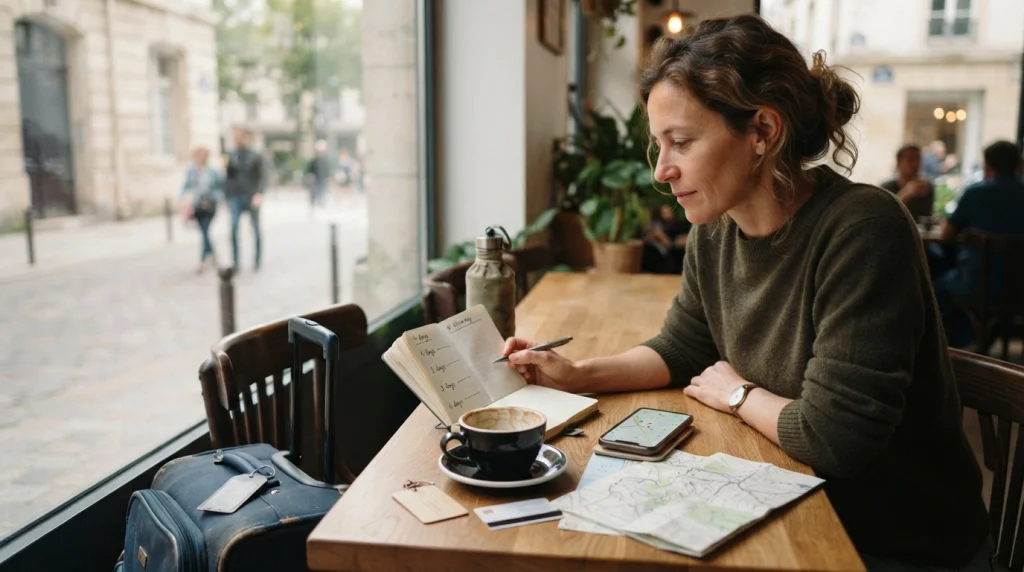
For many beginners, a short trip with one main base is easier than a multi-city itinerary. Three to five nights can provide enough time to practice traveling alone without turning the trip into an endurance test.
You can stay longer if the destination feels familiar. The important part is limiting unnecessary transitions.
Compare an easier first trip with a harder one
| Trip Element | More Manageable First Option | More Demanding Option | Why It Matters |
|---|---|---|---|
| Length | 3–5 nights | Several weeks | A shorter commitment can feel less intimidating. |
| Bases | 1 city or region | 3–5 cities | Fewer transfers mean fewer unfamiliar arrivals. |
| Arrival | Daylight or early evening | Late-night arrival | More services and transport may be available earlier. |
| Daily plan | 1 main activity | Hour-by-hour schedule | Spare time absorbs delays and decision fatigue. |
| Accommodation | One property | Frequent hotel changes | Packing and repeated check-ins use time and energy. |
Try the one-anchor-per-day rule
Choose one important activity each day. Treat everything else as optional.
- Morning: Eat breakfast and get oriented.
- Main anchor: Visit one attraction, neighborhood, class, tour, or nature area.
- Afternoon: Add something easy if your energy is good.
- Evening: Eat somewhere convenient and return when you want.
This gives your day direction without making every delay feel like failure. It also leaves space for discoveries you couldn’t have planned.
Avoid proving yourself through your itinerary
Your first solo trip does not need overnight trains, five cities, sunrise hikes, late-night nightlife, and a suitcase full of reservations. You can do those things later if you enjoy independent travel.
The first trip has a simpler job. It should teach you what traveling alone feels like.
Section Takeaway: A short, single-base itinerary gives you repeated practice with solo decisions while reducing exhausting transitions. Keep the schedule loose enough that a delay doesn’t destroy your whole day.
What Should You Book and Verify Before Leaving?
Book the parts that would be stressful to arrange while tired or disoriented. Leave lower-risk decisions flexible.
I especially want my first night and arrival route settled before I leave home.
Secure the first-night essentials
- Accommodation: Know exactly where you’re sleeping.
- Arrival route: Identify the official train, bus, taxi, transfer, or ride option.
- Check-in details: Confirm reception hours and late-arrival procedures.
- Address: Save your accommodation address offline.
- Payment: Know how you’ll pay for your first transport and meal.
If you arrive late, simplify further. Arrange a clear transport option before departure rather than improvising outside an unfamiliar airport or station.
Build small backups
Solo travel becomes stressful when one lost object can collapse the trip. Avoid relying on one card, one copy of your documents, or one way to access information.
- Carry at least two usable payment methods when possible.
- Keep your backup card separate from your daily wallet.
- Save copies of important travel documents securely.
- Download your main map area for offline access.
- Write down important contacts outside your phone.
- Carry a charger and consider a small power bank.
- Keep some money available for unexpected transport or accommodation changes.
Check health and insurance needs
Health preparation depends on your destination and your own circumstances. Review current destination-specific advice rather than copying another traveler’s packing list.
The CDC Travelers’ Health section provides destination information and travel-health guidance. It also recommends planning how you would access healthcare while abroad.
Read your insurance policy before departure. Pay attention to medical coverage, exclusions, emergency assistance, and any evacuation terms that apply.
Pro tip: Health advice and entry requirements can change. Recheck official sources shortly before departure, especially for international trips.
Section Takeaway: Book the high-stress essentials and create simple backups for money, documents, communication, and health needs. You don’t need every hour reserved before leaving home.
How Can You Reduce Safety Stress Once You Arrive?
Good solo female travel safety habits should give you options, not keep you frightened. Focus on situational awareness, privacy, reliable transportation, and easy ways to leave uncomfortable situations.
Create a simple check-in plan
Share the broad outline of your trip with someone you trust. Decide how often you’ll check in and what they should do if you unexpectedly stop responding.
- Travel dates
- Main accommodation
- Planned destination changes
- Flight or train details when useful
- Expected check-in frequency
- A basic plan for missed check-ins
You don’t need to send a live report of every café or museum. The purpose is to create a sensible backup connection.
Protect information that strangers don’t need
You can be friendly without announcing that you’re alone or giving somebody your accommodation details. Privacy is a normal safety habit.
- Don’t casually share your room number.
- Be selective about real-time location posts.
- Avoid showing hotel key sleeves with identifying information.
- Don’t tell a persistent stranger that nobody expects you home.
- Keep passport and backup money secured when you don’t need them.
Keep control of your way home
Meeting people is one of the enjoyable parts of solo travel. Keep enough independence to leave whenever you choose.
- Know how you’ll return to your accommodation.
- Keep access to your own transport money.
- Confirm vehicle and driver details when applicable.
- Watch your drink in social settings.
- Leave if somebody’s behavior makes you uncomfortable.
You don’t need to prove that a situation is dangerous before creating distance. Moving seats, entering a busy shop, calling transport, or returning to your accommodation can all be ordinary choices.
Experienced solo-travel guidance from Lonely Planet’s solo travel tips for women also emphasizes easing into independent travel rather than forcing maximum discomfort immediately.
Pro tip: Save the destination’s local emergency number and relevant diplomatic or insurance contacts before you need them.
Section Takeaway: Safety planning works best when it preserves your flexibility. Protect personal information, keep control of your transport, stay connected, and give yourself permission to leave.
What If Your Confidence Drops or You Feel Lonely?
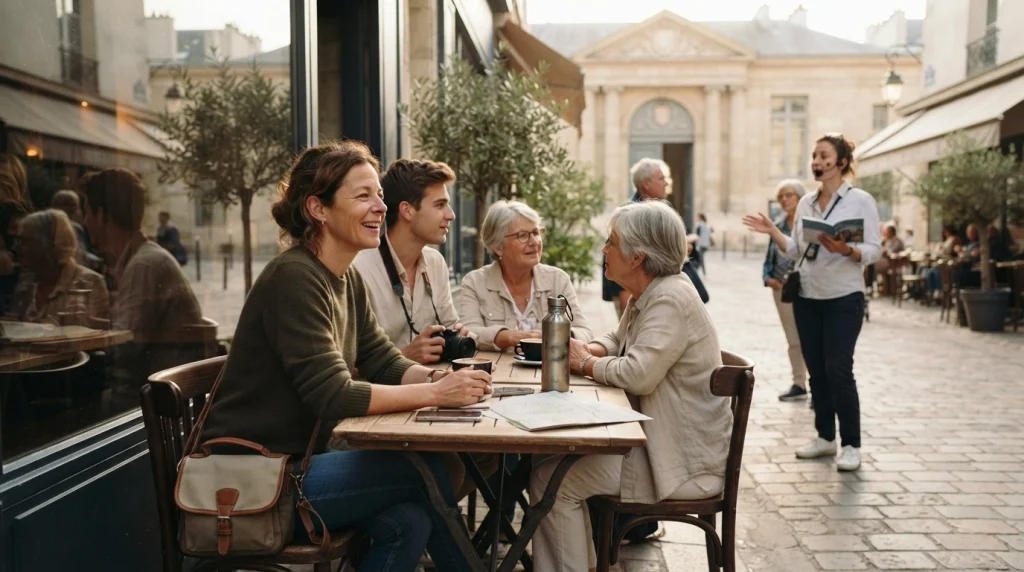
Feeling nervous during a first solo trip doesn’t mean you chose badly. Confidence often develops after you handle several ordinary moments successfully.
The first evening can feel especially strange. You’re tired, the destination is unfamiliar, and suddenly nobody else is deciding what happens next.
Don’t judge the whole trip during a tired moment
Eat something, drink water, shower, charge your phone, and sleep. Evaluate the trip after you’ve rested.
A difficult first few hours don’t predict the next four days.
Practice independence before you travel
You can test solo travel skills close to home. This removes some of the novelty before departure.
- Eat lunch alone.
- Visit a museum by yourself.
- Take a day trip without a companion.
- Navigate an unfamiliar neighborhood alone.
- Use public transportation somewhere new.
- Spend an afternoon without asking somebody else what you should do next.
These small experiences teach you something useful: being alone and being unsafe are not the same thing.
Use structured activities when you want company
Solo travel doesn’t require constant solitude. Group activities make meeting people easier because conversation already has a purpose.
- Walking tours
- Food tours
- Cooking classes
- Small-group day trips
- Language exchanges
- Hostel social events
- Group hikes or cultural activities
I prefer this kind of socializing because it has a clear beginning and end. You can enjoy company without committing your entire day to someone you’ve just met.
Give yourself permission to change the plan
One overlooked benefit of solo travel is flexibility. You can leave an attraction early, change restaurants, skip an activity, rest for an afternoon, or go to bed at 8 p.m.
Your trip isn’t a performance.
Section Takeaway: Confidence doesn’t need to come before your first solo trip. Start small, build familiarity, use structured social activities when you want company, and change plans whenever that makes the experience work better for you.
First Solo Travel Experience FAQ
What is a good length for a woman’s first solo trip?
About three to five nights can be a practical starting point for many beginners. It provides enough time to experience independent travel without committing to a long itinerary before you know how you feel traveling alone.
Should my first solo trip be domestic or international?
Either can work. A domestic trip may remove language, currency, immigration, and mobile-data complications. An international trip can still be manageable when transportation, arrival, accommodation, entry requirements, and communication are straightforward.
Is a hotel or hostel better for a first solo female traveler?
Choose based on your comfort level. A hotel offers more privacy, while a hostel may provide easier social opportunities. A private hostel room can combine personal space with access to communal areas and activities.
How can I tell whether a destination is too challenging for my first solo trip?
Count how many unfamiliar problems you’ll handle at once. Complicated transfers, frequent hotel changes, major language barriers, overnight travel, late arrivals, and difficult transport can create unnecessary pressure when several appear together.
What should I plan first for a solo trip?
Start with your destination, trip length, first accommodation, and arrival route. Then research transportation, mobile data, payment options, documents, current advisories, health needs, and a simple communication plan with someone you trust.
How do I stop being afraid to travel alone?
Don’t make “zero fear” the requirement. Reduce uncertainty instead. Practice solo activities at home, keep the first itinerary simple, understand your arrival route, organize backups, and choose a destination that matches your current experience.
What is the biggest mistake when choosing a first solo travel experience?
Making the trip complicated just to prove you can handle it. Multiple destinations, tight connections, late arrivals, and packed schedules can create stress unrelated to the freedom and confidence you’re hoping to gain from solo travel.
Your first solo journey doesn’t need to be the most adventurous trip of your life. It needs to be manageable enough that you can pay attention to what independence feels like.
Choose one destination, remove unnecessary complications, prepare the essentials, and leave room to change your mind. Once you’ve successfully navigated a few days on your own, you’ll have much better information for choosing your next solo adventure.