How Can a Woman Make Her First Solo Trip Less Stressful?
Quick Answer
A woman can make her first solo trip less stressful by keeping the itinerary simple, booking the first few logistics in advance, creating a basic safety plan, and leaving extra time for rest. Before an international trip, I also recommend checking the official travel guidance for your destination rather than relying only on social media advice.
Start With These Six Steps
- Choose an easy trip: Pick a destination with simple transport, convenient accommodation, and activities you already enjoy.
- Book your arrival: Know how you will get from the airport or station to your accommodation.
- Plan less: Give each day one main activity instead of trying to see everything.
- Create backups: Save alternative transport, accommodation, payment, and communication options.
- Stay connected: Share key trip details with someone you trust and agree on sensible check-ins.
- Expect nerves: Feeling anxious does not mean you made the wrong decision or cannot travel alone.
Your first solo trip becomes much easier when you stop trying to make it perfect. The goal is to remove unnecessary decisions while keeping enough flexibility to change your plans.
I approach first-time solo travel as a series of small, manageable choices. That mindset is much calmer than thinking, “I have to handle an entire trip alone.”
In This Guide
How Can You Make Your First Solo Trip Feel Smaller?
The easiest way to reduce first-solo-trip stress is to reduce the number of unknowns. You don’t need to prove your independence by choosing the hardest possible destination.
A three- or four-day trip can teach you almost everything you need to know about how you react to traveling alone.
Choose convenience over ambition
For a first trip, I would rather stay somewhere convenient than save a little money in an inconvenient area. Being able to walk to food, transport, and a few attractions removes dozens of small decisions.
That matters when you’re already processing a new place alone.
- Choose central accommodation: Look for somewhere with reliable transport and places to eat nearby.
- Avoid complicated transfers: A direct train or flight may be worth paying slightly more for.
- Stay longer in fewer places: Changing hotels every night adds packing, navigation, and check-in stress.
- Arrive during daylight: Daytime arrival can make finding accommodation and learning the area easier.
- Plan one anchor activity: Give each day one important thing to do and treat everything else as optional.
Practice being alone before departure
Solo travel feels less strange when doing things alone is already familiar. Start practicing a few weeks before you leave.
The practice does not need to look impressive.
- Have lunch alone somewhere new.
- Visit a museum by yourself.
- Take public transport to an unfamiliar part of your city.
- Spend an afternoon without asking someone else to make decisions.
- Try a short local day trip.
These exercises help separate two different fears: fear of traveling and fear of simply being alone in public.
Section Takeaway: Make the first trip intentionally easy. A shorter itinerary, fewer hotel changes, and familiar activities give you space to build confidence.
How Do You Plan for Safety Without Worrying Constantly?
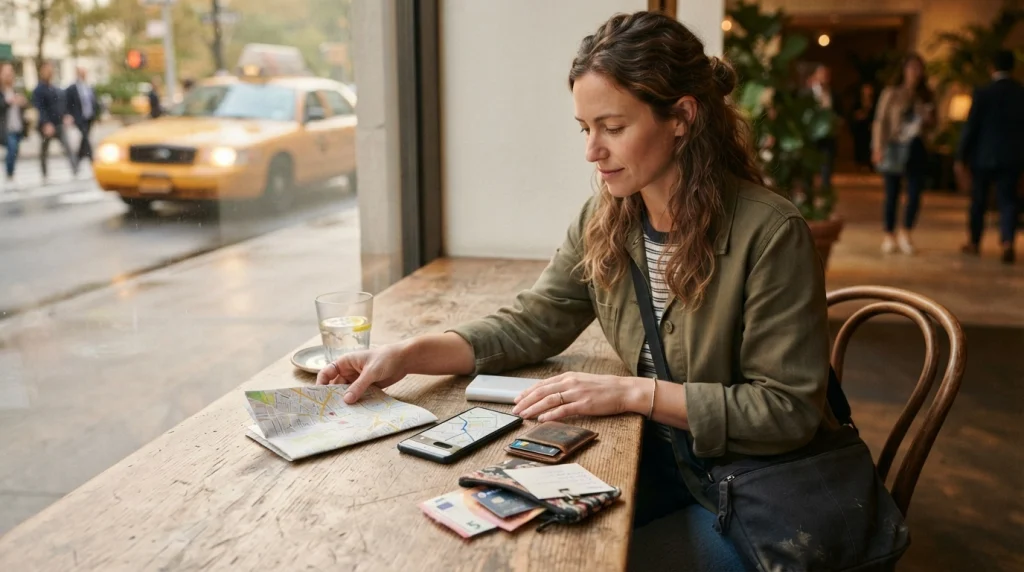
A useful solo female travel safety plan should reduce anxiety, not feed it. Focus on a few actions that give you clear options if something goes wrong.
As of 2026, official travel guidance remains one of the best starting points for checking destination-specific concerns.
Create a small personal safety system
I prefer a simple system that can be remembered when I’m tired. You should not need a twenty-page document to get through an ordinary travel day.
- Share your accommodation: Give the address and booking details to someone you trust.
- Save emergency contacts: Keep important numbers in your phone and somewhere offline.
- Keep backup money: Separate one card and a small amount of cash from your main wallet.
- Download offline maps: They help when your mobile data disappears at the worst moment.
- Know your route home: Before going out, know how you expect to return to your accommodation.
- Use reputable transport: Research official taxi, public transport, or app-based options before arriving.
The U.S. State Department’s guidance for women travelers specifically recommends researching local customs, transportation, accommodation, and destination-specific concerns.
For U.S. citizens traveling internationally, the State Department also operates the Smart Traveler Enrollment Program, which provides relevant embassy and consulate alerts.
Have a backup instead of imagining every danger
Stress often grows when your brain asks, “What if something goes wrong?” Give that question a concrete answer.
| Stressful Situation | Low-Stress Backup Plan |
|---|---|
| Phone battery dies | Carry a charged power bank and keep your accommodation address written offline. |
| Card stops working | Keep a second payment method in a different bag. |
| You miss transport | Save the next departure or an alternative licensed transport option. |
| Accommodation feels wrong | Save two nearby alternatives you could book if necessary. |
| You feel overwhelmed | Return somewhere comfortable, eat, hydrate, charge your phone, and reassess later. |
Pro tip: Check current government travel advisories, local laws, entry requirements, and emergency information for your exact destination before departure.
Section Takeaway: Good safety planning is mostly about having options. Prepare a few practical backups, then allow yourself to enjoy the trip instead of constantly scanning for problems.
How Can You Reduce Stressful Decisions While Traveling?
Decision fatigue is one of the most underestimated causes of first-trip stress. Every meal, route, ticket, neighborhood, and activity can become another decision.
Reduce those choices before departure.
Book the stressful parts, not every minute
You do not need a rigid itinerary. I prefer booking the parts that would be unpleasant to solve while tired or jet-lagged.
- Your first accommodation.
- Your transport from the airport or station.
- Any attraction that regularly sells out.
- Important intercity transport.
- Your first evening meal option or nearby grocery store.
Leave cafés, wandering, shopping, parks, and flexible attractions open. Those are easier to change.
Use the one-main-thing rule
Plan one major activity per day. For example, visit a museum in the morning and let the rest of the afternoon develop naturally.
This creates structure without turning your vacation into a deadline.
- Morning: One important attraction or activity.
- Afternoon: A flexible neighborhood, café, market, or rest period.
- Evening: Dinner near your accommodation unless you already know the area well.
Build buffer time into travel days
Don’t schedule a major attraction one hour after your flight lands. Immigration, baggage, delays, unfamiliar transport, and check-in can consume more time than expected.
Give arrival day a simple job: arrive, check in, eat, and get oriented.
This approach may look less productive on paper. It often feels much better in real life.
Section Takeaway: Book the decisions that are hardest to make under pressure and leave the easy decisions flexible. Your itinerary should support you, not supervise you.
What Should You Pack to Make Solo Travel Easier?
For a first solo trip, smart packing means having what solves common problems without carrying your entire home. A heavy suitcase can create its own stress.
Pack around usefulness rather than hypothetical emergencies.
Keep essential items easy to reach
- Phone and charger: Your phone may handle maps, bookings, translations, communication, and tickets.
- Power bank: Especially useful on long sightseeing or transport days.
- Second payment method: Keep it separate from your everyday wallet.
- Medication: Carry necessary medication according to destination rules.
- Reusable water bottle: Where local water safety and airport rules allow it.
- Small comfort item: Earplugs, an eye mask, or another familiar item can improve rest.
Keep important information available offline
Your phone is useful until it loses signal, breaks, or runs out of battery. Save the information you would hate to lose access to.
- Accommodation name and address.
- Transport tickets.
- Passport or identification copies where appropriate.
- Travel insurance details.
- Emergency contacts.
- Offline maps.
The State Department recommends keeping copies of important travel documents separate from the originals. Its international travel checklist also recommends researching entry rules and insurance before departure.
Plan health needs before you travel
International travel can involve destination-specific health considerations. The CDC recommends checking destination guidance and discussing relevant vaccines, medicines, or health risks before traveling.
You can start with the CDC’s pre-travel guidance.
Pro tip: Health requirements vary by destination and can change. Check official health and government sources instead of depending on an old blog post or social media video.
What Should You Do If Anxiety or Loneliness Hits?
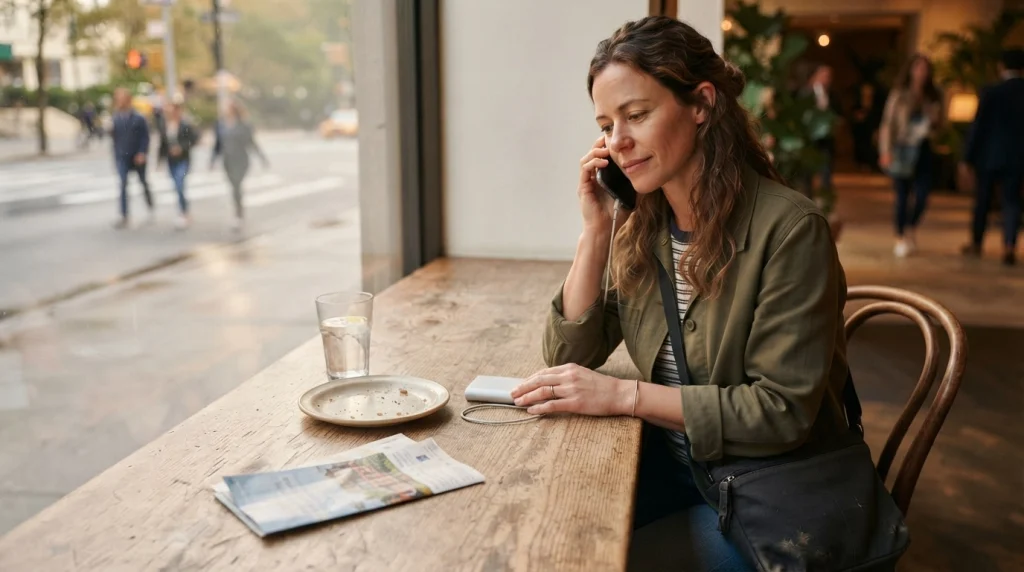
Feeling nervous during a first solo trip does not mean the trip has failed. Even a well-planned journey can include homesickness, tiredness, awkward meals, or moments when everything feels unfamiliar.
The best response is usually to make your world smaller for a while.
Use a one-hour reset
If everything suddenly feels overwhelming, stop trying to fix your entire trip. Focus on your physical needs and the next hour.
- Go somewhere comfortable. Your room, a calm café, or another familiar public place can work.
- Eat and drink something. Hunger and dehydration make ordinary problems feel larger.
- Charge your phone. Remove one obvious practical worry.
- Contact someone you trust. A brief message or call can reconnect you with normal life.
- Cancel something optional. Missing one attraction is cheaper than forcing yourself through a miserable day.
- Decide what comes next. Only make the next necessary decision.
Create connection without filling every minute
Solo travel does not require spending every hour alone. You can choose social experiences when you want them.
- Join a walking tour.
- Take a small cooking or craft class.
- Stay in accommodation with social common areas.
- Attend an organized hostel event if that environment suits you.
- Use established local groups or events after checking their reputation and safety.
Lonely Planet’s current advice for women traveling solo also emphasizes easing into independent travel and using social accommodation or activities when connection helps.
Set sensible check-ins with people at home
Checking in can create reassurance. Constantly reporting your location can make a vacation feel like another responsibility.
Agree on something simple, such as one message each evening or after a long transport day.
Tell your contact what to do if you miss a check-in. That is more useful than creating panic because you forgot to send a message after dinner.
Section Takeaway: Anxiety is easier to manage when you stop treating the entire trip as one problem. Rest, meet your basic needs, reconnect, and make only the next decision.
First Solo Trip FAQ
Is it normal to feel scared before your first solo trip?
Yes. A first solo trip contains unfamiliar decisions, so some nervousness is understandable. You do not need to wait until you feel completely fearless. Prepare the important logistics, practice doing small activities alone, and let confidence grow through experience.
How long should a first solo trip be?
There is no perfect length, but a three- to five-day trip is manageable for many beginners. It gives you enough time to experience solo travel without committing to several weeks before you know how you feel about it.
Should I plan every day before traveling alone?
No. Book important logistics and any attraction that requires advance reservations, but leave some time open. Planning one main activity each day usually creates enough structure without making you feel rushed.
Is a hotel or hostel better for a first solo trip?
Choose based on what makes you comfortable. Hotels and private rooms offer more privacy, while social hostels can make meeting people easier. Many hostels also offer private rooms, which can provide a useful middle ground.
How often should I contact family while traveling alone?
Agree on a realistic schedule before leaving. One daily check-in or a message after major transport days may be enough for some travelers. The important part is making expectations clear so a late reply does not create unnecessary worry.
What if I want to go home early?
You are allowed to change your trip. First, give yourself time to eat, sleep, and recover before making an expensive decision. If you still feel unsafe or deeply uncomfortable, changing accommodation, changing plans, or going home can be reasonable.
What is the most important first-time solo travel tip?
Make the trip easier than you think it needs to be. Simple transport, convenient accommodation, realistic sightseeing, backup plans, and enough rest will usually help more than trying to prove how adventurous you can be.
Your first solo trip does not need to be fearless, flawless, or packed with activities.
Build a trip that gives you room to learn how you travel when the decisions are yours. Once you’ve managed that first airport arrival, first meal alone, and first day navigating independently, the next decision usually feels easier.