How Can a Woman Keep Valuables Safe While Swimming Alone?
Quick Answer
A woman can keep valuables safe while swimming alone by leaving unnecessary items in secure accommodation, using a staffed locker when available, and carrying a few essentials in a swim-rated waterproof pouch. Never rely on hiding valuables beneath a towel or leaving them unattended on the beach. Choose a lifeguarded swimming area and follow official beach safety guidance before entering the water.
Five practical precautions
- Pack fewer valuables: Leave passports, jewelry, extra cash, and unnecessary electronics securely stored.
- Use secure lockers: Choose reputable beach clubs, swimming pools, or facilities with controlled storage.
- Carry small essentials: Use a suitable waterproof pouch for your phone, one payment card, or room key.
- Test waterproof gear: Check its depth rating, closure, and seal before every swim.
- Prioritize swimming safety: Keep equipment streamlined and avoid isolated or unguarded swimming areas.
My preferred approach
- Secure most belongings before leaving my accommodation, then choose a managed swimming location with safe storage.
Wondering how can a woman keep valuables safe while swimming alone? It’s a practical concern when nobody is available to watch your belongings.
I prefer planning my beach bag before leaving my room rather than improvising beside the water. This guide explains secure storage, waterproof gear, common mistakes, and safer alternatives.
In This Guide
- What Is the Safest Way to Protect Valuables While Swimming Alone?
- Which Waterproof Accessories Are Worth Using?
- What Should You Do When There Are No Lockers?
- How Do You Protect Belongings at Beaches and Pools?
- Which Common Beach Security Mistakes Should You Avoid?
- What Is a Simple Solo Swimming Safety Routine?
- Frequently Asked Questions
What Is the Safest Way to Protect Valuables While Swimming Alone?
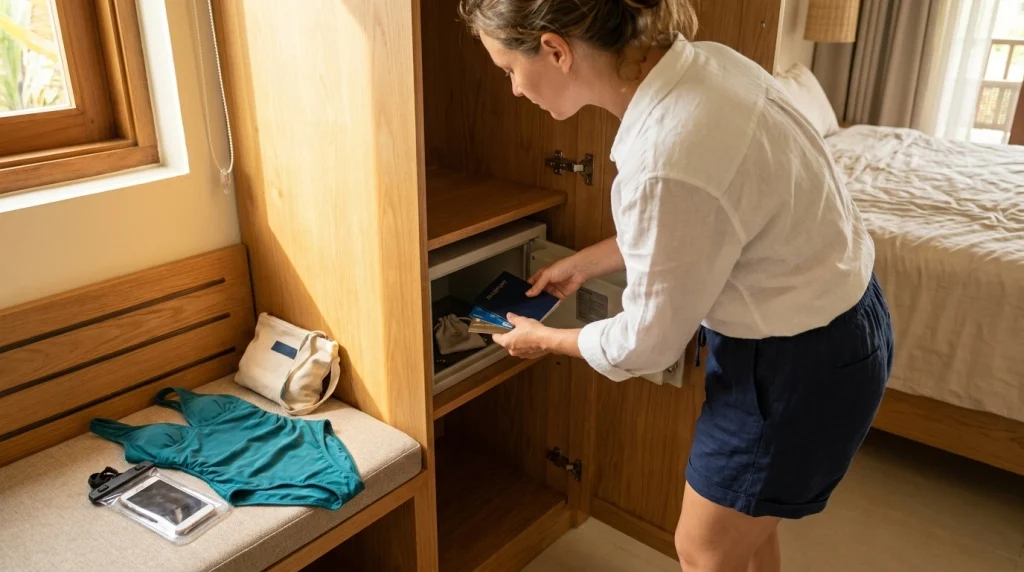
The safest approach is to keep valuable belongings out of the beach environment whenever possible. Secure accommodation and properly managed lockers offer better protection than unattended bags.
I think of swimming-day security as a three-part system: reduce what you carry, secure what stays behind, and protect essentials.
Leave unnecessary valuables at your accommodation
Before leaving for the beach, I separate essentials from belongings that serve no purpose in the water.
That simple decision removes many potential problems before the trip begins.
- Passport: Keep it in secure accommodation storage unless local rules require you to carry it.
- Extra payment cards: Leave backup cards separately secured.
- Jewelry: Avoid bringing expensive watches, necklaces, or sentimental pieces.
- Extra cash: Carry only a modest amount needed for the outing.
- Electronics: Leave laptops, tablets, and additional devices behind.
A hotel room safe may be useful, but no storage arrangement is completely theft-proof. Review the property’s security arrangements before relying on them.
When accommodation storage seems unreliable, I would choose a professionally managed alternative rather than leave expensive belongings unsecured.
Choose lockers with controlled access
A locker is often the easiest option for someone swimming without a companion. It keeps belongings away from unattended towels and public seating areas.
However, lockers vary significantly in security.
- Prefer lockers located inside staffed facilities.
- Check whether the locker has an intact lock and door.
- Avoid lockers showing damage or signs of tampering.
- Keep the access code or locker key private.
- Confirm whether valuables are permitted under the facility’s policy.
- Ask staff how lost keys or access cards are handled.
A locker inside a reputable swimming center generally offers more controlled access than an open bag on a crowded shoreline.
Carry only what must stay with you
If a locker isn’t available, a small waterproof pouch may help. It should hold only the essentials you cannot leave elsewhere.
My minimal swimming setup would usually include:
- One payment card or a small amount of cash.
- A compact accommodation key or access card.
- A phone only when essential and compatible with the pouch.
For a short swim at a managed beach, even carrying a phone may be unnecessary. The goal is fewer things to lose.
Section Takeaway: Reduce valuables before choosing security gear. A secure locker and a lighter beach bag usually work better than carrying everything into the water.
Which Waterproof Accessories Are Worth Using?
The most practical accessories are waterproof phone pouches and compact dry bags rated for the intended activity. Each serves a different purpose.
Water-resistant and waterproof are not interchangeable terms. Always check the manufacturer’s stated limits.
Waterproof phone pouches
A waterproof phone pouch is a sealed protective sleeve designed to limit water entering its interior. Some models permit underwater use, while others only resist splashes.
I would look for these features before choosing one:
- Documented water rating: Confirm the manufacturer supports the intended swimming depth and duration.
- Reliable closure: Select a seal that’s easy to inspect before entering water.
- Comfortable attachment: Avoid loose straps that could catch or entangle.
- Suitable dimensions: Check that the phone fits without stretching the closure.
- Simple retrieval: Make sure the pouch opens easily when your hands are dry.
Don’t assume that an IPX8 marking alone guarantees suitability for every swimming condition. Actual performance depends on the product’s tested limits.
Before trusting a new pouch, I recommend testing it with dry tissue paper instead of a phone. Follow the manufacturer’s test instructions and inspect the tissue afterward.
Compact dry bags
Dry bags are useful for protecting belongings from splashes, rain, and wet surroundings. Most ordinary roll-top dry bags aren’t intended for prolonged submersion.
For swimming, confirm that the particular model explicitly supports immersion. A bag designed for kayaking spray may not protect electronics underwater.
Bulky floating bags can also interfere with swimming. I wouldn’t use one in open water unless it was designed for that activity.
Waterproof waist pouches
A compact waterproof waist pouch may distribute small items more comfortably than a swinging neck pouch.
However, waist pouches can slip or create drag. A loose strap can also become a safety concern.
Choose a close-fitting design that doesn’t restrict movement. Never attach valuables in a way that compromises breathing or swimming ability.
Comparison of ways to secure valuables
| Method | Best use | Main limitation |
|---|---|---|
| Accommodation safe | Passport, jewelry, backup cards | Security depends on the property |
| Staffed locker | Phone, wallet, dry clothing | Availability and access vary |
| Swim-rated phone pouch | Small essentials in water | Seal failure, loss, or damage |
| Submersion-rated waist pouch | Cards, keys, modest cash | Fit and water resistance vary |
| Ordinary dry bag | Splash protection on land | Often unsuitable underwater |
| Unattended beach bag | Nonvaluable items only | Easy theft opportunity |
Prices and product availability vary by country, brand, and retailer. I prioritize suitability and verified specifications over inexpensive accessories that promise unrealistic protection.
Section Takeaway: Choose equipment designed for the exact conditions. A splashproof pouch isn’t necessarily safe for swimming or submersion.
What Should You Do When There Are No Lockers?
When a beach has no lockers, the best solution is often to change what you bring or choose another swimming location. Hiding valuables in the sand isn’t secure storage.
Solo travelers need a practical backup plan before removing their shoes and heading toward the water.
Choose a managed beach facility
Beach clubs, supervised pools, and established resorts may offer secure storage. Some facilities provide day access without requiring an overnight stay.
Before paying for entry, ask:
- Are individual lockers available?
- Are lockers included in the entrance fee?
- Does the facility allow phones and wallets in lockers?
- Is there staff supervision near storage areas?
- What happens if a locker key is lost?
Don’t assume that a staffed entrance means every bag is monitored. Confirm the actual storage arrangement.
Can you ask strangers to watch your belongings?
You can ask someone to watch a towel or inexpensive sandals, but don’t treat a stranger as secure storage for valuables.
A friendly conversation cannot establish trustworthiness. Even someone acting in good faith may leave unexpectedly.
I would avoid handing my phone, passport, wallet, or room key to someone I had just met.
Should you use a hidden beach container?
Some travelers consider sunscreen-bottle safes, disguised containers, or buried waterproof cases. These methods depend on an item remaining unnoticed.
They’re not reliable protection against theft, accidental disposal, or losing the hiding place.
Buried containers can also disturb beaches and create environmental problems. Follow local rules rather than hiding objects in the sand.
When is skipping the swim the better choice?
Sometimes the available storage options aren’t acceptable. That’s a good reason to change plans.
Consider postponing swimming when:
- You must carry your passport and cannot secure it.
- No safe place exists for essential medication or identification.
- The only available swimming area is isolated and unguarded.
- Your waterproof equipment hasn’t been tested.
- Water conditions or weather are unsafe.
You can still enjoy the shoreline without entering the water. A beach walk or relaxing at a staffed café may suit that day better.
Section Takeaway: No locker doesn’t mean you must improvise. Bring fewer valuables, find a managed facility, or choose a different activity.
How Do You Protect Belongings at Beaches and Pools?
Beaches and swimming pools have different security concerns. Pools often offer designated storage, while open beaches may provide none.
Understanding the setting helps you decide which items to carry.
At a public beach
A public beach can have multiple access points and large crowds. A bag left beside a towel may be difficult to monitor.
My preferred arrangement is simple:
- Visit a lifeguarded area.
- Check for official storage facilities.
- Keep expensive belongings at accommodation.
- Use an appropriate pouch for small essentials if necessary.
- Leave only low-value beach items unattended, accepting that they could disappear.
Remember that a visible lifeguard tower doesn’t guarantee supervision of personal belongings. Lifeguards focus on protecting swimmers.
The National Oceanic and Atmospheric Administration recommends swimming near lifeguards and checking local water conditions.
At a hotel or resort pool
Hotel pools may provide access-controlled areas, but access restrictions don’t eliminate theft risks.
Leaving a phone beneath a pool towel isn’t significantly safer just because the pool belongs to a hotel.
Use your room safe when appropriate and bring minimal belongings. Ask whether supervised storage is available.
At a public swimming pool
Public pools often have changing rooms, lockers, and posted security rules. Those features can make planning easier.
Check the facility’s locker policy before bringing valuables. Some pools require your own padlock or a refundable deposit.
If a locker uses a combination, avoid obvious numbers. Never leave its access code written on an exposed card.
At a remote beach or natural swimming location
Remote places may lack lockers, staff, reliable mobile coverage, and emergency assistance. Those gaps matter more than convenience.
A lone traveler should be especially cautious about swimming at unguarded locations.
Official water-safety advice discourages swimming alone. For open-water swimming, arrange a buddy or appropriate supervision instead of relying on your phone as an emergency plan.
Pro tip: Check local beach forecasts, swimming warnings, and emergency guidance through the National Weather Service in the United States or the equivalent local authority abroad.
Section Takeaway: Choose locations that provide both water supervision and secure belongings storage. Pool access or beach crowds alone do not guarantee security.
Which Common Beach Security Mistakes Should You Avoid?
The most common mistake is assuming belongings are safe because they’ll be unattended for only a few minutes. Theft and accidental loss don’t require a long absence.
Leaving valuables beneath a towel
A towel can conceal a phone from casual view, but it doesn’t prevent someone from taking it.
The same applies to slipping a wallet inside shoes or beneath clothing.
Taking every important item to the beach
Carrying multiple cards, expensive jewelry, and essential documents creates unnecessary exposure.
I would rather make a second trip back to my accommodation than risk losing everything at once.
Trusting an untested waterproof pouch
Even a well-reviewed pouch may fail if its seal contains sand or debris. Closure mistakes are another concern.
Inspect and test equipment before each outing. Replace worn or damaged accessories rather than hoping they’ll hold.
Wearing loose accessories in the water
A dangling pouch can become uncomfortable or snag on objects. A loose attachment may also detach in waves.
Use equipment approved for the activity and avoid arrangements that restrict swimming movements.
Assuming a tracking device prevents theft
Bluetooth trackers may help locate misplaced belongings, but they cannot physically prevent someone from stealing them.
Location information can also be delayed or inaccurate. Never confront a suspected thief based on a tracker signal.
Ignoring personal safety while protecting property
Your belongings are replaceable. Your safety matters more.
If someone takes your bag, avoid chasing them into traffic, isolated areas, or dangerous water. Seek help from facility staff or local authorities.
Before international travel, review destination-specific precautions through the U.S. Department of State or your own government’s travel-advisory service.
Section Takeaway: Don’t depend on concealment, untested equipment, or technology alone. Good planning removes opportunities for loss before they arise.
What Is a Simple Solo Swimming Safety Routine?
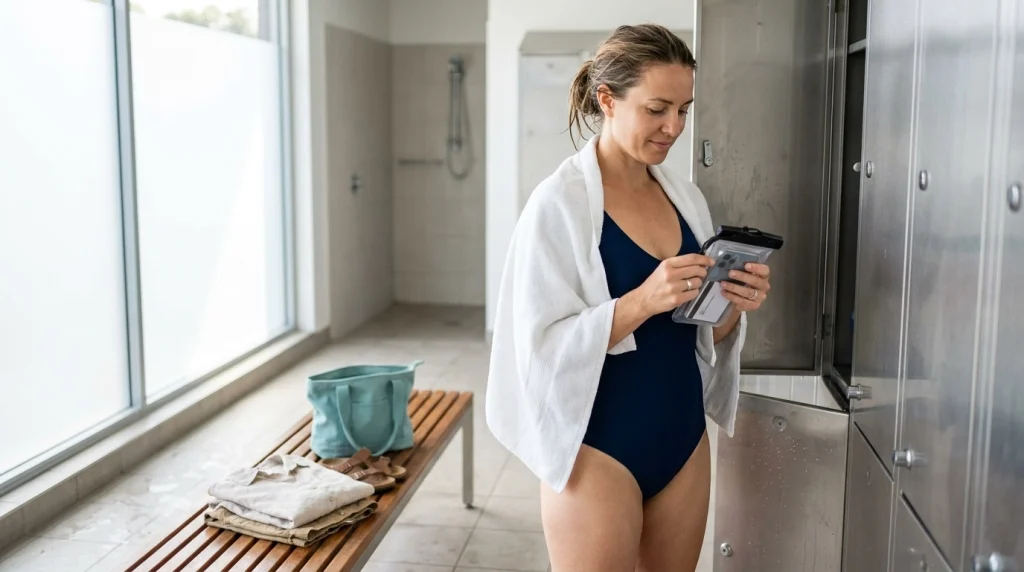
A repeatable routine reduces the number of decisions you must make at the beach. I favor a short checklist over carrying elaborate security equipment.
Before leaving your accommodation
- Secure your passport, extra cards, jewelry, and unnecessary electronics.
- Check your destination’s water conditions and beach warnings.
- Choose a lifeguarded facility with reliable storage.
- Bring only essential cash, a suitable key, and necessary personal items.
- Test the seal on any waterproof accessory.
- Tell a trusted person your general swimming plans when appropriate.
For longer trips, I also recommend reviewing your payment-card settings and enabling device location features.
When arriving at the swimming area
- Check warning flags and ask the lifeguard about conditions.
- Locate storage, changing rooms, exits, and staff assistance.
- Place valuable items in an approved locker.
- Check that the locker closes correctly.
- Keep your access key secure without attaching hazardous straps.
- Confirm you can swim without loose or cumbersome gear.
This is also the time to reconsider your plans if the beach is unguarded or conditions look unsafe.
After swimming
- Return to the storage area before becoming distracted by other activities.
- Check for your phone, cards, money, and accommodation key.
- Dry waterproof accessories before opening them.
- Inspect electronics for moisture before charging them.
- Report lost property promptly to the facility.
If a phone goes missing, use another trusted device to secure accounts. Report stolen payment cards to the issuer immediately.
What if your phone, wallet, or room key disappears?
Stay in a staffed public location while working through the problem. Avoid following someone you suspect of taking an item.
- Phone: Activate available lost-device functions and contact your mobile provider.
- Payment card: Freeze or report it stolen through your bank.
- Accommodation key: Ask the property to deactivate the missing key.
- Passport: Contact local police where appropriate and your embassy or consulate.
- Entire bag: Make a list of missing essentials and prioritize financial and identity security.
A paper copy of essential contact information can be useful when a phone isn’t available. Store it separately from your main valuables.
Section Takeaway: Plan storage before arrival, check safety conditions, and carry fewer items. Preparation is far more dependable than improvising after something goes missing.
Frequently Asked Questions
Can I leave my phone on the beach while swimming alone?
It’s safer not to leave your phone unattended. Store it in a staffed locker or secure accommodation when possible. A properly tested swim-rated pouch is another option, but it still carries risks of water damage, detachment, or loss.
Are waterproof phone pouches completely safe for swimming?
No waterproof pouch guarantees protection in every situation. Check the manufacturer’s depth and duration limits, test the seal, and inspect it before use. Avoid taking expensive electronics underwater unless the protective equipment explicitly supports that activity.
Where should I keep my hotel room key while swimming?
Use a secure locker when available. A compact key may also fit inside a properly rated waterproof pouch. Ask your hotel whether it can deactivate and replace a lost key, especially when the key could identify your accommodation.
Is it safe to ask another woman to watch my beach bag?
Another woman may be friendly or helpful, but gender alone doesn’t establish trustworthiness. Ask strangers to watch only low-value belongings, if necessary. Keep your phone, wallet, identification, and other essentials in secure storage rather than relying on someone you’ve just met.
Should I carry my passport into the ocean?
Generally, avoid taking your passport into the water because loss and water damage can cause serious travel problems. Use secure accommodation storage unless local identification rules require otherwise. Check the applicable laws and carry a permitted alternative when possible.
Can I use a waterproof dry bag instead of a locker?
Only when its manufacturer confirms suitability for swimming and submersion. Many ordinary dry bags protect against splashes but not sustained immersion. Even suitable equipment doesn’t eliminate the possibility of loss, and a bulky bag may make swimming less safe.
What is the safest swimming option for a solo female traveler?
A lifeguarded beach or supervised pool with secure storage offers a practical combination of safety and convenience. Official guidance still recommends swimming with a buddy, particularly in open water. Avoid isolated, unguarded locations and always follow local warnings.
Final Thoughts: Enjoy the Water Without Worrying About Your Bag
Keeping valuables secure while swimming alone starts well before reaching the water. The most effective step is simply bringing fewer things.
My preferred setup is secure accommodation storage, a reputable swimming facility, and a locker for the remaining essentials.
If I need to carry something into the water, I would use an appropriate tested pouch. I wouldn’t compromise swimming safety to protect a phone or wallet.
As you plan your next beach outing, focus on three priorities: secure belongings, supervised swimming, and reliable backup arrangements.
A little preparation makes it easier to enjoy the shoreline without spending the entire visit checking your bag.