Is Backpack a Carry On Bag How to Choose the Perfect Travel Companion
Is a backpack a carry-on bag? Absolutely! Backpacks are popular carry-on choices due to their convenience and versatility. This guide will help you understand airline size rules and show you how to choose the perfect carry-on backpack that fits your travel needs.
Key Takeaways
- Backpacks often qualify as carry-on bags: Most airlines accept backpacks as carry-ons if they meet size requirements.
- Size matters: Always check airline-specific carry-on size limits before packing your backpack.
- Choose backpacks designed for travel: Look for features like laptop compartments, easy access pockets, and durable materials.
- Comfort is key: Padded straps and ergonomic designs make carrying easier during long walks in airports.
- Weight limits: Carry-on backpacks should be lightweight to avoid extra fees and strain.
- Organize smartly: Use packing cubes or organizers to maximize space and keep items accessible.
- Check airline rules for carry-on items: Some airlines allow personal items in addition to carry-ons, so backpacks can sometimes be one or the other.
Is Backpack a Carry On Bag? How to Choose the Perfect Travel Companion
Traveling light is a dream for many, and backpacks have become a favorite choice for carry-on bags. But is a backpack always accepted as a carry-on item? In this guide, you’ll learn how to confirm if your backpack qualifies as a carry-on, what to look for when choosing one, and tips to make your travel experience smooth and hassle-free.
Step 1: Understand Airline Carry-On Rules
Before you start packing your backpack, the first step is to know what airlines allow as carry-on baggage. Most airlines set strict size limits for carry-on luggage, and your backpack must fit within those dimensions.
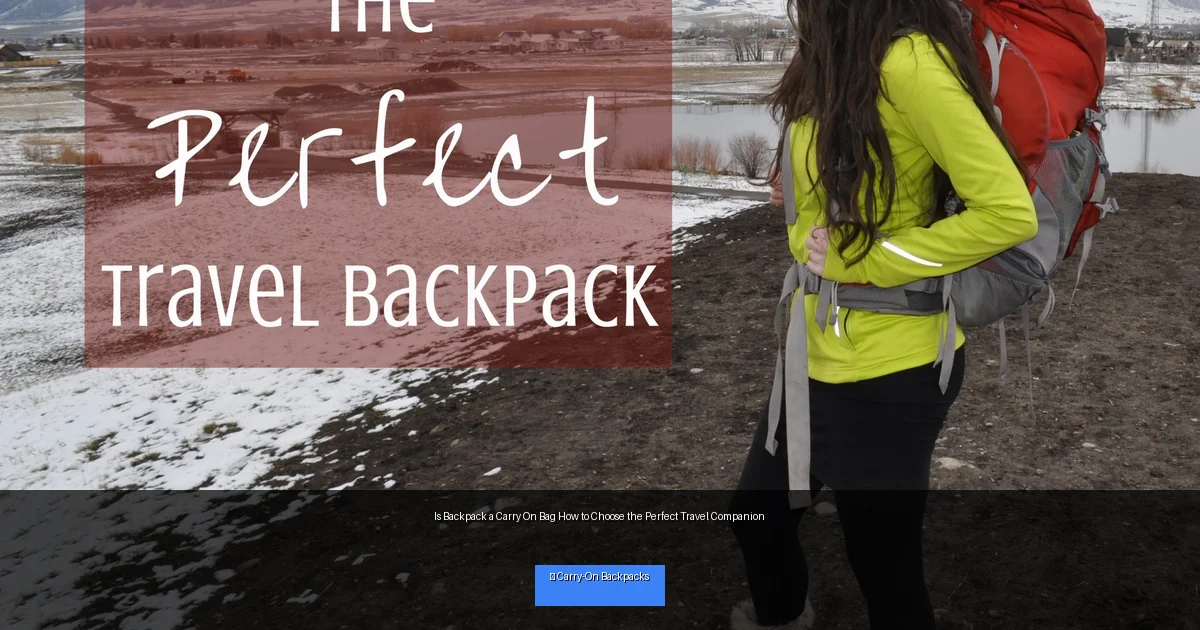
Visual guide about Is Backpack a Carry On Bag How to Choose the Perfect Travel Companion
Image source: thebudgetmindedtraveler.com
Check Size Limits
Airlines usually provide maximum carry-on size in inches or centimeters. For example, a common size limit is 22 x 14 x 9 inches (56 x 36 x 23 cm). Your backpack’s dimensions—height, width, and depth—should be equal or less than these limits.
Confirm Weight Restrictions
While many airlines don’t strictly enforce weight limits on carry-ons, some do. It’s good practice to keep your backpack light—usually under 15-20 pounds (7-9 kg)—to avoid extra fees or difficulty handling it.
Step 2: Choose the Right Backpack Size
Once you know the size rules, it’s time to pick a backpack that fits. Backpacks come in various sizes, but for carry-on use, medium-sized backpacks (around 20-40 liters) tend to work best.
Measure Your Backpack
Measure your backpack’s height, width, and depth when fully packed. Some backpacks expand with zippers or straps, so measure with everything packed in.
Consider Expandable Backpacks
Expandable backpacks offer flexibility. You can compress them when flying or expand them when you need more space at your destination. Just verify the expanded size still meets airline limits.
Step 3: Look for Travel-Friendly Features
Not all backpacks are created equal. Travel backpacks should have features that make flying easier and more comfortable.
Dedicated Laptop Compartment
If you travel with electronics, a padded laptop sleeve helps protect your device and speeds up security checks.
Easy Access Pockets
Front or side pockets let you reach documents, snacks, or chargers quickly without unpacking the whole bag.
Durable and Lightweight Materials
Look for water-resistant fabrics and sturdy zippers to protect your belongings. Lightweight materials reduce the burden on your shoulders.
Ergonomic Design and Padding
Comfort matters when carrying your backpack for hours. Padded shoulder straps, a breathable back panel, and adjustable sternum or waist straps distribute weight evenly.
Step 4: Pack Smartly for Carry-On Success
Packing efficiently maximizes space and keeps your belongings organized.
Use Packing Cubes or Organizers
Packing cubes help separate clothes, gadgets, and toiletries. They make finding items fast and keep your backpack tidy.
Pack Essentials in Accessible Spots
Keep your wallet, passport, boarding pass, and phone in outer pockets so you can grab them quickly at security or boarding.
Follow TSA Rules
Remember liquids must be in containers of 3.4 oz (100 ml) or less and placed in a clear quart-sized bag. Keep this bag easily reachable to speed up airport checks.
Step 5: Troubleshooting Common Issues
Backpack Too Big for Overhead Bin?
If your backpack doesn’t fit in the overhead bin, try placing it under the seat in front of you. Many airlines allow one personal item plus a carry-on. If your backpack fits under the seat, it can be your personal item.
Backpack Feels Heavy and Uncomfortable
Re-assess your packing. Remove non-essential items and distribute weight evenly. Adjust straps for better support and consider a backpack with a waist belt.
Security Holds You for Laptop Removal
Choose backpacks with TSA-friendly laptop compartments that unzip flat. This design speeds up security screening by allowing you to keep your laptop in the bag.
Conclusion: Your Ideal Carry-On Backpack Awaits
Yes, a backpack is definitely a carry-on bag when it meets airline size and weight requirements. By understanding airline rules, choosing the right size backpack, and packing strategically, you can enjoy hands-free travel and hassle-free airport experiences. Look for backpacks designed with travel in mind—durable, lightweight, and comfortable. With the right travel companion on your back, you’re ready for your next adventure!
🎥 Related Video: The best carry-on backpack for traveling 🎒 #travel
📺 Nomadity Travel Backpacks
The best travel backpack for your next vacation? ☀️ This is our new vacuum compression travel backpack and it allows you to …