Is a Backpack Too Big for a Carry On Find Out What Fits Best
Wondering if your backpack is too big for a carry-on? This guide helps you understand airline size limits, how to measure your backpack, and tips for choosing the right carry-on backpack. Travel smarter with the perfect bag size and avoid airport hassles.
Key Takeaways
- Carry-on size limits vary: Airlines have different rules, so always check before you pack.
- Measure your backpack: Knowing the height, width, and depth helps ensure it fits carry-on requirements.
- Choose backpacks designed for flying: Look for carry-on specific backpacks with compact dimensions.
- Packing smart matters: Efficient packing can make even a slightly larger backpack fit better.
- Soft vs. hard backpacks: Soft-sided backpacks can be more forgiving with size and fit in overhead bins.
- Weight limits count too: Besides size, keep your backpack within airline weight limits to avoid fees.
- Check with gate agents if unsure: Sometimes they allow slight flexibility if the bag fits in overhead space.
Is a Backpack Too Big for a Carry On? Find Out What Fits Best
Traveling with a backpack is convenient, but the big question is: is your backpack too big for a carry-on? Airlines have size restrictions, and carrying a backpack that doesn’t meet these can cause stress at the airport. In this guide, you’ll learn how to measure your backpack, understand airline rules, pick the best carry-on backpack, and pack efficiently so you can breeze through security and boarding.
Step 1: Understand Airline Carry-On Size Limits
Before you even look at your backpack, it’s important to know the size limits for carry-on luggage. These limits often vary by airline and sometimes by aircraft type.
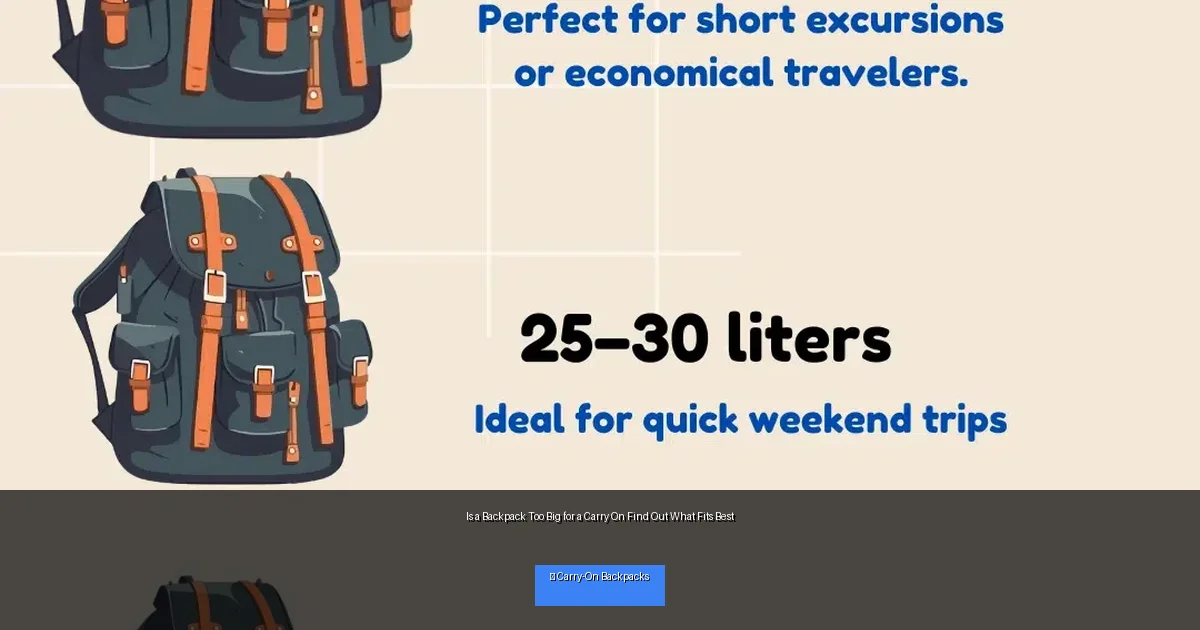
Visual guide about Is a Backpack Too Big for a Carry On Find Out What Fits Best
Image source: backpackswizard.com
Check Your Airline’s Website
Most airlines clearly state their maximum carry-on dimensions in inches or centimeters. Common limits are around 22 x 14 x 9 inches (56 x 36 x 23 cm). However, some budget airlines or regional carriers may have smaller allowances.
Know the Difference Between Carry-On and Personal Item
Sometimes backpacks are counted as personal items if they are smaller. If your backpack is large, it may be classified as a carry-on, which has stricter size limits.
Step 2: Measure Your Backpack Correctly
To know if your backpack fits, you need accurate measurements.
Measure Height, Width, and Depth
- Height: Measure from the bottom of the backpack to the top of the highest point, including any handles or straps that stick out.
- Width: Measure the widest part side to side.
- Depth: Measure the thickness or how far it sticks out from front to back when fully packed.
Consider Expandable Compartments
Many backpacks have zippers that expand storage space. Measure with these compartments both zipped and unzipped to understand the maximum size.
Step 3: Compare Your Backpack Size to Airline Limits
Once you have your backpack’s dimensions, compare them to your airline’s carry-on size limits.
Is Your Backpack Larger Than Allowed?
If any dimension exceeds the limit, your backpack is technically too big for carry-on. This could mean you have to check it, which adds fees and waiting time.
Close But Slightly Over?
Sometimes being an inch or two over isn’t strictly enforced, especially if your backpack is soft-sided and can be compressed. But don’t rely on this — it’s a risk.
Step 4: Choose the Right Backpack for Carry-On Travel
If your current backpack is too big, consider getting one designed for carry-on use.
Look for Carry-On Specific Backpacks
Brands now make backpacks labeled as “carry-on size” or “airline approved.” These are designed to maximize space within size limits.
Opt for Soft-Sided Backpacks
Soft materials can compress when packed, making it easier to fit in overhead bins or under seats.
Check for Organizational Features
Backpacks with multiple compartments help you pack efficiently and keep your belongings accessible.
Step 5: Pack Your Backpack Smartly
Packing techniques can help you fit more in and keep your backpack within size limits.
Use Packing Cubes or Compression Bags
These help compress clothes and create organized layers, reducing bulk.
Fill Odd Spaces
Put smaller items like chargers or socks into shoes or corners to maximize space.
Avoid Overpacking
Stick to essentials and avoid bringing items “just in case.” Less stuff means less bulk.
Step 6: Troubleshooting Size Issues at the Airport
If you arrive at the gate and your backpack seems too big, here are some tips.
Gate Agent Flexibility
If your bag is only slightly over the limit and soft-sided, agents may allow it if it fits in the overhead bin.
Wear Bulky Items
To reduce backpack size, wear heavier or bulkier clothes on the plane (jackets, boots).
Be Prepared to Check
If your backpack is too big, you may have to check it. Pack valuables in a smaller personal item to keep them with you.
Conclusion
Knowing whether your backpack is too big for a carry-on comes down to understanding airline size limits and measuring your bag carefully. Choosing the right backpack designed for travel, packing smart, and double-checking rules can save you stress and fees. With the right approach, your backpack can be the perfect carry-on companion for your next trip!
🎥 Related Video: What Size Backpack Should You Use?
📺 BackpackingTV
I put several backpacks of various size to the test, packing each one with enough for a night out in the woods to find out which size …