How Much Planning Is Too Much for a Woman’s First Solo Trip?
Quick Answer
Too much planning happens when your first solo trip becomes so tightly scheduled that one delay, mood change, or unexpected discovery disrupts the whole itinerary. For most first-time solo travelers, the better approach is to fully plan the important parts—transportation, accommodation, arrival, essential bookings, money, and safety—while leaving roughly 30% to 40% of your sightseeing time flexible. For international trips, I also recommend checking the official international travel planning guidance before departure.
What to plan before you leave
- Book the basics: Confirm transportation, accommodation, and anything likely to sell out.
- Plan your arrival: Know how you will reach your accommodation, especially after a flight or train journey.
- Research safety: Learn about neighborhoods, local transport, cultural expectations, and current travel guidance.
- Create backups: Save offline directions, reservation details, emergency contacts, and a second payment method.
- Leave breathing room: Avoid reserving activities from breakfast until bedtime every day.
A simple rule
- Plan what would create a serious problem if it went wrong. Stay flexible about what would merely change how you spend an afternoon.
If you’re wondering how much planning is too much for a woman’s first solo trip, you probably want two things at once: enough preparation to feel safe and enough freedom to enjoy traveling alone.
That balance matters. A first solo trip should feel supported by your plan, not controlled by it.
In This Guide
- What Does Too Much Planning Look Like on a First Solo Trip?
- What Should You Definitely Plan Before Traveling Alone?
- How Much Free Time Should a First Solo Itinerary Have?
- Can You Overplan Solo Female Travel Safety?
- How Do You Know When Planning Is Making You More Anxious?
- What Is a Simple Planning Framework for a First Solo Trip?
- Frequently Asked Questions
- Final Takeaway
What Does Too Much Planning Look Like on a First Solo Trip?
Too much planning means creating an itinerary so rigid that normal travel changes feel like failures. You know where you will eat, what attraction comes next, and exactly when every activity must start.
Overplanning is different from being prepared. Preparation protects the important parts of your trip, while overplanning tries to control almost every hour.
Definition: Overplanning a solo trip means committing so much of your itinerary in advance that you have little practical room to adjust for energy, weather, delays, new opportunities, or changing preferences.
I prefer to think about a solo itinerary as a safety net rather than a timetable. It should catch problems without dictating every decision.
Common signs that you have planned too much
- Every meal is scheduled. You feel uncomfortable eating somewhere you discover while walking.
- Activities run back-to-back. A 30-minute delay can disrupt the rest of your day.
- You have prepaid for almost everything. Changing your mind would mean losing money.
- You have no recovery time. Jet lag, heat, long walks, or poor sleep have nowhere to fit.
- You are optimizing constantly. You spend more time calculating the “perfect” route than imagining what you will enjoy.
- Your plan creates anxiety. Missing one attraction feels like wasting the trip.
A packed itinerary can look reassuring on your laptop. It often feels different once you are carrying a bag, navigating unfamiliar streets, making decisions alone, and absorbing a new place.
Solo travel also removes the natural pauses created by traveling with another person. You are the navigator, scheduler, decision-maker, and problem-solver.
Section Takeaway: Plan enough to make the trip manageable, but not so much that following the schedule becomes another job.
What Should You Definitely Plan Before Traveling Alone?
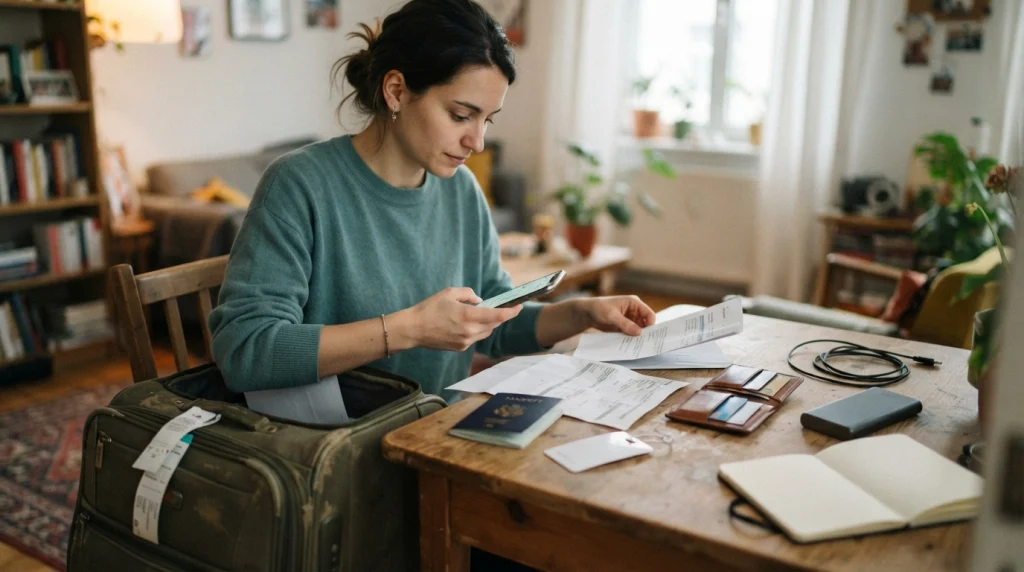
Your first solo trip needs structure around decisions that affect safety, money, or major logistics. These are the areas where advance planning usually reduces stress rather than creating it.
1. Your main transportation
Book flights, long-distance trains, or other major transportation once your dates are settled. Confirm baggage rules, departure locations, and how early you need to arrive.
If a connection looks complicated, save the details offline. Losing mobile data should not make your entire route disappear.
2. Your accommodation
I would book accommodation before a first solo trip rather than arriving without somewhere to stay. Location matters as much as price.
- Check the surrounding neighborhood.
- Read recent guest reviews.
- Confirm check-in hours.
- Review transportation nearby.
- Save the address offline.
- Know what to do if you arrive late.
3. Your first arrival
The first hour deserves more planning than an ordinary sightseeing afternoon. You may be tired, distracted, or unfamiliar with local transportation.
Know how you will get from the airport, station, or bus terminal to your accommodation. Save at least one backup option.
4. Entry, health, and document requirements
For international trips, check passport validity, visas or travel authorizations, local entry rules, and relevant travel guidance before departure.
The U.S. State Department provides an international travel checklist covering destination research, documents, safety preparation, and insurance considerations.
The CDC travel preparation guidance also recommends checking destination-specific health information before international travel.
Pro tip: Requirements can change. Verify entry, health, and security information through official government sources shortly before departure.
5. High-demand activities
Book an attraction ahead when missing it would genuinely disappoint you and tickets often sell out. Do not reserve ordinary activities merely because booking is possible.
One important reservation can give a day structure without controlling the entire day.
How Much Free Time Should a First Solo Itinerary Have?
A useful starting point is to leave about 30% to 40% of your sightseeing time uncommitted. This is a planning guideline, not a universal travel rule.
For a four-day trip, that might mean planning one major activity each day while leaving several mornings, afternoons, or evenings open.
| Planning Style | Typical Day | Main Advantage | Main Risk |
|---|---|---|---|
| Highly scheduled | 4–6 timed activities | You know exactly what comes next | Delays create stress |
| Balanced | 1–2 anchor activities | Structure plus flexibility | Requires some decisions during the trip |
| Mostly spontaneous | Few advance commitments | Maximum freedom | Popular activities may sell out |
Use anchor activities instead of hourly schedules
An anchor activity is the main thing you want to do that day. It could be a museum reservation, walking tour, cooking class, hike, or train journey.
Everything around it stays adjustable.
- Morning: Breakfast and neighborhood wandering.
- 11:00 a.m.: Prebooked museum ticket.
- Afternoon: Lunch and flexible sightseeing.
- Evening: Decide based on energy and weather.
This style works well because you always have a starting point. You are not forced to invent an entire day from scratch.
You also have permission to change direction.
Build in a reset window
On trips longer than a weekend, I like leaving an occasional half-day with no major commitment. It can absorb laundry, rain, fatigue, shopping, travel delays, or something interesting I discover locally.
That unused space is not wasted time. Flexibility is part of the itinerary.
Section Takeaway: One or two anchor plans per day usually gives a first-time solo traveler useful structure without turning the trip into a checklist.
Can You Overplan Solo Female Travel Safety?
You can spend too much time researching hypothetical dangers, but sensible safety preparation is worth doing. The goal is to identify practical actions, not to eliminate every imaginable risk.
Research situations you are likely to encounter
Focus on decisions you will probably make during the trip instead of endlessly reading frightening stories online.
- Which neighborhoods make practical bases?
- How does public transportation work?
- What transportation is available after dark?
- Are there common visitor scams?
- What local laws or cultural expectations matter?
- How will you stay connected?
- Who would you contact during an emergency?
Before international travel, check the current advisory and destination information issued by your own government when available.
U.S. travelers can review Travel.State.gov, including destination information, travel advisories, and emergency preparation resources.
Create backups once, then stop researching
Preparation becomes more useful when research turns into a concrete action. Save what you need and move on.
- Store your accommodation address offline.
- Keep digital copies of important documents.
- Carry two payment methods separately.
- Download an offline map if needed.
- Share key itinerary details with someone you trust.
- Save relevant emergency numbers.
- Keep enough battery power to navigate or call for help.
Once those actions are finished, another three hours of reading travel horror stories may not improve your plan.
Pro tip: Recheck official travel advisories and destination health guidance shortly before departure, because conditions can change after you first plan the trip.
How Do You Know When Planning Is Making You More Anxious?
Planning should gradually turn uncertainty into decisions. If every research session produces five new fears and no completed actions, it may no longer be helping.
Watch for repetitive research
You may have crossed into unhelpful overplanning when you repeatedly research questions you have already answered.
- You read dozens of accommodation reviews after choosing a suitable hotel.
- You keep redesigning the same itinerary.
- You compare transportation routes after finding one that works.
- You search repeatedly for reassurance that solo travel will be safe.
- You create backup plans for increasingly unlikely situations.
Use a decision deadline
Give each major decision a finish line. Once your choice satisfies your important requirements, book it or record it and stop reopening the question.
For example, accommodation might need a suitable location, acceptable reviews, your required amenities, and a price within budget. It does not need to be the mathematically perfect hotel in the entire city.
Separate preparation from reassurance-seeking
Useful preparation ends with an action. Reassurance-seeking often ends with another search.
| Useful Preparation | Possible Overplanning |
|---|---|
| Checking how to reach your hotel | Comparing ten routes after choosing a reliable one |
| Reading current neighborhood information | Searching repeatedly for frightening incidents |
| Saving emergency contacts | Planning responses to dozens of unlikely emergencies |
| Making a simple itinerary | Scheduling every hour to avoid uncertainty |
The first trip does not require you to predict every problem. You need enough information to handle ordinary situations and a basic plan for unexpected ones.
Section Takeaway: Good planning reduces the number of unanswered questions. If research keeps multiplying them, set limits and return to practical preparation.
What Is a Simple Planning Framework for a First Solo Trip?
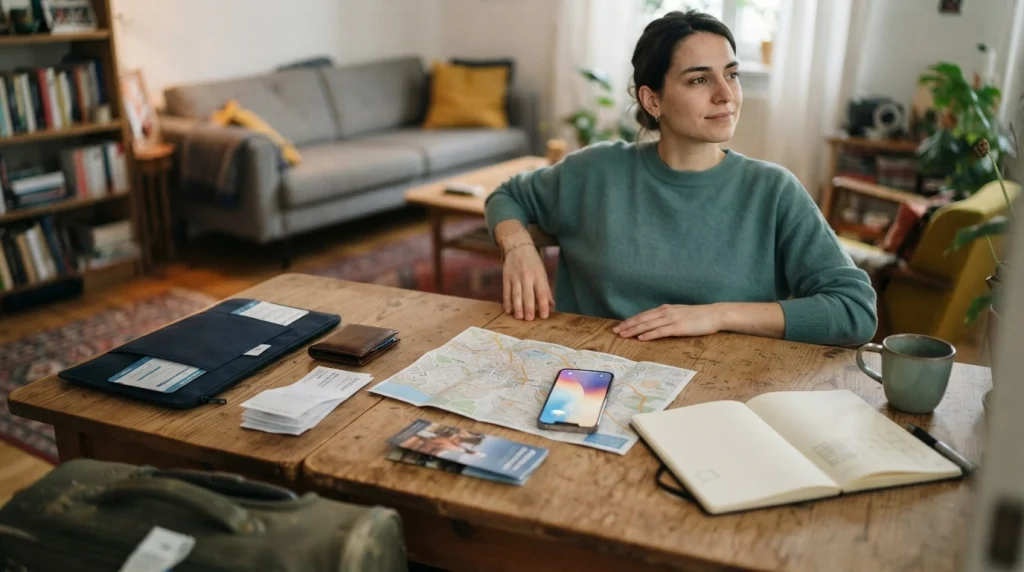
I would organize a first solo trip in three layers: must plan, useful to research, and leave flexible. This keeps important logistics secure while protecting the freedom that makes solo travel rewarding.
Layer 1: Must plan
- Destination and dates: Decide where you are going and how long you will stay.
- Main transportation: Book flights, trains, or other major travel.
- Accommodation: Confirm where you will sleep.
- Arrival: Know how you will reach the accommodation.
- Documents: Check passports, visas, entry rules, and insurance needs.
- Money: Set a budget and prepare backup payment.
- Safety basics: Research neighborhoods, local transportation, and emergency contacts.
Layer 2: Useful to research
- Three to five attractions you might enjoy.
- A few restaurants or food areas.
- Typical transportation options.
- Opening days for major attractions.
- Local customs and clothing expectations.
- Weather for your travel period.
- One backup activity for bad weather.
Layer 3: Leave flexible
- Most meals.
- Cafés.
- Minor attractions.
- Shopping time.
- Neighborhood wandering.
- Rest periods.
- Some evenings.
A sample four-day first solo itinerary
This is how I would keep a short trip structured without filling every hour.
- Day 1: Arrival, check-in, neighborhood orientation, simple dinner.
- Day 2: One prebooked morning activity, flexible afternoon, optional evening plan.
- Day 3: One main attraction or tour, then free time.
- Day 4: Flexible morning, check-out, and planned transportation home.
Notice what is missing. There is no requirement to visit six attractions daily or reserve every meal.
As of 2026, I still prefer this simple structure for beginners because it leaves room for the part no spreadsheet can predict: how you will feel once you are there.
Section Takeaway: Secure the decisions that affect safety, money, and major logistics. Research the rest lightly, then allow the destination to influence your day.
Frequently Asked Questions
Should I plan every day of my first solo trip?
No. Give each day some structure, but avoid scheduling every hour. One or two anchor activities usually leave enough direction while giving you room for weather changes, fatigue, spontaneous discoveries, or simply wanting a slower day.
Is it better to overplan or underplan a first solo trip?
For important logistics, slightly more preparation is usually easier than too little. Book essential transportation and accommodation, plan your arrival, and research basic safety. Keep ordinary sightseeing, food choices, and downtime more flexible.
How far in advance should I plan my first solo trip?
It depends on destination, season, transportation prices, and visa requirements. Start early enough to secure major bookings and documents without spending months repeatedly adjusting minor itinerary details.
Should I book all tours before traveling alone?
No. Prebook tours that sell out or matter greatly to you. Leave less important activities open when possible, especially if the destination has many alternatives you can arrange after arriving.
How many activities should I plan per day?
For many first-time solo travelers, one major activity plus one optional activity is a comfortable starting point. Busy sightseeing days can work, but avoid making every day equally packed.
What if having everything planned makes me feel safer?
Use detailed planning for transportation, accommodation, documents, communication, and backup arrangements. You can still leave low-risk choices flexible, such as where to eat lunch or which neighborhood to explore in the afternoon.
What should I do if my solo travel plans change?
Check whether the change affects safety, accommodation, transportation, documents, or money first. If it does not, adjust the itinerary and continue. Flexibility is a normal part of travel rather than evidence that your original plan failed.
How Much Planning Is Enough for Your First Solo Trip?
Plan the parts that would be difficult, expensive, or stressful to solve at the last minute. That includes your accommodation, major transportation, arrival route, travel documents, budget, safety basics, and high-demand reservations.
Then stop planning.
Leave enough open time to change your mind, rest, follow a recommendation, linger somewhere you like, or skip something that no longer sounds interesting.
Your first solo trip is not an exam. You do not earn extra points for executing a perfect itinerary.
A good plan gives you confidence before departure. A good solo trip gives you enough freedom to make decisions after you arrive.