How Many Payment Cards Should a Solo Female Traveler Carry?
Quick Answer
For most international solo trips, I recommend carrying three physical payment cards: two cards for purchases and one debit or ATM card. Keep one card separate from your everyday wallet, and check official international travel guidance before departure so you know what financial help may be available if something goes wrong abroad.
A simple three-card setup
- Primary card: Use this for hotels, restaurants, transport, and normal daily spending.
- Backup card: Keep it separate in case your main card is lost, blocked, damaged, or rejected.
- Debit card: Use it mainly for ATM withdrawals rather than everyday purchases.
- Separate storage: Never keep all three cards in the same wallet or handbag.
- Emergency cash: Carry a modest cash reserve because cards are not accepted everywhere.
When fewer cards may work
- Two cards can be enough for a short domestic trip with easy access to banking and mobile payments.
If you’re wondering how many payment cards a solo female traveler should carry, the goal isn’t to fill your wallet. The goal is to remove single points of failure while keeping your money simple to manage.
As of 2026, my preferred setup is three physical cards for most international trips. That gives you a practical backup without making a lost wallet more expensive than it needs to be.
In This Guide
- How many payment cards should a solo female traveler carry?
- Which three cards make the most practical travel setup?
- Where should you keep your cards while traveling alone?
- Should the number of cards change with your trip?
- What should you do if a card is lost, stolen, or declined?
- Frequently asked questions
- What should you check before leaving home?
How Many Payment Cards Should a Solo Female Traveler Carry?
Three physical cards are enough for most international solo travelers. I would rather have three carefully chosen cards in two different places than five cards packed into one wallet.
The basic idea is redundancy. If one card stops working, you still have another way to pay and another way to withdraw cash.
Definition: A travel payment-card setup is the combination of credit, debit, or prepaid cards you carry so you can still access money if one payment method fails.
For most trips, I divide those three cards into clear jobs rather than using all of them interchangeably.
- Card 1: Your main purchase card.
- Card 2: A backup purchase card stored separately.
- Card 3: A debit or ATM card for cash withdrawals.
This setup matters more when you’re traveling alone. There may be no travel partner beside you with another wallet, bank account, or emergency card.
That doesn’t mean solo women need to carry excessive financial backups. It means your own backup plan should be deliberate.
- Short domestic trip: Two cards may be enough.
- Typical international trip: Three cards are my preferred balance.
- Long multi-country trip: Three is still usually enough, although a fourth may make sense if it belongs to a separate account.
- Remote or cash-heavy destination: Focus on cash access and separate storage instead of simply adding more cards.
Carrying four, five, or six cards can create a different problem. If your wallet disappears, several accounts may become exposed at the same time.
Your phone’s mobile wallet can add convenience, but I wouldn’t count it as one of the three physical backups. A dead battery, damaged phone, poor connection, or unsupported terminal can remove that option quickly.
Which Three Cards Make the Most Practical Travel Setup?
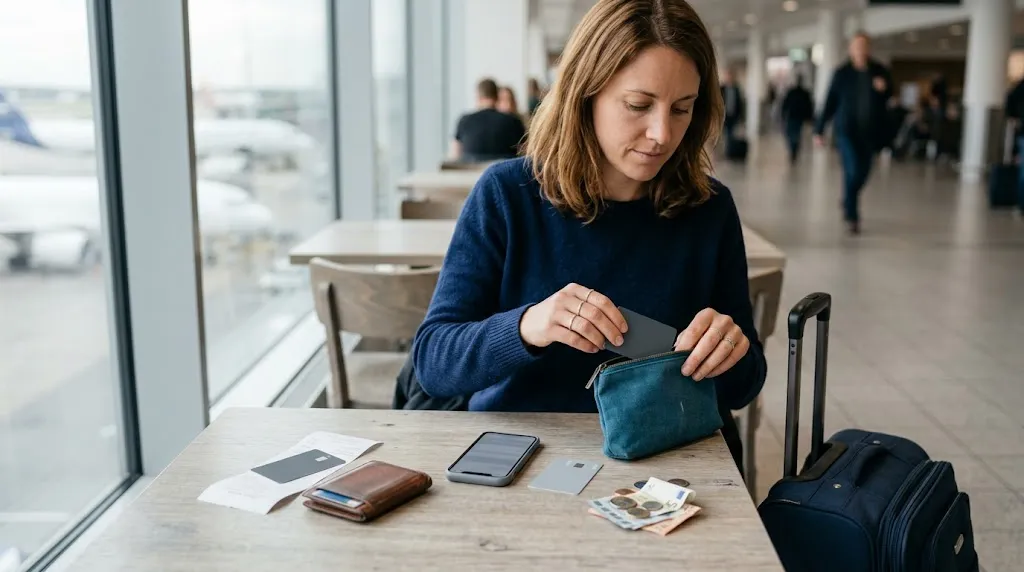
A strong three-card setup gives each card a different purpose. It also avoids depending on one bank account for every expense.
1. A primary card for everyday travel spending
Your primary card is the one you’ll reach for most often. I prefer using a credit card for hotels, transport bookings, meals, and normal purchases when the destination accepts cards widely.
Before traveling, check its foreign transaction fees, available credit, expiration date, PIN requirements, and issuer contact details. Also confirm whether your bank wants travel information before unusual overseas spending.
2. A second purchase card as a true backup
Your second card should not simply be a duplicate sitting beside the first one. Ideally, it comes from another account or issuer so a single banking problem does not disable both cards.
A different payment network can also improve your options when traveling internationally. Acceptance varies by destination, merchant, and payment terminal.
- Don’t carry both together: Store the backup somewhere different.
- Test it before departure: Make sure the card and PIN work.
- Know the limit: A backup card is useless if it has almost no available spending room.
- Save the issuer contact method: Keep it outside the physical wallet.
3. A debit card for accessing cash
Your debit card gives you access to cash when a market, taxi, small guesthouse, café, or rural business doesn’t take your purchase card. I prefer to use debit cards mainly at ATMs rather than for routine shopping.
Check international withdrawal fees and your daily ATM limit before leaving. Your own bank can give the most accurate information because fees and policies differ widely.
For broader destination research, I also check established planning resources such as Lonely Planet before deciding how much I expect to rely on cards versus cash.
Section Takeaway: Your three cards should have three jobs: everyday spending, emergency spending, and cash access.
Where Should You Keep Your Cards While Traveling Alone?
Where you keep your cards matters almost as much as how many you bring. Three cards stored in the same wallet can still fail as a backup system.
I use a split-storage approach. One card stays easy to reach, while the others stay out of sight unless I need them.
- Everyday wallet: Carry your primary purchase card and only the cash you expect to use that day.
- Secondary location: Keep the backup card in a locked suitcase compartment, secure travel pouch, or other protected place at your accommodation.
- Debit card: Carry it only when you expect to use an ATM, or store it separately from your main spending card.
A hotel safe can be useful when available, but no storage system is perfect. The main goal is to prevent one lost handbag, wallet, or daypack from taking every payment option with it.
I also avoid keeping my passport, all my cash, and every payment card together. One theft or mistake should not wipe out every way to identify yourself and pay for essentials.
Should you use a hidden money belt?
A money belt can work for a backup card and emergency cash, especially during long transit days. It is less useful if you must constantly open it in public.
Keep frequently used money somewhere easier to reach. Reserve hidden storage for items you rarely need during the day.
Should you photograph your cards?
I wouldn’t store clear photos showing full card numbers, security codes, and expiration dates in an ordinary photo gallery. Instead, keep the issuer’s emergency contact information and enough account information to identify the card securely.
Your banking app may also let you lock a card quickly. Set up the app, password manager, and account recovery options before leaving home.
- Enable transaction alerts: They can help you notice unexpected charges sooner.
- Use a strong phone passcode: Your phone may hold banking apps and digital cards.
- Know how to freeze a card: Practice finding the control before your trip.
- Keep backup access private: Don’t place recovery information in the same wallet as the cards.
Should the Number of Cards Change With Your Trip?
Yes, but trip complexity matters more than trip length alone. A weekend in a major city can be financially easier to manage than three days somewhere with limited ATM access.
Use the table below as a starting point rather than a rigid rule.
| Trip type | Suggested physical cards | Practical setup |
|---|---|---|
| Short domestic weekend | 2 | Primary spending card plus one debit or backup card. |
| International city trip | 3 | Primary card, separate backup card, and debit/ATM card. |
| Multi-country trip | 3 | Use cards from more than one account or issuer when possible. |
| Long-term travel | 3-4 | Consider a fourth card only if it adds a genuinely separate financial backup. |
| Remote or cash-heavy destination | 3 | Prioritize reliable ATM access, emergency cash, and separate storage. |
What about a first solo international trip?
If it’s your first solo trip abroad, I would keep the system simple. Three cards are easier to track than a complicated wallet full of accounts.
Make a short note showing which card has which job. You shouldn’t have to decide your financial strategy while tired at an airport ATM.
What about countries where cash is still common?
Don’t assume another credit card solves a cash-access problem. Research whether your destination commonly uses cash and whether international cards work at local ATMs.
Travel-planning sites such as Nomadic Matt can provide useful budgeting context, but confirm banking details with your own issuer before departure.
Pro tip: Payment acceptance can vary even within the same country. Verify destination-specific financial information with official government travel guidance and your card issuer before relying on a single payment method.
What Should You Do If a Card Is Lost, Stolen, or Declined?
If a card disappears, act quickly rather than waiting to see whether it turns up. Your first steps should protect the account while preserving access to your remaining money.
- Lock or freeze the card: Use your banking app if that feature is available.
- Contact the issuer: Report a lost or stolen card through an official number or secure app.
- Check recent transactions: Look for charges you don’t recognize.
- Switch to your backup card: This is why it should be stored separately.
- Protect your debit card: Don’t start carrying every remaining card together because one disappeared.
- Ask about emergency options: Your issuer may be able to explain replacement-card or emergency-cash services.
If your card is declined but still in your possession, don’t immediately assume the account has been compromised. The cause could be a merchant terminal, spending limit, issuer security check, PIN problem, or temporary network issue.
Try your second card only after checking that the transaction is legitimate. Repeated attempts at an unfamiliar ATM or terminal can create more confusion.
What if your entire wallet is stolen?
This is the situation your split-storage plan is designed to handle. A separately stored backup card gives you breathing room while you deal with the missing wallet.
- Secure your accounts: Lock or report every missing card.
- Use your separate backup: Pay for immediate food, transport, or accommodation needs.
- Access emergency cash carefully: Use a trusted ATM or assistance option offered by your financial institution.
- Keep identification separate: Your passport or backup ID should not automatically disappear with your daily wallet.
If you are a U.S. citizen and face a serious financial emergency abroad, the U.S. State Department provides information about emergency financial assistance through its international travel services. Travelers of other nationalities should check the equivalent consular guidance from their own government.
Section Takeaway: A backup card only works if it survives the same event that takes your primary card.
Frequently Asked Questions
Is two credit cards enough for a solo female traveler?
Two purchase cards can cover many trips, but I would still add a debit or ATM card for international travel. That gives you a separate way to access cash if card payments are unavailable or one purchase card stops working.
Should I carry three credit cards and a debit card?
Usually, no. For most travelers, two purchase cards plus one debit card provide enough redundancy without putting too many accounts at risk if your wallet is lost.
Should my backup card be from a different bank?
It can be helpful. A card from another issuer or account reduces your dependence on one institution, although you should compare fees, international access, and account terms before choosing it.
Should I keep my debit card in my wallet every day?
Not necessarily. If you mainly use it for ATM withdrawals, you can leave it securely stored on days when you don’t expect to need cash, which reduces the number of important cards you carry.
Can Apple Pay or Google Pay replace a backup card?
I wouldn’t rely on a mobile wallet as your only backup. Your phone can run out of power, be lost, become damaged, or encounter a merchant that doesn’t support your preferred digital payment method.
How much emergency cash should a solo traveler carry?
There is no universal amount because prices and card acceptance vary by destination. Carry enough local currency to cover a practical short-term need such as transport, food, or a small purchase if electronic payments temporarily fail.
Is it safer to carry more cards when traveling alone?
Not automatically. More cards only improve your backup plan when they are stored separately and provide access to different accounts or payment options rather than creating a larger bundle to lose at once.
What Should You Check Before Leaving Home?
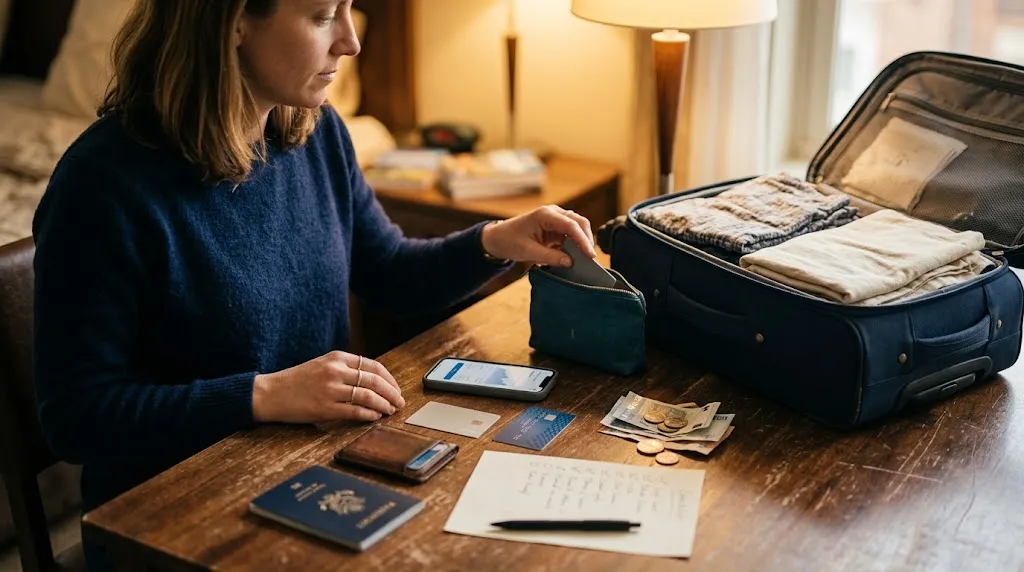
Your payment plan should be finished before you reach the airport. A ten-minute card check can prevent a surprisingly stressful first day.
- Choose your three cards: Primary purchase card, backup purchase card, and debit/ATM card.
- Check expiration dates: Make sure nothing expires during the trip.
- Confirm PINs: Know the PINs you’ll need for ATMs or chip-and-PIN terminals.
- Review fees: Check foreign transaction and international ATM charges.
- Check withdrawal limits: Know your debit card’s daily ATM limit.
- Set transaction alerts: Turn on notifications if your issuer offers them.
- Save issuer contacts: Store official support information somewhere other than your wallet.
- Set up banking apps: Log in before departure and confirm account-recovery methods.
- Separate the backup: Decide exactly where it will be stored.
- Carry emergency cash: Keep it separate from your everyday spending money.
For most solo female travelers, the answer is simple: carry three physical payment cards, but don’t carry all three together. That gives you enough flexibility for normal spending, cash access, and an unexpected problem without turning your wallet into a stack of unnecessary accounts.
The best system is the one you can remember when you’re tired, delayed, or dealing with a problem alone. Keep it simple, separate your backups, and verify your bank’s international rules before every trip.