How Many Pairs of Shoes Should a Woman Pack for Solo Travel?
Quick Answer
Most women should pack two pairs of shoes for solo travel: one comfortable pair for long walking days and one lighter pair for a different activity, weather condition, or slightly dressier setting. One pair can work for a simple weekend, while three pairs make sense only when your itinerary has clearly different footwear needs. This matches the practical light-packing approach in REI’s travel packing guidance.
A simple shoe formula
- Weekend city trip: Pack one or two pairs, depending on your evening plans.
- Four to seven days: Two versatile pairs are enough for most solo trips.
- Longer trips: Two pairs still work if you can rotate them and do not need specialist footwear.
- City plus hiking: Bring two or three pairs if the trail genuinely requires different shoes.
- Beach destinations: Walking shoes plus light sandals usually cover most plans.
My main rule
- Every pair must have a clear job. If two pairs do the same thing, leave one at home.
Deciding how many pairs of shoes should a woman pack for solo travel sounds minor until you start lifting your suitcase. Shoes are bulky, awkward to pack, and easy to overestimate.
As of 2026, my default solo travel shoe strategy is simple: two useful pairs, not a shoe for every outfit. The right number depends more on your activities than your trip length.
In This Guide
- How many pairs of shoes should a woman pack for solo travel?
- When is one pair enough, and when do you need three?
- Which two pairs of shoes should you choose?
- How do trip length, weather, and activities change the number?
- How should you pack shoes without wasting luggage space?
- What shoe-packing mistakes make solo travel harder?
- Frequently asked questions
How Many Pairs of Shoes Should a Woman Pack for Solo Travel?
Two pairs are enough for most women traveling alone. Think of them as a small travel shoe capsule rather than separate shoes for separate outfits.
A travel shoe capsule is the smallest group of footwear that covers your normal walking, planned activities, weather, and clothing.
Why two pairs work so well
Your first pair should handle your longest walking days. Your second should solve a problem the first pair cannot handle.
- Pair one: Comfortable walking sneakers, supportive casual shoes, or another broken-in everyday pair.
- Pair two: Lightweight sandals, flats, waterproof shoes, or activity-specific footwear.
That gives you rotation without filling half your luggage with shoes.
It also gives you a backup if one pair gets soaked, dirty, uncomfortable, or damaged.
Trip length matters less than most travelers think
You do not automatically need more shoes because your trip lasts two weeks instead of five days. Your activities matter more.
If you can wash clothes during a longer trip, you will probably repeat outfits anyway. Your shoes can work the same way.
| Trip type | Suggested pairs | Practical combination |
|---|---|---|
| 2–3 day city weekend | 1–2 | Walking shoes + optional flats or sandals |
| 4–7 day city trip | 2 | Walking sneakers + versatile second pair |
| 1–3 week multi-city trip | 2 | Supportive everyday shoes + light backup |
| City + hiking | 2–3 | Walking shoes + trail footwear + optional sandals |
| Beach or warm-weather trip | 2 | Walking shoes + comfortable sandals |
| Trip with formal events | 2–3 | Walking pair + dress pair + optional activity shoe |
When Is One Pair Enough, and When Do You Need Three?
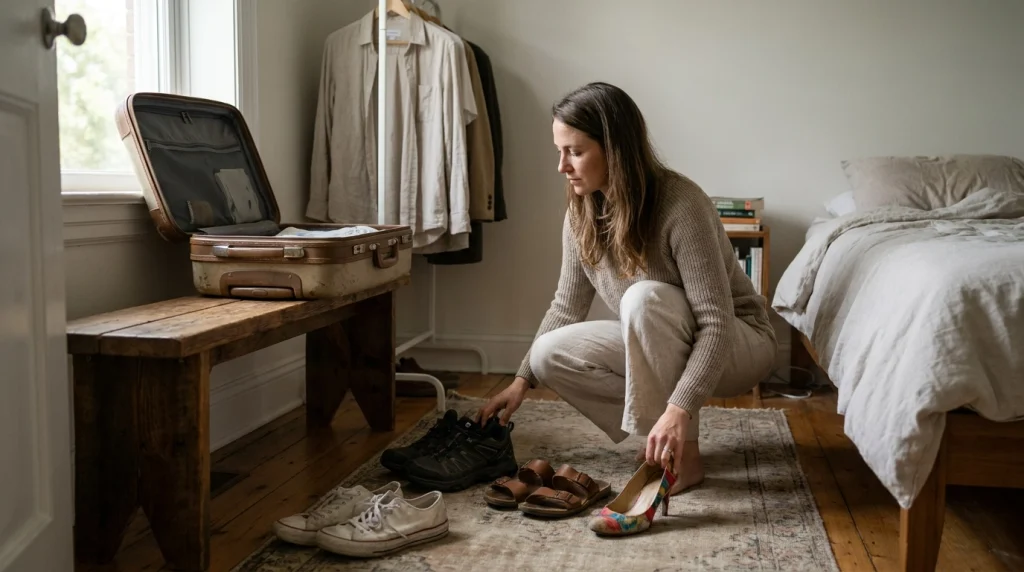
One pair works when one shoe can comfortably handle every major activity on your itinerary. Three pairs become reasonable when your plans create three genuinely different footwear jobs.
Pack only one pair when your trip is simple
A single comfortable pair can work beautifully for a short urban trip. It is especially practical if you are traveling with a personal item or small backpack.
I would consider one pair for trips like these:
- A two-night city break with casual restaurants.
- A work-free weekend built around museums and cafés.
- A mild-weather destination without hiking or formal events.
- A trip where your everyday walking shoe matches every outfit.
Wear that pair during transit, and you may not need to pack footwear at all.
Bring three pairs only when each pair has a purpose
Three pairs can make sense on mixed itineraries. They should not be three slightly different versions of the same shoe.
For example, a trip might include:
- Walking sneakers for long sightseeing days.
- Trail shoes for rocky or muddy hiking routes.
- Light sandals for beaches, showers, or hot evenings.
That combination solves three different needs. Packing sneakers, loafers, flats, and fashion sneakers for the same city walks does not.
If I cannot explain exactly when I will wear a pair, I remove it from my packing list.
Which Two Pairs of Shoes Should You Choose?
Start with your hardest walking day, then choose one complementary pair. Style comes after comfort, weather, and function.
Pair one: your dependable walking shoe
This is the pair I would wear through the airport or station. It should already feel comfortable before departure.
- Good enough for several hours of walking.
- Already broken in.
- Suitable for your destination’s normal weather.
- Easy to combine with several outfits.
- Secure enough for stairs, stations, and uneven streets.
Avoid making your vacation the first serious test of new shoes.
Pair two: choose the biggest gap
Your second pair should cover whatever your main shoe does poorly.
- Hot destination: Lightweight walking sandals.
- Rainy destination: Water-resistant or quick-drying footwear.
- Nice dinners: Comfortable flats, loafers, or compact dress shoes.
- Beach trip: Sandals that tolerate water and dry quickly.
- Hostels: Lightweight shower sandals may be useful.
- Outdoor itinerary: Appropriate trail footwear if your route requires it.
The best second pair often weighs far less than your main shoes. That matters when you are carrying your own luggage through stations and hotel stairs.
For a five-day city trip, I would usually build every outfit around one comfortable walking shoe. My second pair would only come if it solved a clear evening, weather, or temperature need.
How Do Trip Length, Weather, and Activities Change the Number?
Activities should decide your footwear before trip length does. Weather and baggage limits come next.
Check your itinerary activity by activity
Write down the footwear requirement beside each major plan. You will quickly see whether one pair can cover several activities.
- City sightseeing → supportive walking shoes.
- Easy urban parks → usually the same walking shoes.
- Serious hiking → trail-appropriate footwear.
- Beach → sandals or water-friendly shoes.
- Formal dinner → compact dress footwear if necessary.
- Cold conditions → weather-appropriate closed shoes or boots.
The goal is overlap. A shoe that handles three activities earns its luggage space.
Consider baggage rules before adding another pair
Airline baggage allowances vary by carrier, cabin, and aircraft. Check your airline before assuming your bag qualifies as a carry-on.
The International Air Transport Association’s baggage guidance is a useful starting point, but your airline’s own rules remain the final reference.
Weather may justify a specialist pair
A forecast full of rain can change your shoe plan. So can snow, extreme heat, or rough terrain.
Do not pack heavy waterproof boots for one uncertain shower. Do bring suitable footwear when the actual itinerary depends on it.
Section Takeaway: Choose shoes for activities first, weather second, and trip length third. A longer trip does not automatically require more footwear.
How Should You Pack Shoes Without Wasting Luggage Space?
Wear your largest pair during transit and pack the lighter pair. This is one of the easiest ways to protect carry-on space.
Use the inside of your shoes
Empty shoes waste usable space. Fill clean interiors with small, soft items.
- Socks.
- Rolled belts.
- Small fabric accessories.
- Other clean items that will not damage the shoe.
Keep dirty soles away from clothing. A washable shoe bag, reusable bag, or packing pouch works well.
Pack shoes near the bottom or sides
Place heavier footwear close to the wheels of a suitcase. In a backpack, keep weight positioned so the bag remains comfortable to carry.
Do not let shoes crush delicate clothing or toiletries.
Make airport screening easy
Organized luggage is easier to manage when traveling alone. You do not want to unpack half your bag because one item is buried underneath everything else.
If you are traveling through the United States, review current TSA travel and screening guidance before departure.
What Shoe-Packing Mistakes Make Solo Travel Harder?
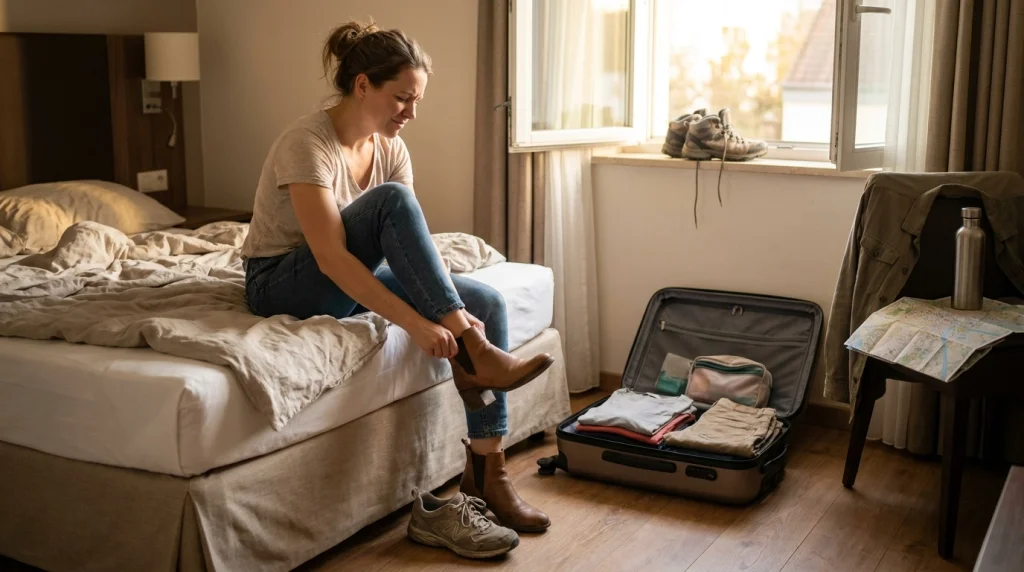
The biggest mistake is packing for imagined situations instead of your actual itinerary. Every unnecessary pair adds bulk you must manage yourself.
Do not bring new shoes for heavy walking
A beautiful new pair can become painful within hours. Use shoes you already know work for your feet.
The American Podiatric Medical Association also highlights blister care and practical foot protection for travelers.
Do not pack separate shoes for every outfit
Build outfits around your footwear instead. Neutral, versatile shoes make this easier.
- Choose clothes that work with both pairs.
- Avoid packing shoes for one hypothetical photo.
- Skip duplicates that serve the same function.
Do not sacrifice comfort for a tiny packing list
Minimal packing is useful only when the items you bring work properly. One painful pair is not better than two functional pairs.
Your footwear should support independence. You may walk farther than expected when navigating transit, checking into accommodation, or changing plans alone.
Do not forget recovery time
Rotating between two pairs can feel better than wearing the same shoes every day. It also gives damp footwear time to dry.
That small backup becomes more useful when nobody else is carrying spare gear for you.
Section Takeaway: Pack fewer shoes, but make every pair dependable. Comfort and versatility matter more than having footwear for every possible outfit.
Frequently Asked Questions About Packing Shoes for Solo Travel
Are two pairs of shoes enough for a two-week trip?
Yes. Two pairs are enough for many two-week trips if both are versatile and suit your planned activities. Trip duration matters less than your itinerary because you can repeat footwear throughout the journey.
Should I bring three pairs of shoes for Europe?
Usually not. For a city-focused European trip, comfortable walking shoes plus one lighter or dressier pair will cover most situations. Add a third pair only for hiking, winter conditions, beaches, or another activity requiring specialized footwear.
Can I travel with only one pair of shoes?
Yes, especially for a short and casual trip. Choose a comfortable, broken-in pair that works with every outfit and planned activity. The downside is having no backup if your shoes become wet, damaged, or uncomfortable.
Should sandals count as one of my pairs?
Yes. If you pack sandals, count them as a pair even when they are small. Lightweight sandals can still earn their space because they work for warm evenings, beaches, pools, hostel showers, and casual walking.
Should I pack heels for solo travel?
Only if you know you will wear them. If your itinerary includes a wedding, formal restaurant, business event, or nightlife where you prefer heels, bring a compact pair. Otherwise, comfortable flats or polished loafers may be more versatile.
Should I pack hiking boots for one hiking day?
It depends on the trail, terrain, weather, and your experience. Easy maintained routes may work with supportive walking or trail shoes, while demanding terrain can require proper hiking footwear. Check trail guidance before deciding.
Final takeaway: For most solo trips, start with two pairs: one dependable walking shoe and one lightweight pair that covers a different need.
Before closing your suitcase, ask one question about every pair: What specific part of this trip needs these shoes? If you cannot answer clearly, that pair can probably stay home.