How Can a Woman Stay Safe in a Hostel? A Practical Solo Travel Guide
Quick Answer
A woman can stay safer in a hostel by choosing well-reviewed accommodation, checking security features, locking away valuables, and setting clear personal boundaries. Female-only dorms can offer extra privacy, but good management matters more than the room label. Before booking, follow a reliable accommodation safety checklist and prepare an emergency backup plan.
Six essential hostel safety habits
- Read recent reviews: Look for reports about safety, cleanliness, staff response, and working locks.
- Choose secure rooms: Consider female-only dorms, controlled access, and staffed reception.
- Lock valuables: Keep your passport, electronics, and spare money inside a reliable locker.
- Protect your privacy: Avoid sharing your exact room number, schedule, or personal details with strangers.
- Plan nighttime travel: Know how you’ll return before leaving the hostel.
- Report problems early: Contact staff, change rooms, or leave when your safety feels threatened.
Before your first night
- Save a backup: Keep another accommodation option and local emergency numbers on your phone.
The first question many solo women ask is simple: how can a woman stay safe in a hostel while sharing space with strangers? The good news is that a few thoughtful choices can make hostel stays more comfortable and secure.
I prefer looking beyond the cheapest bed and checking how a hostel operates after dark. This guide explains what to check before booking, how to protect yourself overnight, and what to do when something feels wrong.
In This Guide
Are Hostels Safe for Women Traveling Alone?
Hostels can be suitable for women traveling alone, but their safety standards vary. A well-managed hostel with secure doors, reliable staff, and clear rules offers important safeguards.
A hostel is budget-friendly accommodation where guests often share bedrooms, bathrooms, kitchens, or lounges. These shared spaces make meeting travelers easier, but they also require extra attention to privacy and belongings.
What makes a hostel feel secure?
Don’t judge safety from a star rating alone. Check whether the building has working security measures and staff who respond to concerns.
- Controlled entrance: Only authorized guests should access sleeping areas.
- Individual lockers: Guests need secure storage for valuables.
- Reception support: Staff should be reachable during an emergency.
- Clear house rules: Guests should understand visitor, noise, and harassment policies.
- Emergency exits: Escape routes should be visible and accessible.
- Good maintenance: Locks, lights, windows, and bathroom doors should work.
No security feature can guarantee complete protection. Still, several effective safeguards working together can reduce common risks.
Are female-only dorms safer than mixed dorms?
Female-only dorms can provide greater comfort and privacy, particularly for first-time solo travelers. However, a female-only room isn’t automatically safer than a well-managed mixed dorm.
The entire building matters. A women’s dorm with broken locks and absent staff may be a poor choice.
| Room type | Main advantage | Potential drawback | Best suited for |
|---|---|---|---|
| Female-only dorm | More privacy from male guests | Availability and price vary | Women who prefer women-only sleeping areas |
| Mixed dorm | Often offers more booking choices | Less changing and sleeping privacy | Travelers comfortable sharing with all genders |
| Private hostel room | Private sleeping space with access to social areas | Often costs more | Women who value privacy and hostel community |
Room design also affects comfort. Privacy curtains, individual reading lights, and small dorm sizes can make sharing easier.
Section takeaway: Choose a hostel for its management and security, not simply its room category. A women-only dorm is an option, not a guarantee.
How Do You Choose a Safe Hostel Before Booking?

Choose a safe hostel by checking its location, recent guest reviews, security arrangements, and reception hours. Confirm important features before paying.
For me, hostel safety begins while comparing listings. The cheapest option can become inconvenient when transport, late arrivals, or poor facilities create extra problems.
Read reviews written by solo female travelers
Start with recent reviews, ideally from the past three to six months. Older reviews may describe different staff or management.
Search reviews for specific security concerns rather than relying on overall scores.
- Do women mention feeling comfortable in the dorm?
- Did staff resolve complaints promptly?
- Are lockers large enough for valuables?
- Do bedroom doors close and lock?
- Are bathrooms clean and adequately private?
- Do guests report unwanted visitors or persistent disturbances?
- Can travelers return safely using nearby transport?
One negative review doesn’t necessarily prove a hostel is unsafe. Repeated complaints about the same security problem deserve more weight.
Choose a practical neighborhood
A beautiful hostel isn’t helpful if reaching it feels difficult or unsafe. Look for accommodation near reliable transportation and everyday services.
When comparing hostels in Lisbon, Bangkok, or Barcelona, I would prioritize the route back over a slightly lower nightly rate. A well-lit street and straightforward journey can reduce unnecessary stress.
Check these location details:
- The walking route from the nearest public transport stop
- Availability of licensed taxis or established rideshare services
- Street lighting around the entrance
- Nearby shops, cafés, or staffed public places
- Recent neighborhood safety information
- Whether late-night transportation operates when needed
Review the destination’s current advice through the U.S. Department of State international travel resources or your own government’s equivalent.
Pro tip: Check official destination advisories shortly before departure. Neighborhood conditions, protests, transport services, and local rules can change.
Ask these questions before paying
A short message to the hostel can reveal how carefully staff handle guest concerns. Clear, specific replies are more useful than vague promises.
- Is reception staffed overnight, and how can guests reach someone?
- Are sleeping areas accessible only to registered guests?
- Does every guest receive an individual locker?
- Must I bring my own padlock?
- Can I reserve a female-only dorm or lower bunk?
- What happens if another guest behaves inappropriately?
- Is late check-in available, and how does it work?
Pay attention to the answers about emergencies and harassment. Responsible accommodation providers should be able to explain their procedures.
Plan your arrival
Arriving during daylight can make finding unfamiliar accommodation easier. If you must arrive late, confirm check-in instructions and transportation in advance.
Save the hostel’s exact address offline. Keep its contact number accessible without relying on airport Wi-Fi.
Also save one alternative place to stay. A refundable backup isn’t always necessary, but knowing your options helps.
Section takeaway: Reviews, location, and security policies should guide your booking decision. Verify the details that matter to you instead of assuming every hostel operates alike.
How Can You Protect Your Belongings in a Shared Hostel Room?
Protect hostel belongings by locking valuables inside secure storage and keeping essential items organized. Never assume a shared bedroom is private.
Most travelers are simply there to explore and enjoy themselves. Still, leaving expensive items unattended makes opportunistic theft easier.
Use hostel lockers correctly
A locker is usually your best storage option for passports, cash, and electronics. Check that its door, hinges, and locking mechanism work.
- Bring a sturdy padlock compatible with the hostel’s lockers.
- Test the lock before leaving valuables inside.
- Keep your key or combination private.
- Don’t leave valuables on your bed while showering.
- Use a staffed safe if appropriate and available.
- Report damaged lockers immediately.
Some hostels provide built-in electronic locks, while others require guests to supply one. Ask before arrival to avoid last-minute problems.
Keep your passport and money organized
I recommend separating everyday spending money from emergency funds. That way, losing a small wallet doesn’t automatically leave you without alternatives.
Use a simple three-part system:
- Daily essentials: Carry the money and cards needed for the day’s activities.
- Backup funds: Secure a spare payment option separately.
- Identity documents: Store your passport securely when local rules and your plans allow.
Keep encrypted or otherwise protected digital copies of important documents. They may help with replacement procedures, although they won’t replace valid originals.
Be careful when charging devices
Phone batteries tend to run low just when directions become important. Charge devices while you can reasonably monitor them.
Use a power bank during day trips. Avoid leaving expensive electronics unattended beside your bunk.
What should you pack for hostel safety?
You don’t need a suitcase full of security gadgets. A few lightweight essentials can solve common travel problems.
| Item | Practical purpose | Priority |
|---|---|---|
| Padlock | Secures compatible storage lockers | Essential if required |
| Power bank | Keeps your phone available for maps and calls | High |
| Small flashlight | Helps in dark corridors or power outages | Useful |
| Crossbody bag | Keeps daily belongings close | High |
| Travel document pouch | Organizes identification and payment cards | High |
| Earplugs and sleep mask | Improve comfort in shared rooms | Useful |
Skip complicated accessories that create fire hazards or block exits. Never add personal locks to shared exit doors.
Section takeaway: Keep valuable items in working lockers and separate your essential documents from everyday spending money. Simple habits matter more than expensive gadgets.
How Can a Woman Stay Safe Overnight in a Hostel?
Stay safer overnight by checking room security, locating emergency exits, and keeping your phone accessible. Report unwanted behavior instead of waiting for it to escalate.
Sleeping near strangers can feel unfamiliar during a first solo trip. A consistent nighttime routine helps you settle in without ignoring genuine concerns.
Follow a five-minute check-in routine
Before unpacking, I recommend checking the room itself. This takes little time and can reveal problems while changing rooms remains easy.
- Confirm that your assigned bed matches your reservation.
- Test the bedroom door and locker.
- Locate the nearest emergency exit and staircase.
- Find the reception desk or emergency contact information.
- Check that the bathroom door provides adequate privacy.
- Save the hostel’s address and emergency contact number.
- Tell a trusted contact where you’re staying.
Look for posted fire instructions and any visible hazards. Report blocked exits, damaged locks, or other concerns to staff.
The State Department’s international travel checklist also recommends preparing for emergencies before traveling abroad.
Set reasonable boundaries with roommates
Being friendly doesn’t require giving strangers unlimited access to your time or personal details. You can be polite and still protect your privacy.
Useful boundaries include:
- Change clothes in a private bathroom or designated area if preferred.
- Keep personal documents and financial information private.
- Decline questions that feel too intrusive.
- Ask staff for help if someone repeatedly ignores your boundaries.
- Don’t allow unregistered visitors into sleeping areas.
Someone else’s friendly behavior doesn’t obligate you to continue a conversation. You can leave without offering an elaborate explanation.
Can you sleep safely in a mixed dorm?
Many women choose mixed dorms without problems, but comfort levels differ. Prioritize a hostel with controlled access and responsive staff.
Consider a smaller dorm or private room if sharing with unfamiliar men makes sleep difficult. Personal comfort is a valid reason to choose different accommodation.
Don’t sleep with valuables unsecured on your mattress. Keep your phone charged and an appropriate light source nearby.
What if someone enters your room at night?
First, assess whether the person is an authorized roommate or staff member. If their behavior feels threatening, move toward a safe, staffed area.
Call reception or local emergency services when necessary. Avoid confronting a potentially dangerous person alone.
If someone touches you without consent, threatens you, or prevents you from leaving, prioritize reaching safety. You don’t need to investigate their intentions before seeking help.
Section takeaway: Check doors, exits, and emergency contacts before sleeping. Clear boundaries and a practical response plan are as important as secure equipment.
How Do You Socialize Safely and Return to a Hostel at Night?
Meet other travelers in shared public spaces, protect personal information, and plan your journey home. You can enjoy hostel life without ignoring safety boundaries.
Hostel friendships are one of the joys of solo travel. But meeting someone over breakfast doesn’t mean you know how they behave in every situation.
Meet people without sharing too much
Group walking tours, cooking activities, and common-room conversations offer natural introductions. They also allow you to observe how people behave.
- Meet new acquaintances in communal areas.
- Avoid giving strangers your exact bed or room number.
- Be cautious about sharing live location details publicly.
- Use official hostel activity channels where available.
- Keep control of your transportation and accommodation arrangements.
- Leave gatherings when you feel uncomfortable.
Sharing your travel plans with a new friend can be fun. Revealing your full schedule, account passwords, or financial details isn’t necessary.
Protect yourself during hostel parties
Social hostels sometimes organize bar crawls or nightlife events. Enjoying these activities doesn’t require drinking alcohol or staying until the end.
Before joining, decide how you’ll get back. Check the location and cost of transportation.
- Keep drinks within your sight and control.
- Don’t accept pressure to drink more than you want.
- Stay aware of your surroundings and companions.
- Arrange transportation through trusted channels.
- Keep enough battery and money for a separate return trip.
- Seek staff or medical assistance if you suddenly feel unwell.
A friendly group can provide companionship, but it isn’t a substitute for your own exit plan. Keep the option to leave independently.
How should you return to a hostel after dark?
Use a known route and suitable transport for local conditions. Don’t assume a short walk is automatically safe.
If taking a taxi or rideshare, confirm the vehicle and driver details through the booking service. Avoid sharing an unverified ride solely to save money.
When walking, stick to reasonably busy, well-lit routes where practical. If something seems wrong, move toward a staffed public location.
Share your location thoughtfully
Arrange check-ins with someone you trust, particularly during late arrivals or unfamiliar journeys. Agree on what they should do if they cannot reach you.
For eligible U.S. travelers, the State Department’s travel services provide information about destination alerts and consular assistance.
Live location sharing can be useful with a trusted contact. Avoid making your movements public to strangers or large social groups.
Section takeaway: Hostel social life can be rewarding without sacrificing privacy. Decide how you’ll leave a gathering before you arrive.
What Should You Do if a Hostel Feels Unsafe?
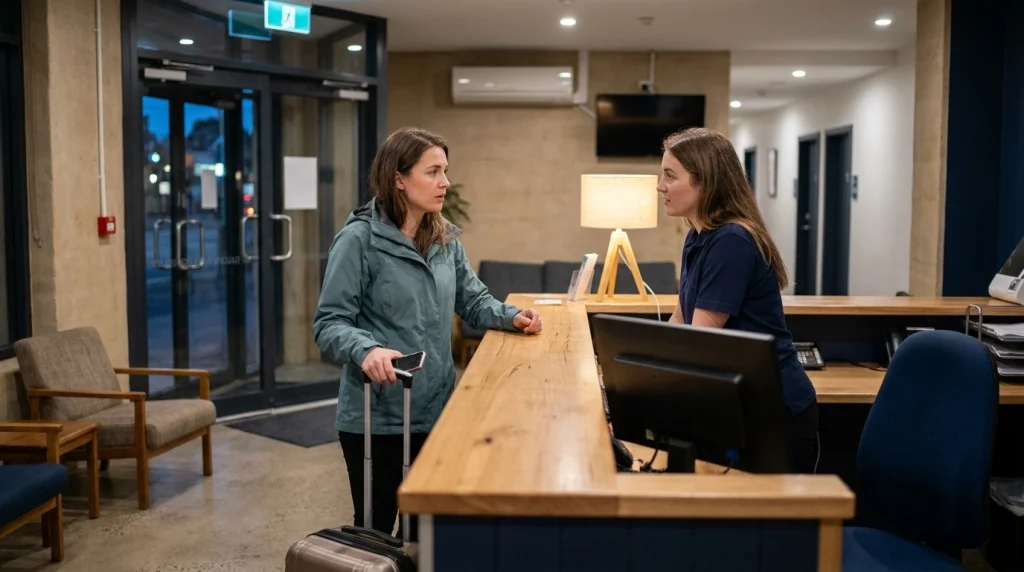
If a hostel feels unsafe, move to a safer location, contact appropriate staff, and request assistance. Leave immediately or call emergency services if you’re in danger.
You don’t have to stay in accommodation simply because you’ve already paid. Your immediate safety takes priority over an unused booking.
Recognize hostel safety warning signs
Not every inconvenience is an emergency. However, some problems warrant quick action.
- Someone repeatedly enters your sleeping area without permission.
- Locks are broken and staff refuse to address them.
- Guests make threats or engage in unwanted touching.
- Staff dismiss serious harassment complaints.
- Unauthorized visitors can freely enter dormitories.
- Emergency exits are obstructed.
- You notice signs of possible unauthorized surveillance.
Keep in mind that an uncomfortable atmosphere and immediate danger require different responses. Either can justify moving elsewhere.
What should you do after harassment?
Harassment can include unwanted sexual comments, persistent following, threats, or physical contact. Respond according to the situation and your immediate safety needs.
- Get somewhere safer: Move to reception, a staffed public space, or another secure location.
- Contact appropriate help: Notify trusted staff or emergency services if necessary.
- Request practical protection: Ask for a room change, removal of an unauthorized person, or assistance leaving.
- Document what happened: Record times, messages, and relevant details when safe.
- Consider an official report: Police, medical services, or consular officials may be appropriate depending on the incident.
If someone has assaulted you, your immediate health and safety come first. Medical care and local specialist support may be available.
You can also contact your embassy or consulate for information about local services. Their ability to intervene depends on the country and circumstances.
How do you change hostels safely?
Find suitable alternative accommodation before announcing your departure when circumstances allow. Prioritize a safe way to reach it.
If danger is immediate, leave without waiting to resolve payment disputes. Collecting every belonging is less important than reaching safety.
Once secure, you can contact the booking platform about complaints, refunds, and documentation. Keep screenshots of any relevant correspondence.
Build an emergency contact plan
Before traveling, save several contacts in both your phone and an accessible backup. This reduces dependence on one person or device.
- Local police, ambulance, and emergency service numbers
- Your hostel’s reception and emergency contact
- A trusted family member or friend
- Your embassy or consulate, if applicable
- Your travel insurance assistance number
- A second accommodation option
For U.S. citizens, the official international travel portal provides country-specific resources and embassy information.
Pro tip: Confirm local emergency numbers through an official government or destination authority. Emergency numbers differ by country, and some services may not support English.
Section takeaway: You can change rooms, report concerns, or leave a hostel. Prioritize immediate safety, then deal with documentation and refunds afterward.
Frequently Asked Questions About Women’s Hostel Safety
Is it safe for a woman to stay in a hostel alone?
Yes, staying in a hostel alone can be a reasonable option for women. Choose properties with good recent reviews, secure entrances, individual lockers, and responsive staff. Safety varies between hostels, so check the specific property rather than assuming every hostel follows the same standards.
Should a solo female traveler choose a female-only dorm?
A female-only dorm can offer additional privacy and peace of mind. However, it doesn’t guarantee safety. Compare room security, overall hostel management, staff availability, and guest reviews before booking. A secure mixed dorm may be preferable to a poorly managed female-only room.
How do you protect yourself from theft in a hostel?
Use a secure locker for valuables, bring a compatible padlock, and avoid leaving electronics unattended. Carry only necessary cash during outings and store backup funds separately. Check that doors and lockers work when you arrive, then report faults promptly.
Is sleeping on the top bunk safer for women?
There is no reliable general rule that a top bunk is safer than a lower bunk. Bed position may affect privacy, comfort, and ease of leaving the room. Choose a bunk that suits your mobility and preferences while prioritizing overall room security.
What should a woman do if a male roommate makes her uncomfortable?
Set boundaries if you can do so safely, and contact hostel staff when behavior continues or becomes threatening. Ask for another room or leave if necessary. For unwanted touching, threats, or immediate danger, prioritize getting to safety and contacting appropriate emergency services.
Can you leave a hostel in the middle of the night?
Generally, you can leave a hostel at any time, although building access and checkout procedures vary. If you feel threatened, move somewhere safe first. Contact reception or emergency services if needed, and resolve bookings or payment questions after reaching safety.
Are hostel lockers enough to keep valuables safe?
Working lockers offer useful protection against casual theft, but no storage method is completely secure. Use a reliable lock, keep combinations private, and avoid storing unnecessary valuables. Ask whether the hostel has a staffed safe for important items and check applicable storage policies.
Final Thoughts: Stay Confident, Prepared, and Aware
Knowing how a woman can stay safe in a hostel isn’t about expecting danger everywhere. It’s about making informed choices before problems arise.
Start by booking carefully, checking the room, securing your belongings, and protecting your boundaries. Keep an alternative accommodation option available when possible.
Hostels can offer affordable stays, new friendships, and memorable solo travel experiences. The goal is to enjoy those opportunities while maintaining control over your personal safety.
Before your next trip, save this checklist and review your hostel’s security arrangements. A little preparation can make your first night feel far less uncertain.