How Can a Solo Female Traveler Avoid Pickpockets? A Practical Safety Guide
Quick Answer
A solo female traveler can avoid pickpockets by carrying a secure crossbody bag, keeping valuables in separate places, and staying alert in crowded spaces. Keep your phone and wallet out of easy reach, especially on public transportation. The U.S. State Department’s advice for women travelers also highlights the importance of caution on crowded buses and trains.
Six simple ways to prevent pickpocketing
- Secure your bag: Wear a zipped crossbody bag in front of your body when crowds become dense.
- Split your money: Carry daily spending cash and keep emergency funds somewhere separate.
- Protect your phone: Avoid leaving it on restaurant tables or in open pockets.
- Watch distractions: Be cautious when strangers crowd, bump, or approach you unexpectedly.
- Plan your route: Check directions before entering busy stations or unfamiliar streets.
- Prepare a backup: Save document copies and emergency contacts somewhere accessible if belongings disappear.
One rule worth remembering
- Never carry every payment method, identification document, and backup option together in one easily stolen bag.
Wondering how a solo female traveler can avoid pickpockets without feeling nervous throughout her trip? The answer lies in a few consistent habits, not constant suspicion.
I prefer a simple approach to solo female travel safety: protect the essentials, recognize common distractions, and prepare for unexpected problems. This guide explains what works before departure and while exploring unfamiliar places.
In This Guide
- Why Do Solo Female Travelers Need to Watch for Pickpockets?
- How Should You Carry Your Money, Phone, and Passport?
- What Are the Most Common Pickpocket Tricks?
- How Can You Avoid Pickpockets in Crowded Places?
- What Should You Prepare Before Your Solo Trip?
- What Should You Do If You Get Pickpocketed?
- Frequently Asked Questions
Why Do Solo Female Travelers Need to Watch for Pickpockets?
Solo travelers need to protect their belongings because there may be no companion watching their bags during everyday distractions. Pickpockets exploit opportunities rather than following one universal target profile.
Pickpocketing means stealing something directly from someone’s clothing, pocket, or belongings without their immediate awareness. It differs from robbery, which involves force or threats.
This distinction matters because prevention often involves controlling access to your belongings. You don’t need to confront everyone who comes close.
Where does pickpocketing commonly happen?
Pickpocketing opportunities often increase when people stand close together or focus on something other than their possessions. Tourist attractions and transportation hubs can create these conditions.
- Busy metro stations: Crowded platforms and train doors can limit personal space.
- Popular landmarks: Visitors concentrate on taking photos and admiring the scenery.
- Street markets: Browsing stalls and handling cash divide your attention.
- Festivals and events: Large crowds make unexpected contact less noticeable.
- Restaurant terraces: Unattended phones and bags can become easy targets.
- Transportation queues: Travelers manage luggage, tickets, and boarding instructions simultaneously.
These locations aren’t automatically dangerous. They simply deserve a more deliberate approach to securing your belongings.
Does traveling alone increase your risk?
Traveling alone doesn’t automatically make someone an easier target. However, managing directions, tickets, luggage, and payments independently can divide your attention.
Imagine arriving at a busy Barcelona metro station with your suitcase. You’re checking the platform, reading signs, and watching the departure display.
That is when a simple bag routine becomes useful. Before entering the crowd, put your phone away and move your zipped bag to the front.
As of 2026, official travel guidance continues to flag crowded public spaces as locations where petty theft may occur. Risks still depend on the destination, neighborhood, and circumstances.
Pro tip: Check your destination’s current security information through the U.S. State Department travel advisories or your own government’s equivalent service.
Section Takeaway: Your goal is to reduce easy opportunities for theft, not to treat every stranger as a threat.
How Should You Carry Your Money, Phone, and Passport?
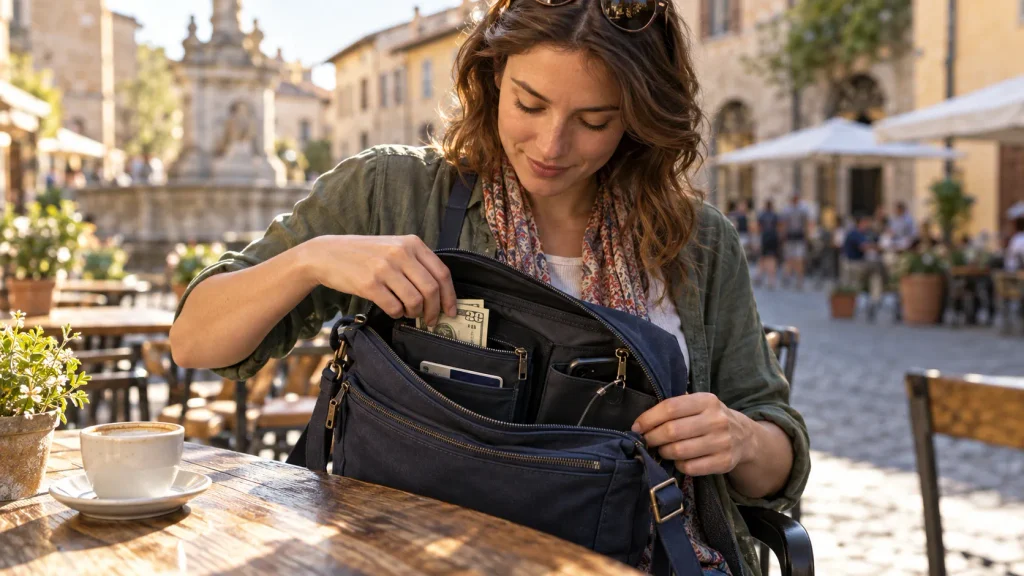
The safest practical approach is to keep essentials secured, limit what you carry, and separate backup items. A secure bag helps, but your daily habits matter just as much.
Choose a bag that stays close to your body
For everyday sightseeing, I favor a compact crossbody bag with a reliable zipper. It keeps my essentials close without requiring constant adjustment.
A good travel bag should make unauthorized access more difficult without making normal access frustrating.
- Closed compartments: Use zipped pockets rather than open-top sections.
- Comfortable strap: Choose a bag you can wear across your torso.
- Front-facing position: Move the bag forward in crowds or queues.
- Inner pockets: Keep payment cards away from the main opening.
- Practical size: Carry only what you’ll use during the outing.
Locking zippers and slash-resistant materials may add protection. However, no bag is completely theft-proof.
A backpack can still work for sightseeing. In tightly packed crowds, keep valuable items away from outer pockets and consider moving the backpack forward.
Never keep all your money in one place
Separating financial essentials creates a backup if one pocket or bag is stolen. I recommend carrying only your estimated daily cash requirement.
For example, on a day with a planned $40 cash budget, you might keep $25 accessible and $15 secured elsewhere. Your actual amount should reflect local costs and payment options.
- Keep your daily spending cash in a closed inner compartment.
- Store a backup bank card separately from your main wallet.
- Leave unnecessary cards in secure accommodation storage.
- Avoid displaying a large amount of cash while paying.
- Use bank notifications to spot unauthorized transactions quickly.
Separate storage reduces the chance of losing everything together. Still, only leave valuables behind when your accommodation offers storage you consider trustworthy.
Protect your phone without losing easy access
Your phone is more than a camera. It may contain navigation, booking confirmations, payment apps, and access to important accounts.
I avoid placing mine in a loose jacket pocket or on a café table near passing pedestrians. I also stop walking before checking complicated directions.
- Enable a strong screen lock and automatic locking.
- Activate your phone’s device-finding features before departure.
- Set up cloud backups for important photos and documents.
- Keep the device inside a zipped compartment when not using it.
- Consider a phone tether where practical, without relying on it as complete protection.
A phone tether may help prevent an accidental drop or opportunistic grab. However, it must not create an injury risk if someone pulls forcefully.
Should you carry your passport everywhere?
Carry your original passport when local law or your circumstances require it. Otherwise, consider leaving it in genuinely secure storage and carrying an accepted copy.
Requirements vary between countries, including whether visitors must carry original identification. Check the rules before deciding.
Keep encrypted digital copies and a separate backup available. A passport photo alone doesn’t replace a legal travel document.
Comparison: Which travel storage option works best?
| Storage option | Best use | Main limitation |
|---|---|---|
| Zipped crossbody bag | Daily sightseeing essentials | Can still be opened or snatched |
| Under-clothing money belt | Backup cash and documents | Inconvenient for frequent payments |
| Secure inner clothing pocket | One backup card or small cash reserve | Limited carrying capacity |
| Small daypack | Water, clothing, and larger supplies | Outer pockets can be difficult to monitor |
| Secure hotel storage | Items not needed during the day | Security and access vary by property |
For most sightseeing days, a zipped crossbody bag and separate emergency reserve form a practical combination. You don’t need expensive equipment to develop good habits.
Section Takeaway: Protect your daily essentials while keeping at least one independent way to pay, identify yourself, or seek help.
What Are the Most Common Pickpocket Tricks?
Pickpockets may use distractions, crowding, or staged interactions to divert attention from bags and pockets. Recognizing these situations helps you respond without panic.
Not every unexpected interaction signals a scam. Focus on behavior and your belongings rather than judging people by appearance.
The accidental bump or crowding trick
Someone bumps into you while another person may reach toward an accessible pocket. Crowded transport doors can make this difficult to notice.
Keep your belongings zipped before entering dense crowds. If you’re bumped, move toward a safer position and check your possessions discreetly.
The spilled drink or cleaning distraction
A stranger may spill something on your clothing and offer to help clean it. The interaction can distract you while another person approaches your bag.
Decline unnecessary assistance politely. Move to a staffed location where you can clean up without exposing your belongings.
The map, petition, or clipboard distraction
Someone may hold a document close to your body while requesting directions, signatures, or donations. The document can obstruct your view of your bag.
Maintain a comfortable distance and keep your possessions closed. You’re free to decline and continue walking.
The staged argument or public commotion
A loud disagreement or unusual street performance can attract attention. Opportunistic thieves may exploit the crowd even when they didn’t arrange the event.
Enjoy public entertainment from a position where you can move freely. Keep your bag secured while watching.
The dropped-object distraction
Someone may drop coins or another small object near you, prompting you to bend down. Your attention then shifts away from your belongings.
Helping someone isn’t inherently unsafe. Secure your bag before assisting and avoid allowing strangers to crowd around you.
How should you react to suspicious behavior?
Protect your personal space and leave when an interaction becomes uncomfortable. You don’t need to accuse someone or prove their intentions.
- Step away from unnecessary physical contact.
- Move into a visible, staffed public area.
- Keep your hands and attention near your valuables.
- Decline requests that involve handing over your phone or wallet.
- Ask staff or security for assistance if someone persists.
If an incident becomes threatening, prioritize getting away over protecting property. Never chase or physically confront a suspected thief.
Section Takeaway: A polite refusal, increased distance, and a secured bag are often more useful than trying to identify every possible scam.
How Can You Avoid Pickpockets in Crowded Places?
Secure everything before entering a crowded area, then reduce how often you open your bag. This is especially useful on trains, buses, at tourist landmarks, and in markets.
On public transportation
The moments before boarding and after arriving deserve extra attention. People are moving quickly while checking tickets, doors, and platforms.
Before approaching the vehicle, follow this routine:
- Put your ticket or transit card somewhere easy to reach.
- Close your wallet and store your phone securely.
- Move your crossbody bag toward the front of your body.
- Keep valuable items away from backpack outer pockets.
- Choose a position where you can maintain reasonable awareness of your belongings.
- Check that you have your essentials after leaving the vehicle.
Don’t stand near a door solely because it seems convenient. Consider the available space, your mobility, and the safest place to travel.
On overnight transportation, take additional care with passports and payment methods. Avoid leaving important items loose while sleeping.
At markets and tourist landmarks
Markets invite browsing, photographing, and comparing prices. I find it easier to organize my spending money before entering rather than repeatedly searching through my bag.
If you want to photograph a landmark, stop somewhere with adequate space. Avoid balancing a phone, map, and open handbag simultaneously.
- Keep small purchase money in an accessible inner pocket.
- Close your bag after every transaction.
- Avoid setting your phone down while examining merchandise.
- Move away from dense crowds before reorganizing belongings.
- Use official ticket offices or trusted ticketing platforms where available.
In restaurants, cafés, and outdoor seating
A quiet meal can create its own distractions. Travelers sometimes place bags behind chairs or phones along the edge of tables.
Keep your bag closed and within sight or secure control. Avoid hanging it where someone passing can easily take it.
When ordering or paying, return your wallet directly to its designated compartment. Consistency makes missing items easier to notice.
When using maps or navigation apps
Standing in the middle of a busy sidewalk with your phone exposed can make navigation stressful. I prefer checking the next few turns before leaving a quiet spot.
Offline maps can help when mobile service disappears. They also reduce the need to stop repeatedly and search for directions.
In some cities, phone snatching from passing vehicles is a separate concern from pickpocketing. Keep a comfortable distance from moving traffic while using your device.
Section Takeaway: Prepare before entering crowded spaces, minimize unnecessary bag opening, and check your belongings after busy transitions.
What Should You Prepare Before Your Solo Trip?
Prepare for theft before traveling by creating independent backups for payments, documents, communication, and accommodation details. This limits disruption if something disappears.
Make an essential backup kit
Your backup kit doesn’t need to be expensive or complicated. It should help you contact someone, identify yourself, and reach a safe place.
- A separate payment card, if available.
- A modest emergency cash reserve.
- Secure digital copies of your passport and important bookings.
- Accommodation address and contact number saved offline.
- Travel-insurance details and the assistance phone number.
- A written or offline-accessible list of emergency contacts.
Store the backup away from your main wallet. Protect digital copies with secure accounts rather than leaving sensitive documents openly accessible.
For a longer trip, an inexpensive backup phone may also be useful. It needs a charging option and a workable communication plan to provide real value.
Prepare your phone for loss or theft
Start with the assumption that your primary phone could become temporarily unavailable. You should still be able to find your hotel and contact someone you trust.
- Enable remote device location and locking features.
- Back up contacts, photos, and important files.
- Record how to contact your mobile carrier.
- Learn how to recover access to your essential accounts.
- Keep backup authentication or account-recovery methods secure.
- Save essential travel information somewhere separate from the phone.
Two-factor authentication protects accounts, but losing the only device receiving security codes can complicate recovery. Prepare an approved backup method before departure.
Research local risks before arriving
Pickpocket risks differ by destination and neighborhood. A familiar habit from one city may not suit another.
For example, some destinations emphasize crowded-transit theft, while others warn about bag snatching near roads. The official UK foreign travel advice service provides destination-specific safety information.
Check current advisories for your actual destination instead of assuming that every European or Asian city presents identical risks.
Share a practical emergency plan
A trusted contact should know how to reach you if your phone disappears. Sharing your hotel information and major transport bookings can make recovery easier.
You don’t need to send constant updates. A simple communication plan is usually enough.
- Agree on a reasonable check-in schedule.
- Share essential accommodation and transport information.
- Explain what your contact should do if you miss a planned check-in.
- Keep their number accessible offline.
- Know the local emergency number before arrival.
Pro tip: Verify local police and emergency contact information through your destination’s official government resources before saving it.
Section Takeaway: The strongest theft-prevention plan also includes recovery options for the belongings you cannot afford to lose.
What Should You Do If You Get Pickpocketed?
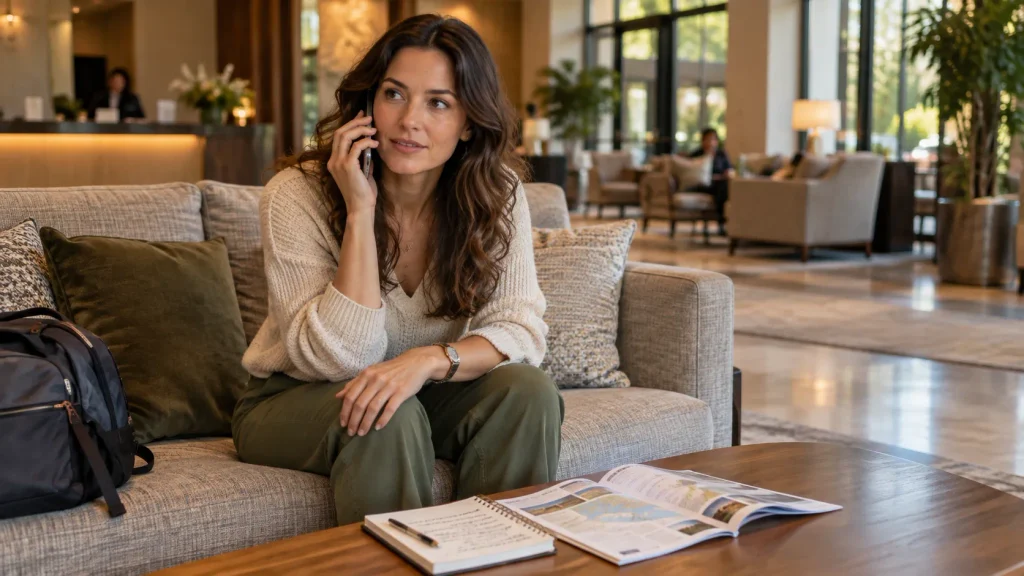
If your belongings are stolen, move somewhere safe, block compromised payment methods, and secure your accounts. Then report the incident and replace essential documents as necessary.
Getting pickpocketed can feel upsetting, especially when you’re alone. Focus on immediate practical decisions rather than trying to recover property through confrontation.
Step 1: Get to a safe location
Move to a staffed shop, hotel, restaurant, or transport office. Avoid following a suspected thief into an unfamiliar or isolated area.
If someone threatens you, prioritize personal safety over possessions. Contact local emergency services when there is an immediate danger.
Step 2: Check exactly what is missing
Identify which items disappeared before taking recovery actions. Your response will differ depending on whether you lost cash, a bank card, a phone, or a passport.
- Check all secure compartments without exposing other valuables.
- Confirm which payment cards are missing.
- Determine whether your phone or identification was taken.
- Review recent transactions when possible.
- Use another device or trusted contact for urgent account access.
Step 3: Freeze stolen cards and secure your phone
Contact your card issuer using an official number or banking app. Lock or cancel affected cards and report suspicious transactions promptly.
If your phone was stolen, use the manufacturer’s official device-recovery service to locate, lock, or erase it when appropriate. Contact your mobile provider about suspending your SIM or service.
Change passwords for exposed accounts where necessary. Consider the effect of remote erasure on device tracking and data recovery before making that choice.
Step 4: Report the theft
Contact local police through an official reporting channel. A police report may help with travel-insurance claims or document replacement.
Record the time, location, missing items, and any available evidence. Avoid guessing details you did not witness.
If your passport was stolen abroad, contact the nearest embassy or consulate for your nationality. Follow its instructions for emergency travel documents.
Step 5: Contact your travel insurer
Insurance coverage varies between policies. Some plans cover certain stolen belongings but apply item limits, deductibles, exclusions, or reporting deadlines.
Before making a claim, check the policy wording and evidence requirements. Don’t assume every lost item qualifies for reimbursement.
Step 6: Rebuild your immediate travel plan
Your next priority is regaining access to safe transportation, accommodation, money, and communication. You may need to adjust your itinerary.
Ask reputable hotel staff or a verified travel service for practical assistance. A small delay is preferable to continuing without essential resources.
The U.S. State Department also provides guidance through its international travel emergencies resources for U.S. citizens needing help overseas.
Section Takeaway: Get safe first, protect financial and digital access second, and handle reporting and replacements once the immediate risk has passed.
Frequently Asked Questions
What is the safest bag for a solo female traveler?
A compact crossbody bag with reliable zippers and inner compartments is a practical choice. Wear it across your torso and keep it in front in crowded places. No bag guarantees protection, so secure habits remain important.
Are money belts safer than regular handbags?
Money belts worn discreetly beneath clothing can help protect backup cash or important documents. They are less convenient for frequent payments, however. Many travelers benefit from using one alongside a secured everyday bag.
Should I carry cash or cards when traveling alone?
Carry a practical mix based on local payment options. Keep a modest amount of cash accessible, use cards where accepted, and store a backup payment method separately. Avoid carrying all your available money in one wallet.
How can I protect my phone from pickpockets?
Keep your phone inside a zipped pocket or bag when you’re not using it. Enable screen locking, device tracking, and backups. Avoid leaving it unattended on tables, especially in busy restaurants and public spaces.
Are tourist areas more dangerous for pickpocketing?
Some busy tourist areas create opportunities for theft because visitors are distracted and crowds are dense. However, the risk varies by destination and specific location. Review current official guidance instead of assuming every popular attraction is unsafe.
What should I do if someone tries to steal my bag?
Prioritize your physical safety. Do not chase the person or fight over your belongings if doing so could cause injury. Move somewhere safe, seek assistance, contact local authorities, and secure any stolen financial or digital accounts.
Can I still enjoy solo travel without constantly worrying about theft?
Yes. Prepare your bag before crowded activities, keep essential backups separate, and stay reasonably aware of your surroundings. Once these habits become routine, you can devote more attention to your experiences instead of repeatedly checking your possessions.
Final Thoughts: Stay Prepared, Not Afraid
Learning how a solo female traveler can avoid pickpockets is mostly about building repeatable habits. Secure your bag, separate essential belongings, and stay aware during crowded transitions.
You don’t need to spend your trip expecting something bad to happen. A few minutes of preparation can make everyday sightseeing more comfortable.
Before your next solo trip, review your bag setup, create a payment backup, and save emergency contact details. Then give yourself permission to explore with confidence.
My favorite travel safety principle is simple: make your essentials harder to steal and your trip easier to recover if something goes wrong.