How Big Can Carry On Backpack Be Find the Perfect Size Guide
Choosing the right size carry on backpack is essential for stress-free travel. This guide explains airline size limits, how to measure your backpack, and offers tips to find the perfect carry on backpack size that fits both your belongings and airline rules.
Key Takeaways
- Carry on size limits vary: Different airlines have different maximum dimensions for carry on backpacks.
- Standard size guideline: Most airlines allow backpacks up to around 22 x 14 x 9 inches (56 x 36 x 23 cm).
- Capacity matters: A good carry on backpack size typically ranges from 20 to 40 liters.
- Check airline policies: Always verify your airline’s specific carry on size limits before traveling.
- Measure your backpack carefully: Include wheels and straps when measuring dimensions.
- Choose lightweight and compressible backpacks: These save space and help you stay within limits.
- Packing smart helps: Efficient packing can maximize carry on use without oversizing your backpack.
How Big Can Carry On Backpack Be? Find the Perfect Size Guide
Traveling with a carry on backpack is convenient, but knowing how big your backpack can be is key. In this guide, you’ll learn everything about carry on backpack sizes, airline restrictions, measuring your backpack, and tips to pick the perfect size. Whether you’re a frequent flyer or an occasional traveler, this guide will help you pack smart and travel light.
Step 1: Understand Airline Carry On Size Restrictions
Each airline sets its own carry on size limits. Most airlines allow a maximum size around 22 x 14 x 9 inches (56 x 36 x 23 cm), but these can vary. Check the airline’s website before booking your ticket to avoid surprises at the gate.
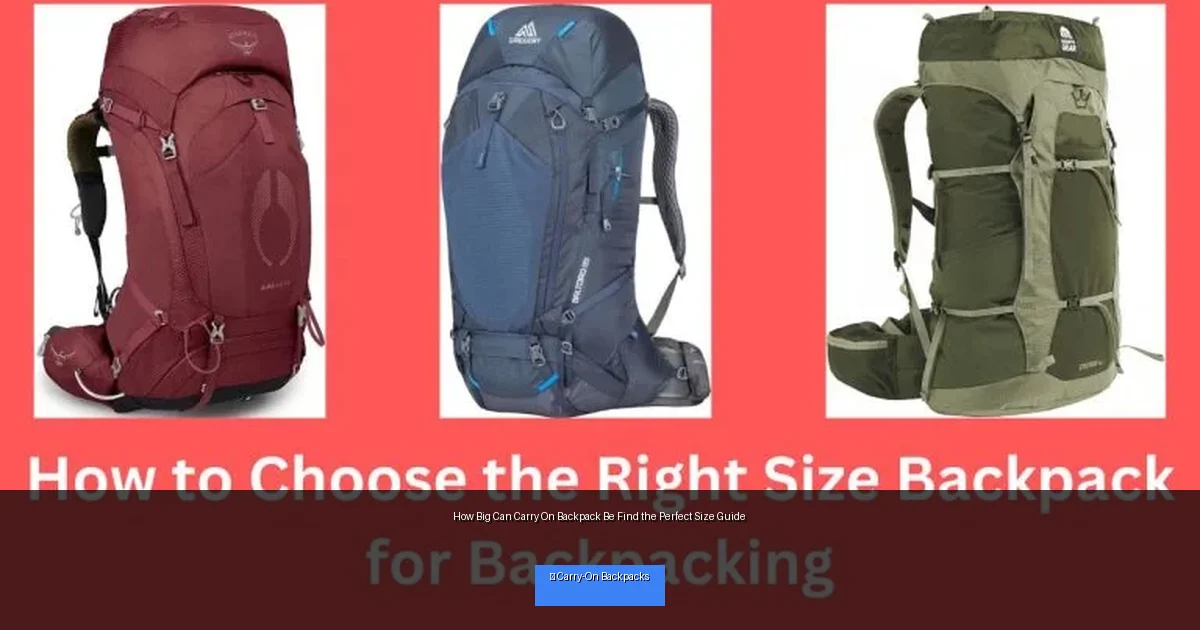
Visual guide about How Big Can Carry On Backpack Be Find the Perfect Size Guide
Image source: finebackpack.com
Common Size Limits
- Domestic US Airlines: Typically 22 x 14 x 9 inches
- International Airlines: Often similar but can be stricter or more relaxed
- Budget Airlines: Usually smaller maximum sizes
Remember, these dimensions include wheels, handles, and any external pockets or straps. So, measuring your backpack accurately is essential.
Step 2: Measure Your Carry On Backpack Correctly
To know if your backpack fits the rules, measure it properly.
How to Measure
- Height: Measure from the bottom to the top, including wheels or feet.
- Width: Measure the widest point side to side, including pockets.
- Depth: Measure front to back at the thickest point.
Use a tape measure and record your backpack’s dimensions. Compare these with your airline’s limits. If your backpack is exactly on the limit, consider a slightly smaller size to avoid issues.
Step 3: Choose the Right Capacity for Your Carry On Backpack
Backpack size is also about volume, which airlines don’t always specify but affects your packing.
Typical Carry On Backpack Volumes
- 20-30 liters: Ideal for minimalist travelers or short trips.
- 30-40 liters: Great for longer trips or if you need more gear.
- Over 40 liters: Usually too large for carry on and better as checked luggage.
Choosing the right volume depends on your trip length and packing style. Remember, bigger backpacks are harder to fit in overhead bins.
Step 4: Find Carry On Backpacks Designed to Meet Size Limits
Many brands design carry on backpacks specifically to meet airline size rules. Look for backpacks labeled as “carry on size” or “airline compliant.”
Features to Look For
- Lightweight materials: Helps reduce your carry weight.
- Compression straps: To tighten the pack and reduce bulk.
- Multiple compartments: For organized packing.
- Durable zippers and fabrics: For long-lasting use.
Popular carry on backpacks come from brands like Osprey, Nomatic, and Patagonia, known for quality and size-appropriate designs.
Step 5: Pack Smart to Maximize Carry On Backpack Size
Even the perfect size backpack won’t help if you don’t pack efficiently.
Packing Tips
- Roll your clothes: Saves space and reduces wrinkles.
- Use packing cubes: Keep things organized and compact.
- Limit bulky items: Wear heavy clothes on the plane.
- Keep liquids in travel-sized containers: Follow TSA rules.
- Distribute weight evenly: Makes carrying easier.
Smart packing helps you fit more without exceeding size limits.
Troubleshooting: What If Your Backpack Is Too Big?
Sometimes, your favorite backpack might be slightly too large for carry on rules. Here’s what to do:
- Adjust straps and compression: Try tightening straps to reduce size.
- Remove external attachments: Like side pockets or straps that add bulk.
- Use a smaller backpack: Consider downsizing for strict airlines.
- Check gate agent policies: Some are flexible, but don’t rely on it.
- Be prepared to check your bag: Sometimes unavoidable, so pack essentials separately.
Conclusion: Finding Your Perfect Carry On Backpack Size
Knowing how big a carry on backpack can be is the first step to easy travel. By checking airline size limits, measuring your backpack carefully, choosing the right volume, and packing smart, you can find the perfect carry on backpack size for your trip. Remember, the goal is to travel light, stay within guidelines, and enjoy hassle-free boarding. Happy travels!