
What Should a Solo Female Traveler Look for in Hotel Reviews?
Quick Answer
When choosing accommodation, a solo female traveler should look beyond star ratings and focus on recent, detailed reviews about personal safety, neighborhood conditions, room security, staff behavior, and late-night access. Compare multiple independent reviews, pay particular attention to reports from women who traveled alone, and verify important concerns with the property before booking. The U.S. Department of State’s lodging safety guidance is a useful additional resource.
What to check first
- Personal safety: Look for specific reports about unwanted visitors, harassment, theft, or staff responses to safety concerns.
- Neighborhood: Check comments about lighting, transport links, nighttime activity, and the walk from the nearest station.
- Room security: Prioritize working locks, controlled guest access, secure windows, and functioning entry systems.
- Staff and reception: Look for dependable check-in, respectful service, and assistance when guests report problems.
- Review quality: Favor recent, detailed accounts and repeated patterns over isolated praise or complaints.
- Practical comfort: Check noise, cleanliness, Wi-Fi, transport costs, and whether the property matches its listing.
Before you book
- Read recent negative reviews, verify the hotel’s location on a map, and contact the property directly about any unresolved safety concerns.
Choosing a hotel alone means making decisions that affect more than your budget or comfort. You also need to feel confident arriving, entering your room, and returning after a long day exploring somewhere unfamiliar.
When researching accommodation, I would treat hotel reviews as clues rather than guarantees. This guide explains how to spot meaningful safety information, assess neighborhood concerns, recognize unreliable reviews, and compare properties without letting a high rating make the decision for you.
In This Guide
- Which safety details matter most in hotel reviews?
- How can you evaluate a hotel’s neighborhood?
- How can you tell whether hotel reviews are reliable?
- What should you check about room comfort and service?
- How should you compare hotels before booking?
- Which review red flags should make you reconsider?
- Frequently asked questions
Which safety details matter most in hotel reviews?
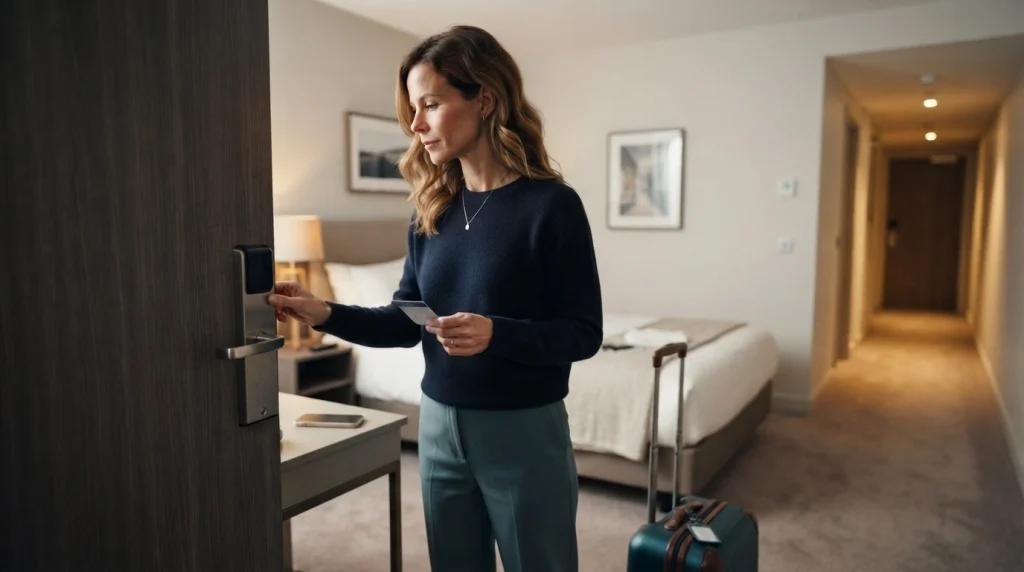
The most useful hotel reviews describe specific safety features and real problems, not just whether a guest felt comfortable. For a woman traveling alone, those details help you assess how the property manages access, privacy, and unexpected situations.
1. Room locks and controlled access
Look for comments about whether bedroom doors lock properly, exterior entrances stay secure, and strangers can enter guest-only areas without difficulty. Reviews that mention broken locks, doors that do not close, or unsecured access deserve careful attention.
Check whether reviewers describe the same issue repeatedly. A single report could reflect a temporary fault, but several recent accounts describing an unresolved security problem suggest a pattern worth investigating.
2. Reception and staff responsiveness
Hotel staff can make a meaningful difference when something goes wrong. Look for reviews describing how reception handled lost keys, room changes, unwanted visitors, or complaints about harassment.
A friendly greeting is nice, but effective problem-solving matters more. Reviews that explain what happened, how staff responded, and whether the issue was resolved provide more useful evidence than vague comments about excellent service.
3. Privacy and unwanted access
Search reviews for reports of staff entering rooms without permission, unclear housekeeping procedures, or strangers approaching guests in corridors. Also check whether room doors have functioning secondary locks where appropriate.
For shared accommodation, read comments about dorm access, locker security, bathroom arrangements, and whether guests can choose women-only rooms. A women-only dorm may suit your preferences, but it does not automatically guarantee better security.
4. Emergency preparedness
Look for information about accessible emergency exits, fire alarms, and staff availability outside normal daytime hours. Reviewers may mention whether reception answered calls promptly or helped guests during an unexpected problem.
Reviews cannot reliably confirm that every safety system works today. Contact the property if fire precautions, room security, or overnight assistance remain unclear.
Section takeaway: Prioritize specific, repeated reports about access, privacy, and staff responses over general statements that a hotel feels safe.
How can you evaluate a hotel’s neighborhood?
A hotel’s surroundings matter as much as its interior because you need to travel between the property and the places you plan to visit. Read reviews for clues about nighttime conditions, transport access, and the practical experience of arriving with luggage.
Look beyond the hotel’s address
A hotel can advertise a central location while sitting on a poorly lit side street or far from the transport stop you expected to use. Reviews can reveal these differences between the listing and the actual arrival experience.
Look for descriptions of the immediate surroundings, especially:
- Street lighting: Do reviewers mention dark entrances, poorly lit streets, or difficult walks after sunset?
- Transport access: How long does it take to reach a train station, bus stop, or reliable taxi pickup point?
- Nearby essentials: Are restaurants, convenience stores, pharmacies, and other useful services within a reasonable distance?
- Nighttime atmosphere: Do reviews mention persistent noise, deserted streets, aggressive solicitation, or uncomfortable approaches?
- Arrival logistics: Can a vehicle reach the entrance, and is the reception easy to identify after dark?
One review describing an uncomfortable walk is a reason to investigate, not proof that an entire neighborhood is dangerous. Look for consistent reports and compare them with reliable local information.
Check the route you will actually use
Imagine arriving at 10 p.m. with a suitcase after a delayed flight. A hotel five minutes from a station may be more practical than a cheaper property that requires a long walk through unfamiliar streets.
Open a map and examine the route from the station or airport transfer point to the hotel entrance. Check the surrounding streets, available transport, and realistic travel time rather than relying on the listing’s general claim of being centrally located.
Consider your planned activities, too. If you expect to return from restaurants or events late, choose accommodation with a manageable route home and dependable transport options.
Understand the difference between perception and evidence
Reviewers use words such as “sketchy,” “rough,” and “unsafe” differently. One person might dislike a busy nightlife district, while another might feel uncomfortable because the streets become quiet after businesses close.
Give more weight to explanations of what happened, where it happened, and when. For destination-specific concerns, compare reviews with official travel advice and trusted local sources.
Pro tip: Check the U.S. Department of State’s crime prevention guidance alongside current destination-specific advice. These resources can help you identify risks that individual hotel reviews may miss.
Section takeaway: Judge the hotel’s immediate surroundings and your likely travel routes, not just its neighborhood name or distance from a tourist attraction.
How can you tell whether hotel reviews are reliable?
Reliable hotel reviews usually contain concrete details, reflect a range of guest experiences, and help you understand what to expect. No single rating or review platform can prove that a property is safe, so compare evidence from several sources.
Prioritize recent reviews
Start with reviews from the past three to six months when available, then look further back to identify recurring problems. Recent feedback can reveal changes in management, building maintenance, neighborhood conditions, or service quality.
Older reviews still have value when they describe structural issues or long-running problems. However, do not assume that a complaint from several years ago accurately describes the property’s current condition.
Look for detailed accounts from solo women
Reviews from women traveling alone can offer helpful context about privacy, staff interactions, nighttime arrivals, and the experience of returning to the hotel independently. They may also mention concerns that guests traveling in groups did not notice.
For example, compare these two hypothetical reviews:
- Less useful: “Nice hotel, great location, would stay again.”
- More useful: “I arrived alone after 9 p.m., reception was staffed, and my key card worked on the guest entrance. The walk from the station was about eight minutes, although the last street was poorly lit.”
The second review gives you practical details to investigate. Still, a reviewer’s gender or travel style does not automatically make their opinion accurate, so check for corroborating accounts.
Identify patterns across different reviews
Repeated details are often more useful than dramatic one-off complaints. If several unrelated guests mention broken room locks, unanswered calls, or uncomfortable interactions with staff, investigate those concerns before booking.
Apply the same principle to positive feedback. Multiple recent reviewers independently describing attentive reception staff or well-maintained rooms provide more context than a collection of brief five-star ratings.
Recognize potentially misleading reviews
Be cautious when reviews contain unusually generic praise, repeated wording, or claims that seem disconnected from the actual property. A sudden cluster of similar reviews or a profile with little credible reviewing history can also warrant closer inspection.
Extremely negative reviews deserve the same scrutiny as excessively positive ones. A complaint about a minor inconvenience does not necessarily indicate a safety problem, while a detailed report of a serious incident should not be dismissed simply because most guests rated the hotel highly.
Check whether the property responds to complaints with specific explanations and reasonable solutions. A thoughtful response can indicate that management takes feedback seriously, although it cannot prove that the underlying problem has been fixed.
Section takeaway: Trust consistent, specific evidence more than star averages, emotional language, or the confidence of a single reviewer.
What should you check about room comfort and service?
Comfort affects your ability to rest, manage your belongings, and feel at ease while traveling independently. The best hotel reviews help you distinguish minor inconveniences from problems that could affect your safety, budget, or itinerary.
Cleanliness and maintenance
Look for recent descriptions of clean bathrooms, fresh bedding, functioning air conditioning or heating, and well-maintained common areas. Repeated complaints about pests, dampness, or neglected rooms deserve attention.
Notice whether reviewers describe a one-time housekeeping mistake or a persistent maintenance problem. A hotel that responds promptly to an isolated issue may still be worth considering, but recurring unresolved complaints deserve more weight.
Noise and sleep quality
Noise can become a practical safety concern when it leaves you exhausted or makes you reluctant to return to your accommodation at night. Read comments about street traffic, bars, elevators, thin walls, and late-night activity in shared spaces.
If you are a light sleeper, check whether guests recommend rooms away from elevators, busy roads, or event spaces. Request a suitable room before arrival rather than assuming the hotel will accommodate the request automatically.
Internet, communication, and essential amenities
Reliable Wi-Fi can help you check transport options, communicate with people at home, and access booking details. If you depend on internet access, prioritize recent reports about connection reliability rather than simply checking whether Wi-Fi appears on the amenities list.
Other useful details include:
- Reception hours: Can you check in if your flight arrives late, and whom can you contact overnight?
- Air conditioning or heating: Does the room remain comfortable during the season you plan to visit?
- Water and bathroom facilities: Do guests report reliable hot water and functioning plumbing?
- Luggage storage: Can you securely store your bags before check-in or after checkout?
- Accessibility: Are elevators, ramps, and other facilities available if you need them?
For important requirements, contact the hotel directly. Reviews may be outdated, and an amenity listed online does not guarantee that it will be available during your stay.
Check the true cost of staying there
A low nightly rate can become less attractive when you add transport costs, mandatory fees, or paid amenities. Reviews can help you identify unexpected charges, although the hotel’s current booking terms should determine your actual budget.
For a practical comparison, calculate the total cost of your intended stay, including transportation to the places you plan to visit. A slightly more expensive hotel may offer better value if it reduces late-night travel or makes daily journeys easier.
Section takeaway: Assess cleanliness, sleep quality, essential amenities, and the full cost of the stay alongside security concerns.
How should you compare hotels before booking?
Compare hotels using the same criteria rather than choosing whichever property has the highest score or lowest price. A simple checklist helps you identify which accommodation best matches your itinerary, comfort needs, and personal safety priorities.
Use a consistent comparison table
The following example shows how to assess two hypothetical properties without pretending that either one has been independently verified. The ratings and details are illustrative, not real hotel listings.
| What to compare | Hotel A | Hotel B |
|---|---|---|
| Illustrative guest rating | 4.7/5 | 4.4/5 |
| Recent security feedback | Several unresolved access concerns | Recent reports describe controlled entry |
| Late-night arrival | Reception hours unclear | Guests report staffed reception |
| Walk from transit | Longer walk; lighting concerns reported | Shorter walk; route still needs checking |
| Price per night | $75 | $88 |
| Decision | Investigate safety concerns before booking | Potentially preferable if concerns are verified |
In this hypothetical example, Hotel B costs $13 more per night. For a three-night stay, that difference is $39 before taxes and fees, which may be worthwhile if its advantages hold up under further checks.
However, a higher price or lower rating does not determine safety. Verify the concerns, compare the total booking cost, and decide which trade-offs you can reasonably accept.
Check more than one review platform
Read reviews on the platform where you plan to book, then compare them with another established source when possible. Differences in feedback can reveal details worth investigating, but ratings from different websites may use different methods and should not be compared as if they were identical.
Check the hotel’s official website for current reception hours, contact details, facilities, and cancellation conditions. If an important safety detail remains unclear, ask a direct question and retain the response.
Match the hotel to your itinerary
Your best option depends partly on how you plan to travel. A hotel near public transport may suit a city break, while a property with reliable parking and clear arrival arrangements may work better for a road trip.
Before deciding, consider these questions:
- Will I arrive during daylight or late at night?
- How will I get from the airport or station to the entrance?
- Will I return after dark, and what transport options will be available?
- Can I contact someone at the property if plans change?
- Does the total price leave enough room in my travel budget for safe, convenient transport?
As of 2026, the same basic approach remains useful across booking platforms: combine current guest feedback with direct verification instead of treating an online score as a safety certificate.
Section takeaway: Choose the property with the strongest overall evidence for your needs, not simply the highest rating or lowest price.
Which review red flags should make you reconsider?

Repeated, unresolved safety complaints deserve more attention than minor inconveniences or a single disappointing experience. If reviews raise concerns about access, harassment, serious maintenance problems, or management’s response to incidents, investigate before committing your money.
Red flags worth investigating
- Repeated security failures: Several recent guests report broken locks, unsecured entrances, or unauthorized access.
- Serious complaints about staff: Multiple accounts describe harassment, inappropriate room entry, or dismissive responses to safety reports.
- Unclear arrival arrangements: Guests describe being stranded outside, unable to contact reception, or surprised by restricted check-in hours.
- Persistent neighborhood concerns: Independent reviews repeatedly describe the same problematic route or late-night access issue.
- Unresolved cleanliness or maintenance issues: Recent guests repeatedly mention pests, unsafe fixtures, or other problems that management has not addressed.
- Confusing payment or cancellation terms: Guests describe unexpected charges or difficulty resolving booking disputes.
These warning signs are reasons to investigate, not proof of wrongdoing. Look for corroboration, check whether management resolved the issue, and contact the property when appropriate.
Ask the hotel direct questions
If you cannot find clear answers in reviews, contact the property through its verified website or booking platform. Keep your questions short and specific so you can assess the response.
- Is reception staffed at the time I expect to arrive?
- Can access to guest-room floors be restricted to authorized guests?
- Do the room doors have functioning locks and secondary security features where available?
- What should I do if I arrive late or need assistance overnight?
- Are the entrance, reception, and route from the nearest transport stop accessible at my arrival time?
Pay attention to whether the hotel answers clearly and consistently. A vague response does not establish that a property is unsafe, but you do not need to book somewhere that leaves important concerns unresolved.
Keep a backup plan
Before traveling, save the address and contact details of your accommodation, confirm your booking, and identify an alternative property in case your plans change. The U.S. Department of State recommends researching lodging carefully and arranging accommodation before arrival.
If you reach a property and discover that the conditions differ substantially from what was promised, prioritize your immediate safety. Contact the booking platform, ask about a room change or cancellation, and arrange alternative accommodation if necessary.
Pro tip: For destination-specific risks, consult official government travel advice and local authorities where appropriate. If you are a U.S. citizen traveling internationally, review the relevant country information and consider enrolling in the Smart Traveler Enrollment Program (STEP).
Section takeaway: You do not need to prove a hotel is dangerous before choosing another one. If important concerns remain unresolved, keep looking.
Frequently asked questions
Should a solo female traveler only book hotels with high ratings?
No. A high rating can reflect cleanliness, friendly service, or good value without addressing personal safety. Read detailed recent reviews about security, staff responsiveness, neighborhood conditions, and nighttime access before deciding whether a hotel meets your needs.
How many hotel reviews should I read before booking?
There is no universal number, but start with around 10–20 recent reviews when available, including both positive and negative feedback. If the property has fewer reviews, inspect each one carefully and seek additional information from another platform or the hotel itself.
Are reviews written by women more useful for solo female travelers?
Reviews from women traveling alone can provide relevant insight into privacy, staff interactions, and nighttime arrivals. However, no reviewer’s identity guarantees accuracy. Compare specific experiences from multiple guests and look for recurring details that you can independently verify.
Is a hotel with 24-hour reception safer?
Twenty-four-hour reception can make late arrivals and unexpected problems easier to manage, but it does not guarantee security. Check whether recent guests describe responsive staff, controlled access, functioning room locks, and effective assistance when concerns arise.
What should I do if hotel reviews mention harassment or theft?
Check whether multiple recent guests describe similar incidents and whether the hotel responded meaningfully. Contact management with specific questions if you are still considering the property. If serious concerns remain unresolved, choose another accommodation rather than relying on the overall rating.
Can I trust hotel reviews that are several years old?
Older reviews can reveal recurring maintenance problems or long-standing location concerns, but they may not reflect current conditions. Prioritize recent feedback, check whether management or ownership has changed, and verify important details directly before booking.
What is the single most important thing to check in a hotel review?
Look for specific, repeated evidence about personal safety and how the hotel responds when guests need help. Then verify the property’s location, access arrangements, and current facilities. A review cannot guarantee your safety, but careful research can help you make a more informed choice.
Choosing accommodation for a solo trip should leave you feeling prepared, not overwhelmed. You do not need a perfect hotel; you need one whose location, security arrangements, service, and price make sense for your plans.
Take a few extra minutes to compare recent reviews, check the route to the entrance, and ask about anything that remains unclear. A thoughtful booking decision can help you spend less time worrying about your accommodation and more time enjoying the journey.
