What Emergency Plan Should a Woman Have for Her First Solo Trip?
Quick Answer
A woman taking her first solo trip should have an emergency plan covering communication, documents, money, medical care, transportation, accommodation, and a clear response if she feels unsafe. Before leaving, review an official international travel checklist, then give one trusted person enough information to act if you miss an agreed check-in.
Your first-trip emergency plan should include:
- Trusted contact: Choose one person who has your itinerary, accommodation details, flight information, and insurance contact.
- Check-in schedule: Agree when you will message and exactly what your contact should do if you disappear.
- Document backups: Keep passport, insurance, booking, and emergency-contact copies separate from the originals.
- Money backup: Carry two payment options and keep emergency cash somewhere separate from your main wallet.
- Medical plan: Know where to seek care, what your insurance covers, and whom to call for assistance.
- Exit plan: Know how you would leave your hotel, neighborhood, or destination if a situation became unsafe.
If you’re wondering what emergency plan a woman should have for her first solo trip, the goal isn’t to prepare for every disaster. You need a simple solo female travel safety system that still works when you’re tired, scared, offline, or missing your phone.
My rule for a first solo trip is simple: never let your phone, wallet, or memory become your only safety plan. Build backups before departure, then keep the plan easy enough to follow under stress.
In This Guide
- What should a first solo trip emergency plan include?
- How should you set up a solo travel check-in plan?
- What documents and money backups should you carry?
- What should your phone, hotel, and transport safety plan cover?
- How should you prepare for a medical emergency?
- What should you do if something goes wrong?
- Frequently asked questions
What Should a First Solo Trip Emergency Plan Include?
A first solo trip emergency plan is a written system explaining how you’ll communicate, access money, replace documents, find medical help, and leave an unsafe situation. It should also tell a trusted person at home when and how to act.
Simple definition: A solo travel emergency plan is your pre-decided response to problems that become harder to solve when you’re alone, stressed, injured, offline, or unfamiliar with the destination.
I think of the plan in three layers: prevent the problem you can prevent, create a backup when prevention fails, and know who takes over when you cannot solve it alone.
Build one emergency information sheet
Create a one-page document before departure. Save it securely on your phone, keep a paper copy, and give a copy to your designated contact.
- Your full itinerary: Flights, train numbers, transfer details, and major travel dates.
- Accommodation: Hotel or hostel names, addresses, phone numbers, and booking details.
- Emergency contacts: Your trusted contact, insurer, bank, airline, accommodation, and relevant embassy or consulate.
- Health information: Allergies, medicines, important medical conditions, and insurance information.
- Document details: Passport number and copies stored securely, separate from the original.
- Local help: The destination’s police, ambulance, fire, and other emergency numbers.
Never assume your usual emergency number works overseas. Emergency numbers differ between countries, so confirm them before you arrive.
Give someone authority to react
Sending your itinerary to your sister, friend, or parent isn’t enough. They need to know what should happen if you miss a check-in.
Your contact should know when to message you, when to call your hotel, and when the situation becomes serious enough to contact local authorities or consular services.
- What time you normally check in
- How much delay is normal
- Where you expect to sleep that night
- Which communication apps you use
- Whether live location is normally enabled
- Who else they should contact
Section Takeaway: Build an emergency system around backups, not fear. One trusted person, one information sheet, and clear escalation instructions solve many first-trip vulnerabilities.
How Should You Set Up a Solo Travel Check-In Plan?
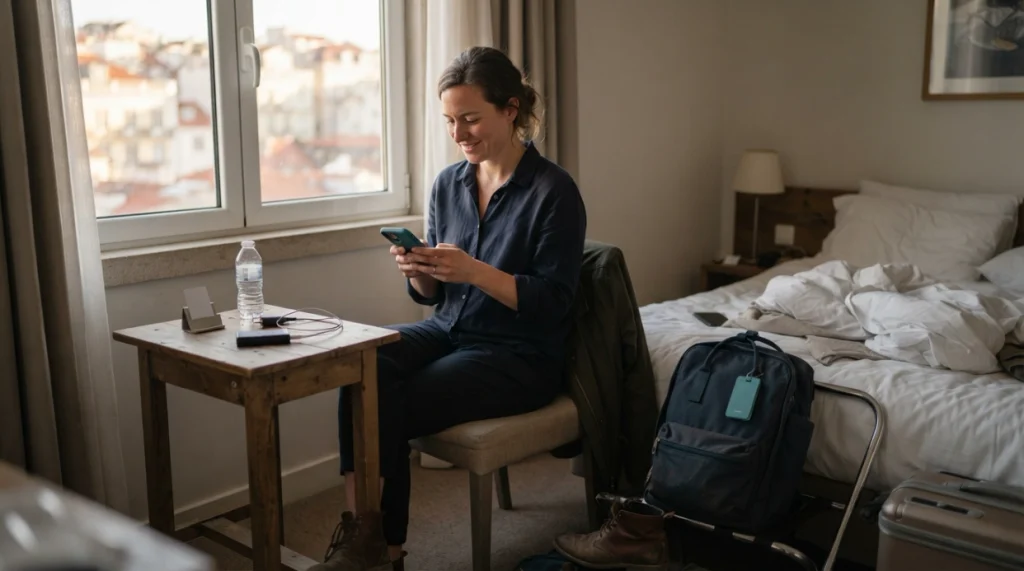
Your check-in plan should be predictable enough that silence means something. It shouldn’t require you to report every coffee stop or museum visit.
For most first-time solo travelers, I prefer event-based check-ins over constant messaging. They protect independence while still creating clear safety markers.
Use milestone check-ins
- Arrival: Message after reaching your destination safely.
- Accommodation: Confirm after checking into your hotel or hostel.
- Long transfer: Check in after an overnight bus, unfamiliar train route, or late flight.
- Unusual activity: Share details before a remote hike, long drive, boat trip, or isolated excursion.
- End of day: Send one short message when you’re back where you planned to sleep.
A seven-day city trip doesn’t need hourly updates. A solo mountain hike or overnight journey deserves more structure.
Create an escalation ladder
You and your contact should decide what a missed check-in means before the trip. The timing below is an example, not a universal rule.
| Situation | First response | Backup response |
|---|---|---|
| 15–30 minutes late | Send a normal message or call | Allow for transit, battery, or signal delays |
| About 1 hour late after a planned arrival | Try your alternate messaging method | Check known flight or transport status |
| Several attempts fail | Contact your accommodation or tour provider | Use your shared itinerary to confirm your last planned location |
| There is evidence of immediate danger | Contact appropriate local emergency services | Contact the relevant embassy or consulate if appropriate |
Don’t make the escalation trigger so sensitive that every dead battery causes panic. At the same time, don’t leave your contact wondering what “check on me if I disappear” means.
Use a code phrase
A discreet code phrase can help when you can communicate but don’t feel safe explaining the situation. Pick something ordinary enough to use naturally but unusual enough that your trusted contact will notice it.
Agree on one meaning and one response. A coded message becomes useless if your contact has to guess whether to call you, book transport, or seek emergency help.
Section Takeaway: A good check-in plan defines normal silence, unusual silence, and emergency silence before you travel.
What Documents and Money Backups Should You Carry?
Keep enough information to recover from theft or loss without carrying every backup in the same bag. Losing one purse shouldn’t mean losing your passport, cash, cards, and document copies together.
The U.S. Department of State recommends organizing required travel documents and keeping copies separate from the originals. Its guidance also suggests leaving copies with someone you trust.
Use a simple two-copy system
- Original documents: Keep your passport and essential originals secured.
- Paper copy: Store one copy separately from the originals.
- Trusted-person copy: Leave another copy with someone at home.
- Secure digital copy: Keep an encrypted or otherwise protected digital version you can reach if your phone disappears.
Your emergency information shouldn’t expose more personal data than necessary. Protect digital passport and insurance files rather than leaving them openly accessible in your photo gallery.
Split your money
I would never keep every payment method in one wallet on a solo trip. One stolen bag could otherwise become both a financial problem and a transportation problem.
- Carry at least two usable payment methods when practical.
- Keep a backup card separate from your main wallet.
- Carry a modest amount of emergency cash in local currency.
- Know how to contact your bank if a card is lost or blocked.
- Keep enough accessible money for basic transport, food, and a safe night’s accommodation.
The exact cash amount depends on the destination. A city with widespread card payments needs a different backup from a rural area where cash is common.
Know your lost-passport plan
Before leaving, locate your country’s embassy or consulate serving the destination. Non-U.S. travelers should use their own government’s official foreign affairs or consular website.
If a passport is lost or stolen, follow local reporting requirements and contact the appropriate diplomatic mission. Having document copies and identification details can make that process easier.
What Should Your Phone, Hotel, and Transport Safety Plan Cover?
Your phone is useful, but it shouldn’t be a single point of failure. Build a plan that still gives you an address, emergency contact, and route to safety after a dead battery or theft.
Prepare your phone before departure
- Enable a strong screen lock.
- Set up device-finding and remote-lock features.
- Download essential offline maps where available.
- Save accommodation details offline.
- Store your insurer and trusted contact numbers.
- Carry a charged power bank for long travel days.
- Write key contact details on paper as a backup.
Location sharing can be useful with someone you trust, particularly during unfamiliar transfers. Treat it as one layer of your system rather than a replacement for check-ins.
Have an accommodation exit plan
When you arrive, notice the main exit, another usable exit, reception location, and how you’ll reach a staffed public area. You don’t need to obsess over the room.
If someone makes you uncomfortable, speak with staff early. Requesting another room or leaving for alternative accommodation can be safer than waiting for a situation to become unmistakably threatening.
Control your late-night transport
Transportation problems feel bigger when you’re alone and tired. Save legitimate transport options before you need them.
- Confirm how official taxis or ride services operate locally.
- Verify the vehicle and driver where the service provides those details.
- Wait in a staffed, well-lit location when possible.
- Avoid announcing publicly that nobody knows where you are.
- Keep your accommodation address available offline.
- Leave a vehicle or situation if you reasonably believe it has become unsafe.
For unfamiliar destinations, research transport norms before arrival instead of improvising outside an airport late at night.
Section Takeaway: Your best technology plan includes an offline backup. Your best transport plan is one you researched before you’re standing alone with a low battery.
How Should You Prepare for a Medical Emergency?
Your medical emergency plan should answer three questions: where will you seek help, how will you pay, and who needs to know? Do this before you’re sick enough to struggle with basic decisions.
The CDC’s pre-travel guidance recommends planning for unexpected problems, carrying emergency contacts, and checking how medical care abroad will be covered.
Carry the health information someone may need quickly
- Your major allergies
- Important medical conditions
- Prescription medicines
- Insurance information
- Emergency contact details
- Any critical information translated into the local language when appropriate
The CDC also advises travelers to bring enough prescribed medicine for the trip plus extra for possible delays. Check destination rules because some medications face import restrictions.
Understand your insurance before buying it
Don’t assume ordinary health insurance will cover treatment abroad. Coverage varies by insurer, country, activity, and policy terms.
Official travel insurance guidance distinguishes travel health insurance, medical evacuation coverage, trip cancellation coverage, and other protection.
- Does the policy cover emergency medical treatment?
- Does it cover your destination?
- Are planned activities excluded?
- Does it cover medical evacuation?
- Does it provide a 24-hour assistance number?
- Must you pay providers first and claim reimbursement later?
If you’re traveling somewhere remote, evacuation coverage may deserve extra attention. The right policy depends on your health, destination, itinerary, and activities.
Pro tip: Check official destination health information and government travel advisories shortly before departure. Requirements and local conditions can change after you book.
What Should You Do If Something Goes Wrong?
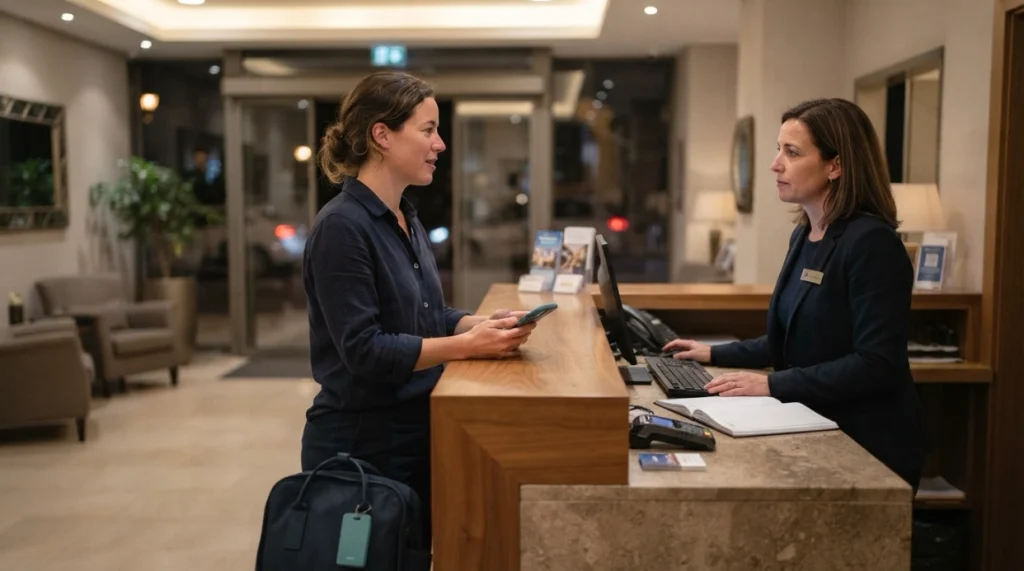
The most useful emergency plan gives you a first move for common problems. When stress rises, fewer decisions are better.
If you feel followed or threatened
Move toward a staffed, public place such as a hotel, restaurant, store, transport desk, or police facility. Don’t worry about appearing rude if leaving protects you.
- Do not lead someone you fear directly to your room.
- Ask staff for help.
- Contact local emergency services if danger is immediate.
- Message your trusted contact when safe to do so.
- Change accommodation if you believe your lodging has become unsafe.
If your phone is stolen
Your paper information now matters. Go somewhere safe and use another device to lock or locate your phone through the manufacturer’s official service.
- Secure important accounts.
- Contact your mobile provider if necessary.
- Notify banks if payment access was exposed.
- Use your offline accommodation and contact details.
- Follow local reporting procedures for theft.
If your passport disappears
Contact the relevant embassy or consulate and follow its replacement instructions. Report the loss to local authorities when required.
Your separate identification copies, accommodation address, and travel itinerary can reduce confusion during the replacement process.
If you’re seriously ill or injured
For immediate danger, contact the destination’s local emergency medical service first. Then use your insurance or assistance provider when circumstances allow.
The CDC provides guidance on getting health care during travel, including planning for providers and carrying medical information.
If a crisis affects the destination
Follow instructions from local authorities and avoid moving through a dangerous area simply to reach an airport. Routes and transport can change quickly during major emergencies.
For U.S. citizens, the State Department’s crisis response guidance explains embassy assistance, communication planning, and preparation for disruptions. Travelers of other nationalities should follow their own government’s equivalent advice.
If commercial travel remains safely available and official guidance recommends leaving, don’t assume an embassy will personally transport you from your hotel. Your emergency fund and exit plan still matter.
If you become stranded after transport fails
Prioritize a safe waiting location over reaching your original plan at any cost. Airport desks, hotel reception areas, stations with staff, and established accommodation can give you time to reorganize.
- Tell your trusted contact what changed.
- Update your accommodation if you’ll arrive late.
- Use official booking or transport channels.
- Avoid unverified ride offers made because you appear stranded.
- Preserve enough phone battery for communication and navigation.
Pro tip: As of 2026, travel alerts, entry rules, health guidance, and emergency conditions can change quickly. Recheck government sources shortly before departure and during a developing crisis.
Section Takeaway: In an emergency, your priority is safety first, communication second, and replacing the original itinerary third. A missed reservation is easier to fix than a risky decision made to stay on schedule.
Frequently Asked Questions
Who should have my itinerary when I travel alone?
Give it to one reliable person who understands your emergency plan. They should have your accommodation details, major transport information, insurance contact, and the check-in schedule you’ve agreed to use.
How often should a woman check in during her first solo trip?
There is no universal schedule. For a straightforward city trip, arrival, major transfers, unusual activities, and an end-of-day message can provide structure without requiring constant updates.
Should I share my live location during a solo trip?
Live location can be a useful extra layer when shared with someone you trust. Don’t rely on it alone because phone theft, battery failure, poor signal, or disabled location services can make it unavailable.
How much emergency cash should I carry?
Carry enough for realistic short-term needs in your destination, such as local transport, food, or safe accommodation. Keep it separate from your main wallet and avoid carrying unnecessarily large amounts.
What emergency numbers should I save before traveling?
Save the destination’s police, ambulance, and fire numbers plus your accommodation, insurer, trusted contact, and relevant embassy or consulate. Verify emergency numbers for each country rather than assuming your home country’s number works.
What information should my emergency contact have?
Your contact should know your itinerary, lodging, transport plans, insurance details, usual communication methods, and escalation plan. They should also know when a missed check-in is ordinary and when they need to act.
Is travel insurance necessary for a first solo trip?
Whether you buy a policy is a personal decision, but you should know how medical care, evacuation, cancellations, and major disruptions would be paid for. Review existing coverage and policy exclusions before departure.
Your first solo trip should feel independent, not unsupported. Build the emergency plan once, share it with someone dependable, and then let it sit quietly in the background unless you need it.
The best plan isn’t the most complicated one. It’s the one you can still follow with a dead phone, a missing wallet, or a stressful change of plans.