How Can a Woman Find a Destination Suitable for Her First Solo Trip?
Quick Answer
A woman can find a destination suitable for her first solo trip by choosing somewhere that matches her confidence, budget, transportation comfort, language skills, and preferred travel pace. Before booking, compare neighborhood-level safety, airport transfers, accommodation location, evening transportation, local customs, and current official guidance such as the U.S. State Department guidance for women travelers.
Use these filters first
- Simple arrival: Look for a clear airport or station transfer that you can understand before leaving home.
- Easy transportation: Favor destinations where you can walk, use public transport, or access reputable taxis without depending on one option.
- Central accommodation: Stay near food, transportation, and the places you expect to visit.
- Manageable cost: Leave enough money for a taxi, hotel change, delayed connection, or other unexpected expense.
- Comfortable culture: Research dress expectations, local laws, social norms, and attitudes toward women traveling alone.
- Backup options: Choose somewhere that gives you another route, hotel, activity, or transport choice when plans change.
A useful beginner rule
- Your first solo destination should feel interesting enough to excite you but simple enough that an ordinary travel problem does not ruin the trip.
Your first solo trip does not need to begin in the destination everyone else calls the easiest. It needs to begin somewhere that feels manageable to you.
That distinction matters. A city with excellent trains might suit one first-time traveler, while another woman feels calmer in a compact coastal town where everything is within walking distance.
As of 2026, I would never choose a destination from a social media recommendation alone. Safety conditions, entry rules, health concerns, transportation, and local regulations can change.
In This Guide
- What Makes a Destination Good for a Woman’s First Solo Trip?
- How Should You Check Solo Female Travel Safety?
- How Easy Should Transportation and Arrival Be?
- How Do You Match a Destination to Your Confidence and Travel Style?
- How Can You Compare Several First Solo Destinations?
- What Should You Check Before You Finally Book?
- First Solo Trip Destination FAQ
What Makes a Destination Good for a Woman’s First Solo Trip?
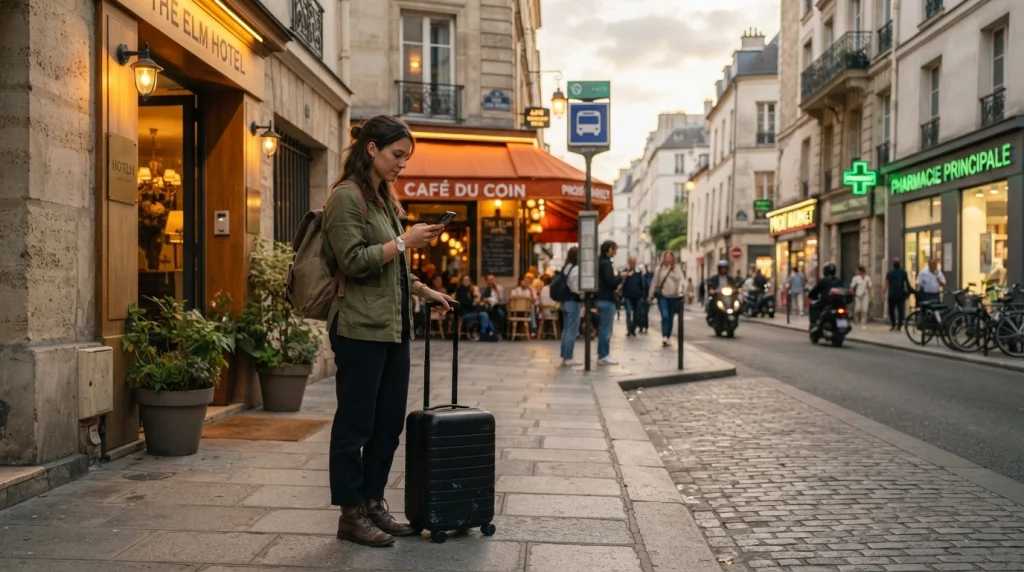
A good first solo destination makes ordinary travel tasks easy enough that you can focus on enjoying yourself. Look beyond attractions and evaluate how the destination works from morning until bedtime.
Solo female travel means traveling independently as a woman while making your own decisions about accommodation, transportation, activities, money, meals, and day-to-day safety.
Start with practical ease, not popularity
A famous destination is not automatically beginner-friendly. A smaller, less famous place may work better when transportation is clear and your accommodation is centrally located.
I like to test a destination by imagining the least glamorous part of the trip. Picture yourself stepping out of an airport after a long flight with low phone battery and a delayed bag.
- Can you reach your accommodation easily? You should know the route before arriving.
- Will your phone work? Check roaming, SIM, eSIM, and Wi-Fi options.
- Can you find food nearby? Your first evening should not require a difficult journey.
- Can you change plans? Look for alternative transport, accommodation, and activities.
- Can you afford flexibility? Your budget should survive one unexpected taxi or hotel change.
Choose one manageable base
For a first trip, staying in one city or region can reduce stress. Every accommodation change creates another check-out, transfer, arrival, and navigation problem.
A trip of roughly four to seven nights in one main base can give you enough time to learn a destination without constantly repacking.
This does not mean you must remain inside one neighborhood. Day trips can add variety without requiring you to move your luggage every two days.
- One home base: You learn the streets and transport faster.
- Fewer arrivals: You reduce unfamiliar late-night check-ins.
- Less luggage handling: You spend more time exploring.
- Easier recovery: A tired day does not disrupt a complicated route.
Think about what happens after dark
A destination can feel simple at noon and completely different at 10 p.m. Check how you would return from dinner, a theater, a tour, or an evening event.
Look at transport operating hours rather than simply confirming that public transportation exists.
- Does the metro or train still run when you expect to return?
- Are licensed taxis or reputable ride services available?
- Would you need to walk through quiet areas?
- Is your accommodation reception staffed when you arrive?
- Can you choose an earlier activity if evening logistics feel uncomfortable?
Section Takeaway: A suitable first destination should make everyday logistics predictable. Attractions matter, but arrival, transportation, accommodation, food, and backup options matter more.
How Should You Check Solo Female Travel Safety?
Research safety at the destination, neighborhood, and activity level rather than looking for one universal safety score. No city or country can be reduced to a single label.
Conditions can differ between neighborhoods and change according to time, transportation method, demonstrations, weather, or local events.
Begin with current official information
If you are traveling internationally, check the current government advisory for your destination shortly before booking and again before departure.
The U.S. Department of State publishes destination-specific Travel Advisories, although travelers should remember that its guidance is written primarily for U.S. citizens.
If you are not American, check your own government’s foreign travel service as well. Your nationality may affect entry rules, consular assistance, and other practical issues.
Research neighborhoods separately
Do not search only for “Is this city safe?” Search the exact neighborhoods where you might stay and the routes you expect to use.
A centrally located property can sometimes make a bigger difference to your experience than choosing between two entire countries.
- Street environment: Check whether shops, restaurants, and transport stops are nearby.
- Evening activity: Find out whether the area becomes deserted after businesses close.
- Transport access: Look for more than one reasonable way to return.
- Accommodation entrance: Read recent reviews for comments about access and location.
- Recurring concerns: Pay attention when several recent travelers describe the same problem.
Separate useful evidence from viral fear
One frightening video does not describe an entire destination. The opposite is also true: one cheerful travel reel does not prove that every neighborhood or activity is low-risk.
Look for patterns across current official information, local guidance, accommodation reviews, and recent traveler reports.
Established travel resources can also provide useful practical perspectives. For example, Lonely Planet’s solo travel guidance for women emphasizes easing into solo travel and thinking carefully about accommodation and everyday safety.
Research activities separately from the destination
Your plans can change the risk profile. Nightlife, hiking, driving, swimming, remote beaches, and overnight buses each deserve separate research.
A destination that suits daytime museums and café visits may require different precautions if your itinerary centers on late-night events or remote outdoor activities.
- Check trail conditions and daylight hours before hiking.
- Research reputable transport before nightlife.
- Check swimming conditions and lifeguard coverage at beaches.
- Review driving rules before renting a car.
- Confirm whether isolated attractions require a guide.
Pro tip: Recheck official advisories shortly before departure. Security conditions, strikes, demonstrations, natural disasters, entry requirements, and regional warnings can change after you book.
Section Takeaway: Good solo female travel safety research is specific. Compare current advisories, neighborhoods, transport, accommodation, activities, and your ability to leave an uncomfortable situation.
How Easy Should Transportation and Arrival Be?
Your first solo destination should have transportation you can understand before you arrive. Complicated logistics add stress at the exact moment you are tired and unfamiliar with your surroundings.
I would give the first 24 hours more attention than almost any sightseeing plan.
Map the complete arrival before booking
Do not stop your research at the airport name. Follow the journey all the way to your accommodation.
- Identify your arrival terminal. Large airports may have several terminals.
- Find the official transport choices. Check trains, buses, licensed taxis, or reputable ride services.
- Check operating hours. A train that looks perfect may stop before a late flight arrives.
- Estimate the final walk. A hotel five minutes from a station feels different from one 25 minutes away with luggage.
- Create a backup. Know what you will do if your first transport choice is unavailable.
Choose accommodation that removes unnecessary trips
A cheaper room far outside the center can cost more once you add daily transport. It may also create inconvenient late-night journeys.
For a first solo trip, I prefer evaluating location before room size or decorative extras.
- Food within roughly a 5-10 minute walk
- A practical public transport stop nearby
- A pharmacy, convenience store, or supermarket within easy reach
- Clear check-in instructions
- Recent reviews that discuss the neighborhood
- A staffed reception or dependable contact method
Look for at least two ways to get back
One fragile transportation option can turn a minor delay into a stressful evening. A destination feels easier when you have a second realistic route.
For example, you might use a metro during the day and keep a reputable taxi service as your evening backup.
Do you need a rental car?
A car can create freedom in rural areas, but it also adds navigation, parking, fuel, insurance, traffic rules, and breakdown concerns.
If you are already nervous about your first solo trip, a walkable destination with useful public transportation may reduce your mental workload.
A road trip can still work for a beginner. Keep the route short and make sure the vehicle does not become another source of constant decisions.
Section Takeaway: Simple arrival and transportation are major confidence builders. Know exactly how you will reach your accommodation, move through the destination, and return when your original plan fails.
How Do You Match a Destination to Your Confidence and Travel Style?
The right destination depends partly on you. Your first solo trip should stretch your independence without stacking several unfamiliar challenges together.
You do not need to prove that you can handle the hardest possible trip.
Decide which challenges you are comfortable handling
Make a quick list before searching destinations. Be specific about what makes you excited and what makes you anxious.
- Language: Are you comfortable using translation apps and gestures?
- Transport: Do complex metro systems energize you or overwhelm you?
- Food: Are you comfortable ordering when menus are unfamiliar?
- Social time: Do you want hostels and group tours, or more private space?
- Nightlife: Are evening activities important to your trip?
- Nature: Do you want established trails or remote outdoor adventures?
- Driving: Are you comfortable driving alone in unfamiliar traffic?
A city can be easier than a quiet town
A large city may sound intimidating, but good transportation and plentiful services can make problem-solving easier.
Restaurants, pharmacies, hotels, tours, taxis, and staffed attractions are often easier to find in a major tourism center.
A small town can feel calmer. However, limited buses, early closing hours, or sparse accommodation may require more planning.
A short domestic trip can be excellent practice
Your first solo experience does not have to require an international flight. A weekend in another city can teach you what parts of solo travel you enjoy.
You will practice navigation, eating alone, managing your schedule, checking into accommodation, and dealing with downtime.
- Try a two-night city break.
- Take yourself to a museum or restaurant alone.
- Use public transportation in an unfamiliar area.
- Book one guided activity and spend the rest independently.
- Notice when you feel most relaxed or stressed.
Consider your tolerance for being alone
Solo travel includes quiet time. A beautiful destination can still feel uncomfortable when you have not planned how you want to spend your evenings.
If you want easy social contact, look for destinations with walking tours, cooking classes, small-group excursions, hostels, or community events.
You do not need to stay in a dorm to meet people. Many hostels offer private rooms, while tours and classes can create social time without changing your accommodation style.
Section Takeaway: Choose a destination that matches your present confidence, not the traveler you think you should already be. One new challenge is exciting; five new challenges at once can be exhausting.
How Can You Compare Several First Solo Destinations?
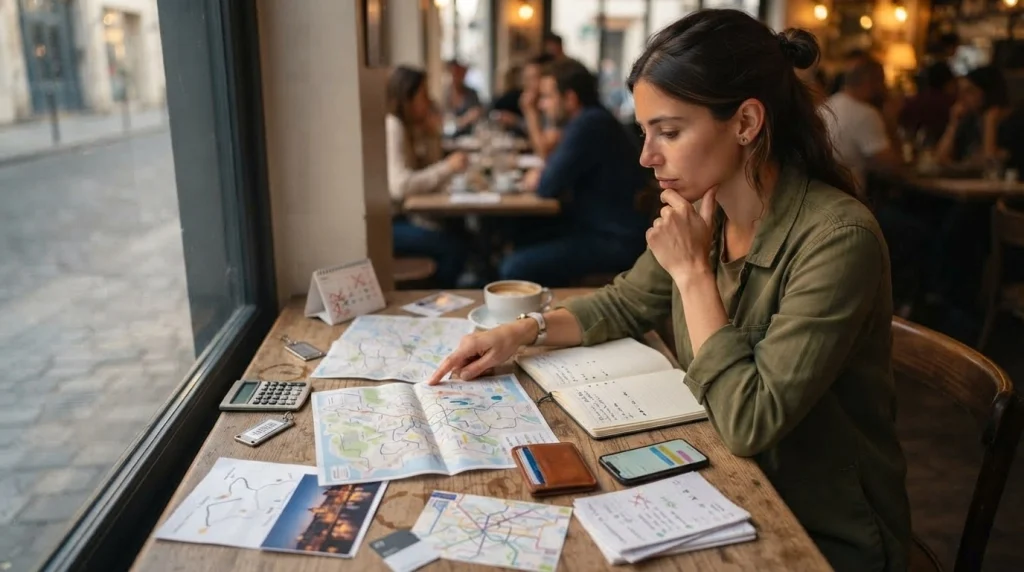
Compare every destination using the same criteria. This makes it easier to separate emotional excitement from practical suitability.
I would not give destinations a universal safety score. Instead, create a personal screening table based on the trip you plan to take.
| Factor | Lower-Friction First-Trip Sign | Reason to Research Deeper |
|---|---|---|
| Airport arrival | One direct route or clear licensed taxi process | Several transfers or poor late-night service |
| Accommodation | Food and transportation within about 5-10 minutes | Isolated location or dependence on private transport |
| Daily transport | At least two reasonable ways to return to your base | One service with limited operating hours |
| Trip pace | One base for roughly 4-7 nights | Frequent hotel changes and long transfer days |
| Budget | Money remains for unexpected transport or accommodation changes | One unexpected expense would strain the trip |
| Communication | Reliable mobile data plus manageable language barriers | Limited connectivity combined with difficult communication |
| Evenings | Food and transport remain available near your accommodation | Long walks or limited late transport |
| Backup options | Several hotels, transport choices, and indoor activities | Few alternatives if weather or logistics change |
Compare the whole trip cost
A cheap flight can hide an expensive destination. Calculate the amount you expect to spend after you land.
- Accommodation
- Airport transfers
- Local transportation
- Meals
- Attractions and tours
- Mobile data
- Travel insurance
- Laundry or luggage storage
- Emergency flexibility money
I would rather choose a destination where I can comfortably afford a taxi home than save every possible dollar and remove my options.
Check destination health information
Health requirements can influence whether a destination feels manageable. Research vaccines, medications, climate, mosquito-borne illness, altitude, food and water guidance, and access to medical care.
The CDC’s Travel Health Notices provide current information on outbreaks, special events, disasters, and other health risks that may affect travelers.
Pro tip: Health guidance changes. Check an official health authority for your destination rather than relying on an old packing list or forum post.
Use a simple shortlist
Once you have researched several possibilities, reduce the list to two or three destinations.
- Remove destinations with logistics you already dislike.
- Remove destinations that stretch your budget too tightly.
- Compare the remaining neighborhoods and accommodation choices.
- Check your arrival and evening transport plans.
- Choose the place where everyday life looks easiest to manage.
Section Takeaway: Compare destinations using the same practical questions. The most suitable option is the one whose transportation, budget, accommodation, culture, and backup plans fit your needs together.
What Should You Check Before You Finally Book?
Before paying for flights and accommodation, mentally rehearse an ordinary day and a difficult day. You should understand what you would do in both.
Run the first-24-hours test
Imagine that your flight lands one or two hours late. Could you still reach your accommodation without making risky or confusing decisions?
- What is your primary airport transfer?
- What is your backup transfer?
- Will reception still be open?
- Will your phone have data?
- Where can you get food?
- How will you access money?
- Who has your accommodation details?
Run the bad-day test
Now imagine that something small goes wrong. Perhaps you miss a train, lose a bank card, feel ill, or decide that you dislike your accommodation.
A suitable first destination should give you choices rather than trapping you inside a fragile itinerary.
- Can you pay with another card or cash?
- Can you reach another hotel?
- Can you change transportation?
- Can you contact someone at home?
- Can you find medical care?
- Can you cancel an activity without ruining the whole trip?
Share essential information privately
Give a trusted person the information they would need if they could not reach you. You do not need to provide minute-by-minute updates.
- Your destination and dates
- Flight or train details
- Accommodation name and address
- Insurance information
- A copy of key identification details stored securely
- Your preferred check-in routine
U.S. citizens traveling internationally can also consider the Smart Traveler Enrollment Program, which provides embassy and consulate alerts for registered destinations.
Give yourself permission to change the plan
Your booking does not create an obligation to endure a situation that feels wrong. Move hotels, take a taxi, skip an activity, return early, or change the route when necessary.
Solo travel gives you more freedom to change your mind, not less.
The final question I would ask
Can you explain the trip clearly without saying, “I’ll figure that out when I arrive” five times?
You do not need every hour planned. You should understand the basics that protect your comfort and options.
- I know how I will arrive.
- I know where I will stay.
- I know how I will move around.
- I understand the neighborhood.
- I know the approximate daily cost.
- I understand important local customs.
- I have checked current safety and health guidance.
- I have backup money and communication.
If those statements are true, you have moved beyond choosing a pretty destination. You have designed a trip you can realistically manage alone.
Section Takeaway: Book when you understand the destination well enough to handle both a normal day and a disrupted one. Preparation should create choices, not make you afraid to travel.
First Solo Trip Destination FAQ
What is the best type of destination for a woman’s first solo trip?
A practical first destination usually has simple transportation, centrally located accommodation, plenty of services, reliable communication, and several backup options. The best choice depends on your confidence, budget, language comfort, preferred pace, and planned activities.
Is a big city or small town better for a first solo trip?
Either can work. A major city may offer better public transport, accommodation choice, tours, and backup plans, while a small town may feel calmer. Compare actual logistics rather than assuming population size determines how easy or safe a trip will feel.
Should a woman travel internationally on her first solo trip?
She can, but international travel adds entry rules, unfamiliar transportation, language differences, currency, and health considerations. A short domestic solo trip can be useful practice if those extra variables feel overwhelming.
How long should a first solo trip be?
There is no required length, but roughly four to seven nights can work well for many beginners. A two-night weekend trip is also useful if you want to practice independent travel before committing to a longer journey.
How can I tell whether a destination is safe for solo female travelers?
Check current government advisories, local laws, neighborhood information, transport conditions, accommodation reviews, and women-specific concerns. Research the exact activities and areas you plan to use rather than depending on a general safety ranking.
Should I stay in a hostel on my first solo trip?
A hostel is optional. Hostels can make meeting people easier, but hotels and guesthouses may provide more privacy. If you want both, consider a private hostel room or join walking tours and group activities while staying elsewhere.
What if I feel nervous after booking my first solo trip?
Some nervousness is normal when you are doing something unfamiliar. Reduce uncertainty by reviewing your arrival, accommodation, transport, first meal, mobile data, and emergency backup plans instead of trying to eliminate every possible risk.
Your first solo destination does not need to prove anything about you. It only needs to give you enough independence to grow without turning every basic task into a challenge.
Choose somewhere you genuinely want to see, then make sure the practical side works. When the destination fits your confidence, budget, transportation needs, and safety research, the trip has a much stronger foundation.
Start with manageable. Confidence can take you farther on the next trip.