How Can a Woman Find Her Embassy Before International Solo Travel?
Quick Answer
A woman can find her embassy before international solo travel by searching her own government’s foreign ministry website for the destination country, then saving the nearest diplomatic mission’s address, normal phone number, and emergency consular contact. U.S. citizens can start with the State Department’s official embassy and consulate directory; other travelers should use their government’s equivalent.
Find your embassy in five steps
- Start with your government: Search your foreign ministry or official overseas-travel website.
- Select the destination: Look for the embassy, high commission, consulate, or mission serving that country.
- Check coverage: Confirm which office handles consular services for the city or region you will visit.
- Save emergency details: Record the main number, after-hours number, address, and official website.
- Keep an offline copy: Save a screenshot or note that remains available without mobile data.
One important check
- Recheck the contact information shortly before departure because diplomatic coverage and emergency numbers can change.
If you’re wondering how can a woman find her embassy before international solo travel, the process is easier than it sounds. I treat embassy research as part of my normal solo female travel safety planning, alongside insurance, airport transport, and emergency numbers.
The goal isn’t to expect trouble. It’s to remove one more stressful search if your passport disappears, a serious emergency happens, or you need official help abroad.
In This Guide
- Where Should You Start Looking for Your Embassy?
- Embassy vs. Consulate: Which Office Do You Need?
- What Embassy Details Should You Save Before Flying?
- What If Your Country Has No Embassy at Your Destination?
- When Should a Solo Woman Contact an Embassy?
- Embassy Planning FAQ for Solo Female Travelers
- Your 10-Minute Pre-Trip Embassy Checklist
Where Should You Start Looking for Your Embassy?
Start with your own government’s official foreign ministry, state department, or overseas-travel website. That source should tell you which embassy, high commission, or consulate represents you at your destination.
A general search engine can help you locate the government page. I wouldn’t rely on a third-party embassy directory for an emergency phone number without confirming it through an official source.
Search by nationality first, not just destination
Your embassy is based on your citizenship, not where you currently live. An Australian living in the United States who travels to Thailand normally needs Australian consular information, for example.
Use a search such as:
- Your nationality + embassy + destination country
- Your foreign ministry + offices abroad
- Your nationality + consular assistance + destination
Then check that the result belongs to an official government domain. Avoid assuming the first directory or map listing is current.
Use your government’s official overseas directory
Several governments provide searchable worldwide mission directories. British travelers can use the GOV.UK embassy and consulate directory.
Canadian travelers can use the Government of Canada offices worldwide directory. Similar official resources exist for many nationalities.
Definition: Consular assistance is help a government may provide to its citizens abroad through an embassy, consulate, high commission, or another designated mission. Available services depend on your nationality, location, and circumstances.
Pro tip: Save the government directory itself as well as the local office details. It gives you a trusted starting point if the mission’s contact information changes.
Embassy vs. Consulate: Which Office Do You Need?

An embassy isn’t automatically the closest or most useful office. A consulate in another city may handle the services you need.
The terms can feel confusing on a first international solo trip. This comparison makes them easier to understand.
| Office type | Typical location | What it may provide | What to check |
|---|---|---|---|
| Embassy | Usually the national capital | Diplomatic functions plus consular services | Citizen-services hours and emergency contact |
| High commission | Often a capital in another Commonwealth country | Similar functions to an embassy | Consular services available |
| Consulate or consulate general | Often a major city outside the capital | Citizen and consular services | Whether it serves your current region |
| Honorary consulate | Varies by country and city | Often more limited assistance | Exactly which services it can provide |
Don’t choose an office only because it’s closest
A nearby honorary consul may not handle the same services as a full embassy or consulate general. The official directory should explain which mission covers your location.
I always look for wording such as “consular services,” “citizen services,” or “emergency assistance.” That matters more than simply finding the nearest pin on a map.
What Embassy Details Should You Save Before Flying?
Save enough information to contact the right office without beginning a new search under stress. Keep the list short and practical.
My pre-trip consular note includes:
- Official mission name: Embassy, high commission, consulate, or designated regional mission.
- Street address: Save it in your map app and as written text.
- Main telephone: Useful during normal office hours.
- Emergency number: Save any after-hours consular contact separately.
- Official website: Use it to recheck instructions during the trip.
- Citizen-services hours: Note whether appointments are required.
- Coverage area: Confirm that the office serves the city or region you’re visiting.
Keep the information available offline
Mobile data can fail at exactly the wrong moment. Your phone can also be lost, stolen, damaged, or out of battery.
I use at least two storage methods:
- A screenshot or offline phone note
- A printed card, notebook entry, or second digital copy
Add your accommodation address, travel-insurance emergency number, and local emergency number to the same note. That gives you one small emergency reference instead of several scattered screenshots.
Recheck it shortly before departure
As of 2026, I still treat embassy information as something to verify shortly before an international trip. Offices can move, telephone numbers can change, and one mission may begin covering another country.
Pro tip: Check the official page again one or two days before departure and update your offline copy if necessary.
What If Your Country Has No Embassy at Your Destination?
Your country may not maintain a resident embassy or consulate everywhere you travel. That doesn’t automatically mean you have no consular option.
First, check your foreign ministry’s destination page. It may direct citizens to an embassy in a neighboring country or another mission with regional responsibility.
Look for regional coverage
One embassy can serve several countries. Your official government directory should identify the mission responsible for your destination.
Save that mission’s emergency instructions even if it’s across a border. The government may also list a local honorary consul or another contact point.
EU citizens have an additional protection option
EU citizens traveling outside the European Union may have extra options when their own country is not represented. The European Commission’s consular protection directory explains how to find an appropriate embassy or consulate.
Eligibility and procedures still matter. Check the current official instructions before assuming another country’s mission can provide the help you need.
Pro tip: Never assume “no embassy in this country” means “nothing to save.” Find the office officially assigned to your destination before you leave home.
When Should a Solo Woman Contact an Embassy?
An embassy or consulate is a useful backup for certain serious problems abroad. It isn’t a replacement for local police, ambulance services, hospitals, your insurer, or your accommodation.
For immediate danger or a medical emergency, use the appropriate local emergency service first whenever possible.
Situations where consular help may matter
Exact services vary, but consular offices commonly publish guidance for situations such as:
- Lost or stolen passports and emergency travel documents
- Arrest or detention
- Serious accidents or illness
- Being the victim of a serious crime
- Major crises, disasters, or civil disruption
- Death or serious emergencies involving a citizen abroad
If you’ve experienced assault, harassment, stalking, or another threat, put immediate personal safety first. Local emergency services may be the fastest route to urgent protection, while consular staff may provide additional guidance depending on the circumstances.
Know what an embassy cannot promise
Consular officers operate within local law. An embassy generally cannot simply override police, courts, immigration authorities, hospitals, or another country’s legal system.
That’s why I build a broader solo travel emergency plan rather than treating the embassy as the entire plan.
- Local emergency services: For immediate police, medical, or rescue needs.
- Travel insurer: For covered medical assistance and policy procedures.
- Accommodation: For local logistics and immediate property-related help.
- Embassy or consulate: For eligible consular assistance involving your government.
U.S. travelers can also review the State Department’s international travel checklist before departure. It includes destination research, travel alerts, documents, and embassy information.
Section Takeaway: Your embassy is one part of a solo travel safety network, not a substitute for local emergency services. Save both local and consular contacts so you know which one to use first.
Embassy Planning FAQ for Solo Female Travelers
Should I find my embassy before every international solo trip?
Yes. Checking your embassy or consulate takes only a few minutes and gives you a verified contact if a serious problem occurs. Save the appropriate office, address, official website, main telephone number, and after-hours emergency instructions before departure.
Do I need to visit the embassy when I arrive?
Usually, no. Most tourists don’t need to physically visit their embassy simply because they entered a country. Your goal is to know where the relevant mission is and how to contact it if you later need eligible consular assistance.
Is a consulate as useful as an embassy?
A consulate can sometimes be more practical because it may be closer to where you’re staying. Services vary by office, however, so confirm through your government’s official directory whether that consulate provides the assistance you might need.
What if my embassy is in another country?
Follow the instructions published by your foreign ministry. Some diplomatic missions have regional responsibility for several countries, and your government may provide a separate local contact, honorary consul, or emergency procedure for travelers in countries without a resident embassy.
Should I save the embassy number in my phone contacts?
Yes, but don’t make your phone the only copy. Save the details in your contacts, then keep a screenshot, printed card, or another offline copy so you can still access the information if your phone or mobile connection fails.
Can my embassy help if my passport is stolen?
Consular offices commonly provide guidance for citizens whose passports are lost or stolen, although procedures differ by nationality and destination. Contact the office identified by your government and follow its current instructions for reporting the loss and obtaining appropriate travel documentation.
Your 10-Minute Pre-Trip Embassy Checklist
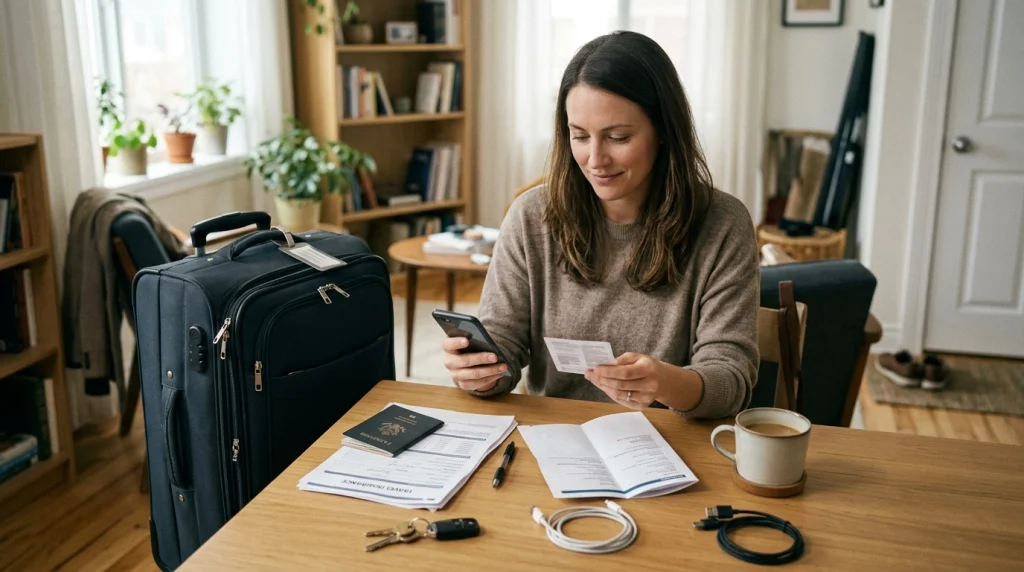
You don’t need an elaborate emergency binder. Ten focused minutes before departure can remove a surprising amount of uncertainty.
Complete these steps for every international solo trip:
- Open your government’s official foreign ministry or travel website.
- Select the country you’re visiting.
- Identify the embassy, high commission, consulate, or regional mission serving you.
- Save the address and official website.
- Save the normal telephone number.
- Save the after-hours emergency contact if one is provided.
- Check office hours and appointment requirements.
- Store a copy offline.
- Add local emergency and insurance contacts.
- Recheck the information shortly before departure.
I think of this as quiet preparation. Once the details are saved, I don’t spend the trip worrying about them.
Do the research, keep the information accessible, and then focus on enjoying your destination. Good solo female travel safety should give you more confidence to explore, not make the world feel smaller.