
How Can a Solo Female Traveler Find the Correct Train Platform?
Quick Answer
A solo female traveler can find the correct train platform by matching her train number, departure time, destination, and operator on the station’s live departure board. Follow the platform signs, confirm the information again before boarding, and listen for announcements about changes. If anything looks confusing, ask uniformed station staff or visit the official information desk rather than guessing.
Five checks before boarding
- Check the train number: Match it with your ticket or booking confirmation.
- Read the destination: Confirm the final destination or a listed stop on your route.
- Verify the platform: Use the latest station departure board rather than relying on an older screenshot.
- Follow station signs: Look for the correct platform number and any lift, stairway, or passageway directions.
- Recheck before boarding: Confirm the train’s number or destination on the platform display and listen for announcements.
A simple safety rule
- Stay calm and visible: If you are unsure, wait near a staffed information point or another official station area while you confirm your route. Never rush onto a train just because its doors are closing.
Finding the correct train platform as a solo female traveler can feel stressful, especially when station announcements use an unfamiliar language or several trains leave within minutes of one another. I recommend using a simple checking routine that works across different rail networks, from large international stations to smaller regional stops.
This guide explains how to read departure boards, use your phone without relying on it completely, handle last-minute platform changes, and protect your belongings while navigating an unfamiliar station.
In This Guide
- How should you prepare before arriving at the station?
- How do you read a train departure board?
- How do you find the platform once you know its number?
- Which apps and language tools help you find the right platform?
- What should you do if the platform changes or you miss a connection?
- How can you stay safe while waiting for your train?
- Frequently asked questions
How Should You Prepare Before Arriving at the Station?

The easiest way to find the correct train platform is to identify your exact service before you enter the station. Your ticket, official rail app, and booking confirmation provide the details you’ll need to check the live departure information.
Know which train you need to catch
A train platform is the designated area beside the railway track where passengers wait to board or leave a train. Platform numbers identify these areas, but the number assigned to your service may change before departure.
Before leaving your accommodation, save or screenshot these details:
- Your departure station and destination station.
- Your scheduled departure time and train number, if provided.
- The railway operator or service name.
- Your carriage and seat numbers, if your ticket includes a reservation.
- Your connecting train’s departure time and station, if you need to transfer.
Keep the ticket accessible on your phone and save an offline copy if the booking system permits it. A screenshot helps when station Wi-Fi is unreliable, but it does not replace live platform information.
Arrive early enough to navigate without rushing
For an unfamiliar major station, aim to arrive around 30 minutes before departure when practical. Allow extra time if you need to collect a paper ticket, pass through security, find a ticket office, or navigate a large terminal.
At a small station with a straightforward layout, you may need less time. The right buffer depends on the station, the railway operator’s boarding rules, and your familiarity with the route.
I would rather have a few spare minutes to check a departure board than drag a suitcase through a crowded concourse while watching the clock. That extra time also gives you room to ask for directions without feeling pressured.
Pro tip:
Check your operator’s official journey planner before leaving. For journeys in Great Britain, National Rail provides train information and live departure details.
Section takeaway: Know your train number, departure time, and destination before reaching the station. Arrive with enough time to verify the platform without rushing.
How Do You Read a Train Departure Board?
A departure board is usually the most useful place to confirm where your train leaves from. It lists scheduled services and, depending on the station, their destinations, departure times, platform numbers, and delays.
Match the information in the right order
When you reach the main concourse, look for a screen labeled departures, departures board, or something similar in the local language. Find your service by comparing the details on your ticket with the information displayed.
- Find the departure time: Look for your scheduled time, allowing for any revised departure information.
- Match the destination: Check the final destination or another station on your route.
- Confirm the train number: Use this when available, especially if several services travel in the same direction.
- Check the operator: Make sure the service matches your booking when multiple rail companies operate at the station.
- Read the platform column: Note the current platform number and any indication that the service is delayed or changed.
Do not choose a train simply because its destination sounds familiar. Two services can travel toward the same city while following different routes, stopping at different stations, or leaving at different times.
What if the platform number is not displayed?
Some stations announce platforms only shortly before departure. A blank platform field or a message such as “to be announced” does not automatically mean your train has been cancelled.
In that situation, stay in the main passenger area where you can see a departure screen. Check the board again regularly and listen for announcements rather than walking to a platform based on an old timetable or an unconfirmed app result.
For example, imagine your ticket shows a 10:20 departure to Lyon, but the platform column remains blank at 10:00. Continue monitoring the board; when a platform appears, match it to the same service before following the signs.
Official railway guidance explains that platform details may become available only when the service’s departure information is updated. You can review National Rail’s guide to live departures and arrivals for an example of how live service information works.
Understand the difference between a platform and a track
A platform is the passenger boarding area, while a track is the rail line on which the train runs. Some countries and stations use different terms or display a track number instead of a platform number.
If your ticket or app displays a track number but the station uses platform numbers, ask staff how the two systems correspond. Don’t assume that the same number means the same thing everywhere.
Section takeaway: Match the departure time, destination, train number, and platform together. If the platform is missing, wait for official confirmation instead of guessing.
How Do You Find the Platform Once You Know Its Number?
Once you confirm the platform number, follow the station’s official directional signs to reach it. Keep checking smaller signs along the way, especially at stations with multiple levels, underground passages, or separate platforms for local and long-distance trains.
Follow signs instead of following the crowd
Large stations can have several staircases, lifts, ticket barriers, and passageways leading to different platforms. A group of passengers moving quickly may be heading toward another train, so use the signs rather than assuming everyone is going your way.
Look for these common signs and symbols:
- Platform or voie: Common wording for a platform in English- and French-language rail settings, respectively.
- Gleis: A word for track or platform commonly seen at German-speaking stations.
- Binario: A common Italian term for a railway track or platform.
- Vía: A term you may see on Spanish-language railway signs.
- Lift or elevator symbol: Indicates an accessible route to another level.
Local wording varies, so treat these as useful examples rather than universal rules. If you’re unsure, show the platform number on your phone to an employee at an information desk.
Confirm you’re at the right platform
Reaching the correct numbered platform is only part of the task. Some platforms serve trains going in opposite directions, and others handle several services with different destinations.
Before settling down, check the information screen beside the platform or on the platform itself. Confirm the train’s destination, departure time, and number where available.
If the platform has separate sections for different carriages, check your ticket or the train operator’s instructions to find your assigned carriage. You don’t need to stand in a particular section unless the service requires it, but checking early can prevent a last-minute scramble.
Section takeaway: Follow official signs to your numbered platform, then verify the actual train before boarding. A correct platform number alone doesn’t guarantee that every train stopping there serves your destination.
Which Apps and Language Tools Help You Find the Right Platform?
Official railway apps and translation tools can make platform navigation easier, particularly when you don’t speak the local language. Use them to support your decisions, while treating station displays and staff guidance as the final check for last-minute changes.
Compare the main information sources
No single tool works equally well at every station. The most reliable approach is to combine your booking information with current railway updates and the signs around you.
| Information source | Best use | Main limitation |
|---|---|---|
| Station departure board | Checking the latest displayed platform and departure status | May not announce a platform until shortly before departure |
| Official rail app or website | Checking schedules, disruptions, and available live information | Features and update timing vary by operator |
| Ticket or booking confirmation | Matching the train number, route, and scheduled departure | May not show the final platform assignment |
| Translation app | Translating signs and preparing a question for staff | May misread abbreviations or transport-specific wording |
| Station staff or information desk | Clarifying confusing routes and confirming a reported change | Staff availability and language support vary |
Prepare a few useful phrases
You don’t need to speak the local language fluently to ask for platform directions. Save these short questions in your phone’s notes app and translate them before your journey.
- “Which platform does this train leave from?”
- “Is this the train to [destination]?”
- “Has the platform changed?”
- “Where can I find the information desk?”
- “Can you show me the way to platform [number]?”
You can also show an employee your ticket or booking screen. Point to the train number and destination rather than relying on a translation of the entire booking confirmation.
For a practical example, if your ticket shows train 842 to Florence at 14:15, you can display those details and ask which platform serves train 842. That is more precise than asking where trains to Florence leave.
Use your phone without losing awareness
Keep your phone charged and download any available offline maps or tickets before leaving your accommodation. A portable charger can be useful on long travel days, but you should still know where to find the physical departure boards.
When checking directions, step away from busy walkways and keep your luggage close. Avoid walking through an unfamiliar station while looking down at your screen.
Section takeaway: Combine official live information, your ticket, and station signs. Translation tools help you ask better questions, but they shouldn’t replace a final check with the railway’s current information.
What Should You Do if the Platform Changes or You Miss a Connection?
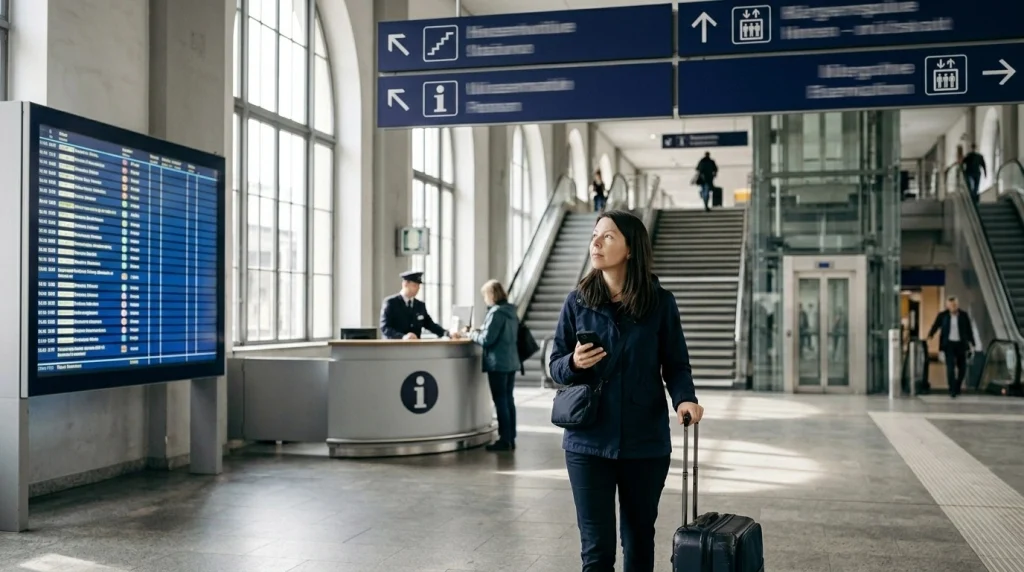
Platform changes are a normal possibility in rail travel, so always check again before boarding. If a change occurs, verify the new platform through an official display or railway employee and follow the signed route calmly.
Respond to a last-minute platform change
A platform may change because of operational needs, delays, or other service adjustments. The number printed on an old screenshot or shown in an earlier search result may no longer be correct.
If you notice a change, follow this sequence:
- Read the new platform number and match it to your train’s destination or number.
- Listen for an announcement or check a nearby information screen.
- Follow the official signs to the new platform.
- Ask staff for help if the route is unclear or the departure is close.
- Confirm the train again when you arrive at the new platform.
Don’t run blindly through the station or cross tracks outside designated passenger routes. If you can’t reach the new platform safely before departure, speak to railway staff about your options.
What if you miss the train or a connection?
First, check the next available departure and speak to the operator about your ticket. Whether you can board a later service depends on the railway’s rules, your ticket conditions, and the reason you missed the connection.
Before travelling, check whether your journey uses separate tickets or a single through-ticket. This distinction can affect what assistance or alternative travel arrangements the operator offers if a delay disrupts your connection.
If you need to change trains, check the connecting service’s platform as soon as you arrive. A connection that looks simple on paper may involve a different floor, a long passageway, or a lift at a large station.
For journeys in Great Britain, National Rail’s guidance on changing trains explains connection planning and options when delays affect your journey.
Section takeaway: Treat platform information as something to verify throughout your journey, not a detail you check just once. If you miss a train, confirm your ticket conditions and ask the operator for the next safe, permitted option.
How Can You Stay Safe While Waiting for Your Train?
Good platform planning also supports solo female travel safety because it reduces rushed decisions and unnecessary movement through unfamiliar stations. Choose a waiting spot where you can see the departure information and reach official assistance if needed.
Choose a practical waiting position
Once you confirm the platform, find a suitable place to wait without blocking passenger movement. Where available, a staffed waiting area or a well-lit part of the platform near other passengers can feel more comfortable, particularly after dark.
- Keep your handbag zipped and your luggage within reach.
- Stay behind the marked safety line until the train stops and boarding is permitted.
- Keep your ticket and phone accessible without displaying cash or valuables unnecessarily.
- Notice the nearest station employee, help point, or information desk.
- Check the departure display periodically for delays or platform changes.
These are sensible precautions, not reasons to assume every quiet platform is dangerous. Use the station’s layout and your surroundings to make practical choices.
What if someone offers unsolicited help?
Many fellow travelers are genuinely helpful, but you don’t have to accept directions from a stranger when you’re uncertain. If someone tells you that your train has moved to another platform, verify the information on an official screen or with railway staff.
You can politely say, “Thank you, I’ll check with the station information desk.” This lets you acknowledge the person without following unverified directions.
When you need assistance, approach an identifiable railway employee or an official information counter whenever possible. If staff aren’t nearby, use a marked help point or the operator’s published customer service channel.
Plan for an unfamiliar station after dark
If your train leaves late at night, check the station’s opening arrangements and available services in advance. Some smaller stations have limited staffing, fewer facilities, or less frequent trains than major terminals.
Share your planned arrival time with someone you trust if that helps you feel more secure. Keep your onward transport arrangements accessible, particularly if you expect to arrive after public transport becomes less frequent.
Section takeaway: Stay aware of your surroundings, keep belongings close, and verify unexpected instructions. Official assistance and a little advance planning make unfamiliar stations easier to navigate.
Frequently Asked Questions
How early should a solo female traveler arrive at a train station?
For an unfamiliar major station, arriving around 30 minutes before departure is a useful starting point. Allow more time if you need to collect tickets, navigate security, or arrange assistance, and follow the railway operator’s boarding guidance.
What should I do if my ticket doesn’t show a platform number?
Check the station’s live departure board when you arrive. Many railways assign or publish platforms closer to departure, so the missing number doesn’t necessarily indicate a problem. Wait in an appropriate passenger area until official information becomes available.
Can two trains use the same platform?
Yes, some stations use the same platform for multiple services at different times, and certain platforms may serve trains going in different directions. Always match the destination, departure time, and train number before boarding rather than relying on the platform number alone.
What if I cannot understand the station announcements?
Use the visual departure boards and your railway operator’s official app or website. You can also show your ticket to station staff and ask them to confirm the platform. A translation app can help you prepare a short question in the local language.
Should I trust a train platform number shown in a travel app?
Use the app as a helpful source, but verify the platform against the latest official station display or railway announcement. Updates can arrive at different times across information systems, and platforms can change shortly before departure.
What should I do if I accidentally board the wrong train?
Tell the train conductor or railway staff as soon as you realize the mistake. Explain your intended destination and ask about the safest way to correct your journey. Avoid getting off at an unfamiliar stop without checking the available services and your onward options.
How can I find the correct platform when changing trains?
Check the connecting service’s departure time, train number, and platform as soon as you arrive at the interchange station. Follow the signs and allow time for lifts, stairs, or long passages. If the connection is tight, ask staff for the quickest permitted route.
Final Takeaway: Confirm Before You Board
Finding the correct train platform becomes much easier when you follow the same routine at every station. Prepare your ticket details, check the live departure board, follow the signs, and verify the train again before boarding.
As you gain experience, you’ll become more comfortable navigating stations even when the signs or announcements are unfamiliar. You don’t need to know every local transport term; you need a reliable way to check information and ask for help when necessary.
For your next solo trip, save your train details before leaving, arrive with enough time, and remember that asking an official employee to confirm a platform is a smart travel decision, not a sign that you’re unprepared.
