Should a Woman Use an eSIM for International Solo Travel?
Quick Answer
Yes. For most women taking an international solo trip, an eSIM is one of the easiest ways to get mobile data without replacing a physical SIM. It can keep maps, ride apps, messaging, translation, and bookings available after arrival, but you should confirm phone compatibility and understand whether your plan includes only data or also calls and texts. Apple also provides current guidance on using an eSIM while traveling internationally.
What I would check before relying on one
- Phone compatibility: Make sure your phone supports eSIM and is unlocked for another carrier.
- Real coverage: Check which local networks the eSIM provider uses in every country on your route.
- Calls and SMS: Many travel plans focus on data, so don’t assume you receive a local phone number.
- Data allowance: Estimate how much you’ll need for maps, rides, messages, uploads, and video.
- Backup access: Keep offline maps, booking details, and another way to connect if mobile data fails.
My simple rule
- If I’m arriving alone, especially after dark, I want my mobile data working before I leave the airport or station Wi-Fi.
If you’re asking, “should a woman use an eSIM for international solo travel?”, my answer in 2026 is usually yes. An international travel eSIM can make the first hour in a new country much easier.
I see it as part of arrival planning rather than a travel luxury. Reliable data gives you faster access to navigation, hotel messages, ride apps, translation tools, tickets, and people back home.
In This Guide
- Should you use an eSIM when traveling internationally alone?
- Why is an eSIM useful for solo female travelers?
- What are the disadvantages of using a travel eSIM?
- eSIM vs. physical SIM vs. international roaming
- How should you set up an eSIM before a solo trip?
- What should you check before buying a travel eSIM?
- Frequently asked questions
Should You Use an eSIM When Traveling Internationally Alone?
For most solo international travelers with a compatible unlocked phone, yes. An eSIM removes several small connectivity problems that feel much bigger when you’re handling an arrival alone.
An eSIM, or embedded SIM, is a digital mobile-network profile stored on a supported device instead of a removable plastic SIM card. The GSMA defines the standards that allow eSIM profiles to be securely downloaded to compatible devices.
You can read more about the underlying technology through the GSMA eSIM information center.
When an eSIM makes the most sense
I would strongly consider one when a trip includes any of these situations:
- Airport arrivals: You want data immediately without finding a SIM shop.
- Late arrivals: You may need maps, hotel messages, or a ride before local stores open.
- Multi-country trips: A regional plan may cover several destinations under one profile.
- Short trips: Spending time registering and swapping a physical SIM may not feel worthwhile.
- Dual-SIM phones: You may be able to keep your normal line while using the eSIM for travel data.
That last point matters to me. I don’t want a cheaper data plan to make receiving an important message from home more difficult.
When I would not depend on an eSIM alone
I wouldn’t make any single connectivity option my entire safety plan. Networks can fail, phones can break, batteries die, and settings can get changed by accident.
Before a solo trip, I also keep these available offline:
- Hotel name and address
- Flight and train details
- Boarding passes where possible
- Offline maps for the arrival area
- Emergency contacts
- Travel insurance information
- A screenshot of important booking confirmations
An eSIM adds convenience. It shouldn’t become the only way you can find your accommodation or contact someone.
Section Takeaway: For most international solo trips, an eSIM is a smart primary data option. Keep essential arrival information available offline as well.
Why Is an eSIM Useful for Solo Female Travelers?
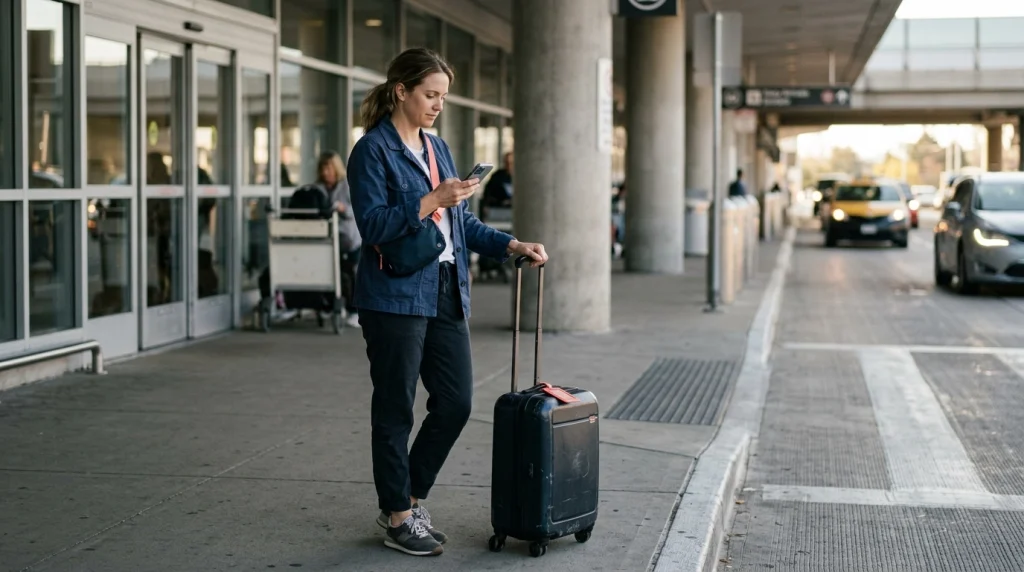
The biggest advantage isn’t that eSIM technology is exciting. It’s that it can reduce the number of things you need to solve immediately after landing.
You can arrive with mobile data already prepared
With many eSIM plans, you can install the profile before leaving home. Activation rules differ, so check when the plan’s validity period begins.
My rule for solo arrivals is simple. If I might leave the terminal alone, I want data ready before I need transportation.
You don’t need to handle a tiny physical SIM
A physical SIM works perfectly well, but swapping cards creates another item to manage. Losing your home SIM during a trip can create an annoying problem later.
Apple notes that an eSIM can’t simply be removed from a lost or stolen iPhone like a physical SIM can. That doesn’t make the phone theft-proof, so a strong device passcode still matters.
You can keep your normal number available on supported phones
This is one of my favorite reasons to consider eSIM. Some phones support two active cellular lines or profiles, although the exact capability depends on the device and carrier.
Apple supports international Dual SIM use on compatible iPhones. Google also says supported Pixel phones can manage multiple eSIM profiles.
Google’s current Pixel eSIM guidance specifically discusses using prepaid eSIM service for international travel.
You can avoid an airport SIM-buying decision
After a long flight, I prefer fewer financial and technical decisions. Comparing plans at an airport kiosk while protecting luggage isn’t my favorite way to start a trip.
An eSIM lets you research coverage, validity, data limits, and activation instructions before departure. That is especially useful for first-time solo travelers who want a calmer arrival.
Section Takeaway: The real value of an eSIM is smoother arrival logistics. It can put maps, messages, rides, and booking information in your hand before you leave the airport.
What Are the Disadvantages of Using a Travel eSIM?
An eSIM isn’t automatically better in every country or for every traveler. The right choice depends on your phone, destination, length of stay, and communication needs.
Many travel eSIMs are mainly data plans
Don’t assume your plan includes a local phone number. Some travel eSIM products provide mobile data without standard local voice calls or SMS.
That usually works well for WhatsApp, Signal, FaceTime, Messenger, email, and other internet-based services. It can be inconvenient when a hotel, tour operator, or local service expects a normal phone call.
Your phone may be locked
A compatible phone can still reject another carrier if it remains network-locked. Check this before buying anything.
Apple advises travelers using another provider to make sure their iPhone is unlocked. Android requirements can vary by manufacturer and carrier.
Coverage quality depends on the local partner network
The eSIM company you buy from may not own cellular towers in your destination. Your connection may use one or more partner networks.
That means a plan advertising “coverage in Italy” doesn’t tell you everything. Look for the actual supported network if the provider publishes it.
Unlimited may not mean unlimited high-speed data
Read the fair-use policy. A plan may offer unrestricted total data but reduce speed after a daily or trip-wide threshold.
This matters if you expect to upload videos, work remotely, use your phone as a hotspot, or stream frequently.
Troubleshooting can feel harder without Wi-Fi
Most installations are simple until they’re not. A QR code, APN setting, roaming toggle, or profile activation step can cause trouble.
That is why I prefer installation before departure when the provider allows it. I can solve problems while I still have familiar Wi-Fi and another phone nearby.
Section Takeaway: Check whether your plan is data-only, which networks it uses, when validity starts, and what happens after any high-speed allowance is consumed.
eSIM vs. Physical SIM vs. International Roaming: Which Is Better?
There is no universal winner. For a typical one- or two-week solo vacation, I usually prefer a travel eSIM when coverage and pricing are reasonable.
| Option | Best For | Main Advantage | Main Drawback |
|---|---|---|---|
| Travel eSIM | Short trips, multi-country travel, easy arrival setup | No physical card swap and often available before departure | Some plans are data-only or rely on roaming partners |
| Local physical SIM | Longer stays or travelers who need a local number | Can provide strong local pricing and direct carrier service | Requires purchase, registration where applicable, and SIM handling |
| Home-carrier roaming | Travelers who prioritize simplicity | Keep your existing number and carrier relationship | Price and data terms can be less attractive depending on your plan |
Choose an eSIM when convenience matters most
This is my default for a city break, short vacation, or several-country itinerary. It works best when the provider clearly lists coverage and plan limits.
Choose a local SIM when you’re staying longer
A direct local carrier plan can make sense for weeks or months abroad. It may also be better when you specifically need a local number.
Choose home roaming when simplicity matters more than price
Some carriers include useful international benefits already. Check your existing plan before purchasing another service.
The GSMA describes international roaming as the process that lets a mobile device connect through another network while outside its home coverage area. Your carrier can tell you exactly what your roaming plan includes.
How Should You Set Up an eSIM Before a Solo Trip?
Do as much as possible before departure. I don’t want my first technical test to happen beside an airport baggage carousel.
- Check that your phone supports eSIM. Review the manufacturer’s current compatibility instructions.
- Confirm that the phone is unlocked. A carrier lock may stop another provider’s plan from working.
- Compare coverage at every destination. Check countries, local partner networks, and any excluded territories.
- Read the activation rule. Find out whether validity begins at purchase, installation, activation, or first network connection.
- Install the profile before travel if permitted. Follow the provider’s instructions without turning it on too early.
- Label your cellular lines. Names such as “Home” and “Travel” make settings easier to understand.
- Choose the correct mobile-data line. Make sure the travel eSIM handles data after arrival.
- Review roaming settings. Some travel eSIMs require data roaming because they connect through partner networks.
- Prevent unwanted home-line data use. Check your phone’s data-switching and roaming settings.
- Save the installation details. Keep provider support information and activation instructions accessible offline.
Don’t delete the profile too quickly
Turning an eSIM off isn’t always the same as deleting it. Some plans can’t simply be reinstalled after the profile is removed.
I would keep it installed until the trip is over unless the provider specifically tells me otherwise.
Test the settings before leaving Wi-Fi
After landing, confirm that mobile data loads a simple webpage. Then test the services you’ll rely on first.
- Maps
- Hotel or accommodation app
- Messaging
- Ride or transit app
This takes a minute. It can save a stressful troubleshooting session outside the terminal.
What Should You Check Before Buying a Travel eSIM?
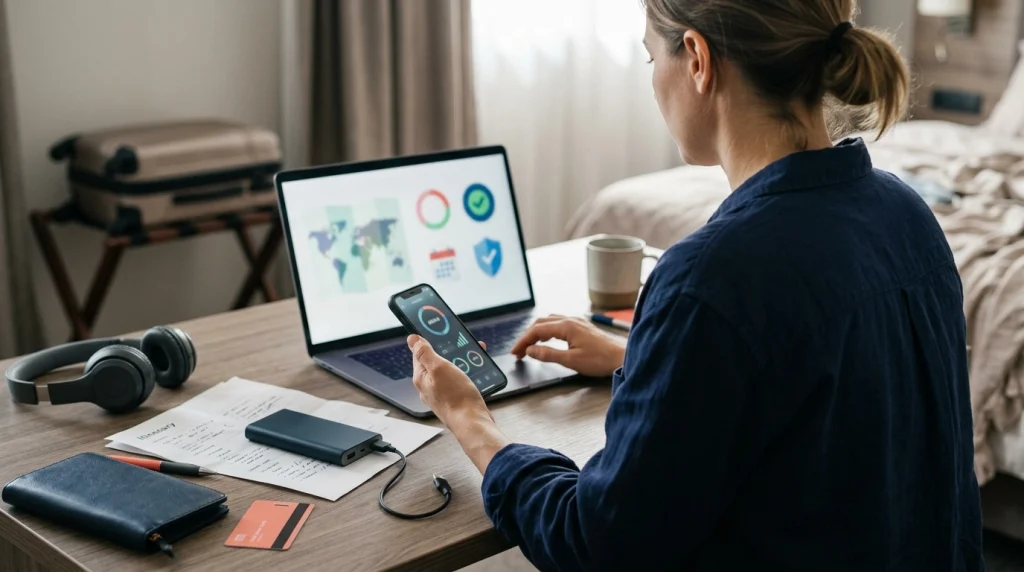
Don’t choose only by the number of gigabytes. The cheapest plan isn’t useful if its coverage, validity, or speed rules don’t fit your trip.
Coverage and local networks
Start with your exact destination list. Regional plans can look convenient, but coverage may differ from country to country.
If you’re visiting cities and rural areas, search for the local network names listed by the provider. That can give you a better idea of likely reach.
Plan duration
A seven-day plan for an eight-day trip creates an obvious problem. Give yourself enough validity for delays and schedule changes.
Data allowance
A light user who needs maps and messages may need much less data than someone uploading video daily. Download large files over trusted Wi-Fi when practical.
For reference, an hour of video can use far more data than hours of text messaging or basic map searches. Your actual usage depends on app settings and video quality.
Hotspot or tethering rules
If you plan to connect a laptop, confirm tethering is allowed. Some travel plans restrict it or apply separate limits.
Phone number and SMS support
This is important for travelers who expect ordinary calls. A data-only eSIM will not magically provide standard phone service.
If your bank uses SMS authentication, consider how you’ll receive those messages abroad. Keeping your home line active may help, but carrier charges and network availability still apply.
Support and refund rules
Look for clear help channels before paying. I prefer knowing whether support uses live chat, email, an app, or another method.
Also check what happens if the profile can’t be installed. Refund rules vary widely among travel connectivity providers.
Device security
An eSIM can remove the risk of losing a removable SIM card, but your phone still contains valuable personal information. Use a strong screen lock and enable your device-finding features before departure.
Pro tip: Connectivity helps with navigation and communication, but it isn’t a substitute for destination research. Before international travel, review current official travel guidance through Travel.State.gov or your own government’s travel-advisory service.
Section Takeaway: Compare coverage, validity, high-speed data, calling features, hotspot rules, support, and activation terms. The best eSIM is the one that matches your actual itinerary.
Frequently Asked Questions About eSIMs for Solo International Travel
Is an eSIM safe for a woman traveling alone?
Yes, an eSIM can be a practical connectivity option for a woman traveling alone. It can help keep maps, messaging, bookings, and transportation apps accessible, but you should still keep offline copies of critical information and follow normal phone-security practices.
Should I buy an eSIM before I leave my home country?
Usually, I prefer buying and installing it before departure when the provider permits this. You can troubleshoot on familiar Wi-Fi, but check when the plan’s validity begins so you don’t accidentally start a short plan too early.
Can I keep my normal phone number while using a travel eSIM?
Often yes on phones that support Dual SIM or multiple active profiles. Your device and carrier determine the exact setup, and keeping your home line active may still cause roaming charges depending on how it is configured.
Do travel eSIMs include calls and text messages?
Not always. Many travel eSIMs focus on mobile data, while others may include voice, SMS, or a phone number. Check the plan details rather than assuming those services are included.
How much eSIM data do I need for an international trip?
It depends on how you use your phone. Maps, messages, email, and ride apps are usually lighter than video streaming, cloud backups, video calls, or frequent social-media uploads.
Is an eSIM better than buying a SIM card at the airport?
For a short solo trip, I usually prefer the convenience of an eSIM. A local SIM can still be better for longer stays, local-number needs, or destinations where the local carrier offers stronger value.
What should I do if my eSIM stops working abroad?
First confirm the correct data line, data-roaming setting, and network selection recommended by your provider. Use Wi-Fi to contact support if needed, and keep offline maps and accommodation details available as a fallback.
My final take: A woman traveling internationally alone should strongly consider an eSIM if her unlocked phone supports one. It reduces arrival-day friction and makes it easier to stay connected without handling a physical SIM.
I still plan for failure. I keep essential information offline, understand what my home line is doing, and check the eSIM’s coverage before relying on it.
Do those three things, and an eSIM can be one of the simplest upgrades to your international solo-travel setup.