How Can a Woman Drive Safely in an Unfamiliar Country Alone?
Quick Answer
A woman can drive safely in an unfamiliar country alone by checking local driving laws, choosing a reliable rental car, planning daylight routes, and sharing her itinerary with someone she trusts. Learn the local road rules before departure, keep your phone charged, and avoid driving when tired or unsure. Start with official driving safety guidance for international travel and the specific rules for your destination.
Your essential solo-driving safety checklist
- Check legal requirements: Confirm your license, International Driving Permit requirements, insurance, and rental eligibility.
- Research road conditions: Learn about driving sides, speed limits, tolls, road quality, and local traffic habits.
- Choose daylight travel: Schedule unfamiliar roads and longer journeys during daylight whenever practical.
- Protect your route: Download offline maps, save your accommodation address, and share your itinerary.
- Prepare for emergencies: Keep water, a charged phone, essential documents, and roadside assistance details accessible.
- Trust your judgment: Stop somewhere public and well-lit if a situation, route, or interaction feels unsafe.
One important precaution
- Never feel obligated to continue driving, accept an unwanted detour, or stop in an isolated place simply because you have already committed to a route.
Driving alone abroad can give you the freedom to explore small towns, scenic roads, and places that organized tours rarely reach. However, unfamiliar traffic rules, language barriers, and unexpected roadside problems can make even a short journey feel challenging.
When planning a solo road trip, I would prioritize a manageable route, dependable transportation, and clear backup plans over squeezing every possible stop into one day. This guide explains how to prepare, stay aware behind the wheel, handle uncomfortable situations, and travel with greater confidence in 2026.
In This Guide
- 1. How should you prepare before driving abroad alone?
- 2. How do you choose a safe rental car?
- 3. How can you plan a safe solo driving route?
- 4. How can a woman protect herself while driving alone?
- 5. What should you do during a breakdown or emergency?
- 6. What is the best checklist for a solo road trip abroad?
- 7. Frequently asked questions
1. How should you prepare before driving abroad alone?
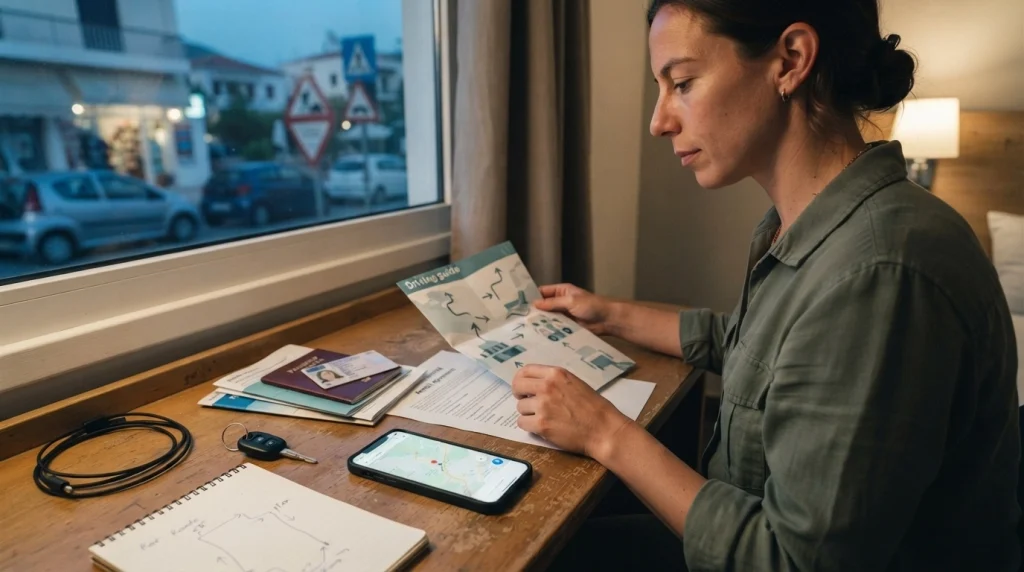
The safest solo road trip starts before you collect your keys. Confirm that you can legally drive, understand the local rules, and have a realistic plan for the roads you intend to use.
Check your driving documents and insurance
Driving requirements differ between countries, and sometimes between regions within one country. Your home driving license may be sufficient in some destinations, while others require an International Driving Permit (IDP), an official document that translates your driving credentials into multiple languages.
Before booking a vehicle, verify these requirements with the destination’s official transport authority, embassy, or government travel guidance. Check whether the rental company imposes additional age, experience, or documentation requirements.
Keep the following documents accessible:
- Your valid driving license and IDP, if required.
- Your passport or another accepted form of identification.
- Your rental agreement and proof of insurance.
- Emergency contacts and roadside assistance details.
- Any required vehicle permits, toll arrangements, or border-crossing documents.
Review your insurance carefully. Confirm liability coverage, collision protection, theft protection, deductibles, and exclusions for particular roads or vehicle types.
Do not assume your regular car insurance or travel insurance automatically covers every driving-related expense. Ask the insurer to clarify coverage for accidents, medical treatment, vehicle damage, and roadside assistance.
Learn the rules that could surprise you
Driving abroad is more than adjusting to a different steering position. Road signs, right-of-way rules, speed limits, parking restrictions, and enforcement practices can differ substantially.
Research these details before departure:
- Driving side: Confirm whether vehicles travel on the left or right side of the road.
- Intersections: Learn local rules for roundabouts, pedestrian crossings, and turning across traffic.
- Speed limits: Understand the units displayed on signs, including kilometers per hour versus miles per hour.
- Local restrictions: Check low-emission zones, congestion charges, toll roads, and restricted historic centers.
- Required equipment: Verify whether warning triangles, reflective vests, or other items are compulsory.
If you are accustomed to right-side driving and your destination uses left-side driving, practice the basic rules before entering busy traffic. Consider starting in a quiet area rather than immediately tackling a complicated city center.
Pro tip: Review the destination-specific driving section on the U.S. Department of State’s driving guidance, alongside your own government’s travel advice and local transport authority information.
Assess whether driving is the right choice
Solo female travel safety depends partly on choosing transportation that matches your experience. A rental car can provide flexibility, but it is not automatically safer than public transport or a licensed local driver.
Consider your comfort with unfamiliar traffic, mountain roads, rural driving, and navigating without reliable mobile coverage. If a destination has dangerous road conditions or driving norms you cannot confidently manage, hiring a reputable local driver may be the more sensible option.
Section takeaway: Confirm your legal eligibility, insurance, and local road rules before booking. Choose the transport option that fits your actual driving skills, not just your itinerary.
2. How do you choose a safe rental car?
Choose a vehicle that is easy to operate, appropriate for the roads you will travel, and supported by a reputable rental company. A smaller, familiar car can make parking, maneuvering, and navigating narrow streets easier.
Book with a reliable rental company
Compare rental terms before paying, including insurance, roadside assistance, fuel policies, mileage limits, and after-hours support. Read the cancellation conditions and clarify what happens if the car develops a mechanical problem.
For a solo traveler, reliable assistance can matter more than saving a small amount on the daily rate. Choose a company with clear contact details and a practical process for reporting accidents or breakdowns.
When selecting a vehicle, consider:
- Vehicle size: Pick a car you can comfortably park and control on local roads.
- Transmission: Book automatic transmission if manual driving would distract you.
- Safety equipment: Check seat belts, tires, lights, brakes, and warning indicators.
- Navigation: Confirm that the navigation system works in your destination or bring a reliable alternative.
- Storage: Choose enough luggage space to keep bags out of sight when parked.
Inspect the car before leaving
Take a few minutes to inspect the vehicle in the rental company’s designated pickup area. Photograph existing scratches, dents, the wheels, the windshield, and the fuel level, then make sure the condition is recorded in your rental agreement.
Before driving away, locate the following controls:
- Headlights, hazard lights, windshield wipers, and indicators.
- Parking brake, gear selector, and fuel-release mechanism.
- Spare tire or tire repair kit, if supplied.
- Emergency equipment and the vehicle’s assistance information.
Ask the rental agent to explain unfamiliar controls. Test your mirrors, seat position, and visibility before joining traffic.
Keep your passport and other important documents with you rather than leaving them inside the parked vehicle. When you leave the car, conceal luggage and valuables, lock the doors, and choose secure parking whenever possible.
Compare your transportation options
The best option depends on local conditions, the distance you need to cover, and how comfortable you feel traveling independently.
| Option | Main advantage | Main drawback | Best suited for |
|---|---|---|---|
| Rental car | Flexible routes and departure times | Driving, parking, and breakdown responsibilities | Confident drivers exploring multiple stops |
| Licensed local driver | Local road knowledge without driving yourself | Higher cost and less independence | Difficult roads or unfamiliar traffic systems |
| Public transport | No driving or parking responsibilities | Limited access to remote destinations | Cities and routes with dependable connections |
| Organized day tour | Transport and route planning are handled | Fixed schedules and less freedom | One-off excursions or challenging destinations |
There is no universally safest choice for every country. Compare current local transport guidance, availability, costs, and road conditions before deciding.
Section takeaway: Prioritize a dependable vehicle and clear rental support. If unfamiliar roads would overwhelm you, choose a safer-feeling alternative instead of forcing yourself to drive.
3. How can you plan a safe solo driving route?
A good route minimizes unnecessary stress, keeps you connected to practical services, and gives you enough time to respond to delays. For solo female road trips, a shorter, well-researched drive is often a better starting point than a long, ambitious itinerary.
Plan your journey around daylight
Whenever possible, schedule unfamiliar roads during daylight. Darkness can make road markings, pedestrians, animals, potholes, and unexpected turns harder to spot, particularly on poorly lit rural roads.
Build a realistic itinerary with breaks rather than relying on the shortest estimated driving time. For example, a planned three-hour drive should include extra time for meals, fuel, traffic, rest stops, and navigation errors.
Before leaving, identify:
- Your starting point and final destination.
- Suitable fuel stations and rest areas along the route.
- Public, well-lit places where you can stop safely.
- Alternative roads in case of closures or severe weather.
- A reasonable latest arrival time for your accommodation.
Avoid planning a remote mountain crossing or a long rural drive immediately after a flight. Fatigue and unfamiliar conditions can combine to make driving less safe.
Use navigation without becoming distracted
Download offline maps before departure because mobile data may disappear outside cities or across borders. Save your accommodation’s address, coordinates, and telephone number in case the navigation app fails.
Set your destination before moving. Mount your phone securely, enable spoken directions, and pull over somewhere safe if you need to change the route or check a message.
Keep a backup plan. A second navigation app or an offline map can help if your preferred service loses signal or sends you toward an unsuitable road.
Do not follow navigation instructions blindly. If a suggested shortcut leads onto a narrow, unpaved, flooded, or isolated road that does not match your plan, stop at a safe location and reassess.
Share your itinerary and arrival time
Choose a trusted contact who can check that you reach each destination safely. Share your route, accommodation details, expected arrival time, and the vehicle’s rental information where appropriate.
Agree on a simple check-in routine. For example, message your contact before departure and after arrival, then update them if a major delay changes your plans.
Live location sharing can provide additional reassurance, but it should not replace scheduled check-ins. Make sure the person monitoring your trip knows what to do if you miss an agreed check-in and cannot be reached.
Save local emergency numbers and the nearest suitable assistance contacts before entering remote areas. Emergency numbers and available services vary by country.
Choose accommodation that supports safe arrivals
Check your lodging’s parking arrangements before booking. Secure on-site parking, clear arrival instructions, and staff who can help with late check-ins can reduce stress after a long drive.
Read recent accommodation information and verify the actual entrance and parking location on a map. An address may lead to a pedestrian-only street, a restricted zone, or an entrance that is difficult to find after dark.
Section takeaway: Share your route, download maps, and plan around daylight and rest stops. A flexible itinerary gives you room to make safer decisions when conditions change.
4. How can a woman protect herself while driving alone?
Personal safety while driving alone means staying aware without treating every stranger or unexpected event as a threat. Set clear boundaries, keep essential supplies accessible, and make decisions that allow you to leave uncomfortable situations safely.
Keep your doors locked and valuables out of sight
Lock the doors when appropriate, wear your seat belt, and keep bags, passports, cash, and electronics out of view. Store important belongings securely before you start driving rather than rearranging them at a traffic light.
At fuel stations and rest stops, take a moment to assess the surroundings. Prefer established locations with staff, lighting, and other customers, especially when traveling alone in an unfamiliar area.
Use these everyday precautions:
- Keep your phone charged and within safe reach, without handling it while driving.
- Carry only the cash and cards you need for the day.
- Avoid displaying expensive jewelry, cameras, or electronics unnecessarily.
- Check your surroundings before getting out of the car in an isolated place.
- Park in designated spaces and note where you left your vehicle.
These habits reduce opportunities for theft and help you remain organized. They cannot eliminate every risk, so combine them with local safety advice.
What should you do if someone makes you uncomfortable?
You do not owe anyone an explanation for ending a conversation or leaving a location. If another driver, stranger, or passerby makes you uncomfortable, prioritize getting to a safe, public place without escalating the interaction.
If someone asks whether you are traveling alone, you can keep your answer brief and noncommittal. You do not need to share your accommodation, full itinerary, or personal contact details.
If you suspect another vehicle is following you, do not drive directly to your accommodation or stop somewhere isolated to investigate. Stay on public roads where possible and head toward a busy, staffed location or an appropriate police facility, depending on the circumstances.
Contact local emergency services if you believe you face an immediate threat. If driving becomes unsafe, pull over only where doing so is reasonably safe and seek assistance.
Handle unwanted roadside assistance carefully
Most people offering help may have good intentions, but you can decide which assistance you accept. If someone approaches after a breakdown, remain in a secure position when possible and contact your rental company or roadside provider directly.
When help arrives, verify the provider’s identity before handing over your keys or documents. If the situation feels wrong, explain that assistance is already arranged and contact the appropriate authorities if necessary.
Avoid accepting unsolicited rides to another location. Instead, request a verified service through your rental company, insurer, or another reputable provider.
Respect local customs without compromising your boundaries
Driving customs, expectations around women’s travel, and social norms vary between destinations. Research local advice about appropriate clothing, photography, roadside interactions, and restricted areas before your trip.
Adapt practical choices to the location, but remember that being polite does not mean agreeing to something that feels unsafe. You can decline an invitation, end a conversation, or choose a different route without apologizing.
Section takeaway: Stay aware, protect your privacy, and maintain control over your transportation decisions. Your comfort matters, and you can change plans whenever circumstances warrant it.
5. What should you do during a breakdown or emergency?
A breakdown, accident, or sudden road closure can happen even when you plan carefully. Knowing whom to contact and where to seek help makes it easier to respond calmly when you are alone.
If your car breaks down
If the vehicle develops a problem, focus first on reaching a reasonably safe position rather than trying to diagnose the fault while traffic passes nearby. Follow local road-safety rules and the vehicle’s emergency instructions.
If you can safely move the car, pull into an appropriate parking area or well away from moving traffic. Turn on hazard lights when needed and follow local requirements for warning triangles or reflective equipment.
Once stopped, assess the situation before getting out. A narrow shoulder, blind bend, tunnel, or high-speed road may make leaving the vehicle more dangerous than remaining inside, so follow local emergency guidance.
Next, take these steps:
- Contact the rental company’s emergency number or your roadside assistance provider.
- Share your location, vehicle details, and a clear description of the problem.
- Ask how the provider will identify the responding mechanic or recovery vehicle.
- Contact emergency services if the vehicle creates an immediate hazard or anyone is injured.
- Update your trusted contact about the delay and your next steps.
Do not attempt roadside repairs in moving traffic or another dangerous location. If you cannot reach assistance and feel exposed to immediate danger, contact the local emergency service.
If you have an accident
After a collision, stop and follow local legal requirements. Check whether anyone is injured, call emergency services when needed, and move away from immediate hazards only when it is safe to do so.
Exchange the information required by local law and your rental agreement. Photograph the scene and vehicle damage if doing so is safe, and avoid admitting fault or signing documents you do not understand.
Contact the rental company and insurer as soon as practical. Follow their instructions about police reports, repairs, replacement vehicles, and claims.
If language is a barrier, request an interpreter or assistance from your rental company or insurer. Keep copies of incident numbers, official paperwork, and contact details.
Prepare for weather and changing road conditions
Weather can turn a manageable route into a hazardous one. Heavy rain, snow, ice, fog, extreme heat, and strong winds can affect visibility, braking, tire grip, and vehicle reliability.
Check local forecasts and road closure notices before departure, especially for mountain passes, coastal routes, and remote regions. Postpone the journey if conditions exceed your experience or the authorities advise against travel.
Carry water, suitable clothing, a phone charging cable, and essential medication in your day bag. In remote areas, consider additional supplies appropriate to the climate and expected journey length.
Never assume a four-wheel-drive vehicle makes every road safe. Vehicle capability cannot compensate for poor visibility, flooding, ice, or a closed route.
Know when to abandon the plan
One of the most useful solo travel skills is recognizing when continuing no longer makes sense. A delayed departure, missed attraction, or extra hotel night is usually less costly than taking an unnecessary risk.
If you become too tired, lose confidence in the route, or encounter deteriorating weather, find a suitable place to stop and reassess. Notify your accommodation and trusted contact when your arrival plans change.
Pro tip: Before departure, review the official travel advice for your destination, identify its emergency number, and confirm how your rental company handles breakdowns. The GOV.UK guide to driving abroad is also a useful starting point for travelers checking international driving requirements.
Section takeaway: Save assistance contacts before you leave, follow local accident procedures, and never put yourself in danger to keep a schedule. A backup plan is part of safe driving, not a sign that your trip has failed.
6. What is the best checklist for a solo road trip abroad?
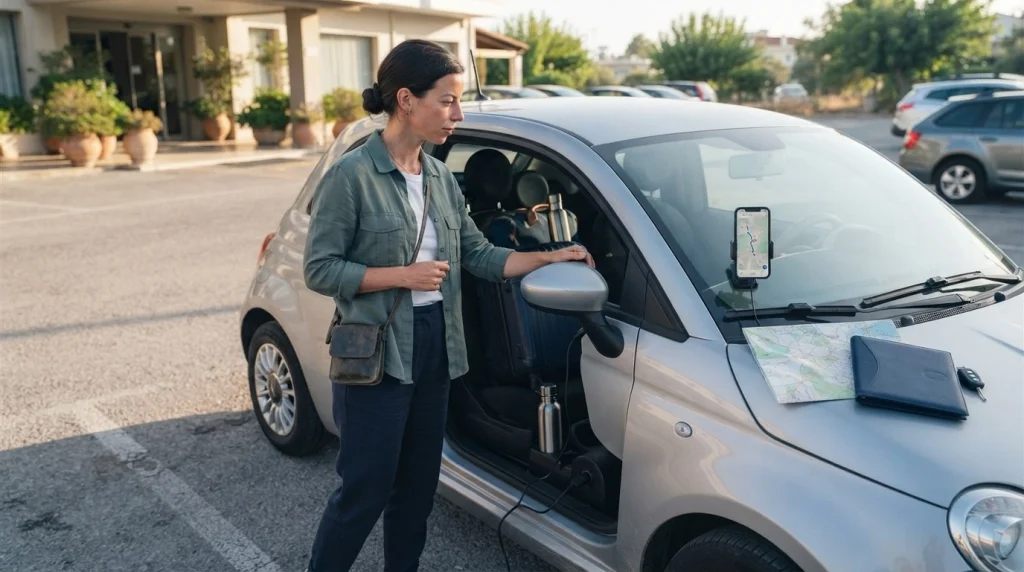
A simple checklist prevents small oversights from becoming major problems. Review it the evening before departure and again before collecting your rental car.
The day-before checklist
- Documents: Verify your license, IDP if required, passport, rental agreement, and insurance.
- Route: Check road conditions, driving times, tolls, parking, and likely rest stops.
- Weather: Review the forecast and any local travel warnings.
- Navigation: Download offline maps and save important addresses.
- Communication: Charge your phone and power bank, and share your itinerary.
- Emergency details: Save local emergency numbers, roadside assistance, and rental support.
- Accommodation: Confirm your reservation, arrival instructions, and parking arrangements.
- Rest: Get enough sleep and avoid scheduling a demanding drive after an exhausting travel day.
The before-you-drive checklist
Before leaving the rental lot or accommodation, make sure you know how the vehicle works and have everything you need within reach.
- Adjust your seat, mirrors, and steering position.
- Check fuel or battery range and the planned refueling points.
- Confirm that headlights, indicators, wipers, and seat belts work.
- Secure your luggage and keep valuables out of sight.
- Set navigation and audio before moving.
- Tell your trusted contact when you are departing.
Build a realistic first-day itinerary
If this is your first time driving in the destination, keep your opening journey simple. Choose a familiar type of vehicle, an easy route, and accommodation with straightforward access.
For example, a first-day plan might involve collecting the car in the morning, driving to one nearby destination, stopping for lunch, and arriving at your hotel well before dark. This is a planning example, not a universal safe driving-time limit; adapt it to local conditions and your experience.
Leave room for unexpected delays. If the first day feels more demanding than expected, shorten the next day’s route rather than pushing through fatigue.
Make a backup plan for each major leg
A backup plan should answer one practical question: what will you do if you cannot complete the drive as planned? You do not need a complicated emergency strategy for every minor inconvenience.
For each major journey, identify:
- A safe alternative route or a place to stay overnight.
- A reliable way to contact roadside assistance.
- A public location where you can stop if you need to reassess.
- A person who knows your expected arrival time.
These simple preparations can make unfamiliar roads feel more manageable. They also give you permission to slow down, change direction, or take a break without feeling that you have lost control of the trip.
Section takeaway: Keep your documents, communication plan, vehicle checks, and emergency contacts organized. A flexible first-day itinerary helps you build confidence before attempting more challenging routes.
7. Frequently asked questions
Is it safe for a woman to drive alone in a foreign country?
It can be, provided the destination, road conditions, and driving requirements suit your experience. Research local safety guidance, follow traffic laws, choose reliable transportation, and plan your routes carefully. No destination or precaution guarantees complete safety, so be prepared to change plans when conditions warrant it.
Should I avoid driving at night when traveling alone?
Whenever practical, schedule unfamiliar routes during daylight. Night driving can increase difficulty on poorly lit roads and make pedestrians, animals, and road hazards harder to see. If you must drive after dark, choose a suitable route, check conditions, and avoid continuing when tired or uncomfortable.
Do I need an International Driving Permit to rent a car abroad?
That depends on the destination, your existing driving license, and the rental company’s requirements. Some countries accept certain foreign licenses, while others require an International Driving Permit alongside your original license. Verify the rules with official local authorities before booking and confirm that your documents satisfy the rental agreement.
How can I stop feeling nervous about driving in an unfamiliar country?
Start with preparation and gradual exposure rather than a demanding road trip. Learn the local rules, practice driving in a quiet area if appropriate, use a familiar vehicle, and choose a short daytime route. Allow extra time, take breaks, and consider a local driving instructor or professional driver if needed.
What should I do if someone follows my car?
Stay calm and avoid confronting the other driver. If possible, remain on public roads and head toward a busy, staffed location or police facility rather than your accommodation or an isolated area. Contact local emergency services if you believe you are in immediate danger, and inform your trusted contact when safe.
What should I keep in my car when traveling alone?
Carry your required documents, a charged phone, a charging cable or power bank, water, basic first-aid supplies, and roadside assistance details. Add weather-appropriate clothing and any locally required safety equipment. Keep important valuables secure, and check destination-specific recommendations before traveling into remote areas.
Is renting a car safer than using public transportation?
Neither option is always safer. A car gives you greater control over your schedule, but it also makes you responsible for driving, parking, and breakdowns. Public transportation or a reputable local driver may be a better choice where traffic is difficult, parking is limited, or unfamiliar road conditions exceed your comfort level.
Final takeaway: Drive with a plan, not pressure
Learning how a woman can drive safely in an unfamiliar country alone comes down to preparation, awareness, and flexibility. You do not need to know every road in advance, but you should know the local rules, your route, your emergency contacts, and your options if something changes.
Before your next solo road trip, check the official driving requirements, book a vehicle that suits your experience, and build a manageable itinerary with daylight arrivals and regular breaks.
Most importantly, give yourself permission to slow down, ask for reliable assistance, or choose another form of transportation when necessary. A successful solo adventure is not about proving you can handle every situation; it is about making thoughtful decisions that help you explore with confidence.