How Can a Solo Female Traveler Communicate Her Hotel Address to a Driver?
Quick Answer
A solo female traveler can communicate her hotel address to a driver by showing the official hotel booking, a saved map pin, or an address card in the local language. Before the ride begins, confirm the destination, check the vehicle and driver, and share the trip details with someone you trust when appropriate. Preparing an offline backup and knowing how to contact your accommodation make this process easier when traveling alone.
What to prepare before getting into the vehicle
- Official hotel details: Save the property’s full name, complete address, telephone number, and correct entrance.
- Local-language address: Ask reception for a written address if the driver may not understand English.
- Map and offline copy: Save a screenshot of the destination and download a map if your app supports offline navigation.
- Verified transportation: Use an official taxi stand or a reputable ride-hailing service where available.
- Trip monitoring: Check the route and use available trip-sharing or emergency features.
- Backup contact: Keep the hotel’s public phone number and your country’s travel guidance accessible.
One important precaution
- Confirm that the address matches your actual booking, not just a similar hotel name.
- If the driver cannot identify the destination or something feels wrong, pause before departing and arrange another ride if necessary.
Knowing how to communicate a hotel address is a small but important part of solo female travel safety. When you’re arriving in an unfamiliar city, even a simple taxi journey can feel stressful if you don’t speak the local language or have reliable mobile data.
I approach this part of travel planning by preparing the destination information before leaving the airport, station, or hotel. In this guide, I’ll explain how to show an address clearly, choose the right communication method, and stay aware of your surroundings without making every journey feel complicated.
In This Guide
- Why should you prepare your hotel address before traveling?
- What is the best way to show a driver your hotel address?
- How can you communicate when you don’t speak the local language?
- How can you stay safe when taking a taxi or rideshare alone?
- What should you do if the driver cannot find your hotel?
- What should you check before, during, and after the ride?
- Frequently asked questions
Why Should You Prepare Your Hotel Address Before Traveling?
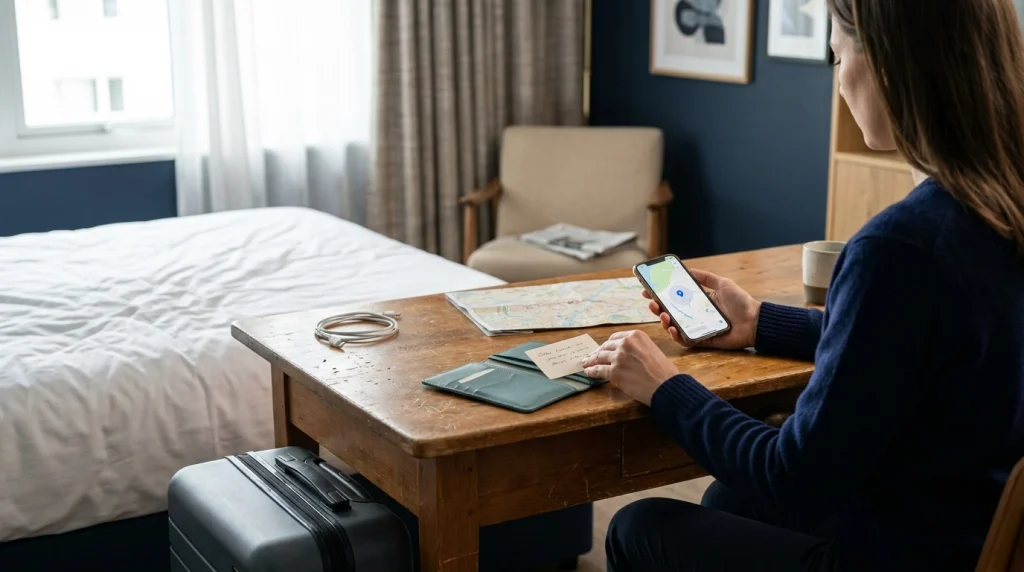
Preparing your hotel address in advance means you can communicate your destination without relying on memory, pronunciation, or a working internet connection. It also helps you avoid confusion between similarly named hotels or properties with multiple entrances.
What is a hotel address card?
A hotel address card is a short written record of your accommodation’s official name, complete address, telephone number, and useful directions. You can save it as a phone screenshot, keep it in your notes, or carry a printed copy.
For solo travelers, this simple backup is useful when a phone battery runs low, mobile data stops working, or a driver cannot understand a spoken address. It also makes returning to your accommodation easier after an evening out.
Which details should you include?
Copy the details directly from your confirmed reservation or the hotel’s official website. Avoid relying on a shortened address from an old message or a location remembered from a previous visit.
- Hotel name: Include the complete property name and branch when relevant.
- Full address: Record the street, building number, district, city, and postal code when available.
- Local-language name: Include the original spelling or script provided by the hotel.
- Telephone number: Save the hotel’s public contact number, including the country code.
- Entrance or landmark: Add the confirmed guest entrance or a nearby recognizable landmark if useful.
Keep this information separate from your passport details, payment information, and reservation confirmation codes. A driver generally needs your destination, not access to your entire booking account.
Why is this especially useful for women traveling alone?
Traveling alone means you may need to solve a transportation problem without a companion to interpret, check a map, or contact reception. Preparing the address reduces the number of decisions you must make when tired, distracted, or arriving after dark.
It is not a guarantee of safety, but it gives you more control over the journey. You can check the destination before boarding and avoid depending entirely on a stranger’s directions.
Section takeaway: Save the verified hotel address in at least two accessible formats, such as a phone screenshot and a paper card.
What Is the Best Way to Show a Driver Your Hotel Address?
The best method is usually to show the driver a clear, verified destination on your phone before the ride starts. A written address is particularly helpful when pronunciation is difficult, while a map pin can clarify the property’s location and entrance.
1. Show your booking confirmation
Open your hotel reservation and display the property name and address. This is a practical starting point because the information comes from the booking you already have.
Check that the confirmation shows the correct city and branch. If the address appears only in English, ask the hotel to provide its official local-language version before your trip.
2. Use a map pin
Open your preferred navigation app and select the exact hotel location. Zoom in to check the surrounding streets and, where possible, identify the guest entrance rather than a nearby parking area or service road.
Show the driver the destination before departing and confirm that the pin matches the hotel on your booking. A map pin is helpful, but it can be inaccurate, so don’t treat it as independent proof of the correct entrance.
3. Carry a written address card
A paper card is useful when your phone battery dies or you cannot open your maps. Ask hotel reception to write the address in the local language and confirm that the details are current.
If you’re changing hotels, replace the old card immediately. Keeping several similar-looking address cards together can cause confusion when you’re tired or in a hurry.
4. Enter the destination in a ride-hailing app
Where reputable ride-hailing services operate, entering the hotel address directly into the app can reduce the need to explain it verbally. Review the selected property, destination pin, pickup location, and driver information before entering the vehicle.
Don’t assume every app works in every country or accepts every payment method. Check local availability and requirements before relying on a service for your airport arrival.
| Method | Best use | Main limitation |
|---|---|---|
| Booking screenshot | Showing the confirmed hotel details | May lack the local-language address |
| Map pin | Identifying the location visually | May point to the wrong entrance |
| Printed address card | Backup when your phone is unavailable | Can become outdated after a hotel change |
| Ride-hailing app | Booking and monitoring a supported trip | Depends on local availability, connectivity, and app access |
| Hotel staff assistance | Clarifying an unfamiliar address | Requires access to a responsive staff member |
You don’t need to choose just one method. Combining a screenshot, a map pin, and a written backup provides more flexibility if one option fails.
Section takeaway: Use the clearest verified address available, then keep another way to access the same information.
How Can You Communicate When You Don’t Speak the Local Language?
You can communicate your hotel address without speaking the local language fluently. Showing a written destination, using a translation tool, and asking hotel staff for help can make the exchange clearer than trying to pronounce unfamiliar street names.
Use a short, polite phrase
Keep your request simple and show the address at the same time. You don’t need to explain your itinerary or tell the driver that you’re traveling alone.
These English phrases are useful when the driver understands some English or when a translation app can display them in the local language.
- “Could you take me to this address, please?”
- “Is this the correct entrance to the hotel?”
- “Could you please confirm the destination?”
- “Could you call the hotel to confirm the address?”
- “Please stop at a safe, public place.”
Ask the hotel for a local-language address
If you’re visiting a country where drivers commonly use a different writing system, ask your accommodation to send its full address in the local script. Copy the information rather than translating the hotel name yourself.
This is especially useful for accommodation inside a large complex, a property with several branches, or a hotel whose local name differs from its English marketing name. The same approach works for many destinations, although the preferred navigation apps and address formats vary.
Use translation tools carefully
A translation app can help you communicate a short question, understand a driver’s response, or request assistance. Download the language pack in advance if the app supports offline translation.
However, don’t assume a machine translation has corrected an address accurately. Keep the original hotel details visible, and ask the hotel to verify any translated version before using it.
Ask a trusted staff member to help
If the driver cannot identify the hotel, contact reception using the property’s official telephone number or messaging channel. Staff may be able to explain the destination directly or confirm a nearby landmark.
At an airport or station, a staffed information desk or official taxi counter may also help you confirm the address before you depart. Avoid handing an unlocked phone containing personal information to an unfamiliar person when showing the screen is enough.
Section takeaway: Keep your communication short, show the original address, and use verified staff assistance when translation alone isn’t enough.
How Can You Stay Safe When Taking a Taxi or Rideshare Alone?
Sharing your hotel address correctly is only one part of a safe journey. Before boarding, check that the vehicle and driver match the official booking or that the taxi comes from a legitimate local stand.
Choose a reliable pickup option
At airports, railway stations, and major transport hubs, use official taxi ranks or authorized transportation services where available. If you book through an app, compare the vehicle registration, model, and driver information with the details displayed in your booking.
Don’t enter a vehicle simply because someone approaches you and offers a ride. If the details do not match, cancel or step away to a staffed, public location and arrange alternative transport.
Share your trip details thoughtfully
When appropriate, share your ride status, driver information, or estimated arrival time with a trusted contact. Some ride-hailing services provide trip-sharing and emergency features, but their availability varies by country and service.
Use the safety tools available in your actual app, and learn where they are before you need them. A screenshot of the vehicle details can also be useful if you need to explain your journey to someone later.
Stay aware of the route
Keep your map accessible and follow the journey without becoming distracted by your phone. You don’t need to direct every turn, but you should notice if the driver heads somewhere that clearly conflicts with the expected destination.
If the driver takes an unexplained detour, ask a short question or request clarification. If you feel unsafe, ask to stop at a suitable, populated location and contact local emergency services or the relevant platform’s safety support as appropriate.
Protect your personal information
You can communicate the destination without explaining that you’re alone, sharing your room number, or revealing when you’ll leave the hotel. Keep the conversation focused on the journey.
Similarly, avoid displaying your passport, payment credentials, or complete reservation details unnecessarily. Share only the information needed to resolve the transportation issue.
For broader preparation, review your government’s current travel advice before departure. The U.S. Department of State’s travel resources offer destination information and safety guidance for U.S. citizens, while travelers of other nationalities should consult their own government’s official travel advisory service.
Section takeaway: Verify the ride, keep control of your destination information, and know how to get help if the journey changes unexpectedly.
What Should You Do If the Driver Cannot Find Your Hotel?
If a driver cannot locate your accommodation, avoid guessing or agreeing to an unfamiliar destination just to keep the journey moving. Pause the conversation, check the address against your booking, and contact the hotel if the details remain unclear.
Check for a similar hotel name
Hotels in the same city may have similar names, and a chain may operate several properties in different neighborhoods. Compare the full name, district, street address, and branch before confirming the destination again.
If you notice a mismatch, correct it before the vehicle departs whenever possible. If you’re already traveling, ask for clarification and choose a safe place to stop if the destination needs to be changed.
Confirm the correct entrance
Some hotels sit inside shopping centers, office buildings, gated developments, or large resort complexes. A map may show the general property rather than the entrance used by arriving guests.
Ask reception to confirm the correct drop-off point or provide a nearby landmark. If the driver cannot reach the entrance, agree on a clear, public alternative that you can identify before leaving the vehicle.
What if your phone has no signal or battery?
Use your saved screenshot or printed address card to show the driver the destination. This is why keeping the address available offline is worth doing before you leave accommodation with reliable connectivity.
If the address is incomplete, seek help from an official information counter, staffed transport desk, or other appropriate public service point. Avoid following an unfamiliar person to a secluded location simply because they offer to guide you.
What if you feel uncomfortable with the driver?
You don’t have to continue a journey that feels unsafe. If you’re still outside the vehicle, decline the ride and return to a staffed public area; if you’re already inside, ask to stop somewhere appropriate and contact local help if necessary.
Use the ride-hailing app’s safety or emergency features when available, and contact local emergency services if you face an immediate threat. The appropriate emergency number and response options depend on your destination.
Section takeaway: Verify the address first, ask the hotel for clarification, and prioritize a safe public location over reaching the hotel as quickly as possible.
What Should You Check Before, During, and After the Ride?
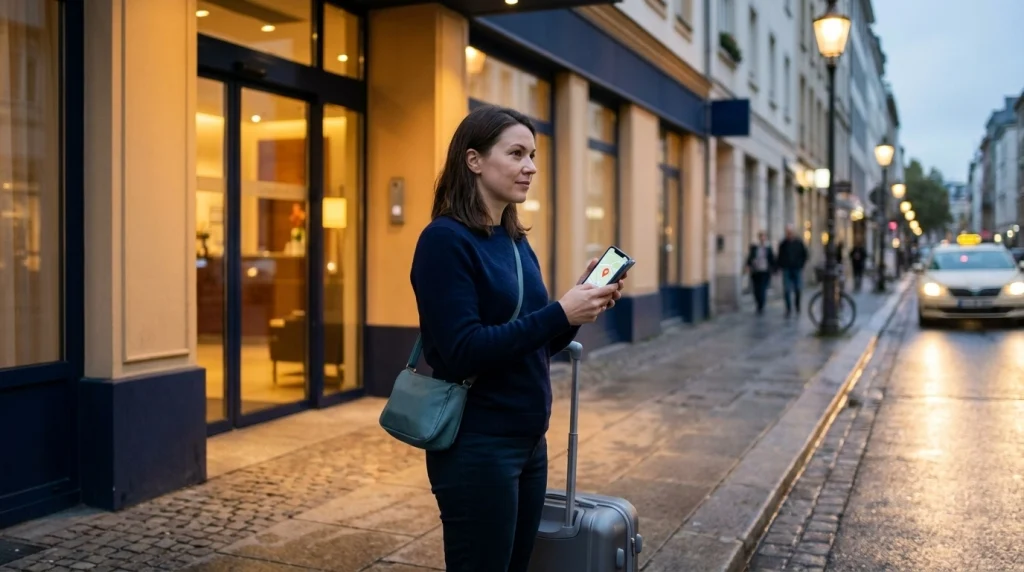
A simple transportation routine can make hotel arrivals more predictable. The following checklist covers the key decisions without requiring you to memorize a long list of safety rules.
Before getting into the vehicle
- Confirm the hotel name, full address, and entrance using your booking.
- Save the address as a screenshot and prepare an offline backup.
- Choose an official taxi service or a reputable ride-hailing option available locally.
- Check the vehicle registration and driver details where applicable.
- Confirm the destination and understand the fare arrangement, including whether a meter or agreed price applies.
- Share trip information with a trusted contact if appropriate.
During the journey
- Keep your phone accessible and your map available when practical.
- Check that the route generally matches the intended destination.
- Ask for clarification if the driver appears to be heading to the wrong place.
- Keep valuables and sensitive personal information secure.
- Use available trip-monitoring tools and seek help if you feel threatened.
When you arrive
- Confirm that the vehicle has reached the correct hotel or agreed entrance.
- Collect your bags and personal belongings before leaving.
- Follow the local payment process and keep a receipt when available.
- Check in with your trusted contact if you previously shared your trip.
- Update your saved address if you change accommodation.
As of 2026, app features, payment options, transport regulations, and local emergency procedures continue to vary between destinations. Check current local guidance rather than assuming the same system works everywhere.
Pro tip: Before traveling, consult your government’s official destination advice and your accommodation’s verified contact details. For U.S. citizens, the Smart Traveler Enrollment Program (STEP) provides a way to register qualifying international trips and receive relevant safety information.
Section takeaway: Prepare the address before leaving, verify the journey as it happens, and confirm your arrival at the correct property.
Frequently Asked Questions
Can I simply show a taxi driver my hotel booking?
Yes, a booking confirmation is often a useful starting point because it displays the property’s name and address. If the driver cannot read the language or the property has several branches, also show the local-language address, a map pin, or the hotel’s public telephone number.
Should I give a taxi driver my hotel room number?
No, a room number is not normally needed to navigate to a hotel entrance. Give the driver the accommodation’s public address and the correct drop-off point, and keep your room number private unless there is a specific, legitimate reason to share it.
How can I get back to my hotel if my phone dies?
Carry a printed address card or keep a separate paper record in your wallet. Include the hotel’s full name, complete address, and public telephone number, preferably in the local language, so you can show the information to an authorized driver or ask an appropriate staff member for help.
Is a ride-hailing app safer than a regular taxi?
Neither option is automatically safer in every destination. A reputable app may provide driver details, trip records, route monitoring, and emergency features, while an official taxi rank may be a practical choice where apps are unreliable or unavailable. Evaluate local transport options and verify the vehicle before boarding.
Should I tell the driver that I’m traveling alone?
No, you don’t need to disclose that you’re traveling alone to communicate your destination. Keep the conversation focused on the address, entrance, route, and fare, and share your travel plans with a trusted contact when that is useful.
What if the driver asks me to get out somewhere other than my hotel?
Ask why the vehicle cannot reach the confirmed destination and check the location before agreeing to leave. If a road closure or access restriction requires a different drop-off, choose a clear, public place near the hotel when possible; if the explanation seems suspicious, remain in a safe position and contact the appropriate transport service or local help.
Should I save my hotel address in the local language?
Yes, when the hotel can provide a verified local-language version, save it alongside the original address. This can reduce misunderstandings in places where drivers or navigation systems use local spelling, but don’t create a translation yourself and assume it is accurate without checking it.
Final Takeaway: Make Your Hotel Address Easy to Show
Communicating your hotel address as a solo female traveler doesn’t have to be difficult. A verified booking screenshot, a saved map pin, and a local-language address card give you several ways to explain your destination even when communication is limited.
Pair that preparation with sensible transportation precautions: verify your driver, confirm the destination before departure, keep track of the route, and know how to contact your accommodation or local emergency services. Small steps like these can make arriving in an unfamiliar city feel more manageable.
Before your next solo trip, prepare your address card and test that you can open it without an internet connection. That simple habit can save time and reduce stress when you need to get back to your hotel.