What Comfort Items Are Useful for Women Traveling Alone?
Quick Answer
The most useful comfort items for women traveling alone are small things that improve sleep, reduce stress, support hygiene, and make long travel days easier. I prioritize an eye mask, earplugs, a light scarf, comfortable socks, a reusable water bottle, familiar toiletries, period supplies, a power bank, simple snacks, and a small health kit based on the CDC’s travel packing guidance.
The comfort items I prioritize
- Sleep kit: An eye mask and earplugs make unfamiliar rooms, overnight transport, and noisy hotels easier to handle.
- Warm layer: A lightweight scarf or wrap helps with cold airplanes, air-conditioning, modesty, and changing weather.
- Personal care: Familiar toiletries and menstrual products prevent unnecessary searches when you arrive tired.
- Phone backup: A charged power bank reduces stress when your phone handles maps, tickets, messages, and reservations.
- Food and water: A refillable bottle and simple snack help when transport runs late or nearby food options are limited.
- Health basics: Your usual medication and a small personalized health kit are more useful than a bulky collection of “just in case” products.
One rule that keeps my bag manageable
- Pack comfort items that solve a problem you realistically expect, not every problem you can imagine.
Traveling alone feels easier when your bag contains a few familiar things that help you settle, sleep, recharge, and feel like yourself. The best comfort items for women traveling alone aren’t necessarily expensive travel gadgets.
I look for items that earn their space repeatedly. If something helps on the plane, in my room, and during a tiring sightseeing day, it usually deserves a place in my bag.
In This Guide
- What Counts as a Comfort Item for Solo Female Travel?
- Which Comfort Items Help Most on Flights, Trains, and Long Travel Days?
- What Makes a Hotel or Hostel Room Feel More Comfortable?
- Which Personal Care Items Are Worth Packing?
- How Do You Pack for Comfort Without Overpacking?
- Frequently Asked Questions
- Final Takeaway
What Counts as a Comfort Item for Solo Female Travel?
A solo travel comfort item is anything small and practical that reduces physical discomfort, mental friction, or unnecessary stress while you’re away. It should make part of your trip easier without creating another packing problem.
I separate comfort from luxury. A silk pillowcase may feel lovely, but a charged power bank can provide more practical peace of mind when I’m navigating a new city alone.
Think about comfort in four categories
- Physical comfort: Things that help you sleep, stay warm, sit comfortably, or recover after a long day.
- Emotional comfort: Familiar routines or small possessions that make an unfamiliar room feel less strange.
- Personal comfort: Toiletries, period products, medication, and clothing that help you feel clean and prepared.
- Practical comfort: Items that prevent stressful problems, such as losing phone power or being hungry during a delay.
That last category matters more during solo travel. When you’re alone, you can’t casually borrow your friend’s charger, pain reliever, sweater, or snack.
You don’t need to prepare for everything. You simply need enough independence to solve common problems without turning your suitcase into a mobile storage unit.
Comfort is personal
One woman may sleep anywhere with no trouble. Another may need an eye mask, earplugs, and her own pillowcase before she can rest in a new environment.
Neither approach is wrong. Your best packing list should reflect what affects your mood, energy, sleep, and confidence.
I learned to pay attention to what I missed on previous trips. If I complained about cold transport three times, a light wrap became more important than an extra outfit.
Before an international trip, I also check the U.S. Department of State’s guidance for women travelers. Clothing expectations, health considerations, and personal safety needs can vary by destination.
Section Takeaway: The right comfort item solves a recurring problem. Pack for your real habits and destination rather than someone else’s ideal packing list.
Which Comfort Items Help Most on Flights, Trains, and Long Travel Days?
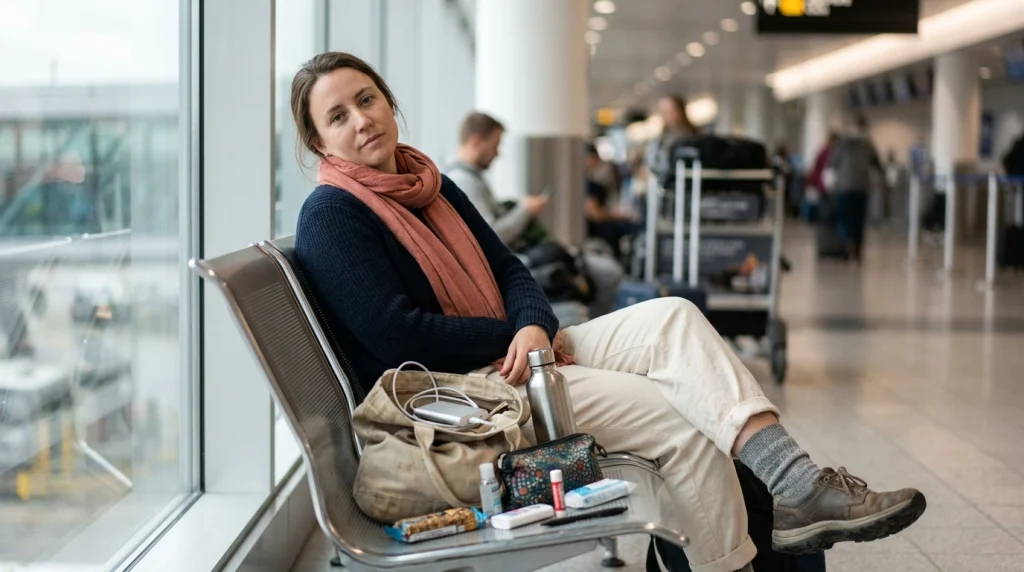
The best transit comfort items help you rest, regulate temperature, stay hydrated, and keep essentials accessible. I keep these items in my personal bag rather than my checked luggage.
That matters when a flight is delayed or a train ride lasts longer than planned. I want the things that keep me functional within arm’s reach.
My small sleep and rest kit
- Eye mask: Useful on overnight flights, bright trains, hostel rooms, and hotels with thin curtains.
- Earplugs: Tiny, inexpensive, and useful when traffic, roommates, hallway noise, or announcements interrupt sleep.
- Neck pillow: Worth considering for long journeys if you know you can sleep sitting upright.
- Comfortable socks: A clean pair can make a surprisingly large difference during a long flight.
- Light scarf or wrap: It works as warmth, a shoulder covering, a light blanket, or extra cushioning.
I don’t automatically bring a bulky travel pillow. If the journey is short, the space it consumes usually isn’t worth it for me.
Keep a small food and hydration backup
Travel schedules don’t always match meal schedules. I usually keep one simple snack where I can reach it without unpacking my bag.
- Nut or seed bars if suitable for your diet
- Crackers
- Dried fruit
- A small sandwich for shorter travel days
- An empty reusable water bottle for airport security, where permitted
Check local rules before carrying food across international borders. Some destinations restrict agricultural products, meat, dairy, fruit, seeds, and other foods.
Protect your phone battery
For a solo traveler, a phone often serves as a map, translator, ticket wallet, booking folder, camera, and communication device. That makes a power bank a comfort item as much as an electronic accessory.
I charge mine before every long travel day. I also carry the correct cable instead of assuming I’ll find one at the airport or station.
Create a small “arrival pouch”
Arriving somewhere new while tired is one of the easiest times to become scattered. I keep the items I’ll need first in one accessible pouch.
- Phone charging cable
- Earbuds
- Lip balm
- Tissues
- Hand sanitizer
- Pen
- Any medicine needed during the journey
- One payment method
I don’t place every valuable in that pouch. It is simply my grab-fast collection for the journey.
Section Takeaway: Put transit comfort items where you can reach them. Anything buried beneath your clothes is almost useless when you’re tired, cold, or stuck in your seat.
What Makes a Hotel or Hostel Room Feel More Comfortable?
A few familiar routines can make an unfamiliar accommodation feel calmer within minutes. I focus on sleep, lighting, organization, and having tomorrow’s essentials ready.
You don’t need to decorate the room. You want to reduce the little annoyances that make travel feel harder than home.
Build a simple sleep routine
I use the same small sleep kit in hotels, guesthouses, and hostels. Familiarity helps my brain recognize that the travel day is over.
- Eye mask
- Earplugs
- Comfortable sleepwear
- Charging cable long enough for awkward outlets
- Any nighttime medication
If you need white noise, download something before leaving home. Don’t depend on good Wi-Fi at midnight.
Bring one small item that feels familiar
This doesn’t need to be sentimental or valuable. In fact, I avoid traveling with anything I’d be devastated to lose.
A familiar tea bag, soft sleep shirt, tiny notebook, favorite hair tie, or travel-size version of your normal skincare can create a useful sense of routine.
Organize the room before you’re exhausted
When I check in, I don’t immediately scatter everything across the room. I give important objects a predictable place.
- Phone: Charge beside the bed or another fixed location.
- Room key: Keep it in the same pocket or dish each time.
- Shoes: Place them where you can find them quickly.
- Tomorrow’s outfit: Set it aside before sleeping.
- Day bag: Repack it before bed rather than during a rushed morning.
This routine reduces the frantic “where did I put that?” feeling. It also helps me notice missing items before checkout.
Know your surroundings
Comfort isn’t only about soft objects. Knowing where you are and how you’ll leave the building can make a new accommodation feel more manageable.
For international travel, I review the latest official travel advisory information when planning. Travelers from other countries should check their own government’s equivalent guidance.
Pro tip: Official travel guidance can change. Recheck government destination information shortly before departure instead of relying only on advice saved months earlier.
Section Takeaway: Familiar routines often provide more comfort than extra possessions. Create predictable places for important items and make sleep easier before adding more gear.
Which Personal Care Items Are Worth Packing?
The most useful personal care items are the products you rely on and may not want to hunt for immediately after arrival. Pack enough for the trip while keeping destination restrictions and luggage rules in mind.
I don’t bring my entire bathroom cabinet. I bring the small group of products that would genuinely bother me if I couldn’t find a suitable substitute.
Keep your normal routine recognizable
- Toothbrush and toothpaste
- Deodorant
- Basic skincare
- Hairbrush or comb
- Hair ties or clips
- Menstrual products you prefer
- Contact lens supplies, if needed
- Glasses or backup vision supplies, if applicable
Menstrual products deserve extra thought when traveling somewhere unfamiliar. The products or absorbencies you normally buy may be harder to find in some destinations.
That doesn’t mean you need to carry months of supplies. Bring enough to prevent an urgent shopping trip while tired or jet-lagged.
Make a personalized travel health kit
Your health kit should match your destination, trip length, planned activities, and personal needs. The CDC recommends planning travel health supplies around those factors rather than treating one checklist as universal.
- Your regular prescription medicine
- A reasonable extra supply for delays, when permitted
- Basic first-aid items
- Any over-the-counter medicine you normally use
- Sun protection when relevant
- Insect repellent when destination risks make it appropriate
- Health insurance information
The CDC’s pre-travel health guidance recommends checking destination-specific health information before leaving. It also advises travelers to plan ahead for medicine and unexpected health needs.
Medication rules vary between countries. A medicine that is ordinary at home may face restrictions elsewhere, so verify entry rules before packing prescription or controlled medication.
Pro tip: For health requirements, medications, vaccines, and destination-specific risks, use official government or public-health sources rather than relying only on social media packing videos.
Don’t forget comfort after a long walking day
Foot comfort affects my mood more than almost any cosmetic item. Comfortable, already-tested shoes are usually more valuable than packing several fashionable pairs.
I also like having one clean, loose outfit for evenings. Changing after hours of walking helps create a clear break between sightseeing and rest.
Section Takeaway: Prioritize familiar personal-care and health items that would be inconvenient to replace quickly. Test shoes and important products before the trip, not during it.
How Do You Pack for Comfort Without Overpacking?
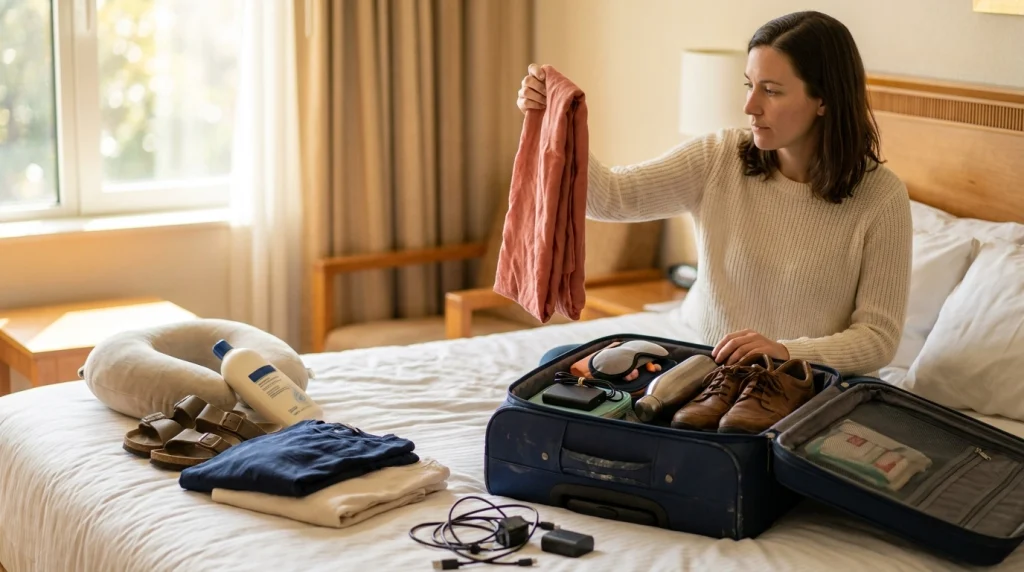
The easiest method is to give every comfort item a specific job. If you can’t explain when you’ll use something, reconsider packing it.
I also prefer items that solve more than one problem. A scarf that provides warmth, modesty, shade, and light cushioning earns space more easily than a single-purpose accessory.
Choose comfort items by trip type
| Trip Type | Useful Comfort Priorities | What I Would Limit |
|---|---|---|
| 2-night city break | Eye mask, earplugs, power bank, comfortable shoes, familiar toiletries, one light layer | Extra shoes, bulky pillow, full-size toiletries |
| 7-day international trip | Sleep kit, health supplies, period products, power bank, reusable bottle, scarf, small snack backup | Duplicate gadgets and “maybe” outfits |
| Hostel trip | Earplugs, eye mask, sleepwear, shower footwear where appropriate, small lock if lockers require one | Valuable sentimental belongings |
| Long train or bus journey | Warm layer, socks, water, snack, tissues, charger, offline entertainment | Items buried in checked or inaccessible luggage |
| Solo road trip | Water, snacks, charging cable, sunglasses, layers, health kit, emergency essentials | Loose items that clutter the driver’s area |
Use the “used, essential, unnecessary” test
After a trip, I mentally sort my belongings into three groups. This is one of the fastest ways I’ve found to improve future packing.
- Used: Items that genuinely improved the trip.
- Essential but unused: Medication, required documents, or sensible emergency supplies.
- Unnecessary: Items packed from anxiety rather than realistic need.
The third category is where overpacking usually hides. Three backup outfits, duplicate electronics, and bulky “comfort” gadgets can make moving alone more tiring.
Give yourself a comfort allowance
Minimalist packing doesn’t have to mean uncomfortable packing. I allow myself a few nonessential items if they noticeably improve my experience.
The important part is choosing them intentionally. I would rather carry one item I love using than five gadgets recommended by strangers online.
Prepare for communication problems too
Being able to contact someone can reduce stress when plans change. Save key information before departure instead of assuming you’ll always have mobile data.
Eligible U.S. travelers can also review the State Department’s Smart Traveler Enrollment Program for embassy and consulate alerts. Travelers of other nationalities should use equivalent services provided by their own governments where available.
As of 2026, I still think the best solo packing systems are simple. Your comfort kit should make you more mobile and self-sufficient, not make your luggage harder to manage.
Section Takeaway: Pack enough comfort to protect your energy, sleep, health, and confidence. Stop adding items when the weight of your bag starts creating more discomfort than those items solve.
Frequently Asked Questions
What should a woman always carry when traveling alone?
Keep identification, a working phone, a payment method, important medication, accommodation details, and essential travel documents accessible. I also carry a charging option and basic personal-care items because these solve many common travel-day problems.
Should I bring a travel pillow when traveling alone?
Bring one if you regularly sleep during long flights, buses, or trains and know the pillow works for you. For short trips, I often skip bulky pillows and prioritize an eye mask, earplugs, and a light layer instead.
What comfort items are best for a first solo trip?
Start with an eye mask, earplugs, comfortable walking shoes, a light scarf, familiar toiletries, a reusable bottle, a snack, and a power bank. Add personal health and menstrual supplies according to your needs and destination.
How can I make a hotel room feel less lonely when traveling alone?
Create a small evening routine instead of filling the room with belongings. Shower, change into comfortable clothes, prepare tomorrow’s bag, call someone if you want connection, and use familiar music, reading, or another calming routine.
Are personal safety alarms a comfort item for solo female travelers?
Some travelers feel more confident carrying a personal alarm, but laws and transport rules vary by destination. Check local restrictions before packing safety devices, especially sprays or other products that may be prohibited.
How many comfort items should I pack for a one-week solo trip?
There is no ideal number, but a small kit of roughly six to ten multipurpose items is enough for many travelers. Focus on sleep, temperature, hydration, phone power, personal care, medication, and one or two familiar items.
Should comfort items go in checked luggage or a carry-on?
Keep anything you may need during the journey in your carry-on or personal item. Medication, chargers, sleep accessories, a warm layer, basic toiletries, and essential documents are most useful when they stay accessible.
Final Takeaway
The best comfort items for women traveling alone are the ones that make independence easier. They help you rest, stay clean, manage your phone, handle a delay, and feel settled without weighing you down.
Start with your normal habits rather than a huge internet packing list. Think about what makes you cold, tired, hungry, uncomfortable, anxious, or frustrated during travel.
- Protect your sleep with an eye mask and earplugs.
- Pack one versatile layer for changing temperatures.
- Carry familiar personal-care and menstrual products.
- Keep medication and health essentials organized.
- Bring a charged power bank and correct cable.
- Keep water and a simple snack available when practical.
- Choose comfortable, tested footwear.
- Leave bulky “just in case” items behind unless they solve a realistic need.
My goal isn’t to feel exactly as comfortable as I do at home. It’s to remove enough small problems that I can spend more energy enjoying the freedom of traveling on my own.
Pack for that feeling. Your bag will usually end up lighter, more useful, and far easier to manage.