How Can a Solo Female Traveler Choose a Destination for a Relaxing Trip?
Quick Answer
A solo female traveler should choose a relaxing destination by prioritizing easy transportation, comfortable accommodation, manageable daily activities, reliable services, and a pace that matches her energy. Before booking an international trip, check the destination’s current information through the U.S. State Department travel planning resources or the equivalent authority for your nationality.
Choose a relaxing destination in six steps
- Define relaxation: Decide whether you want beaches, nature, cafés, spa time, cultural sightseeing, or simply fewer responsibilities.
- Reduce logistics: Favor direct transportation, one accommodation base, and short transfers.
- Check everyday comfort: Research neighborhoods, transport, food access, opening hours, and how easy it is to return to your accommodation.
- Leave breathing room: Choose somewhere enjoyable without filling every day with must-see attractions.
- Research current conditions: Check official safety, entry, health, and transportation information before paying for non-refundable bookings.
- Use the tired-arrival test: Pick a place you could still navigate comfortably after a delayed flight and a long travel day.
One useful rule
- If a destination only feels relaxing when every connection, reservation, and activity works perfectly, choose an easier trip.
When women ask me how can a solo female traveler choose a destination for a relaxing trip, I don’t start with a list of famous places. I start with one question: what would make this trip feel easy to you?
A peaceful beach may relax one traveler and bore another. A walkable city full of cafés may feel restorative to someone who gets anxious in isolated places.
That distinction matters. The best relaxing solo destination isn’t automatically the quietest destination.
In This Guide
- What Makes a Destination Relaxing for a Solo Female Traveler?
- What Should You Research Before Choosing a Relaxing Destination?
- Which Type of Destination Fits Your Travel Style?
- How Much Planning Makes a Solo Trip Feel More Relaxing?
- How Should Safety and Comfort Affect Your Decision?
- How Can You Compare Your Final Destination Choices?
- Frequently Asked Questions
What Makes a Destination Relaxing for a Solo Female Traveler?
A relaxing solo destination removes unnecessary friction. You should be able to sleep comfortably, move around without constant problem-solving, eat easily, and change your plans without creating a crisis.
Relaxation is partly emotional. It also depends on logistics.
Definition: A relaxing solo trip is an independent journey designed around low logistical stress, manageable activities, comfortable downtime, and enough flexibility to change plans without major consequences.
Start by defining what relaxation means to you
Don’t search for “relaxing destinations” until you know what you want to recover from. Someone exhausted by work meetings may want silence, while someone living alone may want gentle social energy.
Write down three things you want more of and three things you want less of.
- More rest: Look for comfortable accommodation, beaches, gardens, wellness options, or slow mornings.
- More nature: Consider established coastal towns, lake regions, mountain bases, or national-park gateway towns.
- More culture: Choose a compact city with museums, cafés, markets, and easy public transportation.
- Less driving: Prioritize walkability, trains, trams, metros, or simple airport transfers.
- Less social pressure: Choose a private room or hotel instead of accommodation built around constant group activities.
- Less decision fatigue: Stay in one base rather than changing hotels every night.
Choose easy over impressive
One of my favorite planning filters is simple: would I still enjoy this place if I completed only half my itinerary? If the answer is yes, the destination has good relaxation potential.
A trip becomes tiring when sightseeing starts feeling like unfinished work.
I prefer destinations where an unplanned afternoon still works. A café, waterfront walk, park, market, or comfortable room can become the day’s activity.
- Choose one main accommodation base.
- Keep most daily journeys short.
- Limit activities requiring timed reservations.
- Avoid stacking early starts on consecutive days.
- Keep at least one unscheduled half-day.
Section Takeaway: A relaxing destination is not necessarily quiet. It is somewhere that lets you enjoy yourself without constantly solving logistical problems.
What Should You Research Before Choosing a Relaxing Destination?
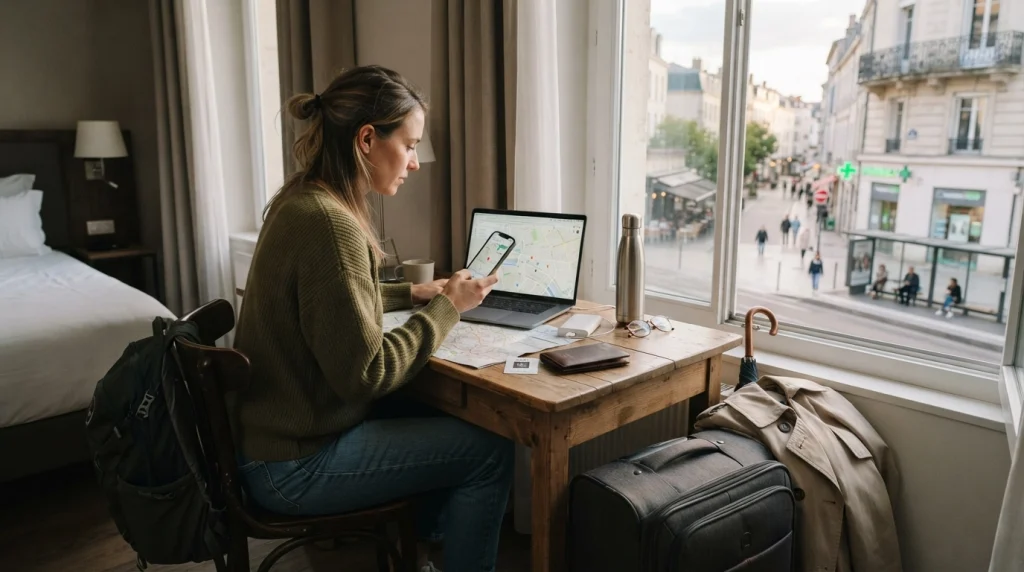
Research the ordinary parts of the trip before the exciting parts. Airport transfers, accommodation location, transportation, meals, weather, and opening hours often affect relaxation more than famous attractions.
Start with the arrival.
Use the tired-arrival test
Imagine you land after a delayed flight. You’re hungry, your phone has 15% battery, and you’ve slept badly.
Could you still reach your accommodation without panic?
- Is there a direct train, bus, shuttle, or clearly regulated taxi option?
- Can you reach the accommodation without three transfers?
- Will reception still be open?
- Can you buy food nearby?
- Can you save the route offline?
- Do you have a backup payment method?
A destination that passes this test usually feels easier once you’re rested too.
Research the neighborhood, not only the hotel
A beautiful hotel can become inconvenient if every meal requires transportation. I would rather stay somewhere slightly less glamorous with useful services within an easy walk.
Check the immediate area on a map before booking.
- Restaurants or groceries within a comfortable distance
- Public transportation stops
- A pharmacy or basic shop
- Well-lit routes back to your accommodation
- Cafés or indoor places for bad-weather days
- Alternative transportation if your first option fails
Look at weather in practical terms
Don’t stop at the average temperature. Research rainfall patterns, humidity, daylight hours, extreme heat, seasonal closures, and whether your preferred activities operate during your dates.
A cheap shoulder-season trip isn’t relaxing if everything you hoped to do is weather-dependent.
For international travel, I also check current health guidance before finalizing plans. The CDC’s pre-travel guidance recommends reviewing destination-specific health information and discussing relevant health needs before departure.
Pro tip: Recheck official health, entry, and travel information shortly before departure because requirements and local conditions can change.
Section Takeaway: Research the trip’s boring details early. Easy arrivals, useful neighborhoods, reliable transportation, and realistic weather expectations create more relaxation than a long attractions list.
Which Type of Destination Fits Your Travel Style?
The best destination style depends on how you recharge. A traveler who loves people may feel isolated at a remote resort, while an introverted traveler may find a major capital exhausting.
Think about environment before country.
| Destination Style | Best For | Ideal Trip Length | Main Planning Risk |
|---|---|---|---|
| Compact cultural city | Museums, cafés, food, easy sightseeing | 3–5 days | Overplanning attractions |
| Beach or island base | Rest, swimming, reading, slow days | 4–7 days | Complicated transfers or seasonal weather |
| Nature gateway town | Scenery, gentle hiking, outdoor time | 3–6 days | Remote transport or limited services |
| Wellness or spa destination | Recovery, treatments, structured downtime | 3–5 days | Higher accommodation costs |
| Train-connected region | Variety without driving | 5–8 days | Adding too many stops |
Choose a city if convenience relaxes you
Cities can work well for solo women because accommodation, food, transportation, and indoor activities are concentrated in one place. They also give you backup options when weather or energy changes.
The mistake is choosing a huge city and trying to conquer it.
Stay in one convenient area. Pick one or two neighborhoods each day rather than crossing the city repeatedly.
Choose a beach destination if you can tolerate quiet time
Beach trips sound universally relaxing, but they create a lot of unstructured time. That is wonderful if reading, swimming, journaling, or doing nothing feels natural to you.
It can feel lonely if you need constant stimulation.
Lonely Planet’s solo-travel coverage, for example, describes destinations such as Grenada as combining beaches with outdoor activities, showing why a relaxing trip can still include optional adventures.
Choose nature without choosing isolation
A nature-focused solo trip can be peaceful without becoming a wilderness expedition. I prefer established trails, staffed accommodation, good phone coverage, and nearby services when relaxation is the goal.
- Marked day hikes rather than remote backcountry routes
- Lodges or hotels rather than isolated camping
- Activities that finish comfortably before dark
- Accessible food and transportation
- Backup indoor activities when weather changes
Section Takeaway: Match the environment to how you personally recharge. A famous “relaxing” destination can still be the wrong choice if its pace, isolation, or logistics conflict with your travel style.
How Much Planning Makes a Solo Trip Feel More Relaxing?
Plan enough to remove uncertainty, but not enough to turn the vacation into a timetable. For most relaxing solo trips, I plan the framework and leave the middle flexible.
The framework includes accommodation, arrival transportation, essential reservations, and a few anchor activities.
Use one anchor activity per day
An anchor activity is the one thing you’d like to accomplish that day. Everything around it can remain optional.
For a four-day relaxing city trip, I might use this rhythm:
- Day 1: Arrive, check in, learn the immediate area, eat nearby, and sleep early.
- Day 2: Visit one major attraction, then leave the afternoon open.
- Day 3: Join one tour, class, spa appointment, or outdoor activity.
- Day 4: Have a slow breakfast, walk somewhere pleasant, and depart with extra time.
Notice what isn’t there. There are no six-attraction days or constant hotel changes.
Protect mornings or evenings
I like keeping one part of the day consistently quiet. On some trips, that means slow breakfasts and no reservations before 10 a.m.
On others, I explore early and keep evenings simple.
- Choose accommodation where spending time in your room feels comfortable.
- Avoid booking every dinner in advance.
- Schedule demanding activities on separate days.
- Give yourself extra time around transportation.
- Keep at least one weather-proof backup activity.
Budget for convenience
A relaxing trip sometimes costs slightly more because convenience has value. A central room, direct train, airport transfer, or occasional taxi may remove hours of stress.
Decide where convenience matters most before booking.
I would rather spend more on a well-located room and less on attractions than save money by staying somewhere that creates two long commutes every day.
Section Takeaway: Plan the edges of the trip carefully and leave the center flexible. One anchor activity per day usually creates enough structure without turning relaxation into another task list.
How Should Safety and Comfort Affect Your Decision?
Safety research should narrow your options, not make you afraid of every destination. Look at current official information, neighborhood-level logistics, transportation, local laws, and how easily you could change your plan.
Conditions also change. Recheck them before departure.
Separate destination risk from trip-design risk
Two travelers can visit the same place and create very different trips. Staying centrally with predictable transportation is different from arriving after midnight and traveling onward to an isolated property.
Ask practical questions.
- Can I arrive during daylight?
- Is my accommodation in a convenient area?
- Can I return without depending on one transportation option?
- Will I need to walk long distances alone after dark?
- Is mobile data reliable enough for navigation?
- What would I do if I wanted to change hotels?
Check official information before booking
The U.S. State Department advises international travelers to review destination-specific travel advisories, entry requirements, local laws, and embassy information. Its planning guidance also covers the Smart Traveler Enrollment Program for eligible U.S. travelers.
Travelers from other countries should also check their own government’s official foreign-travel guidance.
Pro tip: Use government advisories as one research layer. Then research your exact neighborhood, transportation plan, arrival time, and planned activities separately.
Build one backup for every important dependency
You do not need a disaster plan for every possible problem. You do need alternatives for the things your trip depends on.
- Transportation: Know a second way to reach your accommodation.
- Money: Carry a backup card separately from your main payment method.
- Navigation: Save important addresses and maps offline.
- Communication: Know how you’ll access mobile data or Wi-Fi.
- Accommodation: Identify another hotel area you could use if necessary.
- Health care: Know how your insurance works abroad and what emergency coverage you have.
The CDC recommends making a plan for accessing medical care while traveling and understanding what your insurance covers.
Section Takeaway: Relaxation comes partly from knowing you have options. A simple backup plan reduces the pressure to make every original plan work perfectly.
How Can You Compare Your Final Destination Choices?

Once you have two or three possibilities, stop collecting more destinations. Compare the finalists using the same questions.
I use a simple low-stress destination test.
Score the logistics before the attractions
- Arrival: Can you reach your accommodation easily?
- Transport: Can you get around without constant planning?
- Accommodation: Can you afford a location that feels convenient?
- Food: Are easy meal options nearby?
- Pace: Can you enjoy the destination without a packed itinerary?
- Weather: Does the season suit what you want to do?
- Backup options: Can you change activities, transportation, or accommodation?
- Personal excitement: Do you genuinely want to be there?
That last question matters. Don’t choose a destination solely because someone online described it as perfect for solo women.
Your trip should still excite you.
Try the bad-day test
Imagine it rains all afternoon. Your planned activity gets canceled, you’re tired, and you don’t feel like socializing.
Would you still have an acceptable day?
- Could you spend time in a café or museum?
- Would your accommodation be comfortable enough for a few hours?
- Could you order or easily find food?
- Could you move tomorrow’s activity without losing a large amount of money?
- Would staying in for an evening feel safe and comfortable?
If the answer is mostly yes, the destination has flexibility.
Notice which trip you feel relieved imagining
Sometimes two destinations look equally good on paper. One still creates a long mental checklist, while the other makes you think, “I could handle that.”
Pay attention to that difference.
A relaxing solo trip doesn’t need to prove anything. You don’t need the hardest itinerary, the most countries, or the most adventurous story.
As of 2026, I still use simplicity as one of my strongest destination filters. Fewer transfers, fewer hotel changes, and more flexible time usually give me more space to enjoy being somewhere.
Section Takeaway: Compare destinations by how they function on an ordinary or imperfect day, not only by how beautiful they look when everything goes according to plan.
Frequently Asked Questions
What is the best type of destination for a first-time solo female traveler who wants to relax?
A compact city, easy beach destination, wellness town, or established nature base can work well. Prioritize simple transportation, one accommodation base, nearby food, reliable services, and enough activities to enjoy without needing a packed schedule.
Is a beach vacation good for a woman traveling alone?
Yes, if you enjoy unstructured downtime and choose a beach destination with suitable accommodation, transportation, food access, and activities. If too much quiet time makes you lonely, choose a beach town with cafés, tours, classes, or other optional social activities.
Should I choose a city or a small town for a relaxing solo trip?
Choose based on what reduces your stress. Cities usually provide more transportation and backup options, while smaller destinations may offer a slower atmosphere. Research the exact transport, accommodation location, and services instead of assuming smaller automatically means easier.
How many days should a relaxing solo trip be?
Three to five days is a practical length for many first solo trips because it gives you time to settle in without making a long commitment. Experienced solo travelers may prefer a week or longer when transportation and accommodation remain simple.
How much should I schedule each day?
For a relaxation-focused trip, one main activity per day is often enough. Leave several hours open for meals, walking, spontaneous discoveries, weather changes, or rest. Your itinerary should give you direction without making you race against the clock.
How can I avoid feeling lonely on a relaxing solo vacation?
Build optional social contact into the trip. Consider a walking tour, cooking class, small group excursion, yoga session, hostel event, or café visit, while protecting enough private time to recharge. You don’t need to socialize every day.
What should I check immediately before an international solo trip?
Recheck official travel advisories, entry rules, passport and visa requirements, weather, transportation disruptions, accommodation details, and destination-specific health information. Save important addresses and booking details offline and make sure someone you trust has your basic itinerary.
Choose the Destination That Gives You Room to Breathe
A relaxing solo trip should feel manageable before you even leave home. Choose somewhere that matches your energy, keeps important logistics simple, and gives you permission to do less.
You don’t need to see everything. You need enough structure to feel comfortable and enough freedom to enjoy being on your own.
When comparing destinations, picture the ordinary moments: arriving tired, finding dinner, changing plans, spending an afternoon alone, and getting back to your room at the end of the day.
If those moments feel manageable, you’re probably looking at a much better relaxing solo destination.