How Do I Choose a First Solo Travel Destination as a Woman?
Quick Answer
Choose your first solo travel destination by looking for a place that matches your comfort level, budget, interests, transport confidence, and preferred trip pace. Before booking, check current conditions through an official resource such as the U.S. State Department travel-planning guidance rather than relying only on social media or generic “safest destination” lists.
A simple first-trip checklist
- Keep logistics simple: Favor one main base, straightforward airport transfers, and public transportation you can research before arrival.
- Check current conditions: Review government travel advice, local laws, health guidance, and transportation information.
- Match your confidence: Your first solo trip should stretch you without making every hour feel stressful.
- Set a realistic budget: Include accommodation, transport, food, activities, insurance, and an emergency cushion.
- Choose the right trip length: Four to seven nights often gives beginners enough time to settle in without feeling committed to a long journey.
- Plan the first day: Know exactly how you’ll reach your accommodation and what you’ll do after checking in.
One rule I recommend
- Don’t choose a destination because other women call it easy. Choose it because its challenges are challenges you personally feel ready to manage.
Your first solo trip doesn’t need to be your biggest adventure. It needs to be a trip where you can enjoy being alone without spending every hour solving avoidable problems.
When women ask me how to choose a first solo travel destination, I suggest starting with logistics rather than Instagram photos. This guide walks through solo female travel safety, destination fit, budgeting, accommodation, transport, and travel anxiety tips so you can make a decision that feels manageable.
In This Guide
What Makes a Good First Solo Travel Destination?
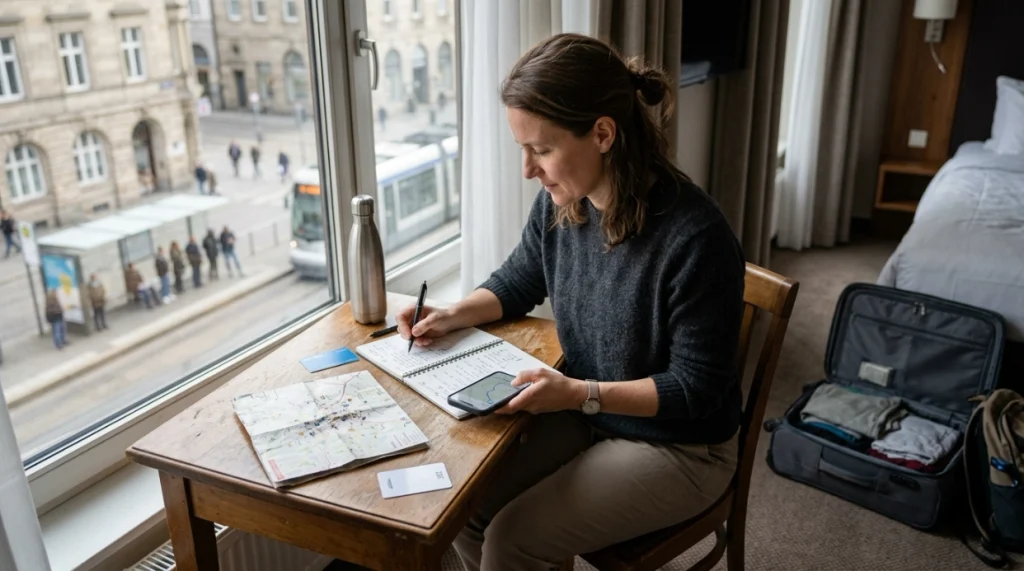
A good first solo destination is one where the everyday logistics feel understandable to you. You should be able to picture arriving, reaching your accommodation, finding food, getting around, and returning safely at the end of the day.
That definition matters because solo female travel isn’t a specific style of vacation. It simply means traveling without a companion while taking responsibility for your own planning, decisions, schedule, and personal safety.
A beginner-friendly solo destination isn’t automatically the destination with the fewest risks. It’s a place where you understand the likely challenges and feel capable of handling them independently.
Start with the things that make you nervous
Your worries are useful planning information. Write them down before researching destinations.
- Worried about getting lost? Look for destinations with well-documented public transportation and offline mapping options.
- Worried about loneliness? Consider social hostels, small-group walking tours, cooking classes, or destinations with active traveler communities.
- Worried about language barriers? Start somewhere where you can communicate comfortably or where tourism infrastructure is easy to navigate.
- Worried about eating alone? Choose a city with casual cafés, markets, counter seating, and takeaway options.
- Worried about nighttime? Build an itinerary that doesn’t depend on late-night transportation or nightlife.
- Worried about emergencies? Research hospitals, emergency numbers, insurance coverage, and your country’s nearest embassy or consulate.
The goal isn’t to eliminate every uncomfortable moment. That’s impossible.
Instead, remove unnecessary sources of stress so you have enough emotional bandwidth for the unexpected parts of travel.
Choose simplicity before novelty
For my ideal beginner itinerary, I prefer one accommodation base rather than changing hotels every day. Each additional transfer creates another opportunity for delays, navigation mistakes, luggage problems, or arriving somewhere after dark.
A four-night stay in one city may teach you more about solo travel than rushing through three cities in the same period. You get time to learn the streets and develop a routine.
- Book accommodation before arrival.
- Research at least two airport-transfer options.
- Save your accommodation address offline.
- Download an offline map.
- Know where you’ll eat on arrival day.
- Keep your first evening lightly scheduled.
Your accommodation matters more on a solo trip because there’s nobody beside you to compensate for a poor location. A cheaper room can become expensive in other ways if every outing requires complicated transportation.
The U.S. State Department’s lodging safety guidance recommends researching accommodation carefully and considering access to transportation and important services.
Don’t confuse popularity with personal fit
Tokyo can be wonderful for someone comfortable learning a large transit network. Another first-time traveler may enjoy a compact city such as Edinburgh or Ljubljana more.
Neither choice is universally better. Your preferred pace matters.
Section Takeaway: Your best first solo destination is usually the place where daily life looks manageable, not the place with the most impressive bucket-list photos.
How Do I Judge Solo Female Travel Safety?
Don’t try to identify a destination that is simply “safe” or “unsafe.” Look at specific risks, where they occur, how current the information is, and whether your planned activities expose you to them.
Conditions can also change. A recommendation written two years ago may not reflect what is happening in 2026.
Use several layers of information
I would never base a first solo trip on one TikTok video, Reddit thread, or travel blog. Personal experiences are useful, but they aren’t complete risk assessments.
Start with official information, then add recent traveler experiences for practical context.
- Check official travel advice. Review your government’s current destination advisory.
- Read the entire country page. Don’t stop at a headline or advisory level.
- Check women’s travel guidance. Look for local laws, cultural expectations, harassment concerns, and transportation guidance.
- Research neighborhoods separately. Conditions can vary substantially within one city.
- Check recent traveler reports. Use them for practical information such as taxi behavior, station layouts, or accommodation locations.
- Recheck shortly before departure. Demonstrations, transport disruptions, severe weather, and local events can change your plan.
The State Department maintains specific guidance for women travelers, including information about local customs, transportation, communication plans, and personal safety.
Ask better safety questions
“Is this city safe for women?” is too broad to produce a useful answer. Break it into situations you may actually face.
- Can I take a licensed taxi or tracked rideshare from the airport?
- Will I need to walk alone after dark?
- What are the common tourist scams?
- Are there local dress or behavior expectations I should understand?
- Is my accommodation near practical transportation?
- Can I reach my accommodation without arriving late at night?
- What emergency number should I call?
- Does my phone work immediately after arrival?
This approach turns vague travel anxiety into solvable planning tasks. That’s much more helpful.
Think about your itinerary, not just the country
A destination’s risk profile doesn’t tell the whole story. Your behavior and itinerary affect your exposure to problems.
A traveler using daytime trains, pre-booked accommodation, and organized hiking tours has a different trip from someone arriving at 1 a.m., hitchhiking, and improvising lodging each night.
- Choose daytime arrival when practical.
- Avoid unnecessary late-night transfers.
- Use licensed or well-established transportation options.
- Share your itinerary with someone you trust.
- Keep emergency money separate from your main wallet.
- Back up important travel documents securely.
Pro tip: Before international travel, check your government’s current destination advice and the CDC Travelers’ Health destination information for health notices and preparation guidance.
There is no planning method that guarantees nothing will go wrong. Good solo female travel safety planning is about recognizing risks early and giving yourself options.
Section Takeaway: Don’t search for a perfectly safe destination. Compare specific, current risks against your itinerary and your ability to manage them.
Which Type of Destination Fits Me?
The easiest destination to enjoy alone usually resembles the kind of travel you already like. A woman who loves museums and cafés needs a different first trip from someone who wants beaches and hiking.
Start with your travel personality. Then shortlist actual cities or regions.
If you want maximum independence
Consider a city where most daily activities don’t require a car, guide, or complicated transfer. Walkable areas and useful public transportation make spontaneous changes easier.
This is one reason city breaks work well for many first solo trips. You can return to your accommodation whenever your energy drops.
If you want social contact without a travel partner
Look for destinations offering structured ways to meet people. A social hostel doesn’t necessarily mean a party hostel.
- Hostel walking tours
- Food tours
- Small-group day trips
- Cooking classes
- Language exchanges
- Meetup events
- Group hiking excursions
Read recent accommodation reviews from women traveling alone before booking. Focus on location, staff availability, lockers, late-entry arrangements, and the atmosphere.
If unfamiliarity excites you
A larger cultural change can be part of the appeal. Tokyo, for example, may feel more adventurous to an English-speaking traveler than a weekend in Edinburgh.
That doesn’t mean you should avoid it. It means you should allow more preparation time for transportation, etiquette, payment methods, communication, and arrival logistics.
| Destination style | Example | Why it may suit a first trip | Main planning challenge |
|---|---|---|---|
| Compact English-speaking city | Edinburgh | Less language stress and many attractions concentrated around central areas | Accommodation costs and weather can affect plans |
| Compact Southern European city | Lisbon | Good option for travelers who enjoy cafés, neighborhoods, viewpoints, and city exploration | Hills, busy tourist areas, and transport planning |
| Large transit-focused city | Tokyo | Strong fit if you enjoy structured urban travel and detailed planning | Large station networks and a bigger cultural learning curve |
| Highly connected city-state | Singapore | Useful for travelers who value urban transport and compact sightseeing | Higher accommodation spending and important local rules |
| Smaller European capital | Ljubljana | Smaller scale may appeal to travelers who dislike huge metropolitan areas | Fewer big-city attractions if you want a packed schedule |
This table isn’t a safety ranking. It’s a way to see how different destination types create different planning demands.
Once you have three possible destinations, use a general guide such as Lonely Planet, official tourism information, transit websites, and current government advice to compare what daily travel would look like.
Don’t choose a destination because you think you “should”
Some women feel pressure to make their first solo trip dramatic. You don’t earn extra solo-travel points for crossing more borders or traveling farther.
A three-hour train ride to a city you’ve never explored still counts as solo travel. So does a weekend in your own country.
Section Takeaway: Choose the style of destination that matches how you already enjoy spending time. Familiar travel preferences make unfamiliar solo travel easier.
How Far, How Long, and How Much Should My First Solo Trip Be?
For many beginners, four to seven nights is a practical starting range. It’s long enough to experience solo routines but short enough to feel manageable if you discover solo travel is more tiring than expected.
You can absolutely travel longer. The point is to avoid turning your first experiment into an endurance test.
Decide whether you want a domestic or international first trip
A domestic solo trip removes several layers of complexity. You may already understand the language, phone system, currency, healthcare system, and transportation culture.
An international destination adds excitement but also more planning. Passports, visas, currency, roaming, travel insurance, and local laws may all matter.
- Choose domestic travel if your main goal is building confidence being alone.
- Choose nearby international travel if crossing a border feels exciting but you want a short journey home.
- Choose long-haul travel if the destination itself is your main motivation and you’re comfortable preparing more carefully.
Calculate the entire trip cost before booking flights
A cheap flight doesn’t make a destination cheap. Accommodation can quickly become the largest expense for someone traveling alone because you aren’t splitting a room with another person.
Create your own total-trip estimate before paying for anything non-refundable.
| Example 5-day budget item | Planning assumption | Example amount |
|---|---|---|
| Round-trip transportation | Flight or train | $350 |
| Accommodation | 4 nights × $100 | $400 |
| Food | 5 days × $40 | $200 |
| Local transportation | Airport transfer plus city transport | $90 |
| Activities | Tours, museums, or attractions | $120 |
| Insurance and miscellaneous costs | Planning allowance | $90 |
| Emergency cushion | Extra accessible funds | $250 |
| Example total | Illustrative budget only | $1,500 |
Those figures are an example planning exercise, not destination prices. Replace every amount with current quotes for your own trip.
Leave room in the itinerary
A first solo trip doesn’t need twelve hours of sightseeing every day. Solo travel can be mentally tiring because you’re constantly making decisions.
I like the idea of one anchor activity per day. Everything else can remain flexible.
- Day 1: Arrive, check in, buy essentials, and take a short neighborhood walk.
- Day 2: Main city attraction plus relaxed café or market time.
- Day 3: Small-group tour or day trip.
- Day 4: Flexible sightseeing and something social.
- Day 5: Easy breakfast, checkout, and departure.
This structure gives you practice with independence without demanding constant performance. You can always add more.
Section Takeaway: A shorter, properly funded first solo trip is often more useful than stretching your budget across a complicated itinerary.
How Do I Test a Destination Before Booking?
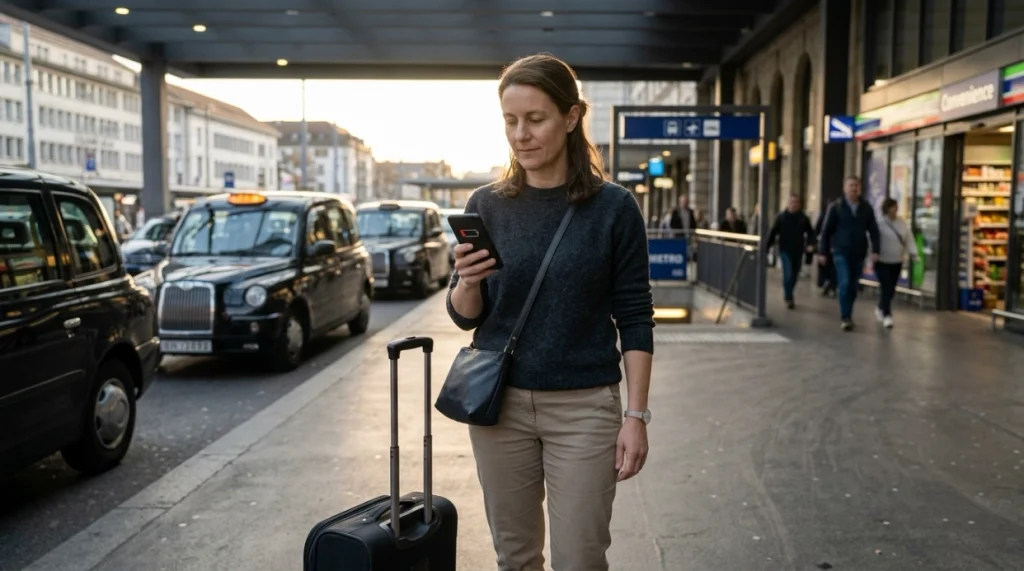
Before booking, mentally travel through your first 24 hours. If the plan contains several unanswered questions, research them before paying.
This simple exercise catches more practical problems than staring at another “best solo destinations” list.
Run the arrival-day test
Imagine you’ve just landed after a delayed flight. Your battery is at 25%, you’re hungry, and you’re carrying your luggage.
Can you still explain exactly what happens next?
- Where do you get mobile data or Wi-Fi?
- How do you travel from the airport or station?
- How long does that journey normally take?
- How do you pay?
- Where exactly is your accommodation?
- What happens if reception is closed?
- Where can you buy food and water nearby?
- Who do you contact if your original transport plan fails?
If you can answer those questions, the destination is becoming operational rather than theoretical. That’s a good sign.
Run the ordinary-Tuesday test
Vacation research usually focuses on landmarks. Solo comfort often depends more on ordinary moments.
- Where would you eat breakfast alone?
- Can you walk or use transit to your main activities?
- Is there a pharmacy or supermarket nearby?
- What would you do if it rained all day?
- Can you return to your accommodation before dark if you want to?
- Are there activities where meeting other travelers is possible?
This test is especially useful if travel anxiety appears when you have unstructured time. A loose solo trip itinerary can provide reassurance without locking every hour into reservations.
Run the bad-day test
Now imagine something minor goes wrong. Your train is canceled, you lose a bank card, or your accommodation isn’t what you expected.
You don’t need a solution to every possible disaster. You do need backup options.
- Carry at least two usable payment methods when possible.
- Keep emergency funds separate.
- Store document backups securely.
- Know how to contact your insurer.
- Save key addresses offline.
- Identify alternative accommodation before departure.
- Share your itinerary with a trusted contact.
Try a practice solo day first
If the idea of international solo travel still feels enormous, practice locally. Spend a full day exploring somewhere alone before booking a bigger trip.
Take public transportation, eat lunch alone, visit an attraction, navigate with your phone, and make decisions without asking someone else what they prefer.
A weekend away is an even better test. You’ll learn whether you enjoy the independence, how you react to evening solitude, and whether you tend to overschedule.
Use a final yes-or-no checklist
- I understand the current travel advice.
- I know how I’ll reach my accommodation.
- I can afford the trip without depending on emergency money.
- I have researched local customs and laws.
- I know how I will use my phone.
- I know my main transportation options.
- I have accommodation in a practical location.
- I have a basic communication plan with someone at home.
- I know what I’ll do during my first day.
- I feel more excited than trapped when I imagine taking the trip.
You don’t need zero anxiety before traveling alone. Some nerves are normal when you’re doing something new.
The important difference is whether your anxiety points to a solvable planning gap or tells you the destination is beyond your current comfort level.
Section Takeaway: A destination becomes a strong first-trip candidate when you can clearly explain how an ordinary day, an arrival day, and a difficult day would work.
Frequently Asked Questions About Choosing a First Solo Travel Destination
What is the best destination for a woman’s first solo trip?
There isn’t one destination that fits every woman. A good first choice matches your budget, language comfort, transportation confidence, interests, preferred climate, and tolerance for unfamiliar situations while giving you manageable logistics.
Should my first solo trip be in my own country?
It can be. Domestic travel lets you practice eating alone, navigating, choosing accommodation, handling evenings, and solving small problems without also managing visas, unfamiliar currencies, international phone service, or a major language barrier.
How many days should a first solo trip be?
Four to seven nights is a useful starting range for many beginners. A weekend can also work if your main goal is simply testing how solo travel feels before committing to a longer journey.
Is staying in a hostel better for a first-time solo female traveler?
Not automatically. Female-friendly hostels can offer social contact and budget savings, while hotels may offer more privacy and quiet. Check recent reviews, location, lockers, room arrangements, reception hours, and security procedures before choosing.
How can I avoid feeling lonely on my first solo trip?
Build optional social contact into your schedule. Walking tours, cooking classes, small-group excursions, hostel events, language exchanges, and Meetup-style gatherings let you spend time with people without giving up control of your itinerary.
Should I choose somewhere where English is widely spoken?
Only if language uncertainty is one of your biggest concerns. A language barrier can be manageable with translation apps and preparation, but reducing that challenge may help if you already feel nervous about navigation, transportation, or eating alone.
When should I reconsider a destination I’ve already chosen?
Reconsider when current official guidance changes significantly, important transportation becomes unreliable, your budget no longer works, health requirements create problems, or new information makes the trip feel substantially harder than the journey you originally planned.
Your first solo trip is not a test you need to pass. It’s your chance to discover what kind of traveler you are when every decision belongs to you.
Pick a destination whose logistics you understand, give yourself enough money and time, and keep the itinerary simple. Confidence usually grows from doing the manageable trip first, then making the next adventure bigger.