How Can a Woman Choose a Beach Destination for Solo Travel?
Quick Answer
A woman should choose a beach destination for solo travel by comparing safety, accommodation location, transportation, beach conditions, total cost, cultural expectations, and how easy the destination feels to navigate alone. Before booking, I also recommend checking current travel guidance for women rather than relying only on destination rankings or social media recommendations.
Check these before choosing
- Neighborhood safety: Research the exact area where you plan to sleep, eat, walk, and return after sunset.
- Easy transportation: Know how you will get from the airport or station to your accommodation before arriving.
- Beach conditions: Check swimming conditions, lifeguards, tides, weather, and how populated the beach normally is.
- Good accommodation: Prioritize a well-reviewed location close to restaurants, transport, and the beach rather than the cheapest room.
- Real trip cost: Include transfers, meals, local transportation, activities, insurance, and beach-related expenses.
- Comfort level: Choose somewhere whose language, culture, nightlife, transport, and pace match your solo travel experience.
My simplest rule
- Imagine arriving alone after a delayed flight. If getting safely to your room still looks straightforward, the destination is probably worth keeping on your shortlist.
A beautiful beach isn’t automatically a good solo destination. When I evaluate one, I care just as much about the streets behind the beach, transportation, accommodation, and evening routine.
This guide explains how a woman can choose a beach destination for solo travel without reducing the decision to a generic list of “safe beaches.” The goal is to find somewhere you can enjoy independently and navigate with confidence.
In This Guide
- What Makes a Beach Destination Good for a Woman Traveling Alone?
- How Should You Check Solo Female Travel Safety?
- How Easy Should Transportation and Accommodation Be?
- Which Type of Beach Destination Fits Your Travel Style?
- How Much Will the Beach Trip Really Cost?
- How Do You Make the Final Destination Choice?
- Frequently Asked Questions
What Makes a Beach Destination Good for a Woman Traveling Alone?
A good solo beach destination is one where enjoying the coast doesn’t require solving difficult transportation, accommodation, communication, or safety problems every day.
Solo female beach travel means visiting a coastal destination without a travel companion while independently managing your accommodation, transportation, activities, budget, and personal safety.
I don’t start by asking, “Which beach is prettiest?” I start by asking whether ordinary parts of the trip look manageable.
- Arrival: Can you reach your accommodation without negotiating a complicated transfer after landing?
- Location: Can you stay near the beach without becoming isolated from restaurants and transportation?
- Mobility: Can you get around without renting a car or depending on strangers for rides?
- Daily life: Are food, water, pharmacies, mobile data, and basic services easy to access?
- Evenings: Can you have dinner and return without creating an unnecessarily difficult journey?
- Activities: Can you join tours, surf lessons, boat trips, or other activities through established operators?
Choose for your current confidence level
Your first solo beach trip does not need to test every travel skill at once. A destination can be wonderful yet wrong for your current experience.
A first-time solo traveler may benefit from a compact coastal town or established resort area. An experienced traveler may feel comfortable arranging ferries, scooters, remote guesthouses, or complicated transfers.
Think beyond the beach itself
The beach may occupy four hours of your day. The rest happens in streets, restaurants, shops, transportation, and your accommodation.
Open a map and study the surrounding area before becoming attached to photographs. Look for restaurants, grocery stores, pharmacies, transit stops, and several accommodation options within a practical distance.
Decide what you want the trip to feel like
A woman looking for quiet reading time needs a different destination from someone hoping to meet other travelers. Define the experience before comparing places.
- Rest and quiet: Look for comfortable accommodation and a beach that doesn’t depend on nightlife.
- Social travel: Consider destinations with hostels, group tours, surf schools, or organized activities.
- Culture plus beach: Choose a coastal city or town where museums, markets, and historic areas add variety.
- Outdoor adventure: Research snorkeling, diving, kayaking, surfing, hiking, and operator safety.
- Digital break: A smaller destination may work, but confirm transportation and emergency access first.
The right destination is not necessarily the place with the highest online rating. It is the place whose normal daily routine matches how you want to travel.
How Should You Check Solo Female Travel Safety?

Research safety at the neighborhood and activity level instead of asking whether an entire country is simply “safe” or “unsafe.” Conditions can change by area, transportation method, time, weather, and current events.
As of 2026, I would still start with current official information before turning to blogs, forums, videos, and social media experiences.
Check official travel information first
For international trips, review the destination’s current government travel guidance, local laws, entry information, and regional warnings before booking.
The U.S. State Department maintains current Travel Advisories with destination-specific risk information. Travelers from other countries should also check their own government’s foreign travel service.
Pay attention to warnings that apply only to certain provinces, islands, border areas, or neighborhoods. A country-level headline may not explain the exact area you intend to visit.
Research the neighborhood where you will actually stay
A famous beach can have several surrounding neighborhoods with completely different transportation and evening environments. Check accommodation areas separately.
- Read recent lodging reviews that mention arriving alone.
- Check whether restaurants remain open near your accommodation.
- Look at walking routes between the beach and your room.
- Identify nearby transportation stops and taxi options.
- Check whether the route becomes isolated after dark.
- Find a pharmacy, clinic, or medical facility before arrival.
I also look at several possible hotels or hostels in the same area. Having a backup is useful if the first property feels different from its listing.
Research transportation from the airport or station
Your arrival is one of the first moments when you must navigate an unfamiliar destination while carrying luggage. Make that part easy.
Official U.S. guidance for women travelers recommends researching local transportation and arranging reputable airport transportation where appropriate.
- Airport transfer: Find the official taxi, shuttle, train, bus, or app-based ride process.
- Payment: Know whether you need cash before leaving the terminal.
- Arrival time: Consider whether a late flight changes your transportation options.
- Backup: Save your accommodation’s phone number and address offline.
- Ride verification: Use licensed transportation and confirm vehicle details when an app provides them.
Check cultural expectations and local laws
Beach clothing that feels ordinary at a resort may be inappropriate away from the coast in some destinations. Research expectations instead of assuming the beach culture extends everywhere.
Look into clothing, alcohol rules, photography restrictions, public behavior, religious customs, and laws that may affect women differently.
This does not mean choosing only destinations culturally similar to home. It means knowing the rules before you arrive.
Don’t ignore ocean and weather safety
Solo beach safety includes the water itself. Beautiful water can still have strong currents, changing tides, waves, storms, marine hazards, or limited lifeguard coverage.
- Check whether the beach has lifeguards.
- Read local warnings about currents and tides.
- Check seasonal storms and extreme heat.
- Avoid swimming alone in conditions you cannot assess.
- Ask local professionals about unfamiliar water conditions.
- Choose established operators for diving, surfing, or boat trips.
Health preparation matters too. The CDC recommends checking destination-specific health information and preparing for heat, sun exposure, insects, and local health risks before international travel.
Pro tip: Check the CDC’s current travel health resources and the official government advice for your destination shortly before departure. Conditions can change after you book.
Section Takeaway: Judge safety using the exact neighborhood, transportation, activities, laws, weather, and current conditions you will encounter. A generic destination ranking cannot do that work for you.
How Easy Should Transportation and Accommodation Be?
For solo travel, convenience has value. A cheaper room can become a poor deal if you need expensive rides every time you leave it.
I prefer accommodation that simplifies several problems at once: getting to the beach, finding dinner, joining activities, and returning comfortably.
Use a simple location test
Search the accommodation on a map rather than trusting descriptions such as “minutes from the beach.” Walking time and actual walking conditions matter.
- Beach access is straightforward.
- Several restaurants are nearby.
- A grocery store or convenience shop is accessible.
- Public transport or reputable taxis are available.
- The immediate area isn’t dependent on one isolated road.
- You have more than one accommodation option nearby.
Look for practical lodging features
Luxury matters less to me than location, secure access, responsive staff, and clear check-in arrangements.
The U.S. State Department’s lodging safety guidance recommends researching accommodation carefully, reviewing the surrounding area, and having backup options.
- Recent reviews: Prioritize current feedback over an impressive lifetime rating.
- Reception: Check staffing or contact arrangements if you arrive late.
- Secure entry: Understand how guests enter the property and rooms.
- Luggage storage: Useful when check-in and transportation times do not align.
- Communication: Confirm the property answers questions before arrival.
- Transport access: Know how you would leave quickly if plans change.
Consider whether you need a car or scooter
A destination becomes more complicated when every beach, restaurant, and activity requires private transportation.
If you don’t confidently drive abroad, choose somewhere that works without a rental vehicle. Don’t build your vacation around learning a new driving environment under pressure.
Check mobile data before arriving
Reliable navigation becomes especially useful when traveling alone. Research roaming, local SIM cards, eSIMs, and Wi-Fi before departure.
- Download offline maps.
- Save the accommodation address offline.
- Keep booking confirmations accessible without internet.
- Save emergency and transportation contacts.
- Carry a charged power bank on long day trips.
These preparations are small, but they reduce how many problems must be solved in real time.
Which Type of Beach Destination Fits Your Travel Style?
There is no single best type of beach destination for women traveling alone. Coastal cities, islands, resorts, surf towns, and remote beaches solve different problems.
I find it more useful to compare destination types before comparing individual beaches.
| Destination Type | Main Advantage | Main Planning Issue | Often Suits |
|---|---|---|---|
| Coastal city | Transport, restaurants, services, and activities | Neighborhood choice and busy urban areas | First-time travelers who want variety |
| Resort area | Simple beach access and organized services | Higher prices and less local independence | Travelers prioritizing relaxation |
| Surf or backpacker town | Social activities and easier traveler interaction | Nightlife, informal transport, and seasonal crowds | Social or activity-focused travelers |
| Island | Distinct coastal atmosphere and concentrated attractions | Ferries, flights, weather disruptions, and limited services | Travelers comfortable with extra logistics |
| Remote beach | Privacy, nature, and fewer crowds | Transportation, communication, food, and emergency access | Experienced independent travelers |
Coastal cities can simplify a first trip
A city with an accessible beach can provide the easiest balance of relaxation and infrastructure. You usually have more accommodation, transportation, dining, and indoor options.
This matters when weather changes. A beach-only destination can feel limiting when rain or rough seas cancel your plans.
Resort areas reduce some logistics
Resort districts can simplify accommodation, beach access, meals, and organized excursions. They may suit women who want downtime rather than constant navigation.
Still, research what happens outside the property. You may need transport for pharmacies, local restaurants, attractions, or the airport.
Surf and backpacker towns can be more social
Traveling alone does not mean spending the entire trip alone. Surf schools, hostels, walking tours, diving courses, and group excursions create natural ways to meet people.
Read recent reviews carefully if nightlife is central to the destination. Your experience can change significantly depending on which street or accommodation you choose.
Islands require an extra logistics check
An island may involve a flight followed by a ferry, shuttle, taxi, or boat. Count every transfer before booking.
Check ferry schedules, luggage rules, seasonal cancellations, late-arrival options, and what happens if your incoming flight is delayed.
Remote beaches are not automatically better solo escapes
Seclusion looks attractive in photographs. It can also mean fewer transportation choices, limited phone service, fewer medical facilities, and nowhere nearby to buy essentials.
I would choose remoteness intentionally rather than discovering it after arrival.
Section Takeaway: Pick the type of beach destination before chasing individual beach names. Infrastructure, social atmosphere, transport, and isolation often influence a solo trip more than the sand itself.
How Much Will the Beach Trip Really Cost?
Calculate the complete daily cost rather than comparing hotels alone. Beach destinations often hide significant costs in transfers, activities, food, and transportation.
A $60 room that requires $25 rides each day may cost more than a $90 room in a walkable location.
Build a simple solo-trip budget
- Accommodation: Room rate, taxes, resort fees, and any solo occupancy cost.
- Arrival: Airport transfer, ferry, train, bus, or taxi.
- Daily transport: Public transit, taxis, rideshare, scooters, or rental vehicles.
- Food: Breakfast, lunch, dinner, snacks, drinking water, and tips where applicable.
- Beach costs: Chair rental, umbrella, lockers, entrance fees, or beach club charges.
- Activities: Surf lessons, snorkeling, diving, boat tours, hiking, or guided excursions.
- Connectivity: Roaming, SIM, eSIM, or portable Wi-Fi.
- Insurance: Travel medical and trip protection based on your needs.
- Emergency buffer: Enough money to change accommodation or transportation unexpectedly.
Pay more for location when it removes daily friction
Solo travelers cannot split every taxi or transfer with a companion. This changes the value equation.
A central room may reduce transportation costs while making breakfast, dinner, the beach, and activities easier to reach.
Check whether the destination is seasonal
Beach prices can change sharply between high season, shoulder season, and low season. Weather often changes at the same time.
A cheap low-season rate is not a bargain if heavy rain, rough seas, closed businesses, or reduced ferries prevent you from enjoying the trip you planned.
Keep money available for changing your mind
I consider flexibility part of my solo travel budget. If accommodation or transportation feels wrong, having money available gives you options.
That buffer does not need to fund another vacation. It simply needs to cover practical changes such as another hotel night, a reputable taxi, or an earlier transfer.
How Do You Make the Final Destination Choice?
Once you have two or three candidates, compare them using the same checklist. Don’t keep researching indefinitely.
A destination that passes seven practical tests is usually easier to evaluate than one that merely looks exciting.
- Check current guidance. Review official safety, entry, health, and local-law information.
- Map your arrival. Know the complete route from your airport, ferry port, or station to the accommodation.
- Inspect the neighborhood. Confirm food, transportation, beach access, and basic services are practical.
- Review accommodation. Read recent feedback and identify at least one backup property.
- Research the beach. Check swimming conditions, weather, seasonal concerns, and available activities.
- Calculate the whole budget. Include transfers, transportation, food, activities, communication, and a backup fund.
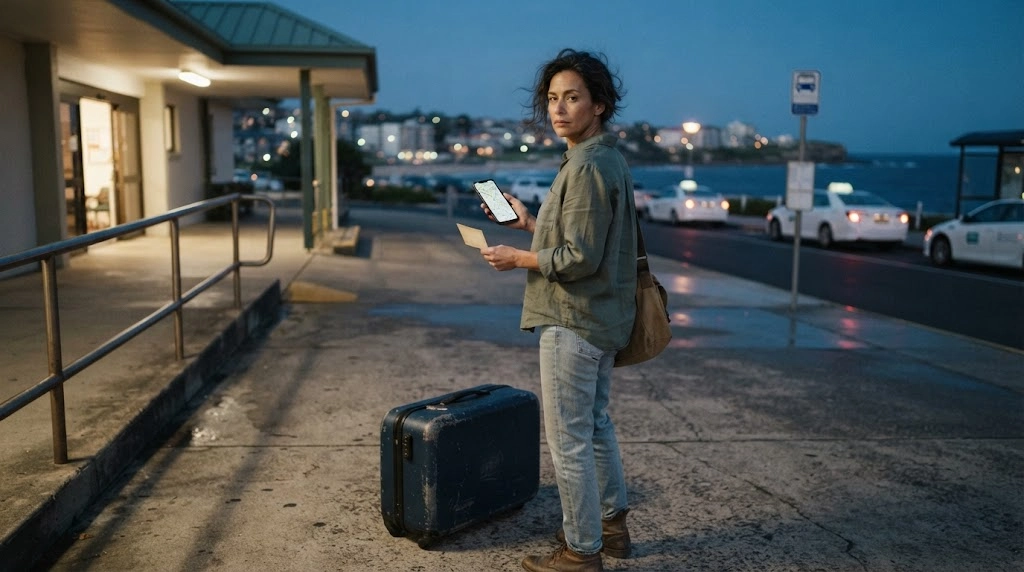
- Run the tired-arrival test. Imagine handling everything after a delayed journey while tired and alone.
Use the tired-arrival test
This is one of my favorite filters because it removes the fantasy from destination planning.
Imagine your flight lands two hours late. Your phone battery is low, you’re hungry, and you still need to reach your accommodation.
Would the route still make sense?
- Is the transfer method clear?
- Can you identify the correct vehicle or transit route?
- Will reception still be available?
- Do you have the address saved offline?
- Is there a backup transport option?
If those answers are unclear, solve them before booking or choose another destination.
Don’t chase a perfect safety score
No beach destination removes all risk. The useful question is whether you understand the risks relevant to your plans and can manage them reasonably.
Government travel guidance, local authorities, established tourism sources, accommodation reviews, and recent traveler reports all provide different pieces of the picture.
Choose the place where you can enjoy being independent
Your solo trip should not feel like a continuous security exercise. Good planning should make more room for swimming, reading, exploring, eating, and enjoying your own company.
The destination that gives you that balance is usually a stronger choice than the one that simply produces the best photograph.
Pro tip: Before paying for non-refundable reservations, revisit the latest official international travel planning information and destination-specific government guidance.
Section Takeaway: Make your final decision by testing real daily logistics. If arrival, accommodation, transportation, beach access, cost, and backup plans all make sense, you have much stronger reasons to book.
Frequently Asked Questions
What should a woman look for in a solo beach destination?
Look for a manageable accommodation area, straightforward transportation, safe beach access, nearby restaurants and services, reliable communication, reasonable total costs, and activities you can comfortably do alone. Check current official safety and health information before booking.
Are beach resorts good for first-time solo female travelers?
A resort can simplify a first solo beach trip by putting accommodation, food, beach access, and activities in one area. However, research airport transfers, the surrounding neighborhood, guest access, transportation, and what services are available outside the resort.
Is a quiet or busy beach better for a woman traveling alone?
Neither is automatically better. A moderately active beach can provide easier access to cafés, transport, lifeguards, and other travelers. A quiet beach may offer relaxation but can require more planning around transportation, communication, services, and emergency access.
Should I stay directly on the beach when traveling solo?
Not necessarily. A hotel several streets back may be a better choice if it provides stronger transport connections, restaurants, secure access, and a livelier evening environment. Compare the entire neighborhood rather than judging the property only by its distance from the water.
How can I research whether a beach area is safe?
Start with current government travel information, then research the exact neighborhood, accommodation reviews, transportation, local laws, beach conditions, and recent traveler experiences. Avoid relying on one safety ranking because conditions can differ significantly within the same destination.
How important is transportation for a solo beach trip?
Transportation is one of the most important factors because you cannot rely on a companion to help solve arrival or navigation problems. Research airport transfers, local transit, reputable taxis, evening service, and how you would return to your accommodation after activities.
How far in advance should I choose a solo beach destination?
Choose early enough to research transportation, accommodation, seasonal weather, entry requirements, and activities without rushing. The ideal booking window varies by destination, but current safety, health, weather, and entry information should always be checked again shortly before departure.
Choosing a beach destination for solo travel is less about finding a universally “best” beach and more about finding the right combination of comfort, independence, safety planning, and enjoyment.
Start with two or three places you genuinely want to visit. Run each one through the same safety, transportation, accommodation, beach, budget, and tired-arrival tests, then choose the destination whose everyday logistics make you feel ready to go.