How Can a Woman Buy Train Tickets When Traveling Alone?

Quick Answer
A woman traveling alone can buy train tickets through the official railway website or app, at a station ticket counter, or from an authorized ticket machine. Compare departure times, fares, seat reservations, luggage rules, and arrival stations before paying. Choose a suitable daytime departure when possible, keep your ticket accessible, and verify your booking through the official railway information service for your route.
The essential booking steps
- Choose your route: Enter the correct departure station, destination, travel date, and preferred time.
- Compare fares: Check ticket restrictions, change fees, refunds, and total costs.
- Select a seat: Reserve one when available, especially for long-distance or overnight journeys.
- Pay securely: Use an official railway service or a verified ticket seller.
- Save your ticket: Download the mobile ticket or collect the required paper ticket before boarding.
- Plan your arrival: Confirm the platform, station entrance, connection details, and onward transport.
One important safety tip
- Book before reaching an unfamiliar station whenever practical, and keep your phone charged so you can access your ticket and travel updates.
Learning how to buy train tickets when traveling alone can make a solo trip feel much more manageable. You don’t need to understand every railway rule before you leave; you simply need a reliable way to choose your train, pay for your ticket, and reach the right platform.
In this guide, I’ll explain the booking process, common ticket types, seat choices, payment options, and practical safety precautions. These tips apply to many railway systems, although exact rules, prices, and booking procedures vary by country and operator.
In This Guide
- Where can you buy train tickets when traveling alone?
- How do you book train tickets online step by step?
- Which train ticket should a solo female traveler buy?
- How should you choose a seat and plan for safety?
- What should you check before paying for a ticket?
- What should you do on the day of your train journey?
- Frequently asked questions
Where Can You Buy Train Tickets When Traveling Alone?
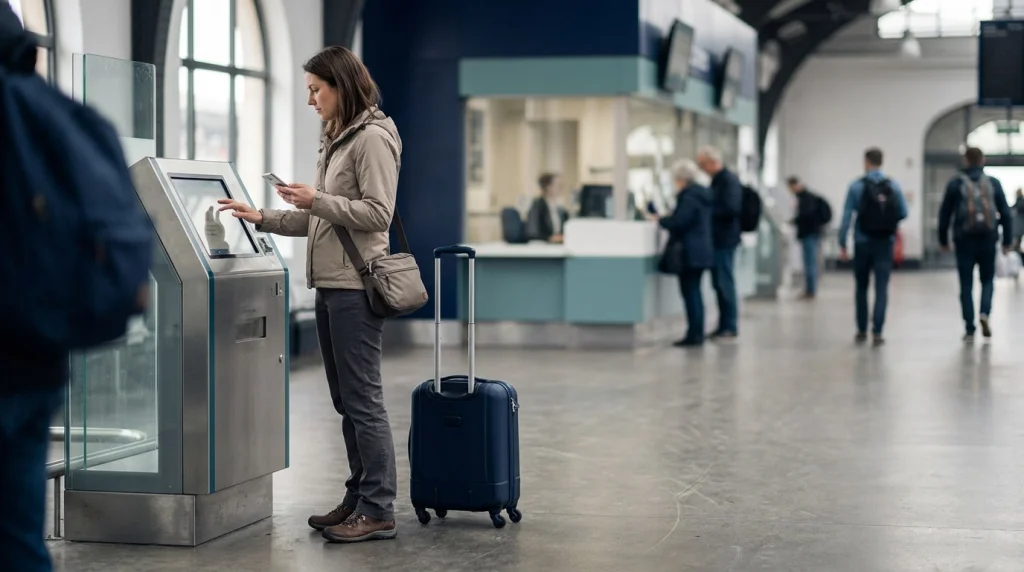
You can buy train tickets online, through a railway app, at a station ticket counter, or from a ticket machine. The best option depends on the country, the route, your payment methods, and how comfortable you feel using local booking systems.
1. Book through the official railway website
For many journeys, the railway operator’s official website is the easiest place to start. It lets you compare departure times, check ticket conditions, and review available seats before paying.
For example, travelers using Amtrak in the United States can book through Amtrak’s official ticket purchasing page. In Britain, National Rail provides journey information and links to ticketing services.
2. Use the railway’s official app
An official app can be useful when you’re traveling between several cities because it may store tickets and provide service updates. Download it before your journey, sign in if necessary, and check whether your particular ticket works offline.
Don’t assume every railway offers the same features. Some apps sell tickets directly, while others mainly provide schedules, journey planning, or reservation information.
3. Buy your ticket at the station
A staffed ticket counter can be helpful if you need assistance choosing a route or understanding unfamiliar fare options. You can show the agent your destination and ask for the next suitable train, the total fare, and any required reservation.
Ticket machines are another option, particularly at larger stations. Allow extra time to use one, since smaller stations may have limited facilities or machines that accept only certain payment methods.
4. Use an authorized ticket seller
Some countries have established third-party booking platforms that compare trains operated by different companies. These can simplify complicated itineraries, but check whether the displayed price includes booking fees and whether customer support handles changes or refunds.
- Start with the railway operator when you know which company runs your train.
- Compare reputable sellers when a trip crosses borders or involves multiple operators.
- Avoid unfamiliar websites that pressure you to pay immediately or request unnecessary personal information.
Section takeaway: Choose a booking channel you can verify and understand. Booking directly with the railway is a sensible starting point for many first-time solo travelers.
How Do You Book Train Tickets Online Step by Step?
Online train booking usually follows a straightforward sequence: search for your journey, compare trains, choose a fare, enter the required details, pay, and save your ticket. You can complete these steps at home instead of trying to work them out in a crowded station.
Step 1: Enter your departure and arrival stations
Type the exact names of your starting station and destination. Large cities sometimes have several stations, so check which one serves your accommodation and planned activities.
For example, a city-center station may be more convenient than an airport station, even if both appear in the search results. Confirm the station name before selecting a train.
Step 2: Select your date and departure time
Choose your travel date and compare trains that fit your plans. If you’re unfamiliar with the destination, a daytime departure can give you more flexibility when finding your accommodation or navigating the arrival station.
Check whether the timetable uses a 12-hour or 24-hour clock. A departure at 07:15 is in the morning, while 19:15 is in the evening.
Step 3: Compare journey times and connections
The cheapest train isn’t always the most practical option. A direct journey may be worth paying slightly more for if it avoids a complicated transfer or a long wait at an unfamiliar station.
Before choosing a connecting journey, check these details:
- Transfer time: Allow enough time to reach the next platform, especially at a large station.
- Station changes: Some itineraries require traveling between separate stations in the same city.
- Ticket coverage: Confirm whether the whole journey is covered by one ticket or several separate tickets.
- Last connection: Check whether a missed connection would leave you without practical onward transport.
Step 4: Select your ticket and seat
Choose the fare that fits your budget and schedule. If the system offers seat selection, review the available options and check whether a reservation costs extra.
Some tickets automatically include a seat reservation, while others do not. Read the booking summary carefully rather than assuming a confirmed ticket guarantees a specific seat.
Step 5: Enter passenger details and pay
Enter your name and other requested information exactly as instructed by the railway operator. Some journeys require identification, and international services may have additional documentation requirements.
Use a trusted payment method and review the total before confirming. Wait for the booking confirmation rather than assuming that a payment screen alone means your ticket has been issued.
Step 6: Save your confirmation
After payment, check the confirmation for the travel date, departure time, stations, train number, coach, seat, and ticket reference. Download the actual ticket if one is issued separately from the confirmation email.
- Save the ticket in your phone’s files or official railway app.
- Keep a screenshot of essential journey details where permitted, but don’t rely on a screenshot if the operator requires a live barcode.
- Store the booking reference separately so you can retrieve the ticket if needed.
Section takeaway: Complete the booking before your travel day whenever possible. A saved ticket and a checked itinerary reduce the number of decisions you’ll need to make at the station.
Which Train Ticket Should a Solo Female Traveler Buy?
The right train ticket depends on whether your plans are fixed, how much flexibility you need, and whether you want a guaranteed seat. Understanding the main ticket types helps you avoid paying for flexibility you won’t use or choosing a cheap fare with inconvenient restrictions.
Compare common train ticket types
| Ticket type | Typical benefit | What to check |
|---|---|---|
| Advance or fixed-train | Can offer a lower fare when booked early. | Whether you must use the booked departure and whether changes are allowed. |
| Flexible | May allow a wider choice of departure times. | Valid travel dates, permitted trains, and any time restrictions. |
| Off-peak or restricted-time | May cost less outside designated busy periods. | Which departure times and routes qualify. |
| Rail pass | Can suit travelers making several rail journeys. | Pass validity, reservation fees, and eligible trains. |
| Sleeper or overnight ticket | Combines overnight transport with a sleeping accommodation option. | Cabin type, privacy, occupancy, and mandatory reservations. |
These descriptions are general rather than universal fare rules. Names, benefits, and restrictions vary between operators, so check the conditions attached to the actual ticket you’re purchasing.
Should you choose the cheapest ticket?
Choose the cheapest fare when your schedule is firm and the restrictions suit your plans. A non-refundable ticket may be a poor fit if your arrival time, accommodation check-in, or connecting transport could change.
For a first solo trip, I would compare the complete journey rather than focusing on the ticket price alone. A slightly more expensive direct train may save you the stress and additional cost of a complicated transfer.
Is a rail pass worth buying?
A rail pass may be useful when you’re visiting several destinations and expect to take multiple trains. However, it isn’t automatically cheaper than separate tickets, and some high-speed or overnight services require additional reservations.
Estimate your planned journeys individually, then compare their combined cost with the pass price and reservation charges. Check the pass’s official conditions before purchasing.
Section takeaway: Match the ticket to your actual itinerary. Flexibility, reservation requirements, and connection risks matter just as much as the advertised fare.
How Should You Choose a Seat and Plan for Safety?
When traveling alone, choose a seat that makes you comfortable and gives you practical access to the facilities you need. A seat reservation can also make boarding easier because you’ll know where to go instead of searching for an available place with your luggage.
Which seat is best when traveling alone?
There isn’t one universally safest seat on every train. Carriage layouts, staffing, passenger numbers, and security arrangements differ, so consider the specific service rather than relying on a single seating rule.
When seat selection is available, consider these preferences:
- Near the aisle: Useful if you expect to stand up frequently or need easier access to the door.
- Near other passengers: A populated carriage may feel more comfortable than an isolated section, particularly on a quiet service.
- Near staffed areas: If the train has a staffed compartment or clearly identified assistance point, ask the operator about suitable seating.
- Near luggage storage you can monitor: Choose an arrangement that lets you keep an eye on your belongings without blocking the aisle.
- In a designated quiet or reserved area: Check the rules and whether the seating arrangement suits your needs.
A window seat may offer a better view, while an aisle seat can make moving around easier. Neither option guarantees greater safety, so prioritize your comfort, the train’s layout, and the journey conditions.
Should you book a women-only carriage or compartment?
Some railway systems offer women-only carriages or designated women-only sections on particular services. Availability, eligibility, operating hours, and carriage locations vary by country and operator.
If this option matters to you, confirm that it exists on your specific route before paying. Don’t assume that a general seat reservation automatically places you in a women-only area.
What about overnight trains?
Overnight trains can save daytime travel hours and sometimes reduce accommodation costs. However, you should understand the sleeping arrangement before booking, especially if privacy is important to you.
Check whether your accommodation is a private cabin, a shared sleeping compartment, a reclining seat, or a couchette. A couchette is a simple bunk in a shared sleeping compartment, and it may involve sharing with passengers you don’t know.
- Choose a private compartment if privacy is a priority and your budget allows it.
- Check whether women-only sleeping compartments are offered on the route.
- Read the operator’s rules about cabin occupancy, locking doors, and luggage storage.
- Keep valuables secure and your essential belongings within reach.
- Check the arrival time and arrange onward transport before boarding.
What should you do if you feel uncomfortable?
If another passenger makes you uncomfortable, you don’t need to wait for the situation to become serious before seeking help. Move to a more populated area when practical and contact train staff or local emergency services if you feel threatened.
Save the operator’s contact information before departure. If you experience harassment or another safety concern, report it to the appropriate staff or authorities when it is safe to do so.
Section takeaway: Book a seat that fits your comfort and practical needs, and know how to contact staff. A reservation helps with planning, but it cannot guarantee a particular level of safety.
What Should You Check Before Paying for a Ticket?
Before confirming your purchase, review the total cost, ticket restrictions, station details, and any required reservations. A short check now can prevent expensive mistakes or unnecessary stress later.
Use this pre-payment checklist
- Correct date: Make sure the departure date matches your itinerary, especially when crossing time zones or booking overnight travel.
- Correct stations: Verify both station names, not just the city names.
- Correct time: Check the departure and arrival times and whether the service runs on your selected day.
- Total price: Review booking fees, seat reservations, luggage charges where applicable, and any currency conversion costs.
- Refund conditions: Understand whether you can cancel, change the date, or transfer the ticket to another departure.
- Reservation requirements: Check whether you need a separate seat reservation or an additional ticket for part of the journey.
- Identification: Confirm whether the railway requires a passport, another form of identification, or passenger details matching your travel document.
- Ticket delivery: Check whether you receive a mobile ticket, a printable ticket, or a collection code for a station machine.
- Arrival logistics: Make sure your destination and onward transport are practical for the arrival time.
How can you avoid ticket-booking scams?
Use the official railway operator’s website or a recognized seller, and check the address carefully before entering payment details. Search advertisements and unofficial booking pages can resemble legitimate services, so don’t assume the first result is always the best place to buy.
Protect your payment information with these habits:
- Type the official website address yourself or access it through a trusted railway information service.
- Avoid sending card details, passwords, or verification codes to someone through social media or messaging apps.
- Be cautious if a seller demands payment through an unusual transfer method.
- Check your booking confirmation and payment record after the transaction.
- Keep your booking reference private when sharing travel plans publicly.
How much should you budget for a train ticket?
There is no single reliable price for a train ticket across countries and routes. Fares depend on distance, demand, class, booking timing, ticket flexibility, and whether the service requires a reservation.
For a useful comparison, record the actual prices displayed for your travel date rather than relying on a generic estimate.
| Budget item | What to include |
|---|---|
| Base fare | The displayed price for your chosen route and ticket type. |
| Reservations | Any compulsory or optional seat or sleeper reservation fees. |
| Booking charges | Seller fees, payment fees, or currency conversion costs, if applicable. |
| Station transfers | Local transport to the departure station or onward travel after arrival. |
| Contingency | A reasonable buffer for unexpected transport changes or additional expenses. |
In 2026, online booking options and passenger protections continue to vary by railway system. For example, the European Commission proposed further measures to simplify cross-border rail booking in May 2026, but a proposal should not be mistaken for a rule already in force.
For European journeys, read the official EU rail passenger rights guidance to understand applicable protections, including the rules around cancellations and delays.
Section takeaway: Compare the full cost, not just the advertised fare. Always verify the conditions and travel details attached to the exact ticket you’re buying.
What Should You Do on the Day of Your Train Journey?
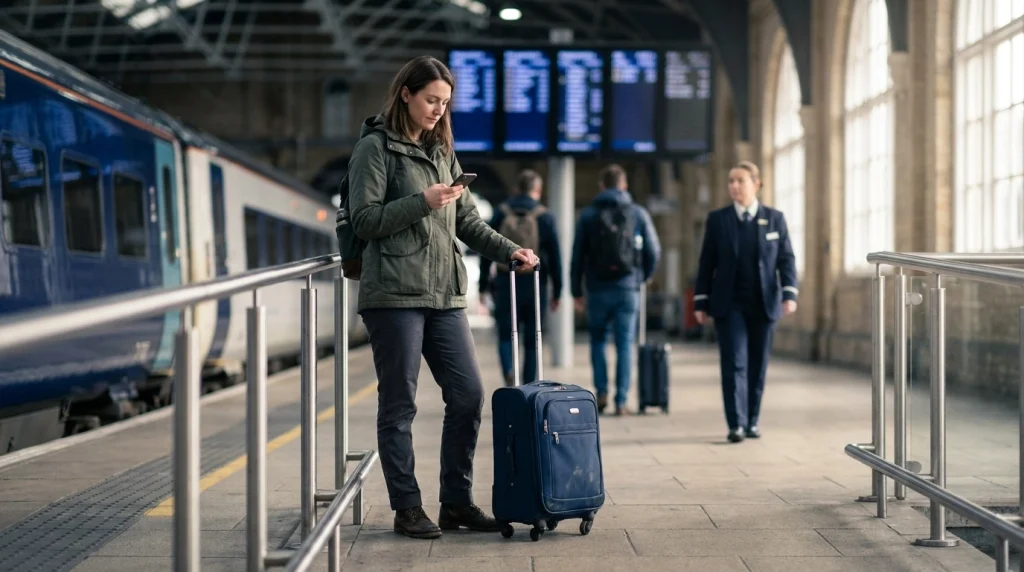
On travel day, arrive with enough time to find your platform, verify the service, and deal with unexpected changes. Your exact arrival buffer depends on the station, the route, luggage requirements, and whether you need to collect a paper ticket.
How early should you arrive at the station?
For an unfamiliar station, arriving around 20–30 minutes before departure can be a useful planning target for an ordinary domestic journey, provided the operator doesn’t recommend more time. Allow longer if you must collect tickets, pass through additional checks, or navigate a large station.
Don’t treat that time as a universal rule. International services, sleeper trains, and special boarding procedures may require earlier arrival.
Find your platform and coach
Check the station’s departure boards and compare the train number, destination, and departure time with your ticket. Platforms can change, so confirm the information again before boarding.
- Keep your ticket and booking reference accessible.
- Follow signs for the correct platform and boarding area.
- Check the coach letter and seat number if you reserved a specific seat.
- Ask uniformed railway staff if the platform or carriage position is unclear.
- Keep bags close and avoid leaving valuables unattended while checking information.
What if you miss your train?
Don’t assume your ticket automatically allows you to board the next departure. Some fares are tied to a specific train, while others offer more flexibility, and the rules differ by operator.
Contact railway staff or use the operator’s official app to check your options. Before purchasing a replacement ticket, ask whether your original fare permits a change or whether the missed departure qualifies for any specific assistance.
What if your train is delayed or cancelled?
Check the railway operator’s official service updates and follow instructions from station staff. Depending on the ticket, operator, and applicable passenger-rights rules, you may be entitled to rebooking, a refund, assistance, or compensation.
Keep your original ticket and records of the disruption. If you need to make alternative travel arrangements, confirm the rules before spending extra money whenever circumstances allow.
Prepare for the last part of your journey
Arriving at the destination is only part of the trip. Check how you’ll reach your accommodation, especially if the train arrives after dark or local public transport has limited service.
- Save the accommodation address and directions offline.
- Identify an official taxi rank, reliable public transport route, or pre-arranged pickup.
- Check whether the accommodation can receive you at your arrival time.
- Share your expected arrival time with a trusted contact if that helps your travel plan.
Pro tip: Before leaving, check your railway operator’s official travel updates and the relevant government’s travel advice for your destination. For European rail journeys, consult the official EU passenger-rights guidance if a disruption affects your plans.
Section takeaway: Keep your ticket, route details, and onward transport plan ready. If something changes, verify your options through official railway channels rather than making rushed decisions.
Frequently Asked Questions About Buying Train Tickets Alone
Can a woman buy a train ticket without a travel companion?
Yes. Women can generally purchase train tickets and travel independently, subject to the railway operator’s normal ticketing and identification rules. You don’t need a companion simply to book a seat, buy a ticket at a counter, or use an official ticketing app.
Is it better to buy train tickets online or at the station?
Online booking is often more convenient because you can compare fares and reserve seats before leaving your accommodation. Station counters are useful when you need personal assistance, while ticket machines can help when counters are closed. Availability and payment options depend on the railway system.
Should I book a train ticket in advance when traveling alone?
Booking in advance can help you secure a suitable departure, find lower restricted fares, and reserve a seat on busy routes. However, the ideal booking window varies by operator. Check when tickets go on sale and whether early-purchase fares allow changes.
Do I need to reserve a seat when buying a train ticket?
Not always. Some trains include a reservation, some offer optional reservations, and others require one for particular tickets or services. Read the fare conditions before paying, especially for high-speed, international, and overnight trains.
What if I don’t have internet access when boarding?
Download your ticket in advance if the operator permits offline access, and keep your booking reference available. Some railways require a live barcode or another form of ticket validation, so check the operator’s rules rather than relying on a screenshot alone.
Is a first-class ticket safer for a solo female traveler?
Not necessarily. First class may offer more space or different amenities, but it doesn’t guarantee better personal safety. Consider carriage occupancy, staffing, the route, your comfort, and the available assistance arrangements when deciding which class to book.
What should I do if someone asks to see my train ticket?
Railway staff may inspect tickets during boarding or onboard checks. Follow the operator’s normal procedures, and if you’re unsure whether someone is authorized, politely ask for identification or seek assistance from clearly identifiable railway personnel. Don’t share payment credentials or account passwords.
Final Thoughts: Make Your Train Journey Easier
Buying train tickets when traveling alone becomes much easier once you know where to book, how to compare fares, and which details to verify before paying. Start with a trusted railway website, choose a ticket that fits your schedule, and save your booking confirmation.
For your first solo rail journey, consider choosing a straightforward daytime route with a manageable arrival time. As your confidence grows, you can explore more complicated itineraries while keeping the same habits: verify your ticket, protect your belongings, and know where to find official help.
You don’t have to plan every possible outcome to travel independently. A little preparation can help you board with greater confidence and enjoy the freedom of discovering somewhere new at your own pace.