How Can I Build Confidence Before Traveling Alone as a Woman?
Quick Answer
If you’re wondering how you can build confidence before traveling alone as a woman, don’t wait until you feel fearless. Build confidence through small solo experiences, careful planning, and repeated proof that you can handle unfamiliar situations. Even experienced travelers recommend easing into solo travel rather than making your first independent experience unnecessarily difficult.
Start with these confidence-building steps
- 1. Practice locally: Eat alone, explore another neighborhood, or take a nearby day trip without relying on someone else.
- 2. Learn the route: Practice reading transit maps, finding platforms, and navigating with offline maps.
- 3. Plan your arrival: Know how you’ll travel from the airport or station to your accommodation before leaving home.
- 4. Create backups: Save emergency contacts, duplicate important documents, and keep a second payment method.
- 5. Book one social activity: A walking tour, class, or hostel event can remove pressure to meet people spontaneously.
- 6. Start manageable: A two- or three-night first trip can teach you more than months of worrying about a larger one.
Remember
- Confidence isn’t the absence of nerves. It’s knowing you have a plan when something feels unfamiliar.
My biggest lesson from solo travel is simple: confidence usually arrives after you start doing things alone, not before. Good solo female travel safety planning matters, but endless planning can become another way to postpone the trip.
This guide shows you how to practice independence, reduce travel anxiety, build a realistic safety plan, and design a first solo trip that stretches you without overwhelming you.
In This Guide
- Where does solo travel confidence actually come from?
- How can I practice traveling alone before my trip?
- What should I plan so I feel safer, not more anxious?
- How should I choose my first solo trip?
- What should I do when fear spikes before departure?
- How do I stay confident once I’m traveling alone?
- Frequently Asked Questions
Where Does Solo Travel Confidence Actually Come From?
Solo travel confidence is the belief that you can make decisions, solve manageable problems, and ask for help when needed while traveling independently. It doesn’t mean believing nothing uncomfortable will happen.
Solo travel confidence: trusting your ability to prepare, notice problems, adapt your plans, and take sensible action when you’re away from your usual support system.
I think many first-time travelers accidentally set themselves an impossible target. They tell themselves, “I’ll book when I’m confident.”
That reverses the process. You usually become confident because you’ve collected evidence that you can handle things alone.
Build proof instead of chasing fearlessness
Think about skills you already use at home. You navigate unfamiliar streets, speak to strangers, solve transport problems, manage money, and decide when a situation feels uncomfortable.
A solo trip uses many of those same abilities in a less familiar environment. Preparation makes that environment easier to interpret.
Psychologists use the idea of gradually approaching feared situations in structured exposure work. The American Psychological Association notes that graded exposure moves from easier situations toward more difficult ones and can strengthen a person’s sense of mastery.
You don’t need to treat your vacation like therapy. The practical lesson is simply useful: small, manageable challenges can build confidence better than waiting indefinitely for anxiety to disappear.
- First win: Have coffee alone somewhere unfamiliar.
- Next win: Spend half a day exploring your own city independently.
- Then: Take public transport to another town and return the same evening.
- Later: Book one night away alone.
- Finally: Try the larger solo trip you’ve been imagining.
Section takeaway: You don’t need enough confidence for the whole journey today. You only need enough confidence for the next manageable step.
How Can I Practice Traveling Alone Before My Trip?
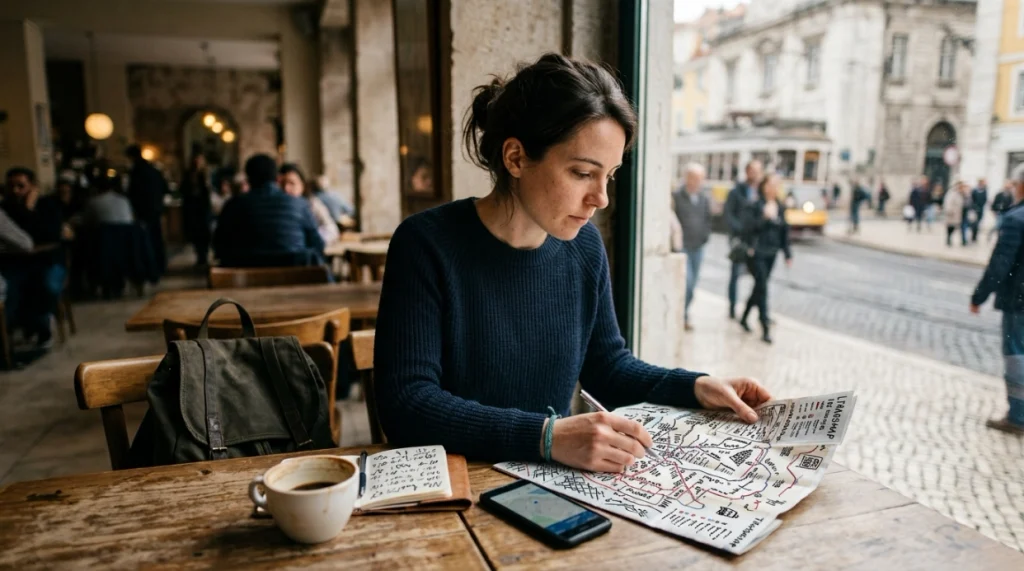
Practice the parts of solo travel that make you most nervous before you leave. Navigation, eating alone, transport, problem-solving, and speaking to strangers all become less intimidating with repetition.
Create a solo travel confidence ladder
I like turning vague anxiety into specific exercises. Instead of saying, “I’m scared to travel alone,” identify exactly which situations feel difficult.
Then practice a smaller version close to home.
| Practice level | Suggested exercise | Time | Skill you’re practicing |
|---|---|---|---|
| Easy | Coffee, lunch, or a museum alone | 1–3 hours | Being comfortable alone in public |
| Moderate | Explore an unfamiliar part of your city | Half day | Navigation and decision-making |
| Moderate | Take a train or bus to another town | Full day | Transport and schedule management |
| Challenging | Spend one night away alone | 24 hours | Accommodation and evening routines |
| Trip rehearsal | Take a two- or three-night solo break | 2–3 nights | Complete independent travel routine |
Practice eating alone
Eating alone worries more first-time travelers than many admit. Start somewhere casual rather than choosing a formal restaurant as your first experiment.
Bring a book if it makes the first attempt easier. After a few meals, you’ll probably spend less time wondering whether anyone is watching you.
Practice getting temporarily lost
Don’t intentionally put yourself somewhere unsafe. Instead, choose an unfamiliar but well-trafficked area and practice finding your way using signs, transit information, and your map.
Try finding your route before immediately following turn-by-turn directions. This teaches you to orient yourself rather than becoming dependent on one app.
Practice asking strangers simple questions
Ask an employee which platform you need, where a museum entrance is, or whether a bus stops at a particular station. These small conversations make asking for assistance abroad feel ordinary.
They also teach an important lesson: independent travel doesn’t mean doing everything without help.
Section takeaway: Rehearse the specific situations you’re worried about. Familiarity turns “What if I can’t handle this?” into “I’ve handled something similar before.”
What Should I Plan So I Feel Safer, Not More Anxious?
Plan the decisions that would be stressful to make tired, jet-lagged, or without reliable internet. Leave harmless choices flexible.
My rule is to organize the first 24 hours more carefully than the rest of the itinerary.
Know exactly how your arrival works
Before departure, know how you’ll get from your airport, train station, or bus terminal to your accommodation. Save the address offline and screenshot the route.
- Arrival time: Know when you’re expected to reach the destination.
- Transport: Research the normal airport or station transfer options.
- Accommodation: Save the full address and check-in instructions.
- Backup: Know what you’ll do if your first transport option isn’t available.
- Connectivity: Decide how you’ll get mobile data or reliable Wi-Fi.
On an early solo trip, I noticed that my nerves were always strongest between leaving the airport and reaching my room. Once I started planning that section in detail, arrival days became much calmer.
Create a simple safety file
Solo female travel safety works best when important information isn’t stored in only one place. Keep both digital and offline access to essentials.
- Passport or identification copies where appropriate
- Insurance details
- Accommodation address
- Emergency contact information
- Transport booking details
- Backup payment method
- Local emergency numbers
If you’re a U.S. citizen traveling internationally, the State Department’s International Travel Checklist recommends reviewing destination advisories, organizing documents, considering insurance, and preparing for unexpected situations.
Use a check-in plan that doesn’t control your trip
Tell one trusted person where you’re staying and when they should expect to hear from you. Decide what they should do if you miss a check-in by several hours.
A predictable system usually reassures family more than constant messaging. It can also stop you from spending the whole journey proving that you’re okay.
Research issues that affect women specifically
Cultural expectations, transportation habits, nightlife risks, harassment patterns, and local laws differ between destinations. Check current information rather than assuming advice from another country applies everywhere.
The U.S. State Department maintains a dedicated resource for women travelers covering precautions and assistance abroad.
Pro tip: Before any international trip, verify current government travel advisories and official destination information. Conditions can change after an article like this is published.
Section takeaway: Preparation should reduce the number of stressful decisions you make on arrival. It shouldn’t require predicting every possible problem.
How Should I Choose My First Solo Trip?
Your first trip doesn’t need to be your dream adventure. Choose a destination and trip format that let you practice independence without creating unnecessary logistical difficulty.
Keep the first itinerary simple
A complicated multi-city itinerary creates more transfers, check-ins, navigation, and opportunities for delays. Staying in one base gives you time to learn your surroundings.
For a first attempt, two to four nights can be enough to experience solo routines without committing to several weeks away.
- Choose one base: Avoid changing hotels every night.
- Limit transfers: Fewer travel days mean fewer stressful logistics.
- Research transport: Pick somewhere you can understand how you’ll get around.
- Read recent reviews: Pay attention to comments about location, access, and nighttime surroundings.
- Protect your arrival day: Don’t schedule a demanding activity immediately after a long journey.
Choose accommodation that matches your personality
A lively hostel isn’t automatically better for a solo traveler. Neither is an isolated private apartment.
If you’re worried about loneliness, consider a social hostel with private rooms or women-only dorm options. Check recent reviews and the property’s actual location before booking.
If social environments drain you, a central hotel or guesthouse may give you the quiet base you need. You can still meet people through activities during the day.
Book one structured social activity
You don’t need a packed group itinerary. One walking tour, cooking class, workshop, or small-group excursion can create an easy social starting point.
This is especially helpful during your first 24 to 48 hours. Conversation happens naturally because everyone already has the activity in common.
As of 2026, solo-travel communities also make it easier to find destination discussions before departure. Facebook groups, Meetup events, hostel activity boards, and traveler communities can help, although you should still use normal judgment when meeting anyone from the internet.
Section takeaway: Make your first trip easy enough to learn from. You can add more challenging destinations, longer itineraries, and spontaneous travel once you know how you respond to being alone.
What Should I Do When Fear Spikes Before Departure?
Pre-trip fear doesn’t automatically mean you’re making a bad decision. Separate useful concerns that need action from repetitive “what if” thoughts that don’t produce a solution.
Turn each fear into a question you can answer
Write down what you’re worried about. Then decide whether the concern needs research, practice, a backup plan, or acceptance.
- “What if I get lost?” Download offline maps and practice navigating before departure.
- “What if I feel lonely?” Book one group activity and identify a few social spaces.
- “What if something goes wrong?” Save emergency contacts, insurance information, and backup funds.
- “What if I hate eating alone?” Practice several solo meals before traveling.
- “What if I want to come home?” Remember that changing your itinerary isn’t failure.
Stop over-consuming frightening travel stories
Research should help you make decisions. If you’re repeatedly reading dramatic stories without learning anything new, you’re no longer planning.
Return to reliable sources and destination-specific information. Social media anecdotes can provide context, but one person’s experience doesn’t establish the normal risk level for an entire city or country.
Prepare your health needs too
Health preparation can remove another layer of uncertainty before international travel. Check requirements early rather than discovering them shortly before departure.
The CDC advises travelers to review destination-specific travel health information, including relevant vaccines, medicines, and health risks.
Pro tip: For health requirements, vaccines, medicines, or outbreaks, use current CDC or destination-government guidance rather than relying on an old blog article.
Section takeaway: Useful fear identifies something you can prepare for. Once you’ve made a reasonable plan, repeating the same worry rarely makes you safer.
How Do I Stay Confident Once I’m Traveling Alone?
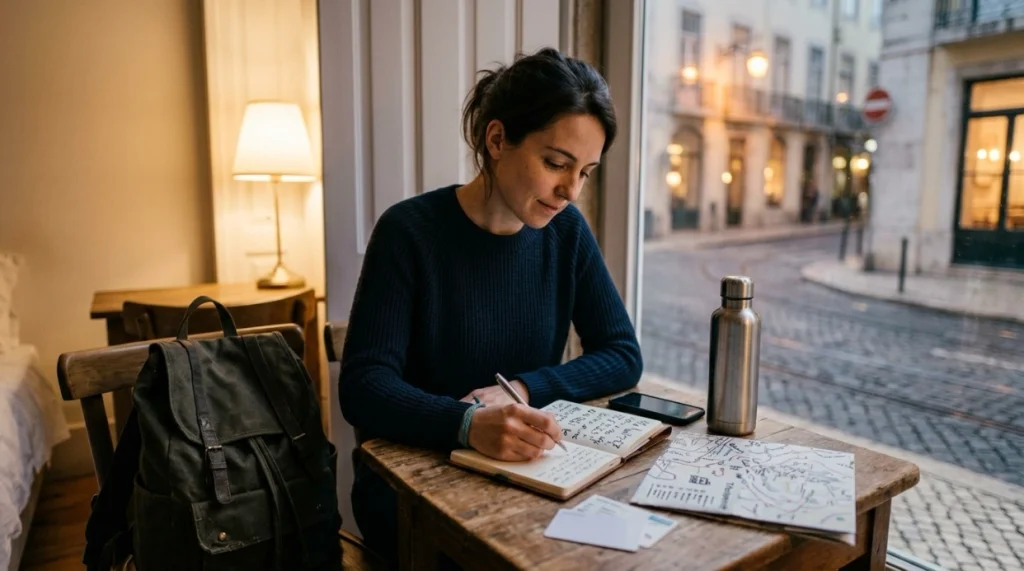
Give yourself small wins during the first day instead of testing every limit immediately. Your goal is to settle into the destination, not prove how brave you are.
Make day one deliberately easy
After checking in, learn the immediate area. Find a cafe, convenience store, transit stop, pharmacy, or another useful landmark.
Then return to your accommodation while the route is still fresh. Knowing the few streets around your base can quickly make an unfamiliar city feel more manageable.
Trust yourself when you want to change plans
A prepaid activity isn’t more important than your comfort. You can leave a venue, change transport, skip an event, or return to your accommodation.
You don’t owe strangers detailed explanations for your decisions. A short “No, thank you” is enough in many ordinary situations.
Expect confidence to fluctuate
You might feel independent at breakfast and overwhelmed two hours later. That doesn’t erase the progress you’ve made.
Travel combines unfamiliar places, disrupted sleep, transportation, crowds, new social situations, and constant decisions. Give yourself permission to slow down.
Keep a tiny record of your wins
At the end of each day, write down three things you handled yourself. They don’t need to be dramatic.
- Found the correct train
- Asked someone for directions
- Ate dinner alone
- Changed a plan when it wasn’t working
- Started a conversation with another traveler
- Found your way back without panicking
Those details matter because anxiety tends to remember what nearly went wrong. A travel journal gives you evidence of everything you managed successfully.
After several days, the unfamiliar routines often become ordinary. That’s when many women realize confidence was being built in dozens of small moments rather than one heroic leap.
Section takeaway: Measure progress by what you can handle, not by whether you ever feel nervous. Confidence can coexist with caution.
Frequently Asked Questions
Is it normal to be scared before my first solo trip?
Yes. A new trip involves unfamiliar transport, accommodation, decisions, and surroundings, so some nervousness is understandable. Instead of trying to eliminate every uncomfortable feeling, identify specific concerns and prepare for the ones you can control.
How far should I travel for my first solo trip?
There is no required distance. A nearby city can teach you the same core skills as an international trip: navigation, eating alone, managing accommodation, making decisions, and solving small problems without a companion.
How long should my first solo trip be?
For many beginners, two to four nights is a manageable experiment. It’s long enough to experience arrival, several independent days, evenings alone, and the return journey without committing to a long itinerary before you know how solo travel feels.
How do I tell my family I’m traveling alone?
Show them your preparation rather than arguing that nothing could go wrong. Share your itinerary, accommodation details, transport plan, emergency contacts, and an agreed check-in routine while making clear that you’ll still make your own normal travel decisions.
What if I feel lonely while traveling alone?
Plan opportunities for light social contact before loneliness becomes overwhelming. Walking tours, classes, hostel events, Meetup gatherings, and small-group activities can create conversation without requiring you to find travel companions for the entire trip.
Should I join a group tour before traveling completely alone?
You can. A short group trip or organized activity can act as a bridge between traveling with friends and handling everything independently. Another option is adding one solo day before or after a group experience so you can practice without managing the entire journey alone.
What if I discover that I don’t enjoy solo travel?
That’s useful information, not failure. You might prefer shorter solo breaks, organized tours, trips with friends, or itineraries that combine independent days with group activities. The purpose isn’t to prove that one travel style is superior.
Before your first trip, choose one confidence-building action you can complete this week. Take yourself to lunch, navigate somewhere unfamiliar, plan a local day trip, or spend one night away.
Then make the next step slightly bigger. You don’t have to become fearless before traveling alone; you need enough preparation and self-trust to begin.