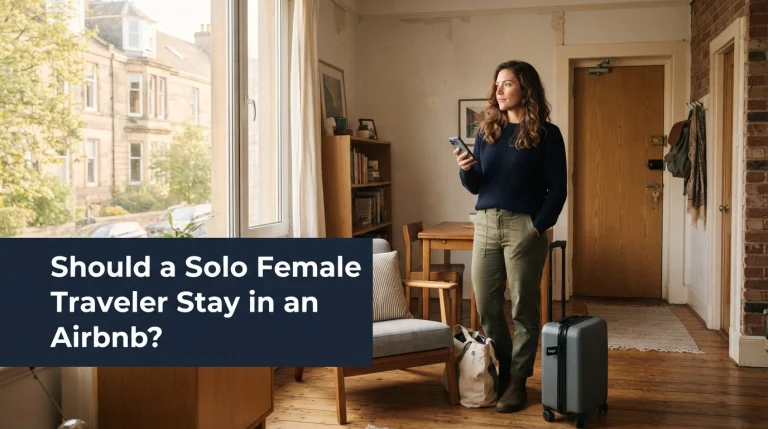
Are Hostels Safe for Women Traveling Alone? A Practical Safety Guide

Quick Answer
Yes, hostels can be a safe and affordable option for women traveling alone, provided you choose carefully and take sensible precautions. A well-managed hostel with secure access, reliable staff, working lockers, and recent positive reviews from solo female travelers can offer a comfortable place to sleep and meet other travelers. However, no accommodation is completely risk-free, and a female-only dorm or private room may offer greater peace of mind.
What Makes a Hostel Safer?
- Secure access: Look for controlled entry, working room locks, and a reception desk that takes security seriously.
- Female-only dorms: Choose a women-only shared room if you prefer sleeping around other women rather than a mixed group.
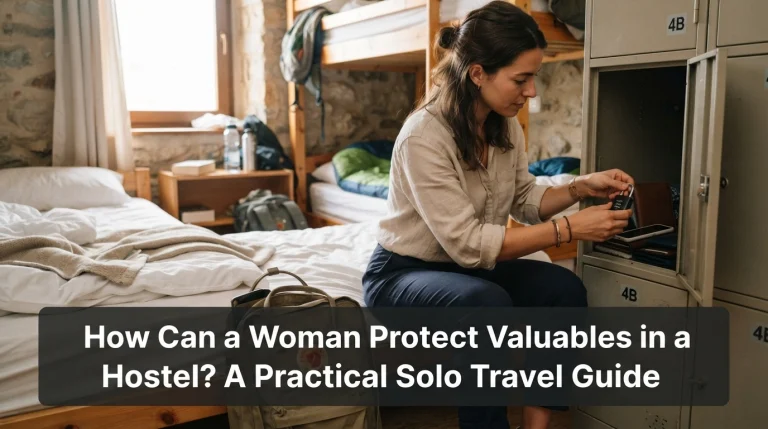
- Lockable storage: Confirm that you can secure your passport, cash, electronics, and other valuables.
- Reliable staff: Favor properties with clear check-in procedures and staff who respond to safety concerns.
- Recent reviews: Read comments from women traveling alone about cleanliness, harassment, security, and the surrounding neighborhood.
- Convenient location: Choose accommodation with a practical route to public transport and essential services.
One Important Precaution
- Book your first night before arriving, keep an alternative accommodation option available, and check the latest official travel advice for your destination before departure.
Are hostels safe for women traveling alone? It’s one of the most important questions to answer before booking your first solo trip, especially if you’ve never shared a room with strangers.
Hostels can make solo travel more affordable and social, but the experience depends on the property, its staff, its location, and your own comfort level. I’ll break down what to check before booking, how to choose the right room, and what to do if something feels wrong.
This guide focuses on practical decisions you can make before and during your stay, whether you’re planning a weekend city break or a longer international adventure.
In This Guide
Are hostels safe for solo female travelers?
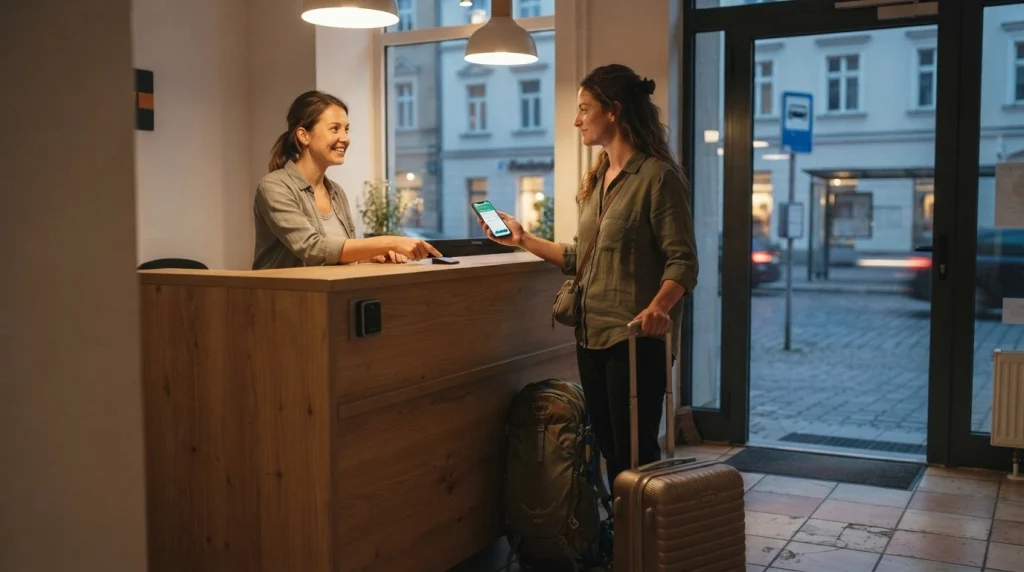
Hostels can be a reasonable accommodation choice for women traveling alone when they have effective security procedures, responsible management, and suitable facilities. However, the word “hostel” doesn’t guarantee a particular level of safety.
A hostel is budget-oriented accommodation that commonly offers shared bedrooms, communal bathrooms, and social spaces. Some also offer private rooms, women-only dorms, and organized activities.
What are the main safety concerns?
Sharing a room means you’ll sleep near people you haven’t met before, and you may have limited control over who enters communal areas. Most of the practical concerns involve protecting your belongings, maintaining personal boundaries, and knowing how to get help.
- Theft: Unsecured phones, passports, wallets, and laptops can be vulnerable in shared rooms.
- Unwanted attention: Other guests may ignore boundaries or make you uncomfortable.
- Room access: Poor key control or weak security can make it easier for unauthorized people to enter.
- Nighttime disruption: Drinking, parties, noise, and unfamiliar roommates can affect your rest and sense of security.
- Location risks: A poorly lit street or difficult late-night journey may be a greater concern than the room itself.
Does staying in a hostel mean you’re taking an unnecessary risk?
Not necessarily. The goal isn’t to eliminate every possible risk, which no accommodation can do, but to choose a place with sensible safeguards and a plan for unexpected situations.
For example, if your flight arrives at 10 p.m., a hostel near reliable transport with late check-in and staffed reception may be more practical than a cheaper property requiring a long walk through an unfamiliar area.
That decision matters more than choosing a hostel simply because it has the lowest nightly price.
Section takeaway: A hostel can suit solo female travelers, but assess the specific property, room arrangements, and neighborhood rather than relying on the accommodation category alone.
Which hostel room is safest for women?
A female-only dorm or a private room is often the most comfortable choice for women who feel uneasy about sharing sleeping space with unfamiliar men. The best option depends on your budget, privacy needs, and the security of the property.
Female-only dorms
Female-only dorms allow you to share a room with other women while keeping the cost below that of many private rooms. They can also make it easier to connect with other female travelers.
Still, a women-only label doesn’t automatically mean stronger locks, better management, or fewer theft concerns. Check the same security features you would evaluate in any other room.
Mixed-gender dorms
Mixed dorms accommodate guests of different genders and are common in budget hostels. Many travelers use them without problems, but you should consider your personal boundaries and the property’s rules before booking.
If you choose a mixed dorm, look for secure lockers, individual beds with privacy curtains when available, clear guest policies, and staff who can address inappropriate behavior.
Private hostel rooms
A private room gives you more personal space while retaining access to shared kitchens, lounges, and social activities. It’s worth considering if you want the social atmosphere of a hostel without sharing a bedroom.
Verify whether the room has its own bathroom, how its door locks, and whether guests must pass through controlled entrances to reach it. A private room doesn’t necessarily have the same security arrangements as a hotel room.
Compare your options
| Room type | Main advantage | Main consideration |
|---|---|---|
| Female-only dorm | Shared accommodation with women | Other guests still share the room |
| Mixed dorm | Often offers more room choices | Shared sleeping space across genders |
| Private hostel room | More privacy and personal space | Higher cost and varying security features |
| Hotel room | Usually a private sleeping area | Cost, location, and security vary |
There is no universal price difference between these options. Compare the total cost, including taxes, transport, towels, luggage storage, and any other compulsory fees.
Section takeaway: Choose a female-only dorm if shared accommodation appeals to you but mixed sleeping arrangements don’t. Consider a private room when privacy and uninterrupted rest are higher priorities.
How do you choose a safe hostel?
The safest booking decision starts before you arrive. Check the neighborhood, read detailed reviews, confirm security facilities, and make sure the property can accommodate your arrival time.
1. Read reviews written by solo female travelers
Don’t rely exclusively on an overall star rating. Look for recent, specific comments about staff behavior, room access, harassment, locker availability, bathroom security, and the walk back at night.
- Look for repeated complaints rather than treating one vague review as conclusive.
- Check how management responds when guests raise safety concerns.
- Pay attention to recent reports of broken locks, missing belongings, or unauthorized visitors.
- Check whether the reviews describe the room type you plan to book.
2. Check the location on a map
A low-priced hostel can become an expensive or uncomfortable choice if reaching it requires unreliable transport or a long walk through isolated streets. Check the route from the station or airport, nearby transport stops, and access to shops or other useful services.
Look at the route after dark as well as during the day. A central address is not automatically safe, and a quieter neighborhood is not automatically dangerous.
3. Confirm security features before paying
Read the listing carefully, then contact the property if important details aren’t clear. Ask specific questions rather than relying on broad claims that the hostel is safe.
- Are lockers available, and do I need to bring my own padlock?
- Can only registered guests enter the sleeping areas?
- Is reception staffed throughout the night?
- Can I check in if my transport arrives late?
- Are the bedroom doors lockable, and are there clear emergency exits?
- What should guests do if they experience harassment or another safety concern?
Also check fire alarms, evacuation instructions, and access to emergency exits. Security is not just about preventing unauthorized entry; it includes being able to leave the building safely during an emergency.
4. Book with a backup plan
For your first night in a new destination, book ahead rather than assuming you can find a suitable room on arrival. Save the property’s address, contact details, and confirmation somewhere accessible offline.
Identify another accommodation option in case your room is unsuitable or your reservation falls through. A refundable booking may be worth considering when your plans are uncertain.
Section takeaway: Favor clear security procedures, recent and relevant reviews, a practical location, and responsive staff. If the property cannot answer basic safety questions, consider another option.
How can you stay safe during your hostel stay?
Once you arrive, a few simple habits can reduce avoidable problems. Check the room, secure your belongings, protect your personal information, and pay attention to how other guests behave.
Complete a quick room check
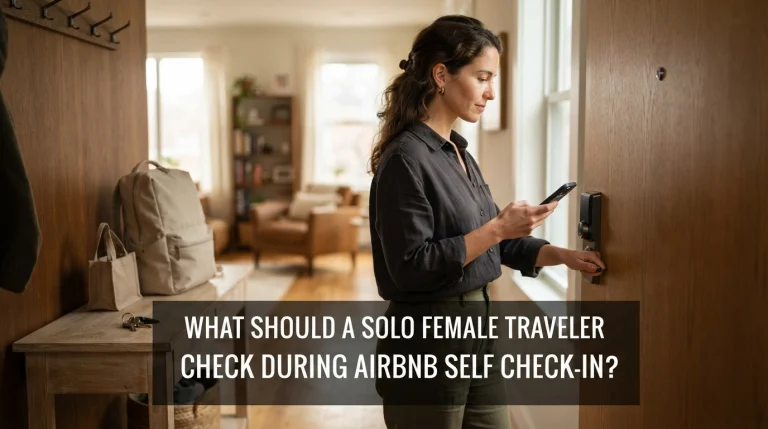
Before unpacking, confirm that the room matches your booking and that the security features work as described. Find reception and the nearest emergency exit while you are still getting oriented.
- Test the bedroom door and any available window locks.
- Locate your assigned locker and confirm that it closes securely.
- Check the route to the bathroom and the nearest exit.
- Ask staff to resolve broken locks, missing keys, or other security problems immediately.
- Keep your room key or access card separate from any information that reveals your room number.
Protect your valuables and documents
Use a lockable locker for your passport, spare cash, electronics, and other valuables when available. Keep your phone and the items you need most within reach, and avoid leaving valuables unattended in common areas.
Carry a secure backup of essential travel documents, such as an encrypted digital copy or another protected record. Store it separately from the originals so losing one doesn’t leave you without any information.
Set boundaries with other guests
Hostels can be excellent places to meet people, but you don’t owe strangers your time, personal information, or company. You can decline invitations, end a conversation, or ask someone to stop without explaining your reasons.
- Meet new acquaintances in shared public spaces first.
- Avoid sharing your room number, detailed itinerary, or live location publicly.
- If you go out with new friends, keep control of your transport home.
- Watch your drink and don’t accept one you haven’t seen prepared.
- Keep your phone charged and let a trusted person know your general plans.
Be prepared for late arrivals and nights out
If you’ll arrive after dark, confirm check-in arrangements and organize a reliable route before leaving the airport or station. Choose licensed transport or a reputable ride service when appropriate, and verify the driver and vehicle details.
After an evening out, you don’t have to walk back alone just because other guests are doing so. Arrange transport if the route, time, or neighborhood makes walking uncomfortable.
Section takeaway: Secure your belongings, learn the building’s layout, maintain personal boundaries, and plan how you’ll get back at night. Small precautions are useful, but they don’t replace proper hostel security.
Pro tip: Before departure, check your destination’s official government travel advisory for current local risks, laws, emergency contacts, and transport guidance.
Is a hostel safer than a hotel or private room?
Neither a hostel nor a hotel is automatically safer in every situation. A well-managed hostel can have excellent access controls, while a poorly maintained hotel may have security weaknesses.
The meaningful comparison is between the specific properties, their locations, their room arrangements, and the support available if something goes wrong.
Which accommodation should you choose?
| Your priority | Option to consider | What to verify |
|---|---|---|
| Meeting other travelers | Social hostel | Guest access, staff oversight, and room security |
| Lower accommodation costs | Female-only or mixed dorm | Total fees, lockers, and transport costs |
| More privacy | Private hostel room or hotel | Door locks, reception, and visitor policies |
| A late arrival | Property with confirmed late check-in | Reception hours, entry instructions, and transport |
| Extra personal space | Private accommodation | Location, host or staff access, and emergency support |
When is paying more worth it?
Spending more may be worthwhile if it gives you a secure location, reliable late-night access, a private room, or a simpler route back from activities. You don’t need luxury accommodation to make a sensible safety decision.
On the other hand, don’t assume an expensive room is secure without checking. Reviews, door security, entry procedures, and the surrounding area still matter.
For first-time solo travelers, one practical approach is to book a well-reviewed female-only dorm for a short stay, assess how comfortable you feel, and move to a private room if shared accommodation doesn’t suit you.
Section takeaway: Match your accommodation to your actual needs. Privacy, good management, secure access, and a suitable location are more useful decision criteria than price alone.
What should you do if a hostel feels unsafe?
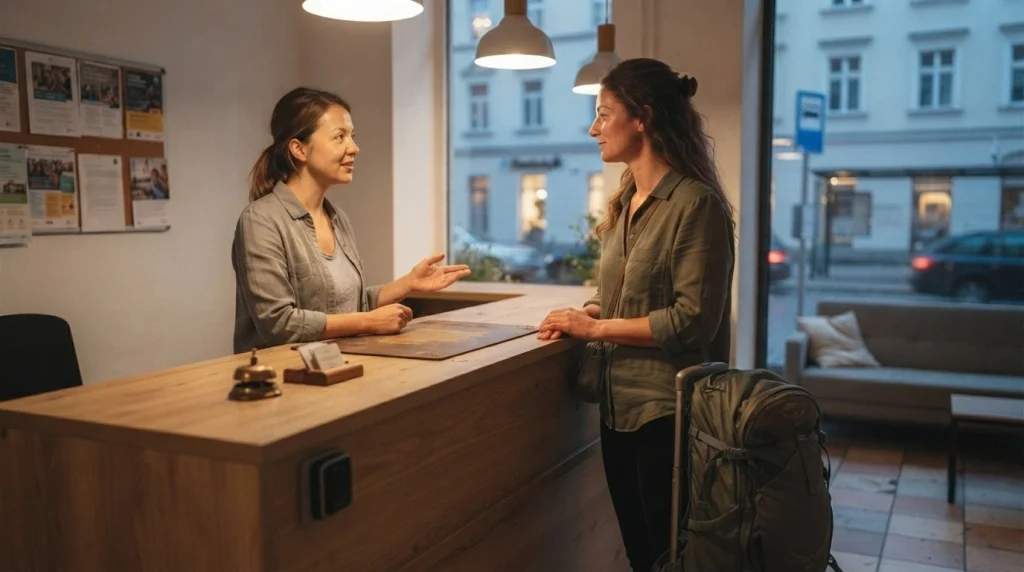
If something feels wrong, take the concern seriously and move toward a safer situation. You don’t have to remain in a room, social situation, or property just because you’ve paid for it.
If a guest makes you uncomfortable
End the interaction if you can do so safely, move to a public area, and contact hostel staff. Describe the behavior clearly and ask for a practical solution, such as a room change or assistance leaving the property.
If staff dismiss your concern or the person continues, consider moving to another accommodation. Don’t wait for a situation to escalate before taking reasonable steps to protect yourself.
If you suspect theft or unauthorized access
Report missing belongings, compromised keys, or signs of unauthorized entry to management immediately. If you return and find your room door open or damaged, don’t enter if you suspect someone may be inside; seek help from staff or local authorities.
For stolen bank cards, contact your bank to block them. If your passport is missing, contact the relevant embassy or consulate for instructions and replacement-document procedures.
If you face an immediate threat
Leave the immediate danger if you can do so safely, get to a staffed or public location, and contact local emergency services. Follow the advice of emergency responders and seek medical assistance if needed.
Before traveling, save local emergency numbers and your country’s embassy or consulate contact details. Emergency numbers and reporting procedures differ by destination, so don’t assume the number used at home will work abroad.
For further planning, consult the U.S. Department of State’s lodging safety guidance or your own government’s equivalent advice.
Section takeaway: Trust your judgment, seek help early, and leave if the property or situation no longer feels safe. Your safety is more important than saving a booking fee.
Frequently Asked Questions About Hostel Safety for Women
Are hostels safe for women traveling alone for the first time?
Yes, a well-managed hostel can be a suitable starting point for a first solo trip. Choose one with recent positive reviews from solo women, secure storage, clear guest-access rules, and reliable staff. A female-only dorm or private room may help you feel more comfortable while adjusting to solo travel.
Should women always book female-only hostel dorms?
No. Female-only dorms are a preference, not a guarantee of safety. Some women prefer them for privacy or comfort, while others are comfortable in mixed dorms with good security and clear guest policies. Choose the arrangement that matches your boundaries, budget, and confidence level.
Can someone enter my hostel room without permission?
It depends on the property’s access controls, room locks, and key management. Before booking, check how guests enter sleeping areas and whether bedroom doors lock securely. If you discover a broken lock or unauthorized entry, contact staff immediately and consider moving if the problem remains unresolved.
What should a woman pack for hostel safety?
Consider a small padlock compatible with the hostel’s lockers, a charged phone, a power bank, a compact flashlight, and a personal safety alarm where legal. Keep essential documents protected and save emergency contacts offline. Check the property’s facilities first so you don’t carry unnecessary equipment.
Is it safe to stay in a hostel if I arrive late at night?
It can be, provided you confirm late check-in, understand the entry procedure, and arrange a reliable journey from the airport or station. A staffed reception and well-lit entrance can be helpful. If check-in arrangements are uncertain, choose another property or arrange accommodation for an earlier arrival.
Are hostels safer than Airbnb or hotels for solo female travelers?
There is no universal answer because safety depends on the individual property and destination. Hostels may provide staffed reception and social spaces, while hotels or private rentals may offer more privacy. Compare access controls, verified reviews, location, emergency support, and the arrangements for entering your room.
What are the warning signs of an unsafe hostel?
Repeated reports of theft or harassment, broken locks, uncontrolled access to sleeping areas, dismissive staff, unclear emergency exits, and serious unresolved maintenance problems deserve attention. One complaint may not tell the whole story, but repeated specific concerns are a reason to reconsider the booking.
Final Takeaway: Can You Feel Safe Staying in a Hostel Alone?
Hostels can be a rewarding choice for women traveling alone, offering affordable beds, shared facilities, and opportunities to meet people along the way. The best experience starts with careful research rather than assuming every hostel is safe or every shared room is dangerous.
Prioritize secure access, working locks, reliable staff, recent reviews, and a location that suits your plans. Choose a female-only dorm or private room if it helps you rest comfortably, and keep a backup accommodation plan available.
Most importantly, give yourself permission to change your plans if a property doesn’t meet your expectations. Solo travel should offer independence and discovery, not pressure to ignore your own boundaries.
Ready to plan your next solo trip? Start by checking official destination advice, shortlist two or three well-reviewed accommodations, and book the one that best balances security, location, comfort, and budget.
Pro tip: Review the latest official solo-travel safety guidance before departure, and save the emergency contacts relevant to your destination.