Are Female-Only Hostel Dorms Useful for Solo Female Travelers?
Quick Answer
Yes, female-only hostel dorms are useful for solo female travelers, especially beginners who want affordable accommodation, more personal comfort, and opportunities to meet other women. They can reduce some concerns about sharing sleeping spaces with strangers, but they do not guarantee safety, privacy, or quiet nights. A well-managed hostel with secure entry, lockers, and helpful staff matters more than the dorm label alone. Before booking, check the U.S. State Department’s lodging safety guidance.
Main Benefits of Female-Only Dorms
- Greater personal comfort: Sharing a bedroom with other women may feel less intimidating.
- More relaxed routines: Some travelers feel more comfortable changing clothes and getting ready.
- Easy social connections: Roommates may become companions for sightseeing, meals, or day trips.
- Budget-friendly accommodation: Shared female dorms can cost less than private hostel rooms.
- Beginner-friendly experience: A smaller women-only room can make a first hostel stay feel more manageable.
Important Limitations
- Not automatically safer: Security depends on the entire property, staff, and access controls.
- Not completely private: You still share sleeping space and sometimes bathrooms.
- Not always quieter: Roommates can have different sleep schedules, regardless of gender.
The question “are female-only hostel dorms useful for solo female travelers?” often comes up before a first independent trip. I think the answer depends on what helps you feel comfortable enough to enjoy traveling alone.
A women-only dorm can make hostel life easier, but it isn’t the right choice for everyone. Here’s how I evaluate comfort, safety, cost, and social opportunities before choosing a bed.
In This Guide
- What Is a Female-Only Hostel Dorm?
- What Are the Benefits of Female-Only Hostel Dorms?
- Are Female-Only Hostel Dorms Safer Than Mixed Dorms?
- Female-Only Dorms vs. Mixed Dorms vs. Private Rooms
- How Do You Choose a Good Female-Only Hostel Dorm?
- Who Should Book a Female-Only Dorm?
- Frequently Asked Questions
What Is a Female-Only Hostel Dorm?
A female-only hostel dorm is a shared sleeping room reserved for women under the property’s accommodation policy. Guests book individual beds rather than renting the entire room.
These dorms usually have bunk beds, shared storage, and access to hostel common areas. Depending on the property, bathrooms may be inside the room or along a shared hallway.
How Do Female-Only Hostel Rooms Work?
When booking, you select a bed labeled “female dorm” or “women-only dorm.” The hostel assigns you a bed alongside other guests who booked that room type.
Room sizes vary, so check the exact listing before paying. Common arrangements include:
- Four-bed dorms: Fewer roommates and generally less movement around the room.
- Six-bed dorms: A practical balance between shared accommodation and manageable room size.
- Eight-bed dorms: More opportunities to meet people, with potentially more noise.
- Large dorms: Often budget-oriented, with greater variation in sleep schedules and available space.
The women’s-only policy normally applies to the sleeping room, not the entire hostel. Shared kitchens, reception areas, and social lounges may welcome guests of all genders.
Are Female-Only Hostels and Female-Only Dorms the Same?
No. A female-only hostel restricts accommodation according to its women-only policy, while a female dorm can exist inside a mixed-gender hostel.
This difference matters if you’re looking for an entirely women-focused property. Read the listing carefully rather than assuming the whole building follows the dorm’s rules.
As of 2026, booking platforms such as Hostelworld’s room-type guide distinguish female-only dorms from mixed dorms and private rooms.
What Are the Benefits of Female-Only Hostel Dorms?
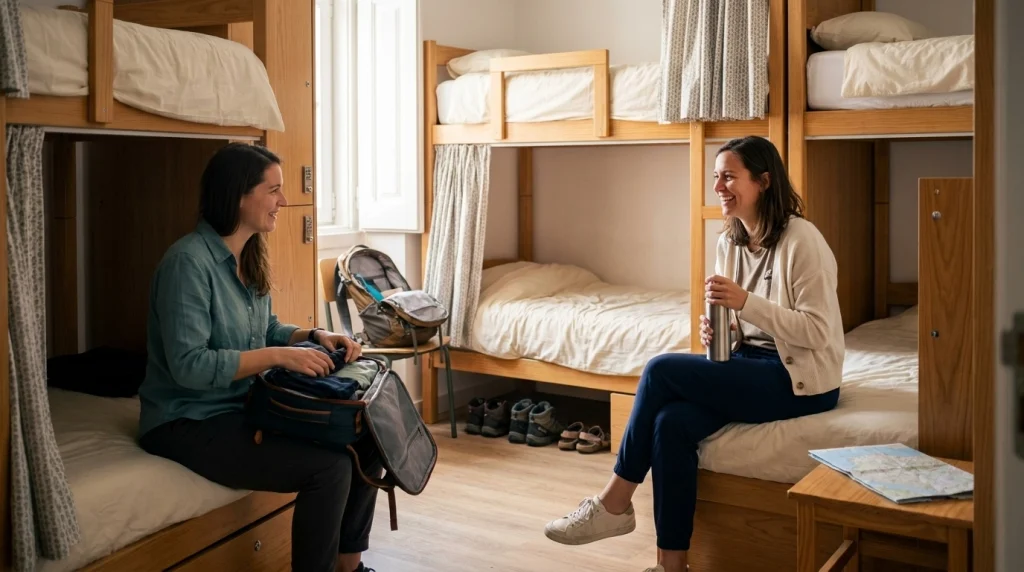
The biggest benefit is often personal comfort. A female-only room can remove one concern from an unfamiliar sleeping arrangement, leaving more energy for exploring.
1. Feeling More Comfortable While Sharing a Room
Sleeping beside unfamiliar people takes some adjustment. Some women find that sharing with female roommates makes the experience feel less intimidating.
I see this as a personal preference, not a universal rule. Women can be inconsiderate roommates too, and mixed dorms can be perfectly comfortable.
A useful way to think about it is simple: choose the room where you expect to rest best. Good sleep matters more than proving how adventurous you are.
2. Making Friends With Other Women Traveling Alone
One of the advantages of hostel life is meeting travelers without arranging social activities in advance. A friendly conversation while packing can turn into an invitation to explore.
Female dorms can be helpful when you’d particularly enjoy meeting other women. You might find companions interested in similar activities.
- Finding someone to join a daytime walking tour.
- Sharing a table at a hostel breakfast.
- Planning a museum visit or local market outing.
- Comparing transportation options for the next destination.
- Sharing practical recommendations about nearby neighborhoods.
However, sharing a dorm doesn’t automatically create friendships. Some people are working remotely, traveling with friends, or simply enjoying quiet time.
I prefer letting conversations develop naturally. A quick invitation is enough, and a polite refusal shouldn’t feel awkward.
3. Enjoying More Comfortable Morning and Evening Routines
Shared accommodation can make ordinary routines feel unusually public. Getting dressed, organizing toiletries, or packing before sunrise may require extra consideration.
Some travelers feel more relaxed doing these things in a women-only dorm. That doesn’t mean everyone will have the same comfort level.
Privacy curtains, changing areas, and bathrooms with locking doors still matter. A female-only label doesn’t replace those features.
4. Saving Money Without Giving Up Hostel Life
A dorm bed often costs less than booking a private room alone. That’s helpful when you’re managing transportation, food, and activities on a limited travel budget.
Female-only dorms may cost more than mixed dorms at the same property. The difference changes with location, dates, and availability.
Before paying extra, ask what you’re receiving. A small, well-equipped room might justify the difference, while an overcrowded room may not.
5. Building Confidence on a First Solo Trip
For beginners, the first night in shared accommodation can feel like a bigger challenge than sightseeing alone. A room that feels manageable can make that transition easier.
Consider arriving during daylight and booking only two nights initially. You’ll have enough time to assess the hostel without committing your entire trip.
Imagine arriving in Lisbon after a long flight and finding a calm six-bed dorm with secure lockers. Having a straightforward place to settle could make your first evening much easier.
That’s the kind of comfort I would prioritize over saving a few dollars.
Section Takeaway: Female-only dorms are most useful when they improve your comfort, rest, and confidence. The benefits are personal rather than guaranteed.
Are Female-Only Hostel Dorms Safer Than Mixed Dorms?
Female-only hostel dorms may reduce certain comfort concerns, but there isn’t enough evidence to say they’re universally safer. The property’s security practices matter far more than the gender arrangement alone.
A poorly managed female dorm can have serious weaknesses. A well-managed mixed dorm may offer stronger locks, better supervision, and faster staff support.
What Actually Makes a Hostel Dorm Secure?
I would evaluate these features before considering any room safe enough to book:
- Controlled entry: Guests use a working key card, secure code, or another reliable room-access system.
- Individual lockers: Every guest has somewhere to secure valuables.
- Reliable staff support: Guests can contact responsible staff when problems occur.
- Visitor restrictions: The hostel has clear rules about who may enter sleeping areas.
- Recent reviews: Travelers report consistent experiences with cleanliness, security, and staff conduct.
- Practical location: The property is reasonably accessible from transport and main activity areas.
A dorm’s gender policy should support these safeguards, not replace them. Never assume that every roommate, employee, or visitor will respect boundaries.
Can Men Enter Female-Only Dorm Rooms?
Women-only booking restrictions generally concern the room’s overnight guests. Staff access, maintenance arrangements, and enforcement rules depend on the hostel.
Some properties may have male employees who enter rooms for legitimate work. Others may have specific staff or entry procedures.
If this matters to you, ask the hostel how it handles maintenance, cleaning, and unexpected room access. A good property should explain its policy clearly.
What Should You Do If Someone Makes You Uncomfortable?
Don’t feel obligated to tolerate inappropriate behavior simply because you’re sharing accommodation. You can request help without first deciding whether someone intended harm.
- Move to a staffed or public area if you feel threatened.
- Explain the concern to reception or the manager.
- Ask for a different room or another safe accommodation arrangement.
- Keep relevant messages or booking details if you need to report an incident.
- Contact local emergency services if you’re in immediate danger.
You can also keep a trusted contact updated about where you’re staying. Share essential details privately rather than posting your room location publicly.
Pro tip: Review the U.S. State Department’s guidance for women travelers and the official travel advice applicable to your destination and nationality.
Section Takeaway: A female-only dorm can improve your sense of comfort, but real security comes from effective access controls, responsive staff, and smart personal habits.
Female-Only Dorms vs. Mixed Dorms vs. Private Rooms
The best accommodation depends on your budget, sleep habits, and preferred level of interaction. None of these choices is automatically right for every solo traveler.
Here’s how I compare them before booking.
| Feature | Female-Only Dorm | Mixed Dorm | Private Hostel Room |
|---|---|---|---|
| Sleeping arrangement | Shared with women | Shared across genders | Room booked privately |
| Typical price relationship | Budget to moderate | Often budget-friendly | Usually higher for one traveler |
| Bedroom privacy | Limited | Limited | High |
| Social opportunities | With roommates and hostel guests | With roommates and hostel guests | Mainly in shared areas |
| Sleep disruptions | Possible | Possible | Fewer roommate-related disruptions |
| Best suited for | Women seeking a women-only sleeping space | Travelers comfortable sharing with any gender | Travelers prioritizing privacy |
These are typical differences, not fixed rules. Always compare the actual room listings because facilities, pricing, and occupancy vary.
Is Paying Extra for a Female-Only Dorm Worth It?
Sometimes, yes. I would pay a reasonable premium if the room offered a better fit for my comfort needs.
For example, suppose a mixed dorm costs $22 and a female-only dorm costs $27 per night. That hypothetical $5 difference becomes $15 over three nights.
I’d compare that extra cost against the room size, reviews, privacy features, and security. Gender restrictions alone wouldn’t justify ignoring a clearly better accommodation option.
Can a Private Hostel Room Be a Better Choice?
Absolutely. Private rooms can provide the independence of a hotel while retaining access to the hostel’s communal atmosphere.
They’re particularly useful when you’re exhausted, working remotely, or struggling with shared-room sleep. You can still meet travelers in the kitchen or join organized activities.
For a longer trip, a practical approach is to combine different room types. Shared dorms work for social days, while private nights can help you recover.
How Do You Choose a Good Female-Only Hostel Dorm?
Start with the hostel’s overall quality rather than filtering only by room type. A great dorm inside a poorly managed building is still a poor booking choice.
Check Recent Reviews From Solo Female Travelers
Reviews are most useful when they describe actual experiences. Look beyond the overall rating and read comments about problems that affect your stay.
- Was the room clean when guests arrived?
- Did lockers and access cards work?
- Did staff respond helpfully to complaints?
- Did guests feel comfortable arriving after dark?
- Were there repeated reports of noise, harassment, or missing belongings?
One unusual complaint may not describe the entire property. Several recent reviews mentioning the same problem deserve much closer attention.
For additional practical checks, read Hostelworld’s hostel safety guide.
Choose Your Location Before Comparing Prices
A cheap hostel becomes less appealing if reaching it requires complicated late-night transfers. Location affects both convenience and your ability to return comfortably.
Check the walking route from public transport, available transportation after dark, and the hostel’s arrival instructions.
I would rather pay a little more for a practical location than repeatedly worry about getting back. Still, no neighborhood should be treated as completely risk-free.
Check the Dorm’s Facilities
Photos can make bedrooms look spacious even when storage is limited. Check the listed facilities and ask questions when details are missing.
- Lockers: Confirm their size and whether you need a padlock.
- Privacy curtains: Useful for separating your sleeping space visually.
- Power outlets: Convenient for charging your phone near the bed.
- Air conditioning or heating: Important when traveling during extreme temperatures.
- Bathrooms: Check whether they are ensuite, shared, or gender-designated.
- Room access: Look for clear information about keys or entry codes.
- Reception hours: Confirm how to get help outside normal check-in times.
Ask These Questions Before Booking
If a hostel description seems vague, send a short message. Good communication before booking can reveal how responsive the property is.
- Is the dorm exclusively assigned to women overnight?
- How many beds are in the room?
- Can non-guests enter sleeping areas?
- Is there secure luggage storage?
- What happens if I arrive after reception closes?
- Can I request a room change if there’s a problem?
Use a Simple First-Night Routine
Your arrival routine shouldn’t be complicated. The goal is to become familiar with the building and keep essential belongings secure.
- Confirm your bed assignment and emergency contact information.
- Locate the nearest exit and reception area.
- Test the dorm door and your locker.
- Put your passport, money, and valuables somewhere secure.
- Keep your phone charged and save the hostel’s address offline.
- Introduce yourself to roommates if the moment feels appropriate.
I also recommend keeping basic sleep essentials within reach. Earplugs and an eye mask can be more useful than expected in any shared room.
Section Takeaway: Book for the whole experience: secure facilities, useful location, responsive staff, and a room suited to your needs. Don’t let the female-only label distract you from weak reviews.
Who Should Book a Female-Only Dorm?
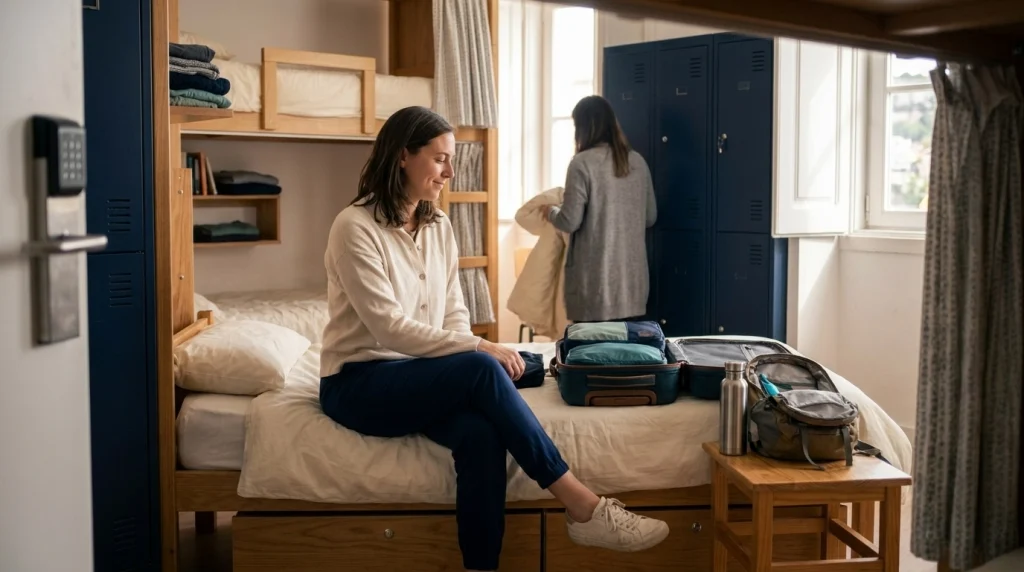
Female-only dorms are worth considering when sharing with women makes accommodation feel more approachable. But your personal priorities should guide the final choice.
Travelers Who May Benefit Most
- First-time solo travelers: A smaller women-only room may ease the adjustment to hostel life.
- Women who prefer female roommates: Room policies can match personal or cultural comfort preferences.
- Budget-conscious travelers: Dorm beds offer an alternative to paying for an entire private room.
- Social travelers: Shared rooms can create opportunities to meet women exploring independently.
- Travelers testing hostel life: A short booking makes it easier to decide what works.
When I Would Choose Something Else
Sharing a room isn’t always the best arrangement. A private room may be more useful when sleep, recovery, or uninterrupted personal space matters most.
I’d also consider a well-reviewed mixed dorm if its facilities and location were clearly better. Comfort comes from the full environment, not one booking category.
For a first trip, I would use this decision order:
- Find a reputable property in a suitable location.
- Check its security features and recent reviews.
- Compare the actual dorm arrangements.
- Choose female-only accommodation if it improves your comfort.
- Book a private room if sharing feels too stressful.
You don’t need to stay in a dorm to qualify as an independent traveler. Solo travel is about making your own decisions, including where you sleep.
Frequently Asked Questions About Female-Only Hostel Dorms
Are female-only dorms good for first-time solo female travelers?
Yes, they can be an excellent starting option. Sharing with other women may feel more comfortable, especially if you’re nervous about your first hostel stay. Choose a small, well-reviewed dorm with secure lockers and reliable staff rather than assuming every women-only room offers the same experience.
Are female-only hostel dorms more expensive?
They sometimes cost more than mixed dorm beds, but not always. Prices depend on the city, travel season, room size, amenities, and availability. Compare the final price for your exact dates, including taxes and fees, before deciding whether the additional comfort is worth paying for.
Can you meet people in a female-only hostel dorm?
Yes. Shared bedrooms can create opportunities for casual conversations, sightseeing plans, and new friendships. However, not every roommate wants to socialize. Hostel lounges, walking tours, and group activities may offer more reliable opportunities to meet people while respecting everyone’s personal space.
Do female-only hostel dorms have separate bathrooms?
Not necessarily. Some include bathrooms inside the dorm, while others use shared facilities elsewhere in the building. A women-only sleeping room doesn’t automatically mean the nearest bathroom is women-only. Check room descriptions and ask the property before booking if bathroom arrangements matter to you.
Can you request a female-only room after booking a mixed dorm?
You can ask, but availability and change policies vary. The hostel may charge the price difference or require a new reservation. If a women-only sleeping arrangement is important, book that specific room category in advance instead of depending on a last-minute change.
Are female-only dorms quieter than mixed dorms?
Not automatically. Noise depends on roommate behavior, schedules, room size, and hostel rules rather than gender alone. A four-bed room in a quiet hostel may suit a light sleeper better than a twelve-bed female dorm inside a busy party hostel.
Is a female-only dorm safer than a private hotel room?
Neither option is universally safer. A private room offers more control over bedroom access, while a dorm may provide nearby guests and hostel staff. Security depends on the property, entry controls, location, management, and your individual circumstances. Compare specific accommodations rather than relying on room labels.
Final Thoughts: Are Female-Only Hostel Dorms Worth Booking?
Yes, female-only hostel dorms can be a useful choice for solo female travelers who want affordable accommodation and a women-only sleeping space. They can make the first hostel experience feel easier without removing the social benefits of shared accommodation.
But they aren’t a guarantee of safety, friendship, or uninterrupted sleep. I would always choose a well-managed property over a poorly reviewed hostel offering the preferred room label.
For your next solo trip, start by comparing a small female-only dorm, a mixed dorm, and a private hostel room. Choose the option that lets you feel rested, comfortable, and ready to explore on your own terms.