How to Build a GPS Tracker with Arduino Step by Step Guide
Building a GPS tracker with Arduino is a fun and educational project that helps you learn electronics and programming. This guide walks you through every step, from gathering parts to coding and testing, so you can create your own reliable GPS tracking device.
Key Takeaways
- Understanding GPS modules: Learn how GPS modules communicate with Arduino to provide location data.
- Required components: Identify essential parts like Arduino board, GPS module, and power supply.
- Wiring and connections: Step-by-step instructions to connect the GPS module properly to Arduino.
- Programming basics: How to code Arduino to read GPS data and display or send it.
- Testing and troubleshooting: Tips to ensure your tracker works accurately and how to fix common issues.
- Customizing your tracker: Ideas for enhancing your GPS tracker with additional features.
How to Build a GPS Tracker with Arduino Step by Step Guide
Are you interested in creating a GPS tracker using Arduino? Whether you want to track your bike, car, or just explore GPS technology, this guide will help you build a simple and effective GPS tracker. You don’t need to be an expert. By the end of this tutorial, you will understand how GPS modules work, how to connect them to Arduino, and how to program everything to get live location data.
What You Will Learn
- What components are needed to build a GPS tracker.
- How to wire the GPS module to an Arduino board.
- How to write and upload the Arduino code to read GPS data.
- How to display or use the GPS coordinates.
- Troubleshooting common problems.
Step 1: Gather the Required Components
Before starting, make sure you have all the necessary parts. Here is a list of components you will need:
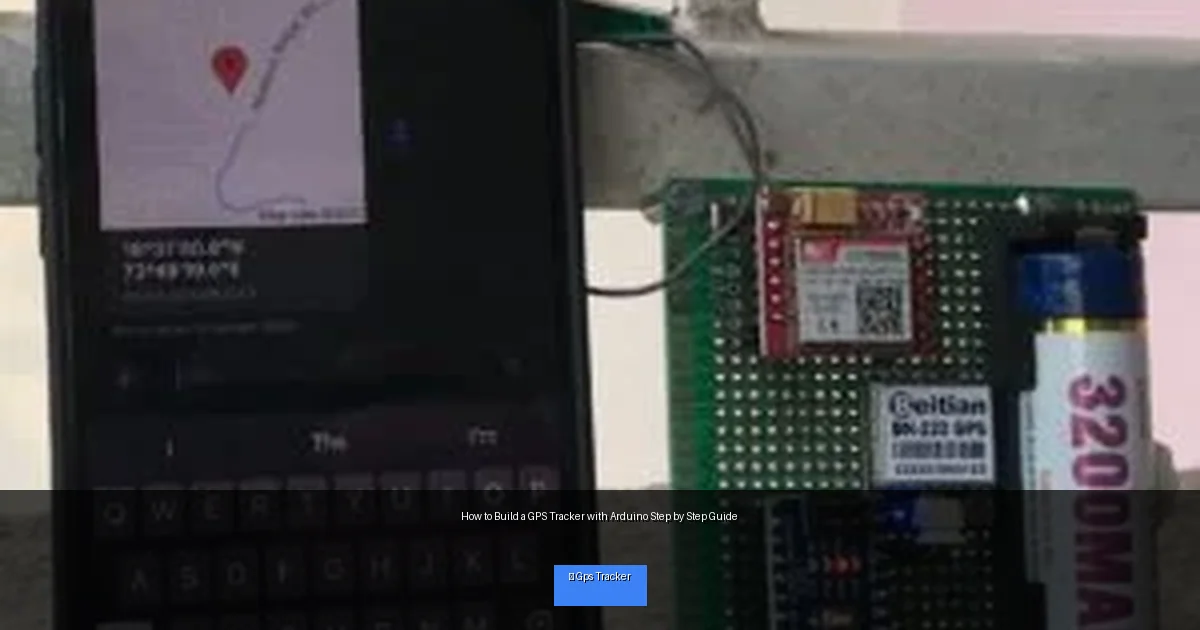
Visual guide about How to Build a GPS Tracker with Arduino Step by Step Guide
Image source: justdoelectronics.com
- Arduino Board: Arduino Uno or any compatible board works well.
- GPS Module: A popular choice is the NEO-6M GPS module.
- Jumper Wires: To connect components.
- Breadboard: Optional but useful for prototyping.
- Power Supply: USB cable or battery pack to power the Arduino.
- Optional – LCD Display: To show GPS data directly on the device.
Make sure your GPS module comes with an antenna or has an external antenna for better signal reception.
Step 2: Understand Your GPS Module
GPS modules receive signals from satellites to calculate your position. The module then sends this data to the Arduino via serial communication (usually UART). The NEO-6M module outputs standard NMEA sentences, which contain latitude, longitude, altitude, speed, and time.
Understanding this data format helps you parse and use the information effectively.
Step 3: Connect the GPS Module to Arduino
Wiring Instructions
Here is how you connect the NEO-6M GPS module to an Arduino Uno:
- GPS VCC to Arduino 5V (or 3.3V if your module requires it)
- GPS GND to Arduino GND
- GPS TX to Arduino RX (Pin 4 or 10) (Use SoftwareSerial if needed)
- GPS RX to Arduino TX (Pin 3 or 11) (Optional for some modules)
Note: Arduino Uno’s default serial pins are 0 (RX) and 1 (TX). It’s better to use SoftwareSerial library with other pins to avoid conflict with USB serial communication.
Using SoftwareSerial
SoftwareSerial allows Arduino to use other pins for serial communication. For example:
- GPS TX → Arduino pin 4 (RX)
- GPS RX → Arduino pin 3 (TX)
This setup frees up the main serial port for debugging on your computer.
Step 4: Install Necessary Libraries
To work with GPS data easily, install the TinyGPS++ library. It helps parse NMEA sentences into readable GPS information.
To install:
- Open Arduino IDE
- Go to Sketch > Include Library > Manage Libraries
- Search for “TinyGPS++”
- Click install
Step 5: Write and Upload the Arduino Code
Here’s a simple example code that reads GPS data and prints coordinates to Serial Monitor:
#include <SoftwareSerial.h>
#include <TinyGPS++.h>

// Create GPS object
TinyGPSPlus gps;

// Create software serial port on pins 4 and 3
SoftwareSerial ss(4, 3); // RX, TX

void setup() {
  Serial.begin(9600);
  ss.begin(9600);
  Serial.println("GPS Tracker Starting...");
}

void loop() {
  while (ss.available() > 0) {
    gps.encode(ss.read());
  }

  if (gps.location.isUpdated()) {
    Serial.print("Latitude: ");
    Serial.println(gps.location.lat(), 6);
    Serial.print("Longitude: ");
    Serial.println(gps.location.lng(), 6);
  }
}
Explanation: This code uses SoftwareSerial to read data from the GPS module, parses it with TinyGPS++, and prints latitude and longitude with 6 decimal places.
Step 6: Testing Your GPS Tracker
After uploading the code, open the Serial Monitor (Ctrl+Shift+M) and set the baud rate to 9600. You should see GPS coordinates appear once the module gets a satellite fix.
Note: GPS modules may take a few minutes to lock satellites, especially on the first use or indoors. For best results, test outside with a clear sky view.
Step 7: Display GPS Data on an LCD (Optional)
If you want to make your tracker standalone, add a 16×2 LCD display using the LiquidCrystal library to show coordinates on the device.
- Connect LCD pins to Arduino as per LCD documentation.
- Update the code to print latitude and longitude to the LCD.
Step 8: Enhancing Your GPS Tracker
Once your basic tracker works, consider these improvements:
- Data Logging: Add an SD card module to save GPS data for later analysis.
- Real-time Tracking: Integrate GSM or Wi-Fi modules to send location data to a server or smartphone.
- Power Management: Use a rechargeable battery and low-power modes for portability.
Troubleshooting Common Issues
- No GPS Fix: Move outdoors with a clear sky view. Check GPS antenna connection.
- No Data on Serial Monitor: Verify wiring. Make sure baud rates match (GPS modules usually use 9600 baud).
- Garbage Characters: Check if SoftwareSerial pins are correct and not conflicting with Serial Monitor.
- Slow Updates: GPS modules can take 30 seconds to several minutes for first fix. Be patient.
Conclusion
Building a GPS tracker with Arduino is a rewarding project that combines hardware and software skills. With a few components and simple coding, you can create a device that tracks your location in real-time. Use this guide as a starting point and explore enhancements to make your GPS tracker more powerful and useful. Happy building!
🎥 Related Video: ARDUINO GPS TRACKER WITH GOOGLE MAPS
📺 LETRONICS TECH