Will a Backpack Fit as a Carry On Find Out What Airlines Allow
Will a backpack fit as a carry on? This guide breaks down airline rules and size limits so you can pack smart. Learn which airlines accept backpacks as carry-ons and get practical tips to avoid surprises at the gate.
Key Takeaways
- Backpack size matters: Most airlines have strict carry-on size limits, so knowing your backpack dimensions is key.
- Airline policies vary: Each airline has different rules about carry-on backpacks, so always check before you fly.
- Soft vs. hard backpacks: Soft backpacks are easier to fit in overhead bins and under seats.
- Packing light helps: Keeping your backpack slim increases the chances it will be accepted as a carry-on.
- Check both overhead bin and under-seat dimensions: Some backpacks may only fit under the seat in front of you.
- Use packing cubes and organizers: These help maximize space and keep your backpack organized.
- Be prepared for gate checks: Sometimes even carry-on backpacks need to be gate-checked if overhead space is limited.
Will a Backpack Fit as a Carry On? Find Out What Airlines Allow
Traveling with a backpack as your carry-on is a popular choice for convenience and mobility. But will your backpack fit as a carry on? This guide will help you understand airline size restrictions, how to measure your backpack, and tips to ensure your backpack qualifies as carry-on luggage. We’ve also included practical advice for packing efficiently and what to do if your backpack is too large.
Step 1: Understand Airline Carry-On Size Restrictions
Each airline has set size limits for carry-on luggage. These limits usually include the total dimensions of the bag (length + width + height). Knowing these limits helps you determine if your backpack will fit.
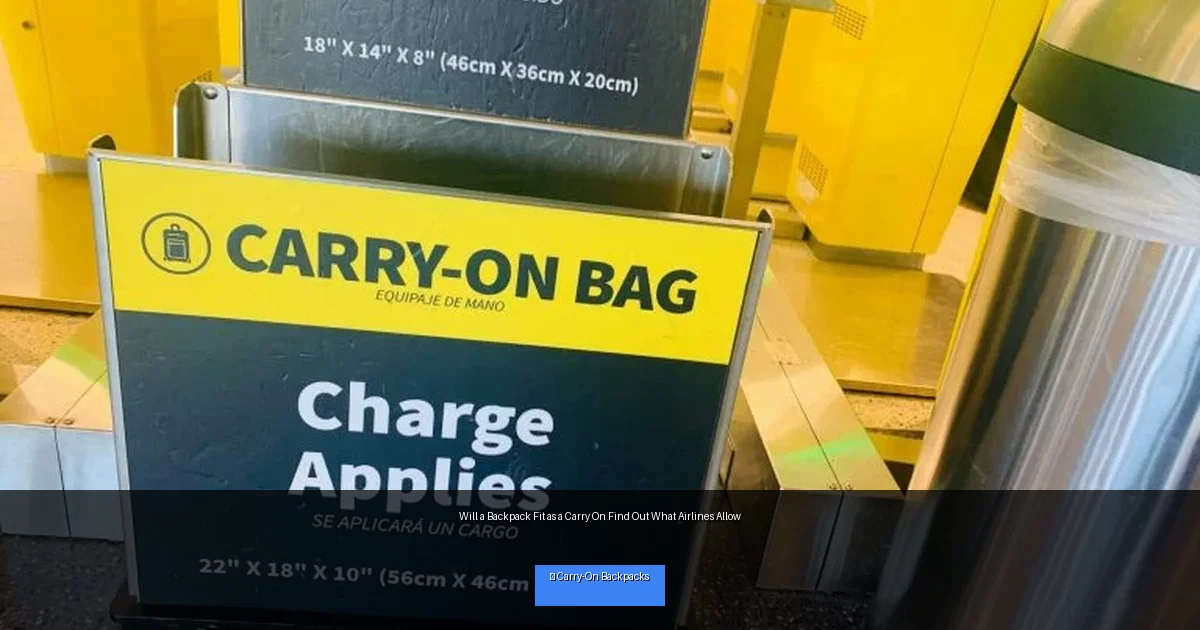
Visual guide about Will a Backpack Fit as a Carry On Find Out What Airlines Allow
Image source: projectuntethered.com
Typical Size Limits
- Most U.S. airlines allow carry-ons up to 22 x 14 x 9 inches (56 x 36 x 23 cm).
- Some international airlines have smaller limits, such as 21 x 15 x 7 inches.
- Always check the airline’s official website before traveling.
Why Size Matters
Backpacks that exceed these dimensions may be denied as carry-ons and forced to be checked. This can lead to delays and fees. Measuring your backpack before your trip is essential.
Step 2: Measure Your Backpack Correctly
Use a tape measure to find the length, width, and height of your backpack. Include all protruding parts like straps, pockets, and handles.
How to Measure
- Height: Measure from the base to the top of the backpack.
- Width: Measure the widest point side to side.
- Depth: Measure from front to back at the thickest part.
Write down these numbers and compare them to the airline’s maximum allowed dimensions.
Step 3: Check Airline Policies for Carry-On Backpacks
Not all airlines treat backpacks the same. Some are very strict, while others are more flexible.
Examples of Airline Policies
- Delta Airlines: Allows carry-on backpacks within 22 x 14 x 9 inches.
- American Airlines: Same size limits, but carry-ons must fit in overhead bins or under the seat.
- Southwest Airlines: Allows carry-on backpacks as long as they fit in the overhead bin or under seat.
- Budget Airlines (Spirit, Ryanair): Often have smaller size limits and stricter carry-on rules.
Always check airline websites or call customer service if you’re unsure.
Step 4: Choose the Right Backpack for Carry-On Use
Not all backpacks are designed for airline carry-ons. Here’s how to pick the best one.
Soft vs. Hard Backpacks
- Soft backpacks: Flexible, easier to squeeze into overhead bins or under seats.
- Hard shell backpacks: Provide protection but may be less forgiving with size limits.
Features to Look For
- Expandable compartments with zip closures to adjust size.
- Multiple pockets for organized packing.
- Lightweight materials to avoid extra weight fees.
- Compression straps to reduce bulk.
Step 5: Pack Your Backpack Efficiently
Packing smart can make your backpack slimmer and easier to fit inside the allowed size limits.
Use Packing Cubes
Packing cubes help compress clothes and keep everything organized.
Roll Clothes Instead of Folding
Rolling saves space and reduces wrinkles.
Limit What You Bring
Stick to essentials to avoid overstuffing your backpack.
Distribute Weight Evenly
Heavier items at the bottom keep your backpack balanced.
Step 6: Know Where to Stow Your Backpack on the Plane
Depending on the backpack’s size, you may place it in the overhead bin or under the seat in front of you.
Under-Seat Storage
If your backpack is smaller than typical carry-ons, it can usually fit under the seat. This keeps your belongings within easy reach.
Overhead Bin Storage
Larger backpacks will need to go in the overhead bin. Arrive early to secure space, as bins fill up quickly.
Troubleshooting: What If Your Backpack Is Too Big?
Check for Gate Check Options
If your backpack is oversized, airlines may require gate checking. This means it’s tagged and placed in the cargo hold but can be retrieved quickly after landing.
Consider a Smaller Backpack
Invest in a backpack designed specifically for carry-on use with airline-approved dimensions.
Wear Bulky Items
If your backpack is too full, wear your jacket or heavier shoes to reduce space taken inside the bag.
Practical Tips for Stress-Free Carry-On Backpack Travel
- Always check airline size policies before packing.
- Weigh your backpack to avoid overweight fees.
- Label your backpack with your contact info.
- Use TSA-approved locks if you lock your bag.
- Keep liquids and electronics accessible for security screening.
- Arrive early to secure overhead bin space.
Conclusion
Will a backpack fit as a carry on? The answer depends on the backpack’s size and the airline’s rules. By measuring your backpack, understanding airline policies, and packing efficiently, you can travel smoothly with your backpack as your carry-on. Always check with your airline ahead of time and choose a backpack designed for travel to avoid last-minute hassles. Happy travels!
🎥 Related Video: WHY THE SIZE OF YOUR BACKPACK MATTERS? FRONTIER AIRLINE LUGGAGE FIT TEST #Travel #hack #savemoney
📺 Khiz & Eesa
Travel Hack – We saved $500 on our flight from New York to Atlanta. It sounds difficult to travel with only a personal item but you …