Is a Backpack a Carry On or Personal Item When Flying
Wondering if your backpack counts as a carry on or personal item when flying? This guide breaks down airline rules, size limits, and packing tips to help you fly hassle-free. Understand how to maximize your luggage allowance and avoid extra fees by knowing where your backpack fits.
Key Takeaways
- Backpack size matters: Airlines classify bags based on size, so your backpack can be either a carry on or personal item depending on dimensions.
- Carry on vs personal item: Carry ons are larger and go in overhead bins, while personal items are smaller and fit under the seat.
- Check airline policies: Each airline has different size limits and rules, so always confirm before flying.
- Packing efficiently: Organizing your backpack smartly can help it meet size requirements and hold more essentials.
- Multiple bags allowed: Most airlines allow one carry on and one personal item, so you can bring both a backpack and a smaller bag.
- Weight limits vary: Some airlines restrict carry on weight, so keep your backpack light to avoid fees.
- Use backpacks designed for travel: Carry-on backpacks with structured compartments and compression straps offer the best convenience.
Is a Backpack a Carry On or Personal Item When Flying?
Traveling with a backpack is super convenient, but many travelers get confused about whether a backpack counts as a carry on or a personal item on flights. This can affect what you’re allowed to bring onboard and where your bag goes during the flight. In this guide, you’ll learn how to determine if your backpack is a carry on or personal item, the size rules to follow, and how to pack smartly to avoid surprises at the airport.
Understanding Airline Baggage Policies
First, it’s important to understand the difference between a carry on and a personal item:
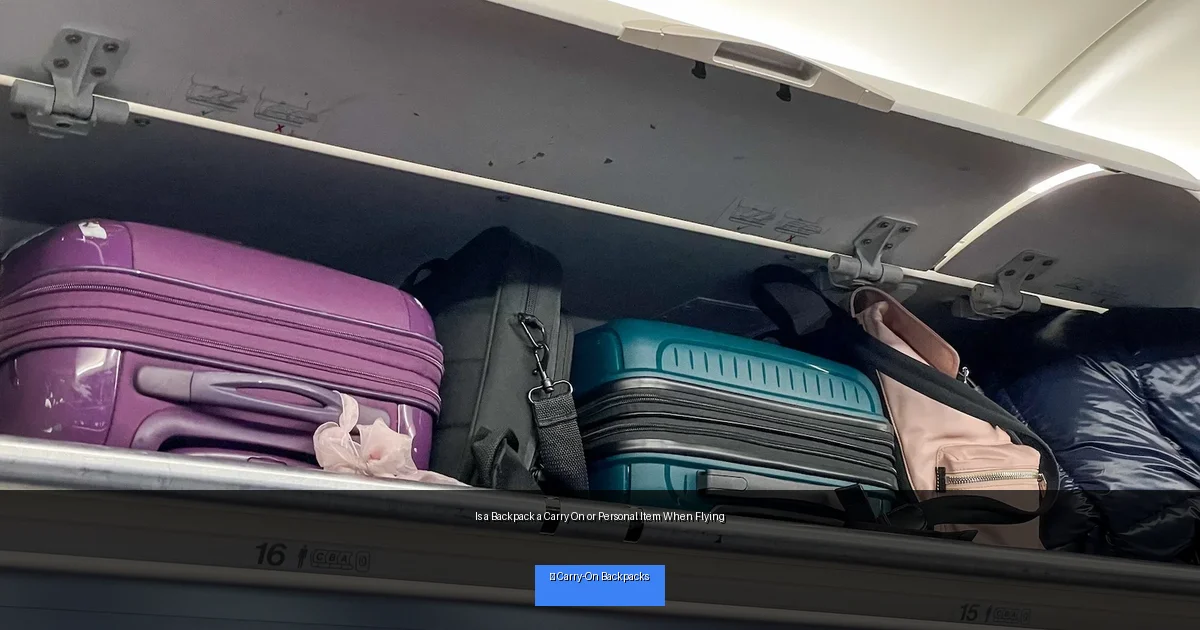
Visual guide about Is a Backpack a Carry On or Personal Item When Flying
Image source: thepointsguy.global.ssl.fastly.net
- Carry on: This is your main bag that you stow in the overhead bin. It’s typically larger and can hold clothes, electronics, and more.
- Personal item: A smaller bag that fits under the seat in front of you. This might be a purse, laptop bag, or a small backpack.
Most airlines allow one carry on and one personal item per passenger, but size limits vary.
Step 1: Measure Your Backpack
To figure out if your backpack is a carry on or personal item, start by measuring it.
How to Measure Your Backpack
- Height: Measure from the base to the top, including any handles or straps.
- Width: Measure the widest part of the bag.
- Depth: Measure how thick the backpack is when fully packed.
Use a tape measure and jot down the dimensions in inches or centimeters.
Step 2: Compare Your Backpack to Airline Size Limits
Once you have your backpack’s dimensions, compare them with your airline’s baggage policy.
Typical Size Limits
- Carry on bags: Usually around 22 x 14 x 9 inches (56 x 36 x 23 cm).
- Personal items: Generally about 18 x 14 x 8 inches (45 x 35 x 20 cm).
If your backpack fits within the carry on size, it can be your main carry on bag. If it’s smaller, it can count as your personal item.
Example Airlines
- Delta Airlines: Carry on max 22 x 14 x 9 inches, personal item smaller than carry on.
- American Airlines: Carry on 22 x 14 x 9 inches, personal item 18 x 14 x 8 inches.
- Southwest Airlines: Carry on 24 x 16 x 10 inches, personal item smaller than carry on.
Step 3: Decide How to Use Your Backpack
Depending on size and your other luggage, decide if your backpack will be your carry on or personal item.
If Your Backpack Is Large Enough to Be a Carry On
- Use it as your main carry on bag.
- Bring a smaller personal item like a purse or laptop case.
- Pack clothes, shoes, and larger items in the backpack.
If Your Backpack Is Small and Fits Personal Item Dimensions
- Use it as your personal item.
- Bring a separate carry on bag, like a suitcase or duffel.
- Keep essentials and smaller items in the backpack.
Step 4: Pack Your Backpack Efficiently
Packing smart helps your backpack fit the size limits and weight restrictions.
Tips for Efficient Packing
- Use packing cubes: They keep items organized and compress clothes.
- Roll clothes: Rolling saves space and reduces wrinkles.
- Limit bulky items: Avoid packing heavy shoes or thick jackets inside the backpack.
- Utilize exterior pockets: Store small items like chargers and snacks in accessible pockets.
- Check weight limits: Some airlines have carry on weight limits; keep your backpack light.
Step 5: At the Airport – What to Expect
When you get to security or boarding, be prepared to show your bag if asked.
Security Screening
- Remove laptops and liquids from your backpack for separate screening.
- Follow TSA or local security rules to speed up the process.
Boarding the Plane
- If your backpack is a carry on, stow it in the overhead bin.
- If it’s a personal item, place it under the seat in front of you.
- If the overhead bins fill up, gate agents might ask you to check the carry on bag.
Troubleshooting: What If Your Backpack Doesn’t Fit?
Sometimes your backpack might be slightly too big or heavy. Here’s what to do:
- At the airport: Gate agents may ask you to check your carry on for free or a fee.
- Before you fly: Consider downsizing your backpack or investing in a travel-specific carry on backpack.
- Pack lighter: Remove non-essential items to reduce weight and size.
- Use compression straps: Many backpacks have straps to cinch down size.
Choosing the Right Backpack for Air Travel
Not all backpacks are created equal. For hassle-free flying, look for:
- Carry-on sized backpacks: Designed to meet airline size limits.
- Structured compartments: Help organize your belongings and protect electronics.
- Lightweight materials: To keep total weight down.
- Comfortable straps: For easy carrying through airports.
- Expandable features: Some backpacks expand but still meet carry on rules when compressed.
Conclusion
So, is a backpack a carry on or personal item when flying? It depends on your backpack’s size and the airline’s rules. Measuring your backpack and comparing it to airline size limits is the key to knowing how to classify it. By packing smart and choosing the right backpack, you can maximize your luggage allowance, avoid fees, and enjoy a smoother travel experience. Remember to always check your airline’s baggage policy before flying to stay informed and stress-free.