
How Can a Woman Keep Luggage Safe on Public Transportation?
Quick Answer
A woman can keep luggage safer on public transportation by keeping valuables in a zipped bag close to her body, securing larger bags within sight, and staying alert when boarding, exiting, and changing connections. Choose well-lit waiting areas, use luggage locks where appropriate, and keep travel documents and emergency money separate from your main suitcase. Before departure, check official travel advice and the local transport operator’s luggage rules.
Essential luggage safety habits
- Keep valuables close: Carry your passport, phone, cards, and cash in a zipped crossbody bag or concealed money pouch.
- Secure large bags: Place luggage where you can see it, and use designated racks or permitted restraints when available.
- Reduce distractions: Put your phone away when boarding, navigating crowds, or handling tickets.
- Plan your transfers: Check your route, platform, stop, and arrival arrangements before leaving.
- Prepare for theft: Keep a record of your luggage, save digital copies of important documents securely, and enable device tracking.
One important precaution
- If someone distracts, crowds, or pressures you around your bags, move toward a staffed area or other passengers rather than confronting them alone.
Traveling alone gives me the freedom to explore at my own pace, but managing luggage in busy stations and crowded vehicles deserves extra attention. The good news is that a few practical habits can make your journey more manageable without turning every bus ride or train transfer into a source of anxiety.
In this guide, I’ll explain how to protect your belongings on buses, trains, subways, and other forms of public transportation, with particular attention to the challenges women may face while traveling alone. You’ll also learn how to choose safer luggage arrangements, respond to suspicious situations, and prepare for the unexpected.
In This Guide
- Why does luggage safety matter for women traveling alone?
- How should you choose and organize luggage?
- How can you secure luggage on different types of public transportation?
- How can you stay alert at stations and during transfers?
- Which luggage safety tools are worth using?
- What should you do if your luggage is stolen or goes missing?
- Frequently asked questions
Why Does Luggage Safety Matter for Women Traveling Alone?
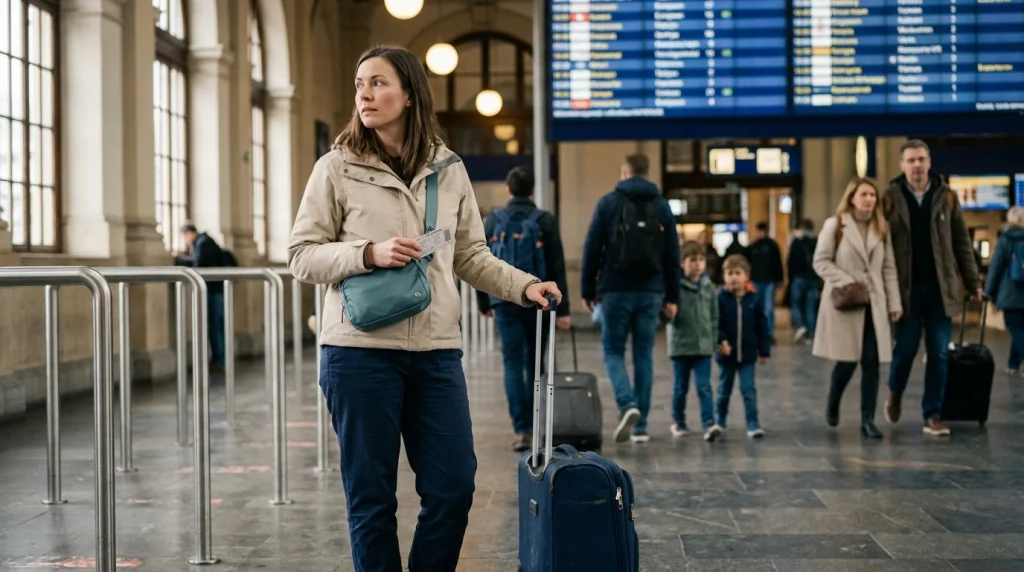
Luggage safety means protecting your bags, valuables, identity documents, and essential belongings from theft, loss, damage, and unauthorized access while traveling. For a solo traveler, that protection matters because there may be no companion available to watch a suitcase while you buy a ticket or ask for directions.
Women traveling alone may also need to consider personal space, unwanted attention, and how to get assistance without leaving their belongings unattended. These concerns vary by location, transport system, time of day, and individual circumstances.
Where are luggage theft risks greatest?
Crowded environments can make it harder to notice when someone touches or moves your belongings. Pay particular attention in places where passengers are distracted or moving quickly.
- Busy stations: Ticket counters, escalators, platform entrances, and crowded departure halls can divide your attention.
- Boarding and exiting: Passengers may rush, push past one another, or reach for bags in shared storage areas.
- Overhead racks: A bag can be difficult to monitor when it is above your head or several seats away.
- Long-distance coaches: Luggage stored in an external compartment may be inaccessible during the journey.
- Transfers and delays: Unexpected platform changes or confusing announcements can distract you from your belongings.
None of these situations automatically means a theft will occur. They simply deserve more attention because your bags may be out of reach or your concentration may be elsewhere.
What should you protect first?
Not every item needs the same level of protection. Your first priority should be the belongings that would be difficult, expensive, or time-consuming to replace.
- Passport, identification, visas, and essential travel documents.
- Phone, payment cards, cash, and accommodation details.
- Medication and other essential personal items.
- Laptop, camera, and other expensive electronics.
- Clothing, toiletries, and other replaceable items packed in your main suitcase.
Keep your most important items together in a small bag that remains with you, but avoid putting every essential in one place. A backup payment card or a small amount of emergency cash stored separately can help if your everyday bag disappears.
Section takeaway: Focus your strongest protection on irreplaceable documents, money, electronics, and essentials. Keep them close enough to monitor without constantly checking your bags.
How Should You Choose and Organize Luggage for Public Transportation?
The safest luggage setup is one you can manage comfortably while walking, boarding, navigating stairs, and responding to unexpected changes. A manageable suitcase and a secure personal bag are often more practical than several loosely carried bags.
Choose luggage that is easy to control
Before buying travel gear, think about the transport you’ll use most often. A large hard-shell suitcase may work well for airport transfers and trains with designated luggage spaces, but it can be awkward on crowded buses or stairways.
- Compact suitcase: Choose a size you can lift into a rack or carry up stairs without assistance whenever possible.
- Crossbody bag: A zipped design worn across your torso keeps essential items close and your hands relatively free.
- Backpack: Use lockable compartments and move it to the front in dense crowds when practical.
- Distinctive luggage: Pick a recognizable color, tag, or strap to identify your bag quickly among similar suitcases.
There is no universally theft-proof suitcase or bag. Secure closures, sensible organization, and good luggage management usually matter more than appearance alone.
How should you pack valuables?
Divide your belongings according to how often you need them and what would happen if you lost them. This prevents you from opening your main suitcase every time you need a ticket, wallet, or charging cable.
| Item category | Best place to keep it | Why it helps |
|---|---|---|
| Passport and essential documents | Secure inner pocket in your personal bag | Keeps important papers close and organized |
| Phone and payment cards | Zipped compartment you can reach easily | Reduces unnecessary bag opening |
| Backup cash and spare card | Separate secure location | Provides a backup if your main wallet is lost |
| Laptop or camera | Padded carry-on that stays with you when possible | Helps reduce exposure to rough handling and unattended storage |
| Clothes and toiletries | Main suitcase | Keeps replaceable belongings separate from daily essentials |
Should you put your name and phone number on your luggage?
Yes, but use a luggage tag that limits public exposure of your personal details. Your name and an email address or phone number may help someone return a misplaced bag, but avoid displaying your home address or unnecessary personal information.
Photograph your suitcase, its contents, and any identifying labels before departure. Keep the pictures and important document copies in a secure account that you can access if your phone or bag goes missing.
Section takeaway: Travel with fewer manageable bags, keep valuables in a secure personal bag, and pack replaceable items separately. A simple system makes it easier to spot when something is missing.
How Can You Secure Luggage on Different Types of Public Transportation?
Your luggage strategy should change depending on where your bags are stored and how easily you can reach them. Before boarding, identify the designated luggage area and decide which belongings must stay with you.
On buses and coaches
Buses can become crowded quickly, especially during rush hour or when several passengers board together. Keep your personal bag zipped and close to your body while entering, paying, and finding a seat.
- Keep small bags with you: Place your personal bag on your lap or securely between your feet where permitted, without blocking the aisle.
- Use overhead racks carefully: Check your bag’s position whenever possible and avoid storing passports, cash, or expensive electronics there.
- Check luggage tags: If the driver or attendant issues a baggage receipt, keep it accessible until you collect your suitcase.
- Watch external compartments: Confirm your suitcase is loaded onto the correct coach and retrieve it promptly at your destination.
For overnight coaches, choose a seat and storage arrangement that lets you remain aware of your belongings without compromising your comfort. Avoid sleeping with your valuables in an open pocket or leaving your phone exposed on a table or seat.
On trains and subways
Trains offer different storage options, including overhead racks, spaces near carriage entrances, and dedicated luggage areas. The best choice depends on the carriage layout, your suitcase size, and whether you can keep the bag within sight.
- Use a designated luggage rack when available and permitted.
- Keep your smaller valuables bag in your possession rather than on an adjacent seat.
- Stay especially attentive when passengers enter or leave at busy stops.
- Before your station arrives, collect your belongings without rushing or leaving items behind.
On a subway, avoid placing your bag near a door where someone could take it and leave before you react. If the carriage feels uncomfortably crowded, move to a less crowded area or another carriage when it is safe and practical to do so.
On ferries and other shared transport
Ferries and other shared services may have designated baggage spaces that are separate from passenger seating. Ask staff about the safest permitted storage arrangement before placing your suitcase out of reach.
Keep essential medication, travel documents, money, and your phone with you. Never assume that a luggage compartment is monitored simply because it is used by other passengers.
Which transport option offers the easiest luggage control?
No transport type is automatically the safest in every destination. Your ability to monitor your belongings depends on the operator’s arrangements, passenger density, journey length, and local conditions.
| Transport type | Main luggage concern | Practical precaution |
|---|---|---|
| City bus | Crowding and frequent stops | Keep valuables zipped and within your control |
| Long-distance coach | Bags stored underneath the vehicle | Keep a baggage receipt and verify your suitcase at collection |
| Train | Storage racks away from your seat | Choose an appropriate rack and monitor your bag |
| Subway or metro | Crowded doors and quick passenger movement | Keep your bag closed and away from doorways |
| Ferry | Shared or separate baggage storage | Ask staff about designated storage and keep essentials with you |
Section takeaway: Match your luggage arrangements to the transport system. Keep valuables with you, monitor larger bags when possible, and confirm how checked or compartment-stored luggage is collected.
How Can You Stay Alert at Stations and During Transfers?
Many luggage problems become harder to manage when you are tired, running late, or trying to navigate an unfamiliar station. Preparing your route and tickets before arrival helps you spend less time distracted in busy public spaces.
Plan your journey before leaving
Check your departure platform, transfer points, estimated journey time, and final stop before you travel. Save your ticket and essential directions somewhere accessible without repeatedly opening your main bag.
When possible, plan to arrive with enough time to find your platform calmly. Rushing through crowds while carrying several bags can make it harder to notice misplaced belongings or changes around you.
Choose a sensible waiting location
Wait in a designated passenger area where you can see station staff, security personnel, or other available assistance. Prefer well-lit, reasonably busy locations over isolated corners, particularly when traveling late or waiting during a disruption.
- Keep your suitcase beside you or within comfortable reach.
- Place a bag between your feet only when it remains secure and does not obstruct other passengers.
- Avoid leaving luggage unattended while buying food or visiting a restroom.
- If you need to step away, take your valuables and ask authorized staff about the correct procedure for your larger luggage.
What if someone distracts you near your luggage?
A stranger asking for directions or offering help is not necessarily a threat. However, if an interaction makes you uncomfortable, keep control of your belongings and create some distance rather than feeling obliged to continue the conversation.
Be cautious if someone repeatedly crowds you, insists on handling your bags, or tries to draw your attention away from your belongings. Move toward staff or a more suitable passenger area if you feel unsafe.
Trust your judgment, but don’t assume that a particular person is a thief based on appearance, clothing, or gender. Focus on observable behavior and your immediate safety.
How can you protect yourself when traveling at night?
Late-night journeys may mean fewer staff members, reduced services, or longer waits between connections. Research your route beforehand and confirm that your planned arrival transport is available.
- Share your itinerary and expected arrival time with someone you trust.
- Keep your phone charged and save essential addresses offline.
- Know how to contact the transport operator or local emergency services.
- Arrange a reputable onward journey if the destination station is unfamiliar or isolated.
Pro tip: Check the U.S. Department of State’s guidance for women travelers and the official travel advice for your destination. Recommendations should reflect local transport conditions rather than assumptions about every country.
Section takeaway: Reduce avoidable distractions by preparing your route, choosing sensible waiting areas, and knowing where to get help. You should never risk your personal safety to protect a suitcase.
Which Luggage Safety Tools Are Worth Using?
A few inexpensive accessories can help you organize your luggage and discourage casual tampering. No lock, tracker, or special bag guarantees protection against theft, so choose tools that solve a specific problem.
Do luggage locks make a difference?
A luggage lock can make a zipped compartment harder to open casually and may help secure compatible zippers. It is a useful deterrent, but it cannot prevent someone from taking the entire suitcase or bypassing the closure.
Choose a lock that fits your luggage and complies with the rules of your transport operator. Avoid securing a bag to a fixed object unless the operator explicitly permits it and the arrangement creates no safety hazard.
Are luggage trackers useful?
A Bluetooth or GPS-enabled tracking device may help you locate a misplaced bag, depending on the device’s technology, battery, network coverage, and available location updates. It is a backup tool, not a substitute for keeping luggage within your control.
Before departure, set up the tracker, check its battery, and learn how to view its location. If a tracker shows your suitcase moving away from you unexpectedly, contact staff or local authorities rather than following a suspected thief into an unfamiliar area.
What other accessories should you consider?
- Crossbody bag: A zipped design with secure compartments keeps everyday essentials close.
- Luggage strap: A distinctive strap helps identify your suitcase, although it is not a guaranteed anti-theft device.
- Portable power bank: A charged phone helps you access tickets, maps, contacts, and emergency information.
- Document organizer: A dedicated inner pocket makes passports and travel papers easier to manage.
- Small personal alarm: Where legal and appropriate, an alarm may help attract attention during an emergency.
You don’t need to buy every accessory. Start with a secure personal bag, a luggage lock if appropriate, and a reliable way to keep your phone charged.
Section takeaway: Use security accessories to support good habits, not replace them. The most useful tools are the ones you can operate easily while moving through unfamiliar transport systems.
What Should You Do if Your Luggage Is Stolen or Goes Missing?
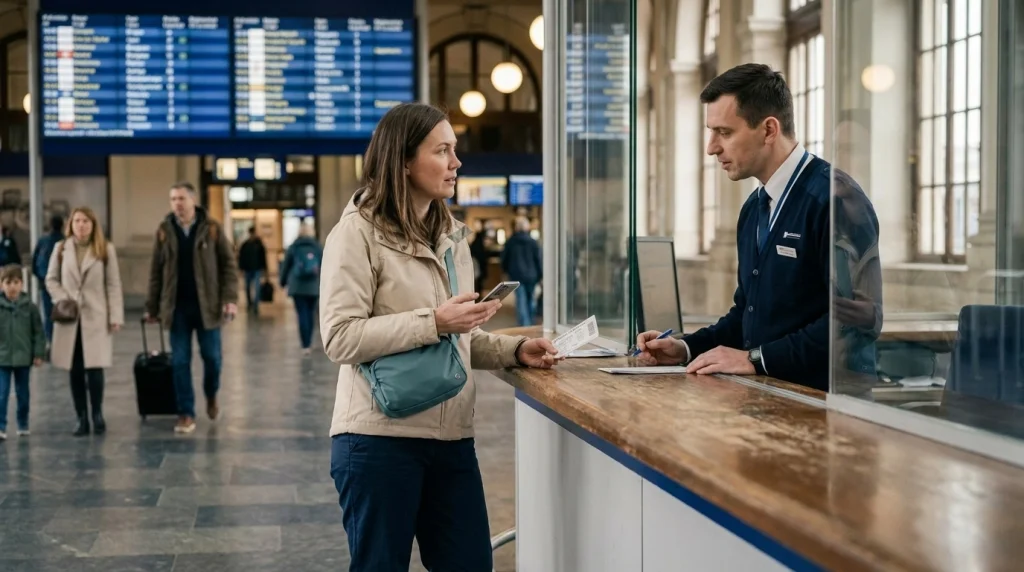
If your bag disappears, your first priority is personal safety. Do not chase a suspected thief, physically resist a robbery, or enter an isolated area to recover your belongings.
Take these steps immediately
- Move somewhere safe: Approach authorized transport staff, station security, or local police as appropriate.
- Report the missing bag: Give the staff your route, carriage or coach details, seat number if relevant, and the last place you saw the luggage.
- Describe your suitcase: Share its color, size, brand, identifying marks, luggage tag, and a recent photograph if available.
- Protect your money: Contact your bank to freeze or cancel missing cards and review recent transactions.
- Secure your devices: Use the official remote-locking or tracking service for a missing phone, tablet, or laptop.
- Replace essential documents: Contact the relevant embassy or consulate if your passport or other critical travel documents have been stolen abroad.
If you suspect theft, file a police report when appropriate and request a report number. Keep copies of receipts, transport tickets, and communications because your insurer may need them.
Will travel insurance cover stolen luggage?
Travel insurance may cover stolen or lost belongings, but benefits depend on the policy, exclusions, documentation requirements, and item-specific limits. Some policies distinguish between unattended baggage, valuables, checked luggage, and items carried personally.
Read your policy before traveling, especially if you carry a laptop, camera, jewelry, or other expensive equipment. Keep proof of ownership and purchase where available, and check the deadline for reporting a claim.
How can you prepare for a missing-bag emergency?
Keep a small backup kit in your personal bag so you can continue your journey if your main suitcase disappears. This is especially useful when you have a long transfer, a late arrival, or a prepaid accommodation booking.
- Copies of essential travel documents stored securely.
- A backup payment card and modest emergency cash.
- Necessary medication and basic personal-care supplies.
- A charged phone, charging cable, and access to important contacts.
- Your accommodation address, onward transport details, and insurance information.
For broader preparation, the U.S. Department of State’s crime-prevention guidance explains practical ways to prepare for theft and other travel-related risks. Travelers should also check the relevant government guidance for their nationality and destination.
Section takeaway: Report missing luggage promptly, protect your financial and digital accounts, and keep enough essentials separate to remain independent while resolving the problem.
Frequently Asked Questions About Keeping Luggage Safe on Public Transportation
Should a woman wear her backpack in front on public transportation?
Moving a backpack to the front can make its zippers and contents easier to monitor in crowded vehicles or stations. It isn’t necessary in every situation, but it can be a sensible precaution when people are standing close together or you cannot easily see behind you.
Is it safe to leave a suitcase in a train luggage rack?
A designated train luggage rack is a normal storage option, but it doesn’t guarantee that your suitcase will remain untouched. Keep valuables with you, choose a rack you can monitor when practical, and follow the train operator’s luggage rules.
Should I lock my suitcase on a bus or train?
A suitable lock can discourage casual access to a zipped suitcase, particularly when it is stored in a shared luggage area. However, a lock cannot prevent someone from taking the whole bag, so keep important documents, money, medication, and electronics with you whenever possible.
How can I protect my passport while traveling alone?
Keep your passport in a secure inner compartment of your personal bag or another suitable concealed holder. Avoid leaving it in a suitcase stored far from your seat, and keep secure digital copies of the identification page and relevant travel documents as a backup.
What should I do if someone tries to take my luggage?
Prioritize your safety instead of physically fighting over the bag. Move toward staff or other people, alert local authorities when appropriate, and report the theft promptly. If the person threatens you or uses force, do not risk injury trying to recover your belongings.
Are anti-theft bags necessary for solo female travelers?
No, an expensive anti-theft bag is not essential for every trip. A well-made bag with secure zippers, comfortable straps, and useful compartments can work well when combined with sensible luggage habits and awareness of your surroundings.
How can I keep my luggage safe when I need to sleep on an overnight train?
Keep essential valuables in a secure bag close to you and follow the operator’s rules for storing larger luggage. If sleeper compartments or designated storage arrangements are available, understand how they work before settling down, and avoid relying on a cable or lock as a guarantee against theft.
Final Takeaway: Travel Prepared, Not Afraid
Keeping luggage safe on public transportation is largely about preparation, sensible storage, and knowing when to pay attention. You don’t need to watch every stranger or spend heavily on specialized equipment to travel more confidently.
Before your next journey, organize your valuables, check your transport arrangements, secure your bags appropriately, and keep a small emergency backup with you. Most importantly, remember that your personal safety always matters more than recovering a suitcase.
Solo travel should give you room to explore and enjoy new experiences. With a practical luggage routine, you can spend less time worrying about your belongings and more time enjoying the journey.
