How Can a Woman Plan an Early-Morning Airport Trip Alone?
Quick Answer
A woman can plan an early-morning airport trip alone by arranging dependable transportation the night before, building extra time into the journey, keeping essential documents and her phone accessible, and sharing the trip plan with someone she trusts. I also recommend checking the U.S. State Department guidance for women travelers when the trip involves an unfamiliar destination.
Plan the trip in this order
- Confirm your flight: Check the terminal, departure time, check-in rules, and airline updates before sleeping.
- Book transport: Arrange a reputable taxi, licensed car service, hotel transfer, or recognized ride app in advance.
- Add time: Allow room for a late driver, quiet-hour road changes, baggage drop, and security.
- Prepare essentials: Charge your phone and keep your ID, boarding pass, payment method, and backup details accessible.
- Share the plan: Give a trusted person your pickup time, transport details, and expected airport-arrival time.
- Verify the vehicle: Match the driver and vehicle information before getting inside.
An early-morning airport run can feel different when you’re doing it alone. The streets may be empty, public transport may not be running, and there is little room for a missed alarm or late driver.
I handle these trips by removing decisions before I go to bed. My goal isn’t to eliminate every possible problem; it’s to make the 3:30 a.m. version of me follow a simple plan.
In This Guide
- What Does Planning an Early-Morning Airport Trip Alone Mean?
- When Should You Leave for an Early-Morning Flight?
- What Is the Best Way to Get to the Airport Alone?
- What Should You Prepare the Night Before?
- How Can You Make the Early-Morning Ride Safer?
- What Should You Do If the Airport Plan Goes Wrong?
- Frequently Asked Questions
What Does Planning an Early-Morning Airport Trip Alone Mean?
Early-morning airport planning means organizing the journey from your accommodation to the terminal before normal daytime services are fully operating. It includes timing, transportation, communication, personal safety, documents, luggage, and a backup plan.
The important word is planning. An airport trip at 4:00 a.m. shouldn’t depend on figuring everything out after you wake up.
Why does an early departure require extra preparation?
An early flight creates several small complications at once. Transport options may be limited, hotel desks may have fewer staff, and you may be tired.
Your normal daytime routine may not work either. A train that runs every ten minutes at noon might not operate at 3:30 a.m.
- Fewer transport choices: Some trains, buses, shuttles, and local taxi services have limited overnight schedules.
- Less visible activity: Streets and pickup areas may be quieter than during the day.
- More fatigue: A 3:00 a.m. alarm makes forgotten chargers and passports much easier.
- Smaller delay margin: Missing an early transport connection can quickly threaten your flight.
- Limited help: A hotel, hostel, or transport company may operate with reduced overnight staffing.
When I have an early solo departure, I think of the journey as a chain. The alarm, driver, route, terminal, check-in, and security all need enough room to work.
A little redundancy helps. Two alarms and a backup transport option are more useful than an elaborate morning routine.
Section Takeaway: Early-morning solo airport planning is mainly about reducing uncertainty before bedtime. Prepare transport, timing, documents, communication, and one backup option.
When Should You Leave for an Early-Morning Flight?

Work backward from the time you want to be inside the terminal, not simply from your flight’s departure time. Then add the realistic driving or transit time plus a delay buffer.
There is no universal airport-arrival time that fits every journey. Airports, airlines, baggage rules, destinations, and security conditions differ.
Build the timeline backward
I start with the airline’s recommended check-in timing. I then check whether I’m checking a bag, traveling internationally, or using an unfamiliar airport.
After that, I calculate the ground journey.
- Check departure time. Confirm the date as well as the time, especially for flights shortly after midnight.
- Confirm airline guidance. Check when check-in and baggage drop close.
- Choose your terminal-arrival target. Give yourself enough time for the airport’s process.
- Calculate normal travel time. Use a current mapping or transit service.
- Add a transport buffer. Allow time for the driver to arrive late or for a road problem.
- Set your pickup time. Make this the time the vehicle should leave, not when you begin getting ready.
A sample early-flight timeline
Imagine your flight departs at 7:00 a.m. and you’ve decided you need to reach the terminal at 5:00 a.m.
If the drive normally takes 35 minutes, I wouldn’t schedule the car for 4:25 a.m. with zero margin.
| Task | Example Time | Why It Matters |
|---|---|---|
| Flight departs | 7:00 a.m. | Fixed deadline |
| Target airport arrival | 5:00 a.m. | Allows time for airport formalities |
| Normal drive | 35 minutes | Baseline travel time |
| Extra road/driver buffer | 20 minutes | Covers a small delay |
| Planned departure | About 4:05 a.m. | Avoids a zero-margin journey |
| Wake-up | 3:15 a.m. | Provides 50 minutes to get ready |
Those times are only an example. Your airline and airport should determine your actual schedule.
I also recheck the route at night. Road closures, construction, airport terminal changes, and overnight transit schedules can alter what looked simple when I booked.
Section Takeaway: Work backward from your desired terminal-arrival time and add a real buffer. Never build an early solo airport run around perfect timing.
What Is the Best Way to Get to the Airport Alone?
The best option is usually the one you can verify, schedule, and use confidently at the required hour. That may be a licensed taxi, reputable ride service, hotel transfer, airport shuttle, or reliable public transport.
I don’t choose transport by price alone for a predawn journey. Reliability and pickup clarity matter more at that hour.
Compare your realistic options
| Option | Main Advantage | Check Before Relying on It |
|---|---|---|
| Pre-booked car | Scheduled pickup | Company reputation, confirmation, cancellation policy |
| Recognized ride app | Driver and trip information may be recorded | Predawn driver availability and local rules |
| Hotel transfer | Simple coordination through accommodation | Price, pickup point, overnight desk coverage |
| Licensed taxi | Direct trip without transfers | How to book a legitimate vehicle locally |
| Airport bus or train | Predictable route and often lower cost | First departure, station access, luggage practicality |
The U.S. State Department recommends researching transport options and arranging airport transportation with a licensed, reputable provider when appropriate. It also notes that some app-based services provide a trip record or ride-sharing features.
That doesn’t mean one transport type is safest everywhere. Local conditions matter.
Pro tip: For an international trip, check the current transportation and safety guidance for your destination on Travel.State.gov or your own government’s equivalent advisory service.
Don’t rely on a scheduled ride without a backup
A reservation isn’t a guarantee that nothing will go wrong. Drivers cancel, apps struggle to find cars, and weather changes routes.
Before sleeping, know what you’ll do if the first vehicle doesn’t appear.
- Save a second reputable transport company’s details.
- Ask whether your accommodation can arrange an emergency taxi.
- Check whether an airport shuttle operates at that hour.
- Know when waiting longer would put the flight at risk.
This backup doesn’t need to be complicated. It only needs to be realistic.
Section Takeaway: Choose transport you can verify and pre-arrange, then identify one workable backup. Early-morning reliability matters more than finding the absolute cheapest ride.
What Should You Prepare the Night Before?
Prepare almost everything before you sleep. The less you need to remember after the alarm rings, the easier the morning becomes.
I use a simple “door-ready” rule. Before bed, I want to be able to dress, brush my teeth, pick up my bags, and leave.
Prepare your travel essentials
- Passport or ID: Put it in a secure but accessible part of your personal bag.
- Boarding pass: Download it to your phone and save an offline copy when possible.
- Phone: Charge it fully and pack a power bank if you use one.
- Payment: Keep at least one usable payment method accessible.
- Driver details: Screenshot the booking, company number, and pickup instructions.
- Airport details: Save the terminal and airline information.
- Accommodation access: Know how you’ll leave if reception or the main entrance is locked overnight.
- Luggage: Finish packing and check carry-on restrictions before going to sleep.
If you’re flying from a U.S. airport, the Transportation Security Administration publishes its current travel and packing guidance. Other countries have their own aviation-security rules.
Set up your phone before bedtime
A charged phone is useful, but offline preparation matters too. Mobile data can fail at inconvenient moments.
- Screenshot the ride reservation.
- Save the airport address.
- Download the local map area if your mapping app supports it.
- Save your airline booking reference.
- Turn the alarm volume up.
- Set two alarms several minutes apart.
- Keep the charger where you won’t forget it.
I also avoid staying awake just because the flight is early. Even a short block of proper sleep helps more than spending midnight repeatedly checking a packed suitcase.
Put clothes and bags in departure order
I place my travel clothes together rather than searching a dark room at 3:00 a.m. Shoes, jacket, personal bag, and suitcase stay near the exit when the accommodation setup allows it.
I keep my passport inside my personal bag, not loose beside the door. Convenience shouldn’t mean leaving critical documents exposed.
Section Takeaway: Make the morning almost automatic. Finish packing, charge your phone, save essential information offline, prepare your clothes, and confirm transport before sleeping.
How Can You Make the Early-Morning Ride Safer?
Verify the transport before entering and keep someone informed of your basic journey. Small checks are more useful than trying to predict every possible risk.
I give myself enough time to check the vehicle calmly. Being late makes people skip steps.
Verify before getting inside
When using a booked or app-based vehicle, compare the available booking details with the vehicle in front of you. The exact verification features vary by service and country.
- Check the vehicle information supplied by the service.
- Confirm the driver details when the platform provides them.
- Use in-app verification features where available.
- Don’t enter a different vehicle because someone claims your assigned driver changed.
- Contact the provider through its official channel if the details don’t match.
The State Department advises travelers to research taxi and ride services and notes that trip-tracking features can provide a record of the journey. It also recommends avoiding rides from strangers.
You can review its broader transportation safety guidance before an international trip.
Share useful information without oversharing publicly
I tell one trusted person when I expect to leave and reach the airport. If the ride app provides a trip-sharing tool, I may use it too.
I don’t post my live solo location publicly. A direct check-in with one person accomplishes the practical goal.
- Your planned pickup time.
- Your estimated airport arrival.
- The transport provider or ride details when appropriate.
- A simple “at the airport” message after arrival.
Stay aware without making yourself anxious
You don’t need to stare at the map for the entire drive. I usually check that the trip begins in the expected direction and occasionally look at the route.
If something feels wrong, prioritize reaching a staffed, public place and contacting the appropriate local service or emergency authority.
Pro tip: Emergency numbers and transport practices differ by country. Save destination-specific official information before traveling rather than assuming your home-country procedures apply.
Section Takeaway: Verify your ride, keep communication available, share useful trip details privately, and know where to get official help. Preparation should increase control, not create panic.
What Should You Do If the Airport Plan Goes Wrong?
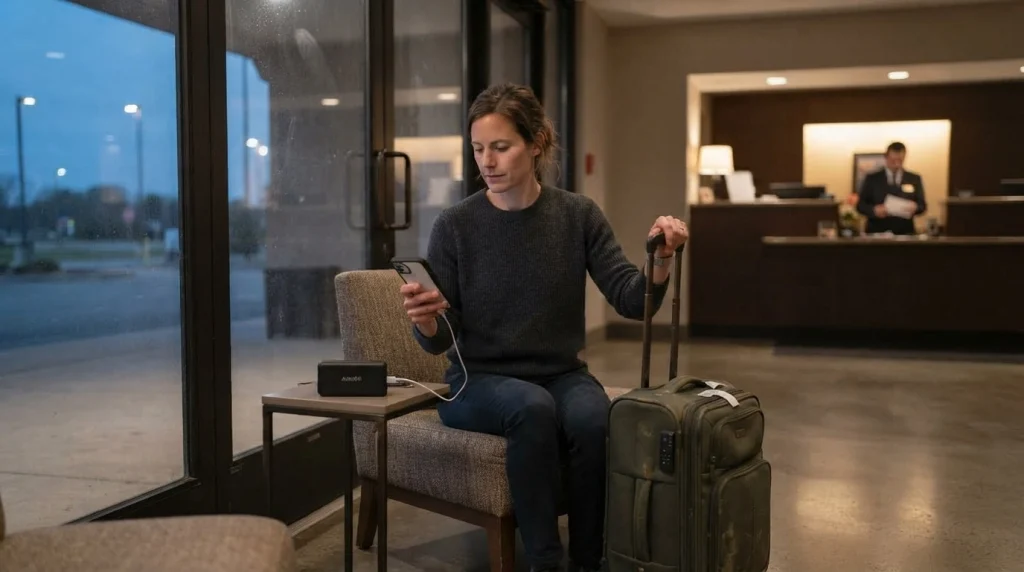
Switch to your backup plan early instead of spending too long trying to rescue a failing first plan. The closer you get to your airport deadline, the more valuable decisive action becomes.
Most early-morning problems are ordinary logistics problems. Treat them one at a time.
If the driver doesn’t arrive
- Check the booking status and pickup location.
- Contact the provider through its official channel.
- Set a short limit on how long you’re willing to wait.
- Move to your pre-identified backup transport if needed.
- Tell your trusted contact if the plan changes significantly.
Don’t keep waiting indefinitely because you’ve already paid or booked. Getting to the airport matters more than proving the first plan should have worked.
If you oversleep
Get dressed and leave unnecessary morning tasks behind. Check the airline booking while arranging the fastest legitimate transport you can safely use.
If the timing becomes impossible, contact the airline through its official app, website, phone number, or airport desk. Don’t rely on a stranger claiming they can fix the ticket for you.
If your phone has little battery
Switch on battery-saving mode and reduce unnecessary use. Prioritize transport details, boarding information, communication, and essential navigation.
A charged power bank can be useful on a solo travel day. Keep it packed according to the airline and aviation-security rules that apply to your journey.
If you feel uncomfortable at the pickup point
You do not need to remain in an isolated location simply because the app placed its pin there. Move to a staffed or more public area when practical and update the pickup point through the official service.
If you’re leaving a hotel or hostel, I prefer waiting inside until the vehicle is close when the property permits it.
If the route changes unexpectedly
A route change isn’t automatically suspicious. Road closures, airport traffic controls, and navigation systems can all redirect a vehicle.
If you’re concerned, check your map and ask the driver about the route. Use the service’s safety features or contact appropriate local help if the situation genuinely appears unsafe.
Section Takeaway: Have a fallback before something fails. When it does, make the next practical decision quickly instead of letting one disruption consume your remaining time.
Frequently Asked Questions
Is it safe for a woman to go to the airport alone early in the morning?
There is no universal yes-or-no answer because safety depends on the location, transport provider, route, and current conditions. Pre-arrange reputable transport, verify the vehicle, keep communication available, and check destination-specific official guidance before traveling.
Should I pre-book a taxi for an early-morning flight?
Pre-booking can reduce uncertainty when public transport is limited. Confirm the company is reputable, check the reservation before bed, and keep a second transport option available in case the scheduled vehicle doesn’t arrive.
Should I use public transport to reach an airport before sunrise?
Public transport can work well when the service is running, the route is straightforward, and you’re comfortable using it with luggage. Check the first departure, station access, transfer points, and destination-specific safety information rather than assuming the daytime schedule applies overnight.
Should I tell someone when I’m leaving for the airport?
It’s reasonable to give a trusted person your planned departure and expected airport-arrival time. You can also share ride information privately when your transport service offers that feature, then send a short message after you reach the terminal.
What should I keep in my personal bag during an early airport trip?
Keep essential identification, your boarding information, phone, payment method, medication you need, transport details, and other important travel documents accessible. Don’t bury items you’ll need at check-in or security inside your checked suitcase.
What if my ride cancels at 4 a.m.?
Use the backup transport option you researched the night before. Contact your accommodation, another reputable provider, or an available official service rather than accepting an unverified ride because you’re under time pressure.
How can I feel less anxious about traveling to the airport alone?
Replace vague worries with specific decisions. Know when you’re leaving, who is taking you, where you’re being picked up, what you’ll do if they cancel, and who you’ll contact after reaching the airport.
Final Takeaway: Make the Morning Boring
The best early-morning airport trip is pleasantly uneventful. You wake up, follow the plan you made while fully awake, verify your transport, and reach the terminal with enough time to handle the normal airport process.
That’s what I aim for when I travel alone. I don’t want to make major decisions on a dark sidewalk with a suitcase at 4:00 a.m.
- Confirm the flight and terminal.
- Arrange reputable transport.
- Create one backup option.
- Work backward to set your departure time.
- Pack and charge everything before bed.
- Save key information offline.
- Share the basic plan with someone you trust.
- Verify the vehicle before leaving.
Do those jobs the night before, and the morning becomes much simpler. You can focus on reaching your gate rather than solving avoidable problems before sunrise.