How Can a Solo Female Traveler Plan Backup Transportation?
Quick Answer
A solo female traveler can plan backup transportation by choosing a primary route plus at least one realistic alternative before each important journey. Check operating hours, licensed taxi or ride-hailing options, offline directions, payment methods, and a safe waiting place, then review the U.S. State Department guidance for women travelers for destination-specific transportation concerns.
Build Your Backup in Six Steps
- Choose Plan A: Decide which transportation method you expect to use first.
- Create Plan B: Pick a different option that does not depend on the same app, route, or operator.
- Check the cutoff: Know when trains, buses, airport shuttles, and taxi services stop or become limited.
- Save it offline: Keep addresses, route screenshots, pickup points, and important phone numbers available without mobile data.
- Carry payment options: Keep enough accessible money for an alternative ride if your preferred payment method fails.
- Know your safe stop: Identify a staffed hotel, airport desk, station office, restaurant, or other suitable place where you can regroup.
Knowing how a solo female traveler can plan backup transportation matters because a smooth journey can change quickly when a train stops running, a ride cancels, mobile data disappears, or an arrival gets delayed.
I prefer to solve those problems before I am tired, carrying luggage, and standing somewhere unfamiliar.
My approach is simple: every important journey gets a primary route, an independent backup, and an exit point where I can safely reconsider the plan.
In This Guide
- What Does Backup Transportation Mean for a Solo Female Traveler?
- How Do You Build a Plan A, Plan B, and Emergency Plan?
- What Should You Check Before Leaving for Your Trip?
- What Should You Do If Your Phone or Ride App Stops Working?
- How Should You Plan Backup Transportation at Night?
- When Should You Abandon Your Original Transportation Plan?
- Frequently Asked Questions
What Does Backup Transportation Mean for a Solo Female Traveler?
Backup transportation is a preplanned alternative you can use when your intended bus, train, taxi, shuttle, rental car, or ride-hailing service becomes unavailable or unsuitable.
It should be realistic enough that you could use it without researching everything again on the street.
Simple definition: A transportation backup plan answers three questions: “What will I use first?”, “What will I use if that fails?”, and “Where will I go if neither option feels workable?”
Your backup should fail differently from your main option
If Plan A and Plan B depend on the same thing, you do not have much of a backup.
For example, two ride-hailing apps still depend on your phone, battery, internet connection, available drivers, and often electronic payment.
A stronger combination might look like this:
- Plan A: Airport train to the city center.
- Plan B: Licensed taxi from the official airport queue.
- Emergency option: Return to the staffed arrivals area and ask the airport information desk for help.
That structure protects you from different problems rather than giving you three versions of the same plan.
Focus first on journeys that are difficult to replace
I do not create an elaborate backup for every short daytime journey.
I focus on transportation where a failure could leave me stranded, make me miss something important, or force a rushed decision.
- Airport-to-hotel transfers
- Trips to airports or train stations
- Intercity connections
- Late-evening returns
- Remote attractions or trailheads
- Travel on public holidays
- Routes with a final bus or train of the day
- Trips where mobile coverage may be limited
The U.S. State Department advises travelers to research reputable transportation and notes that public transportation safety varies between destinations. Its broader driving and transportation safety guidance is useful before building your options.
Section Takeaway: A genuine backup should remain usable when the main plan fails, so avoid making every option depend on the same app, connection, route, or payment method.
How Do You Build a Plan A, Plan B, and Emergency Plan?
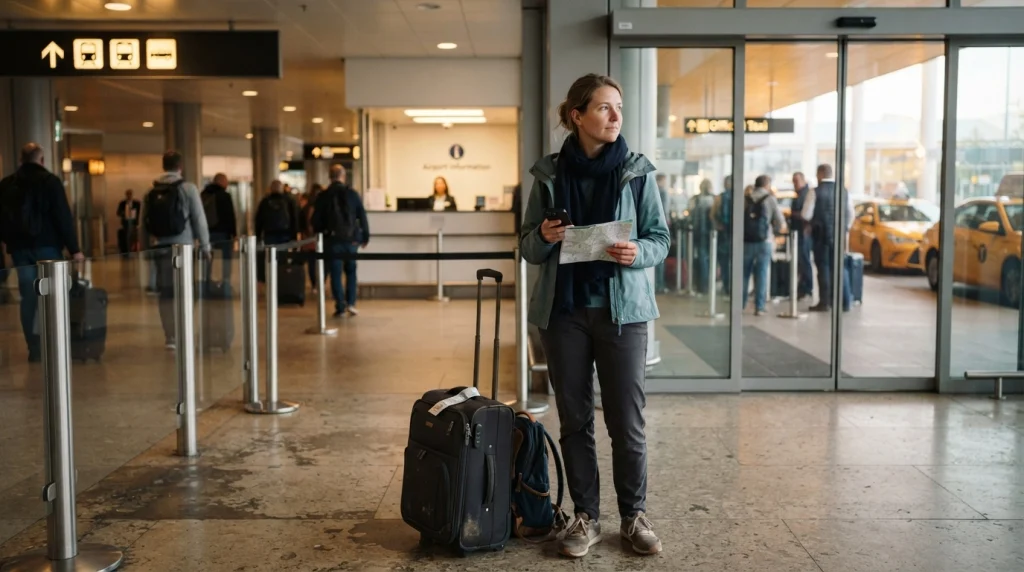
Start with the transportation method you would normally choose, then create a second option with different failure points.
Your third layer is not necessarily another ride; it is a safe way to stop improvising.
| Planning Layer | Purpose | Example | Use It When |
|---|---|---|---|
| Plan A | Preferred route | Airport train | Service is operating normally |
| Plan B | Practical alternative | Official taxi queue | Train is closed, delayed, or unsuitable |
| Emergency layer | Safe reset point | Staffed airport desk or hotel | Neither transport option feels workable |
Step 1: Write down the exact journey
A vague note such as “take a taxi” does not help much when you are stressed.
Record the start point, destination, expected journey time, pickup area, approximate operating window, and where you need to change vehicles.
Step 2: Identify what could break
You are not trying to predict every disaster.
You are checking ordinary travel problems that would make your first choice unavailable.
- Delayed flight
- Train or bus service ending
- Driver cancellation
- Heavy traffic
- Road closure
- No mobile data
- Low phone battery
- Card payment failure
- Sold-out intercity ticket
- Different pickup point than expected
Step 3: Give Plan B a trigger
A backup works better when you decide beforehand when to switch.
Without a trigger, it is easy to keep waiting because you hope Plan A will eventually work.
- If the train stops before my delayed arrival, I use the official taxi queue.
- If my driver cancels twice, I move to my second option.
- If I cannot confirm the vehicle or driver details, I do not enter.
- If the station becomes unstaffed and confusing, I move to my identified safe waiting point.
- If waiting for the cheapest option would push the journey late into the night, I reassess the route.
This is one of the most useful habits I use when planning solo transportation: I decide the switch point while I am calm.
Section Takeaway: Give every important journey a primary route, an independent backup, and a clear trigger telling you when to stop waiting and change plans.
What Should You Check Before Leaving for Your Trip?
Research transportation before departure rather than trying to solve it after arriving.
Your goal is to understand enough of the local system to recognize normal, official options.
Check official transportation information
Start with the airport, rail operator, transit authority, accommodation, local tourism authority, or destination government.
Confirm information again shortly before traveling because schedules and procedures can change.
- Operating hours
- Last train or bus
- Airport taxi procedure
- Authorized pickup locations
- Night service
- Ticket purchasing rules
- Cash versus card acceptance
- Reservation requirements
- Planned strikes or closures
Know what “official” transportation looks like
The correct process varies by destination.
Some airports use taxi counters, some have marked queues, and others direct app-based pickups to specific zones.
The State Department recommends researching licensed and reputable taxis or ride-sharing companies before traveling.
It also advises against accepting rides from strangers or using unmarked taxis in situations where reputable licensed services are available.
Research the road-safety context
The safest-looking transport option is not always the safest on the road.
Vehicle condition, seatbelt availability, driving practices, road quality, and night driving can matter.
- Prefer a vehicle with a working seatbelt.
- Avoid obviously overloaded vehicles.
- Check destination guidance before deciding to self-drive.
- Research whether night road travel carries extra risks.
- Do not assume transportation norms are identical to those at home.
The CDC road-safety guidance for travelers recommends seatbelt use and cautions travelers about issues including night driving, motorcycles, unmarked taxis, and overcrowded vehicles.
Pro tip: Check current government travel guidance for your specific destination before departure. Transportation conditions can vary sharply between countries and even between cities in the same country.
Save a transportation information pack
I like keeping the essential details together instead of hunting through several apps.
The pack can be simple.
- Accommodation name and address
- Accommodation phone number
- Airport or station map
- Primary route screenshot
- Backup route screenshot
- Official taxi or shuttle instructions
- Transit operating hours
- Booking confirmations
- Local emergency number
- Emergency contact details
Section Takeaway: Before departure, learn how legitimate transportation works at your destination and save enough information to use your backup without starting your research again.
What Should You Do If Your Phone or Ride App Stops Working?
Build at least one transportation option that does not require perfect phone service.
A dead battery, poor signal, account problem, or payment failure should be inconvenient rather than trip-ending.
Keep critical information offline
Screenshots are useful because they do not depend on a live connection.
Save the information before leaving reliable Wi-Fi.
- Hotel address
- Route map
- Transit stops
- Station name
- Booking reference
- Driver or transfer instructions
- Emergency contacts
Have more than one payment method
A transportation backup is weak if every option depends on one card or mobile wallet.
Keep your alternatives appropriate for the destination rather than assuming every city handles payment the same way.
A practical setup may include:
- A primary payment card
- A separate backup card
- A modest amount of local currency where cash remains useful
- Emergency funds stored separately from your everyday wallet
Protect your ability to communicate
Keep your phone charged before unfamiliar journeys and consider carrying a power bank where permitted.
Write important details somewhere besides the phone as well.
The State Department’s communication guidance for travelers abroad recommends learning local emergency numbers and keeping backup contact information in case a phone is lost or stolen.
Give another person enough information to help
You do not need to broadcast your movements publicly.
Instead, consider sharing important journey information with someone you trust.
- Where you are leaving from
- Your destination
- Expected arrival window
- Transport provider when relevant
- When you expect to check in again
For eligible U.S. travelers abroad, the Smart Traveler Enrollment Program can also provide embassy or consulate alerts related to security, demonstrations, health issues, weather, and other developments.
Section Takeaway: Design your backup transportation so losing data, battery power, or one payment method does not remove every route available to you.
How Should You Plan Backup Transportation at Night?

Night transportation deserves extra planning because services may be less frequent and staffed options may be reduced.
The best solution depends on the destination, so avoid applying one rule everywhere.
Know the last dependable connection
Do not check only when a transit system officially closes.
Look at the final useful connection for your actual route.
For example, a subway may operate until midnight while the connecting bus you need stops much earlier.
- Check each leg separately.
- Allow time for transfers.
- Account for flight or train delays.
- Know whether weekend hours differ.
- Check holiday schedules when relevant.
Choose your fallback before you need it
If public transportation stops, know what you will use next.
That might be an official taxi rank, a licensed ride service, a hotel-arranged transfer, or another locally appropriate option.
Avoid making the decision based only on whichever stranger approaches you first.
Create a safe waiting strategy
Your backup plan should include where you will wait if transportation is delayed.
A staffed, well-used location is usually more useful than wandering around trying to solve the problem.
Possible reset points include:
- Airport information desk
- Staffed railway concourse
- Hotel lobby
- Transport company counter
- Open restaurant or café in an appropriate area
- Tourist information office during operating hours
Choose places based on the actual destination and local guidance rather than treating this list as universal safety advice.
Pro tip: If you expect a late arrival, review the destination’s current transportation guidance and ask your accommodation how reputable after-hours arrivals are normally handled.
Budget for the expensive backup
Your preferred ride might cost $5 while your fallback costs $25.
That does not mean you must choose the expensive ride first.
It means your trip budget should leave enough flexibility to pay for Plan B when the cheaper route disappears.
I treat that money as transportation resilience rather than everyday spending money.
Section Takeaway: For late journeys, know the last useful connection, choose your fallback before going out, and keep enough budget available to use it.
When Should You Abandon Your Original Transportation Plan?
Change plans when new information makes the original route impractical, unverifiable, or inconsistent with the safety guidance you researched.
You do not need to prove that something is dangerous before deciding another option suits you better.
Use objective triggers where possible
Triggers reduce decision fatigue.
They also stop you from endlessly extending a plan that is already failing.
| Situation | Possible Trigger | Backup Action |
|---|---|---|
| Ride keeps canceling | Two cancellations | Move to a researched alternative |
| Transit delay | Delay threatens the final connection | Switch before becoming stranded |
| Pickup mismatch | Vehicle or driver cannot be verified | Do not enter; return to the pickup point |
| Phone problem | Cannot restore connection quickly | Use offline information and non-app backup |
| Arrival becomes much later | Original route no longer runs as planned | Use your after-hours transportation plan |
Do not let sunk cost control the decision
Paying for a ticket or waiting 30 minutes does not require you to keep following a plan that no longer works.
The question is what makes sense from your current position.
Return to your reset point when confused
When several things go wrong at once, I prefer to reduce the number of decisions I am making.
I go back to the planned reset point, check my saved information, and choose the next verified option.
This is why the third layer of transportation planning matters.
Sometimes the best backup is simply having a sensible place to stop and think.
As of 2026, that remains the core of my backup-transportation strategy: do not try to predict every problem; make sure one ordinary problem cannot remove all of your options.
Section Takeaway: Decide your switching rules before the trip and move to Plan B when your trigger occurs instead of repeatedly trying to rescue Plan A.
Frequently Asked Questions About Backup Transportation for Solo Female Travelers
How many backup transportation options should a solo female traveler have?
For an important journey, one primary option and one independent backup are usually a practical starting point. Also identify a staffed or otherwise suitable place where you can pause and reassess if neither works.
Should I rely on two different ride-hailing apps as my backup?
They can give you more choice, but they may share the same failure points, including mobile data, battery power, driver availability, and electronic payment. Try to keep at least one alternative that does not depend on exactly the same systems.
How should I plan backup transport from the airport?
Research the official airport transport options before departure, including public transit hours, licensed taxi procedures, authorized pickup zones, and accommodation transfers. Save the accommodation address and your alternative route offline before flying.
What if my flight arrives after public transportation stops?
Check the after-hours options before departure rather than deciding after landing. Depending on the destination, that may involve an official airport taxi, licensed ride service, reputable prearranged transfer, or transportation recommended by your accommodation.
How much emergency transportation money should I carry?
There is no universal amount because fares vary widely by destination. Estimate the price of your realistic fallback ride, then make sure you can access enough money to cover that option without depending on only one payment method.
Is public transportation safe for women traveling alone?
There is no single answer worldwide because transportation conditions differ by country, city, route, and time of day. Review current government destination guidance, local transit information, and reputable local sources before deciding which option suits your trip.
What information should I save offline before traveling alone?
Save your accommodation address, primary and backup routes, relevant transport schedules, station or pickup locations, reservation details, accommodation phone number, emergency contacts, and local emergency number. Keep the most important details somewhere besides your phone as well.
Final takeaway: Good backup transportation planning is not about expecting something to go wrong. It is about protecting your choices when an ordinary travel problem changes the route.
Before your next solo trip, pick one important journey and write down Plan A, Plan B, the trigger for switching, and your safe reset point. That four-part habit can make transportation decisions much easier when plans change.