How Can a Woman Create a Flexible Itinerary for Solo Travel?
Quick Answer
A woman can create a flexible itinerary for solo travel by locking in only the parts that are difficult or expensive to change, then leaving open time around them. I usually confirm my first accommodation, major transport, and a few priority experiences, while keeping the rest adjustable. Before finalizing anything, I also review the official guidance for women travelers for destination-specific safety considerations.
A simple flexible-itinerary formula
- Book the anchors: Secure your arrival night, important transport, and any must-do activity that regularly sells out.
- Plan by area: Group nearby sights together instead of assigning every attraction a fixed hour.
- Use priority levels: Separate must-see, would-like-to-see, and optional activities.
- Leave buffer time: Keep part of each day open for delays, rest, weather changes, or spontaneous discoveries.
- Keep a backup list: Save easy indoor and nearby alternatives for days when your original plan stops making sense.
- Review each evening: Adjust the next day based on your energy, safety comfort, weather, and what you learned locally.
A flexible solo travel itinerary gives you structure without making every day feel like an appointment. For me, that balance matters even more when I’m traveling alone because my energy, comfort level, weather, transport, and local advice can change the plan quickly.
The goal isn’t to travel without a plan. It’s to create a solo trip itinerary that can bend without falling apart.
In This Guide
- What Is a Flexible Solo Travel Itinerary?
- What Should You Book Before a Solo Trip?
- How Much Free Time Should You Leave in Your Itinerary?
- How Should You Build Each Day Without Overplanning?
- How Can You Keep a Flexible Itinerary Safe?
- When Should You Change Your Solo Travel Plan?
- Flexible Solo Travel Itinerary FAQ
What Is a Flexible Solo Travel Itinerary?
A flexible solo travel itinerary is a trip plan with a few fixed anchors and enough open space to change activities, timing, or even locations. It gives you direction without forcing you to follow a rigid hour-by-hour schedule.
I think of it as a framework rather than a timetable. The framework protects important reservations while leaving room for real travel.
Flexible doesn’t mean unplanned
One common mistake is assuming flexibility means booking nothing. That can create unnecessary stress when you’re arriving alone in an unfamiliar place.
I prefer dividing plans into three levels:
- Fixed: Flights, arrival-night accommodation, limited trains, major events, or timed tickets that are hard to replace.
- Preferred: Activities you hope to do but can move to another day.
- Optional: Cafés, viewpoints, markets, museums, shopping streets, and other easy additions.
This system makes decisions easier. If rain starts at lunchtime, I don’t feel like I’ve “ruined” the itinerary by moving an outdoor activity.
Why flexibility is especially useful when traveling alone
Solo travel gives you control over your schedule, but it also means you make every adjustment yourself. Nobody else needs to agree when you want to leave early, rest longer, or skip something.
That freedom is one of my favorite parts of traveling solo.
- You can slow down when you’re tired.
- You can leave an area if it doesn’t feel comfortable.
- You can stay longer somewhere you love.
- You can adapt when transport changes.
- You can join a last-minute tour or social activity.
A rigid schedule can turn those advantages into pressure. A flexible plan lets solo travel remain flexible.
What Should You Book Before a Solo Trip?
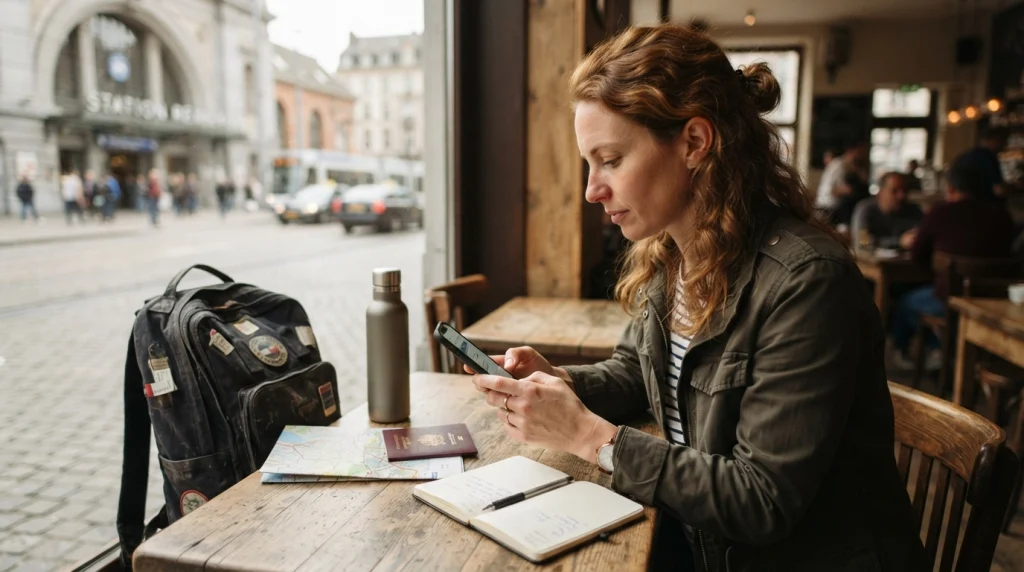
Book anything that would create a major problem if it became unavailable. Leave easily replaceable activities open whenever the destination allows it.
I normally decide this by asking one question: What happens if I don’t book this now?
Book your arrival first
I nearly always reserve my first night’s accommodation before arriving somewhere new. I also save the address, check-in instructions, and route from the airport or station offline.
Late arrivals deserve extra planning. I don’t want my first solo decision at 11 p.m. to be searching for accommodation with luggage beside me.
I also research reputable transportation before arrival. The U.S. State Department advises women travelers to research licensed transportation and consider arranging airport transfers where appropriate.
Lock in scarce experiences
Some attractions, trains, ferries, tours, and special events have limited capacity. Those belong in the fixed layer of your itinerary.
Examples include:
- A popular museum with timed entry.
- A long-distance train with limited seats.
- A small-group guided tour.
- A seasonal event or performance.
- A flight between two parts of your trip.
Everything surrounding those anchors can stay loose.
Keep flexible bookings where possible
When two accommodation options look similar, I pay attention to cancellation terms. A slightly more flexible booking can be useful if my route might change.
I apply the same logic to transport. Before paying, I check whether tickets can be changed, what the deadline is, and whether changing them creates a fee.
| Trip Element | Usually Book Early | Usually Keep Flexible |
|---|---|---|
| Arrival | First night’s stay and essential airport transport research | First evening sightseeing |
| Transport | Flights and limited long-distance routes | Local buses, metro trips, and walking routes |
| Activities | Timed or limited-capacity experiences | Parks, neighborhoods, cafés, and many museums |
| Meals | One important restaurant reservation if desired | Most everyday meals |
Section Takeaway: Protect the difficult-to-replace parts of your trip. Keep the easy-to-change parts open.
How Much Free Time Should You Leave in Your Itinerary?
For most solo trips, I avoid filling more than about two-thirds of my usable sightseeing time in advance. The exact amount depends on the destination, trip length, and how quickly you like to travel.
The point isn’t hitting a perfect percentage. It’s making sure one delay doesn’t destroy the rest of your day.
Use the one-main-thing rule
On many days, I choose one main activity. Everything else becomes a bonus.
A day might look like this:
- Morning anchor: Visit the historic center or take a booked walking tour.
- Flexible lunch: Choose somewhere nearby instead of crossing the city for one restaurant.
- Afternoon options: Pick from a museum, market, park, or café depending on weather and energy.
- Evening decision: Decide later whether to go out, join a group activity, or rest.
This structure gives the day a purpose without turning it into a race.
Add recovery space after demanding days
I avoid stacking a late arrival, sunrise excursion, long train ride, and nightlife across consecutive days. That schedule may look efficient on paper but often feels exhausting in real life.
Instead, I add lighter periods after demanding travel.
- Keep the first evening simple after a long flight.
- Plan an easy afternoon after a sunrise activity.
- Avoid a tight connection immediately after an important tour.
- Leave time for laundry, groceries, repacking, and basic life tasks.
Solo travelers don’t have a companion to watch bags while they solve problems or collect food while they shower. Small tasks can take more of your energy than expected.
Plan for weather, not against it
I rarely assign every outdoor attraction to one fixed day unless I must. Instead, I create interchangeable outdoor and indoor options.
For example:
- Good weather: Viewpoint, walking route, beach, garden, or outdoor market.
- Rainy weather: Museum, covered market, cooking class, gallery, or long café break.
- Low-energy day: Neighborhood walk, easy meal, laundry, journaling, or early night.
This approach prevents bad weather from feeling like a failed travel day.
How Should You Build Each Day Without Overplanning?
Build days around location, energy, and one main priority instead of an hour-by-hour checklist. Grouping nearby activities is one of the easiest ways to make a solo itinerary more flexible.
I don’t want to cross a city three times just because a spreadsheet placed attractions in that order.
Plan by neighborhood or zone
Before traveling, I save possible attractions by area. Then I can choose among nearby options without rebuilding the whole day.
A simple planning note might contain:
- Old Town: Cathedral, historic streets, market, two cafés, small museum.
- Riverside: Promenade, sunset point, food hall, boat trip.
- Museum District: Two museums, park, bakery, metro station.
If one place closes or feels overcrowded, I already have alternatives nearby.
Use an A, B, and C priority list
I sometimes label activities before a trip instead of assigning them exact times.
- A — Must do: I would be disappointed to leave without doing this.
- B — Would love to do: Important, but movable or skippable.
- C — Nice extra: Only if time, energy, weather, and location work.
This stops a long research list from becoming an obligation list.
It also helps when a local recommendation sounds better than something I saved months earlier. I can drop a C-level idea without feeling that I’ve missed a major goal.
Keep travel times realistic
Map travel time before combining activities. A 20-minute train ride can become a 45-minute transition after walking, waiting, finding the platform, and getting oriented.
For longer intercity moves, I compare available routes before finalizing the sequence of destinations. Transport-planning resources such as Rome2Rio can help identify possible connections, but I confirm schedules and fares with the actual transport operator before booking.
Section Takeaway: Organize your trip geographically, not just chronologically. Nearby alternatives make spontaneous changes much easier.
How Can You Keep a Flexible Itinerary Safe?
Flexibility should never mean losing track of where you’re sleeping, how you’re getting home, or what you’ll do if circumstances change. I keep my daytime plans loose while making my basic safety plan more deliberate.
That distinction matters.
Know your non-negotiable safety anchors
I keep a few things fixed even when most of the day is open.
- Accommodation name and address saved offline.
- A reliable route back before going far from my lodging.
- A charged phone and backup power when practical.
- Important documents stored securely.
- A trusted person aware of my general route.
- Local emergency information available offline.
I also avoid telling casual acquaintances unnecessary details about exactly where I’m staying. Official guidance for women travelers similarly recommends protecting accommodation information and researching safe transportation.
Pro tip: Before international travel, check current destination guidance from Travel.State.gov or your own government’s foreign-travel authority. Advice can change after your itinerary was first created.
Decide how you’ll handle nighttime plans
I don’t automatically avoid evenings when traveling alone. I do think through the return journey before I commit to an evening activity.
I check:
- How far the venue is from my accommodation.
- Whether public transportation still runs afterward.
- Whether licensed taxis or reputable app-based rides operate there.
- Whether I’ll need to walk through an unfamiliar area late at night.
- Whether leaving earlier would make the journey simpler.
Those questions help me decide whether an evening plan fits comfortably into the trip.
Keep health plans flexible too
A stomach problem, headache, heat, poor sleep, or minor injury can quickly change a travel day. I never treat rest as wasted time when my body is telling me to slow down.
Before international trips, I also review destination-specific health information. The CDC Travelers’ Health site provides current travel-health guidance for destinations.
Pro tip: Check official health guidance before departure, especially for vaccines, medicines, outbreaks, or destination-specific health risks. Don’t rely on an itinerary written months earlier.
When Should You Change Your Solo Travel Plan?
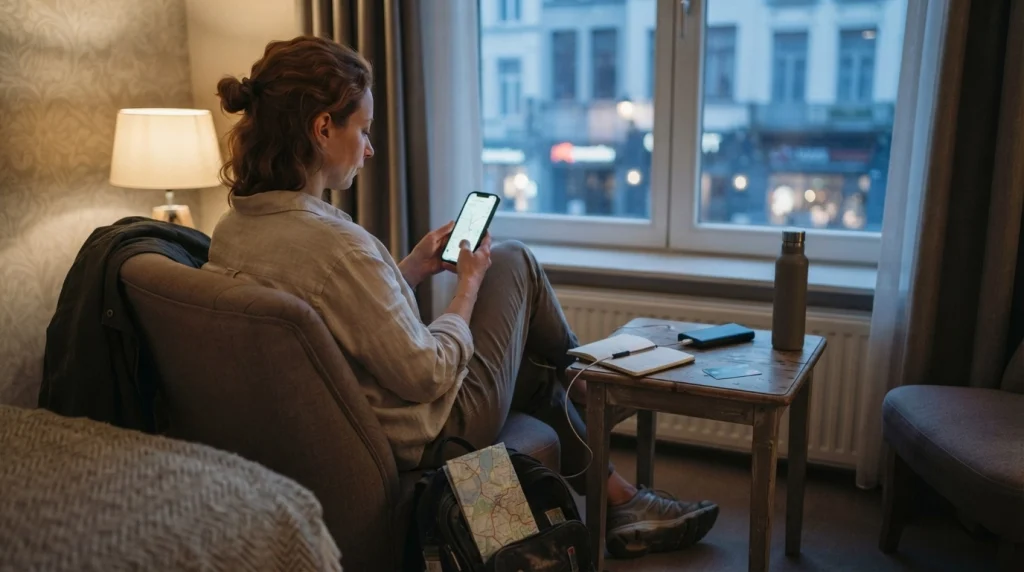
Change your itinerary whenever new information makes another choice safer, easier, healthier, or more enjoyable. A good itinerary serves the trip; the trip doesn’t serve the itinerary.
I’ve learned not to continue with a plan simply because I once typed it into my notes.
Change the plan when your safety comfort changes
If a place, route, accommodation, transport option, or situation feels wrong, I give myself permission to leave. I don’t need to prove that the concern is serious enough to justify changing plans.
Practical alternatives may include:
- Taking a licensed ride instead of walking.
- Moving an activity to daylight hours.
- Changing accommodation.
- Skipping an isolated location.
- Joining a reputable guided activity instead of visiting alone.
Change it when exhaustion starts making decisions for you
Travel fatigue can make small problems feel enormous. It can also make me less patient, less observant, and less interested in places I’d normally enjoy.
When that happens, I simplify.
- Cancel one nonessential stop.
- Eat somewhere close.
- Return to the accommodation earlier.
- Move tomorrow’s start time later.
- Turn a full sightseeing day into a half day.
A slower afternoon can save the next three days.
Change it when you discover something better
Flexibility isn’t only about dealing with problems. It also creates space for good surprises.
I’ve had days where a short conversation led me toward a neighborhood, market, viewpoint, or local event I hadn’t found during research. Those experiences are easier to enjoy when the schedule has breathing room.
Use a five-minute evening reset
Each evening, I quickly review the next day. It keeps my plan current without turning travel into an administrative project.
- Check tomorrow’s weather.
- Confirm any fixed reservation.
- Check transport if timing matters.
- Choose one main priority.
- Pick one indoor or easy backup.
- Decide whether you need more rest.
As of 2026, I still find this simple review more useful than building a detailed schedule weeks before departure. Current local information almost always improves the plan.
Section Takeaway: Changing the itinerary isn’t a planning failure. The ability to adjust is one of the main reasons to build flexibility into the trip from the beginning.
Flexible Solo Travel Itinerary FAQ
Should I book everything before traveling solo?
No. I usually book the difficult-to-replace parts, such as flights, the first accommodation, and limited-capacity experiences. Local sightseeing, meals, and easy activities can often remain flexible unless you’re visiting during an unusually busy period.
How many activities should I plan per day on a solo trip?
I prefer one main activity plus one or two flexible possibilities. That gives the day direction while leaving enough room for meals, transport delays, rest, spontaneous discoveries, and changes in weather.
Is it better to plan a solo trip by day or by area?
I use both, but planning by area gives me more flexibility. I group nearby attractions first, then decide which area fits each day based on weather, reservations, transport, and my energy.
What should I do if I miss something on my itinerary?
Decide whether the missed activity still matters to you. Move it only if it remains a priority; otherwise, let it go rather than squeezing it into another day and creating more stress.
How can I be spontaneous without compromising solo female travel safety?
Keep your basic safety anchors fixed. Know where you’re staying, understand your return route, keep communication available, research transportation, and check current local guidance before making major last-minute changes.
Should I leave a completely free day in my itinerary?
For trips of a week or longer, I often leave at least a half day or lightly planned day. It can absorb bad weather, fatigue, laundry, missed activities, or a place I unexpectedly want to revisit.
What is the easiest way to avoid overplanning a solo trip?
Separate your research list from your actual itinerary. Research as many possibilities as you want, but mark only a small number as priorities and treat everything else as optional.
Create a Plan You Can Change Without Stress
The best flexible itinerary gives you enough structure to feel prepared and enough freedom to respond to the trip you’re actually having. Book the important anchors, group activities by area, leave buffer time, and maintain a short list of backups.
Most importantly, don’t measure a successful solo trip by how many boxes you check. Some of my best travel days have happened because I changed the original plan.
Build the framework before you leave. Then give yourself permission to adapt it once you’re there.