How Can a Woman Choose a Destination for a Solo Road Trip?
Quick Answer
A woman choosing a destination for a solo road trip should look for a place that matches her driving confidence, trip length, budget, weather, and comfort with remote areas. Start with destinations reachable through manageable driving days, then check road conditions, services, accommodation, seasonal risks, and backup routes using reliable resources such as the National Park Service trip-planning guidance.
Choose in six quick steps
- Set your radius: Decide how many hours you feel comfortable driving each day.
- Match your interests: Choose scenery and activities you would genuinely enjoy alone.
- Check services: Look for reliable fuel, food, lodging, parking, and phone coverage.
- Review conditions: Check weather, road closures, seasonal hazards, and daylight hours.
- Study overnight stops: Choose accommodation locations that make arrival and parking simple.
- Create a backup: Know where you could stop early or change routes if necessary.
One useful rule
- For a first solo road trip, choose the destination that makes the journey manageable rather than the one that looks most impressive online.
Choosing a solo road-trip destination is less about finding the “perfect” place and more about finding a place that fits you. I’ve found that a beautiful destination becomes stressful fast when the driving, parking, weather, or overnight logistics feel harder than expected.
The question how can a woman choose a destination for a solo road trip is therefore both a travel-planning and solo female travel safety question. This guide walks through the exact factors I use before committing to a route.
In This Guide
- What Makes a Good Solo Road Trip Destination?
- How Should You Build a Shortlist of Destinations?
- How Do You Check Safety and Road-Trip Logistics?
- How Far Should You Drive on a Solo Road Trip?
- Which Type of Destination Fits Your Travel Style?
- What Should You Check Before Making the Final Choice?
- Solo Road Trip Destination FAQ
What Makes a Good Solo Road Trip Destination?
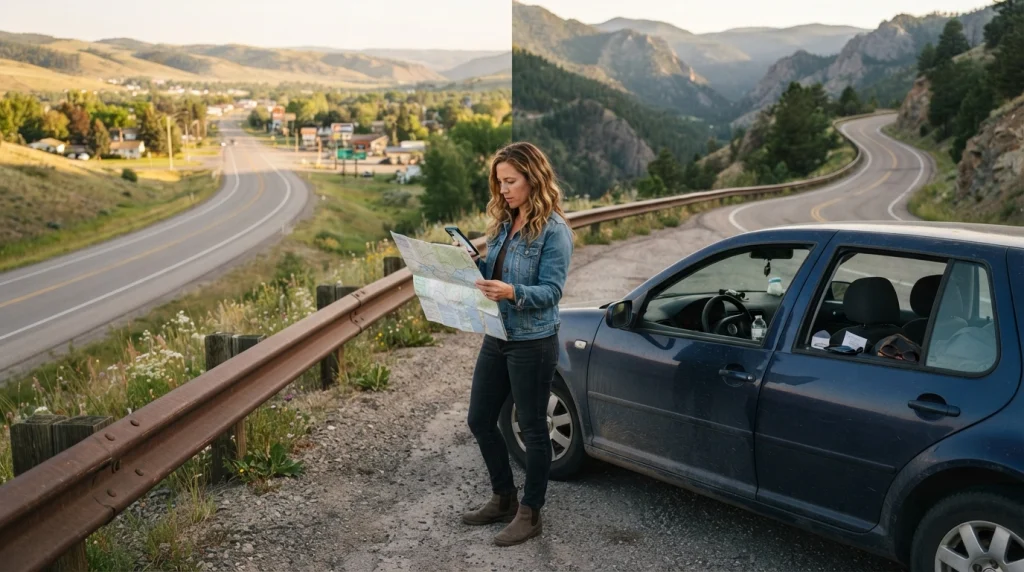
A good solo road-trip destination combines something you want to experience with logistics you can comfortably handle alone. The route, accommodation, parking, services, weather, and daily driving matter as much as the attraction itself.
I think of destination choice as matching the trip to my current confidence level. A destination that feels easy this year can prepare me for a more complicated route next year.
Definition: A solo road-trip destination is the main place or region you plan to reach by car while independently handling navigation, driving, accommodation, budgeting, safety decisions, and changes to the itinerary.
Start with what you want from the trip
Do not begin with a giant list of places other people say you “must” visit. First decide what would make the trip enjoyable for you.
- Nature: National parks, lakes, mountains, beaches, or scenic drives.
- Food: Small cities, market towns, farm regions, or culinary destinations.
- Culture: Museums, historic areas, architecture, festivals, or galleries.
- Relaxation: Coastal towns, spa destinations, quiet cabins, or lake communities.
- Outdoor activity: Hiking, cycling, photography, kayaking, or wildlife viewing.
- Confidence building: A familiar region that still feels different enough to be an adventure.
This matters more when traveling alone because there is no companion filling quiet time. I choose places where I would still enjoy the main activities without needing someone beside me.
Look at the journey, not only the destination
A road trip is different from flying somewhere. The transportation is part of the vacation, so an unpleasant route can change the whole experience.
Before getting excited about a destination, I look at the roads leading there. I want to know whether the drive involves long remote stretches, mountain passes, congested city traffic, difficult border crossings, ferries, or areas with limited services.
- Easy route: Major roads, frequent services, straightforward navigation.
- Moderate route: Some rural roads, mountain driving, or longer service gaps.
- Advanced route: Remote roads, challenging terrain, border procedures, or limited backup options.
A beginner does not need an advanced route to have a memorable trip. I have enjoyed simple regional drives more than ambitious itineraries where every day felt like a deadline.
Section Takeaway: The right destination should make both the drive and the stay feel manageable. Choose for your interests first, then make sure the route matches your skills.
How Should You Build a Shortlist of Destinations?
Build your shortlist by setting practical limits before browsing destinations. Your available days, driving tolerance, budget, season, and must-do activities will quickly remove places that do not fit.
This prevents what I call “map optimism.” A route can look short on a screen while becoming exhausting once meals, fuel stops, traffic, sightseeing, and check-in times enter the day.
Decide how many days you actually have
Count the trip from the moment you leave home until the moment you return. Do not treat travel days as if they contain unlimited sightseeing time.
- Two nights: Choose one destination and keep the route simple.
- Three to four nights: One main base or two nearby stops can work well.
- Five to seven nights: A regional loop becomes more realistic.
- More than one week: Longer point-to-point routes become easier to pace.
For a first solo drive, I prefer having extra time instead of extra mileage. An unplanned café stop or scenic detour should feel enjoyable, not like a problem.
Set a total-trip budget early
Road trips are not automatically cheap. Fuel or charging, accommodation, parking, tolls, food, entrance fees, and unexpected changes all matter.
| Expense | What to Research | Why It Affects Destination Choice |
|---|---|---|
| Fuel or charging | Round-trip distance and service availability | Longer or remote routes may cost more and need extra planning |
| Accommodation | Nightly rates, taxes, parking, cancellation terms | Popular areas can exceed the budget during busy periods |
| Parking | Hotel parking, garages, street rules | Dense cities may add expense and driving stress |
| Activities | Entrance fees and reservations | Major attractions may need advance booking |
| Emergency buffer | Extra night, route change, repairs, replacement items | A buffer makes unexpected changes easier to handle |
Pick three destinations, not twenty
Once your limits are clear, select three realistic possibilities. Researching three places deeply is more useful than saving dozens of attractive pins.
For each destination, write down the same facts so you can compare them fairly.
- Approximate driving time each way
- Number of overnight stops
- Main activity or reason to go
- Typical accommodation options
- Parking situation
- Fuel or charging availability
- Expected weather
- Backup routes or nearby towns
Section Takeaway: Let your time and budget create the shortlist. Then compare a few realistic destinations instead of trying to research everything.
How Do You Check Safety and Road-Trip Logistics?
Check the route and destination separately. A comfortable destination can still involve a difficult drive, while an easy highway route may end in an area where parking or accommodation creates unnecessary stress.
Solo female travel safety works best when it is specific. I want practical information about the exact roads, neighborhoods, arrival time, services, and activities I plan to use.
Research the road before committing
The National Highway Traffic Safety Administration recommends checking weather, traffic, and road conditions before leaving. It also recommends allowing enough time rather than rushing the drive.
NHTSA also advises carrying roadside supplies, including communication, water, basic emergency equipment, and essential medications. Review its road-trip driving guidance before a longer drive.
- Road type: Check whether your route uses highways, mountain roads, rural roads, or unpaved sections.
- Fuel or charging: Identify gaps before entering less populated regions.
- Phone service: Download maps for areas where coverage may be unreliable.
- Weather: Look for snow, heavy rain, heat, flooding, fog, wildfire conditions, or high winds.
- Closures: Check official transportation or park websites close to departure.
Check where you will arrive
I pay special attention to the final hour of the day. Arriving tired in an unfamiliar place can feel harder than the same location does the next morning.
- Can you reach your accommodation without complicated navigation?
- Is parking explained clearly?
- Can you arrive before dark when that would make you more comfortable?
- Are food, fuel, or essential shops reasonably accessible?
- Could you switch accommodation if the original option became unavailable?
Use official information for international destinations
If your road trip crosses borders, research entry rules, insurance, driving laws, permits, emergency numbers, and local transportation conditions before booking. Requirements can differ by country and change over time.
The U.S. State Department maintains destination guidance and specific information for women travelers. Use the government resources relevant to your citizenship and destination.
Pro tip: For international travel, verify current entry rules, security information, health requirements, local driving laws, and emergency contacts through official government sources immediately before the trip.
Section Takeaway: Research concrete risks rather than asking whether an entire place is simply “safe” or “unsafe.” The route, arrival plan, local conditions, and your own comfort level all matter.
How Far Should You Drive on a Solo Road Trip?
Choose a destination that leaves enough energy to enjoy the trip after you park. Driving tolerance varies, so build your route around your own concentration and comfort rather than somebody else’s mileage record.
I never treat the map’s estimated travel time as my complete day. Fuel, meals, rest stops, construction, photographs, and unexpected traffic all extend the journey.
Use driving hours instead of distance alone
Two destinations 250 miles away can feel completely different. One may involve easy highways, while another includes mountain roads, urban traffic, or slow scenic sections.
For planning purposes, I judge each day by hours behind the wheel plus the difficulty of those hours.
- Light day: Enough time remains for relaxed sightseeing and an early check-in.
- Moderate day: Driving is a substantial part of the day but leaves recovery time.
- Heavy day: Most of the usable day depends on driving smoothly with few delays.
I try not to stack heavy driving days together on a leisure trip. The second long day often feels different from the first.
Consider whether night driving is necessary
A destination becomes less attractive to me when the itinerary depends on driving unfamiliar roads after dark. That matters even more when weather, wildlife, poor lighting, or rural roads are involved.
CDC travel guidance advises avoiding night driving in unfamiliar or rural areas when traveling internationally. It also recommends learning local traffic laws, wearing seat belts, and avoiding distracted driving.
You can review the CDC’s current traffic and road safety guidance when planning a trip abroad.
Pro tip: Check official transportation and weather information for your exact route. Conditions that are easy in summer may be completely different during winter, storms, or wildfire season.
Which Type of Destination Fits Your Travel Style?
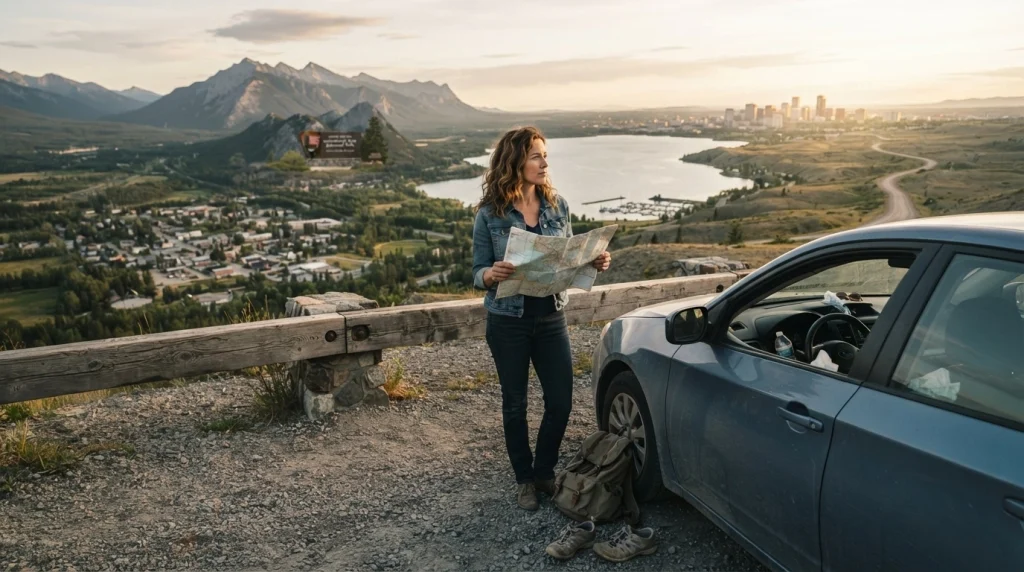
The easiest way to narrow your options is to compare destination types instead of individual cities. Each style creates a different balance of driving, services, parking, activity options, and independence.
| Destination Type | What It Offers | Planning Challenge | Good Fit When You Want |
|---|---|---|---|
| Small city or large town | Restaurants, hotels, museums, services | Parking and traffic near central areas | A mix of convenience and independent exploring |
| National park gateway | Scenery, hiking, wildlife, outdoor activities | Seasonal roads, reservations, limited services | Nature with a planned home base |
| Coastal or lake town | Relaxed scenery, walking, food, water activities | Seasonal crowds and accommodation prices | A slower road-trip pace |
| Major city | Large activity choice and many accommodations | Traffic, parking costs, navigation complexity | Culture and entertainment more than scenic driving |
| Remote scenic region | Quiet roads, landscapes, fewer crowds | Longer gaps between fuel, food, lodging, or help | More experience and stronger backup planning |
My first-trip preference
For an early solo road trip, I like a destination with a clear home base and several optional activities nearby. It gives me independence without forcing me to change hotels every night.
A national park gateway town, smaller city, or coastal base can work well when services are reliable. I can explore during the day and return to somewhere familiar each evening.
The National Park Service recommends checking amenities, weather, terrain, reservations, current conditions, and backup plans before visiting parks. It also advises sharing a trip plan with a trusted contact when heading into outdoor areas.
Those ideas are useful far beyond national parks. A destination becomes easier when I already know where I will sleep, refuel, eat, park, and get help if plans change.
Section Takeaway: Choose the destination type that matches the experience you want and the logistical complexity you are comfortable managing alone.
What Should You Check Before Making the Final Choice?
Before booking, compare your final destinations against one simple checklist. I remove any option that depends on too many things going perfectly.
Use the 10-question destination test
- Would I enjoy the main activities alone?
- Can I complete the drive without pushing my normal limits?
- Can I arrive at my accommodation at a comfortable time?
- Do I understand the parking situation?
- Are fuel or charging stops easy to identify?
- Does the route have reasonable food and restroom options?
- Have I checked weather and seasonal road conditions?
- Could I stop early somewhere safe and practical?
- Does the total cost leave room for an emergency buffer?
- Am I excited about this trip after considering the logistics?
That last question matters. A destination should not survive the practical research only to leave you feeling exhausted before departure.
Pay attention to seasonal differences
The same place may be a simple road trip in one season and a complicated one in another. Snow, heat, flooding, wildfire conditions, storms, shortened daylight, and seasonal closures can change the route.
For parks and protected areas, check the official destination website rather than relying only on an old blog post. The National Park Service specifically recommends reviewing current conditions, weather, amenities, and reservations before arriving.
Create one backup destination
I save one alternative that works with roughly the same dates and budget. I do not fully plan a second vacation, but I want an option if severe weather or major road problems affect the original route.
This removes the feeling that I have to force a trip to happen. Changing destinations can be good travel planning.
Section Takeaway: The strongest choice is not merely the prettiest destination. It is the destination that still works after you test the driving, budget, accommodation, conditions, and backup options.
Solo Road Trip Destination FAQ
What is a good first destination for a woman taking a solo road trip?
A good first destination is usually somewhere with straightforward roads, reliable accommodation, regular fuel or charging stops, useful services, and activities you enjoy alone. A single home base within a comfortable driving distance often creates fewer logistical demands than a complicated multi-stop route.
How far from home should a first solo road trip be?
There is no universal distance. Choose a destination that lets you drive without exceeding your normal concentration and comfort limits. Factor in rest stops, meals, traffic, sightseeing, and the return journey rather than looking only at the map’s mileage.
Are small towns better than cities for solo female road trips?
Neither is automatically better. Small towns may have easier traffic but fewer services, while cities may offer more hotels and activities but harder parking. Compare the specific route, accommodation area, transportation options, and activities instead of choosing only by population size.
Should I choose a popular destination for my first solo road trip?
Popularity can make accommodation, restaurants, and visitor information easier to find, but it may also bring crowds and higher prices. Choose based on practical fit. A less famous destination with easy logistics can be more enjoyable than an overcrowded place chosen only because it is trending.
How can I check whether a remote destination is practical?
Check distances between fuel or charging points, accommodation, food, medical help, phone coverage, and alternative routes. Download offline maps and review official road conditions. If several essential services depend on one location staying open, build a stronger backup plan.
Is it better to stay in one place or move every night?
For many first-time solo road trippers, one base or two longer stays are easier than changing accommodation every night. Fewer moves mean less packing, navigation, parking, and check-in pressure, while still allowing day trips and scenic drives.
What if I change my mind after booking?
Changing plans is part of independent travel. Review cancellation policies before booking so you understand your options. If weather, road conditions, health, vehicle problems, or your comfort level changes, adjusting the route can be the sensible choice.
Choosing a solo road-trip destination should leave you feeling curious, prepared, and capable of handling the journey. You do not need the longest route, the most remote landscape, or the most famous destination to make the trip meaningful.
Start with a place that fits the way you drive and travel today. Once you return home with that experience behind you, choosing the next destination becomes much easier.