How Can a Woman Find Destinations With Safe Evening Activities?
Quick Answer
A woman can find destinations with safe evening activities by checking what happens after dark before booking. Look for busy central neighborhoods, reliable evening transportation, established restaurants and cultural venues, accommodation near activity areas, and current official safety guidance such as the U.S. State Department guidance for women travelers. The goal is not finding a place with zero risk. It is choosing a destination where evening plans can stay simple, public, and easy to leave.
Check these six things first
- Active neighborhoods: Favor areas where restaurants, theaters, shops, and public spaces remain active after dinner.
- Return transport: Confirm how you will get back to your accommodation after the activity ends.
- Public venues: Look for structured activities in established places rather than isolated locations.
- Short distances: Choose accommodation near the places where you expect to spend your evenings.
- Recent conditions: Check current advisories, local news, and transportation information before booking.
- Backup options: Make sure you can leave early without depending on one final bus, train, or ride.
Evenings can be one of the hardest parts of choosing a solo destination. A city may look wonderful during daylight yet feel complicated once museums close and transit becomes less frequent.
When I assess a destination for solo female travel, I look beyond a general claim that it is “safe.” I want to know whether a woman can eat dinner, attend an event, take an evening walk in a busy area, and return without creating unnecessary logistical problems.
In This Guide
- What Makes a Destination Good for Safe Evening Activities?
- How Can You Research Evening Safety Before Booking?
- Which Evening Activities Are Easier for Solo Female Travelers?
- How Should You Compare Destinations for Evening Travel?
- How Do You Check Whether a Neighborhood Works After Dark?
- How Can You Make Evening Plans Easier Once You Arrive?
- Frequently Asked Questions
What Makes a Destination Good for Safe Evening Activities?
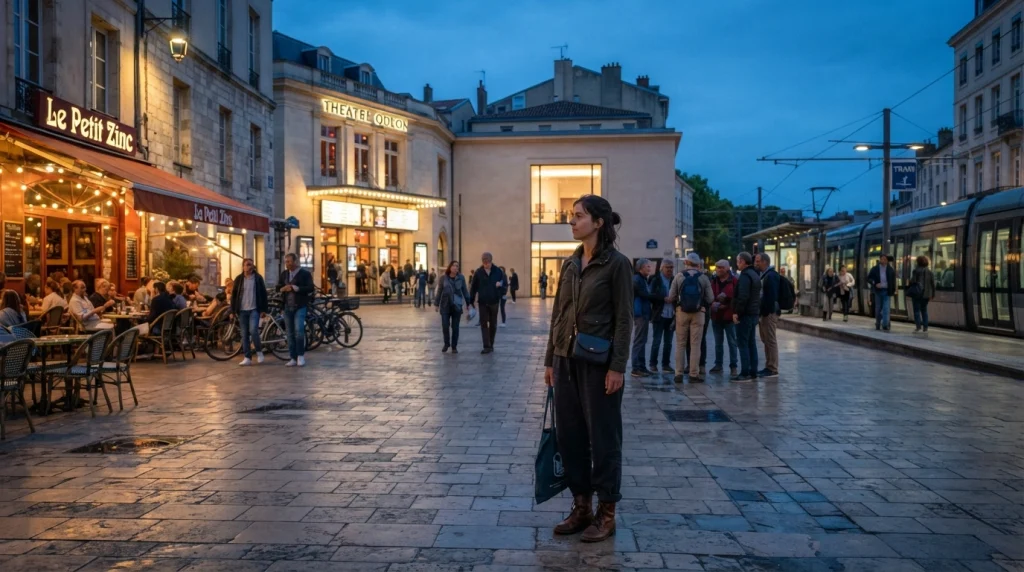
A good evening destination gives you several reasonable choices without forcing you into isolated streets, difficult transfers, or uncertain transportation. Safety depends on the destination, neighborhood, activity, timing, and current local conditions.
Safe evening activities are structured or casual activities that take place in active public environments where a traveler can enter, leave, and return to her accommodation using a practical transport option.
Look for normal activity after dinner
I prefer destinations where being outside at 7:00 or 8:00 p.m. does not automatically mean entering a nightlife district. Cafés, restaurants, theaters, pedestrian areas, markets, and cultural venues create more options.
That matters because nightlife and evening activity are not the same thing. You should not need to visit bars or clubs just to have something to do after sunset.
- Restaurants: Look for several options within a short area rather than one isolated restaurant.
- Theaters and performances: Scheduled events usually give you predictable starting and ending times.
- Evening museums: Some major museums offer later opening hours on selected days.
- Busy public squares: Central plazas can remain active with families, diners, and visitors.
- Guided activities: Food tours, performances, classes, and organized walks add structure.
Transportation matters as much as the activity
An appealing evening event loses much of its value if getting home becomes difficult. I always research the return journey before becoming excited about the activity itself.
A destination becomes easier when several transport choices overlap. Metro service, buses, licensed taxis, reputable ride services, and walkable central neighborhoods create useful backups.
The U.S. State Department notes that transportation safety varies by location and recommends researching reputable taxi and ride services before traveling. App-based rides may also provide a digital record of the journey.
Pro tip: Check destination-specific government travel advice shortly before departure. Conditions can change after you first plan the trip.
How Can You Research Evening Safety Before Booking?
Research the destination as if you were already there at 9:00 p.m. Ask what you would be doing, where you would be standing, and how you would get back to your room.
This approach is more useful than searching only for broad phrases such as “Is this city safe?” Those searches often hide important neighborhood and transportation differences.
Start with official guidance
Before comparing restaurants or attractions, check current destination advisories, local laws, transportation information, and issues affecting women travelers. The U.S. State Department’s international travel planning resources include advisories and destination guidance.
Official guidance should not be your only source. It should be the foundation that helps you interpret everything else.
- Travel advisory: Check whether current unrest, crime, transportation, or regional warnings affect your plans.
- Local laws: Research rules involving alcohol, dress, photography, demonstrations, and public behavior.
- Transport guidance: Check whether taxis, trains, buses, or ride services have destination-specific concerns.
- Emergency information: Save local emergency numbers and know where your accommodation is located.
Search for evening-specific evidence
Next, search for practical signs that a destination still functions normally after sunset. Restaurant opening hours and transit schedules can tell you more than a generic travel ranking.
I usually investigate the following before narrowing my shortlist:
- When central restaurants typically close.
- Whether public transit still runs when evening events finish.
- Whether major venues sit near established accommodation areas.
- Whether visitors commonly use one central district or travel long distances at night.
- Whether licensed taxis or ride services are easy to arrange.
- Whether streets between venues and hotels stay active after dinner.
Read recent reviews for logistics, not guarantees
Recent hotel and attraction reviews can reveal lighting, noise, transportation, and walking conditions. They cannot prove that an area is safe.
I pay most attention to repeated practical comments. Several recent guests mentioning an easy metro connection or a deserted walk provide useful planning clues.
Avoid treating one enthusiastic review as evidence. Personal comfort levels differ too much.
Which Evening Activities Are Easier for Solo Female Travelers?
The easiest evening activities usually have a defined location, predictable duration, visible staff, and straightforward transportation. They let you enjoy the evening without making navigation the main challenge.
You can still be spontaneous. A little structure simply reduces the number of decisions you must make late in the day.
Good options to research
- Early dinner: A reservation around 6:00 or 7:00 p.m. lets you enjoy the evening without returning especially late.
- Live performances: Theater, concerts, dance, and cultural shows have clear venues and finishing times.
- Food tours: Organized tours can combine several stops while keeping the route structured.
- Evening museum hours: Late openings offer indoor activities without requiring a nightlife setting.
- Cooking classes: Classes often create an easy social environment with a fixed location.
- Night markets: Established markets can work well when they are busy, central, and easy to reach.
- Hotel events: Rooftop dinners, lounges, or organized guest activities reduce return-transport concerns.
Activities that need more research
Some activities are not automatically unsafe, but they create extra variables. Remote viewpoints, isolated beaches, long walks, and events ending after public transit stops need more planning.
I also separate “popular nightlife” from “good solo evening logistics.” A famous club district may offer plenty to do while still being a poor fit for the type of evening you want.
- Check the exact finish time.
- Plan the return route before leaving.
- Keep enough battery for maps and transport apps.
- Avoid depending on one final departure.
- Know how to leave early if your plans change.
Alcohol can also affect decision-making and navigation. If you drink, keeping track of your drink and staying able to manage your own transportation matters more when you are alone.
How Should You Compare Destinations for Evening Travel?
Compare destinations using practical evening conditions rather than a single safety score. A place that works beautifully for one traveler may not fit another woman’s comfort level or preferred activities.
I use a simple comparison sheet before booking. It keeps attractive photos from outweighing basic logistics.
| Factor | Stronger Evening Setup | Needs More Planning |
|---|---|---|
| Activities | Restaurants, performances, markets, and cultural venues clustered together | Most attractions close early or require long trips |
| Transport | Several reputable return options | One final bus, train, or uncertain taxi option |
| Accommodation | Close to restaurants and established visitor areas | Cheap room far from evening activity |
| Walking | Short, active routes with businesses still open | Long routes through quiet or unfamiliar areas |
| Timing | Activities available from early evening onward | Most entertainment starts very late |
| Backup plan | Easy to leave early or change transport | Plans depend on one fixed route |
Use a three-evening test
Before booking, imagine three different evenings. This quickly exposes whether a destination offers enough flexibility.
- Quiet evening: Could you eat nearby and return early?
- Cultural evening: Could you attend a performance, museum, or organized activity?
- Social evening: Could you join a class, tour, group dinner, or busy public event?
If all three scenarios require complicated transportation, the destination may demand more planning than you want. That does not make it a bad destination.
It simply tells you what type of trip you are choosing.
How Do You Check Whether a Neighborhood Works After Dark?
Neighborhood choice often affects evening comfort more than the city name. Two hotels in the same destination can create completely different solo travel experiences.
I would rather pay a little more for a practical location than save money and depend on long nighttime journeys every evening.
Map your evening triangle
Mark three things on a map before booking accommodation: where you will sleep, where you expect to eat, and where evening activities happen. Those points should create a manageable route.
Look for more than straight-line distance. A one-kilometer journey can feel simple or awkward depending on crossings, hills, transit access, and street activity.
- Accommodation: Check reception hours and how you enter the property at night.
- Food: Confirm several restaurants or cafés sit nearby.
- Transport: Identify the closest reliable evening transport stops.
- Landmarks: Save recognizable places near your accommodation.
- Alternatives: Find at least one taxi or ride option before you need it.
Check the area at the correct time
A neighborhood that looks busy in midday photos may change after offices or markets close. Search recent reviews that mention evenings rather than relying on daytime descriptions.
Business hours help too. If almost everything around a hotel closes by 6:00 p.m., the area may become much quieter later.
Street-view tools and maps can help with orientation, but they may contain older imagery. Use them to understand layout, not to make current safety conclusions.
Pro tip: Compare neighborhood research with current official destination guidance. Never assume an area remains suitable because an older blog post recommended it.
How Can You Make Evening Plans Easier Once You Arrive?
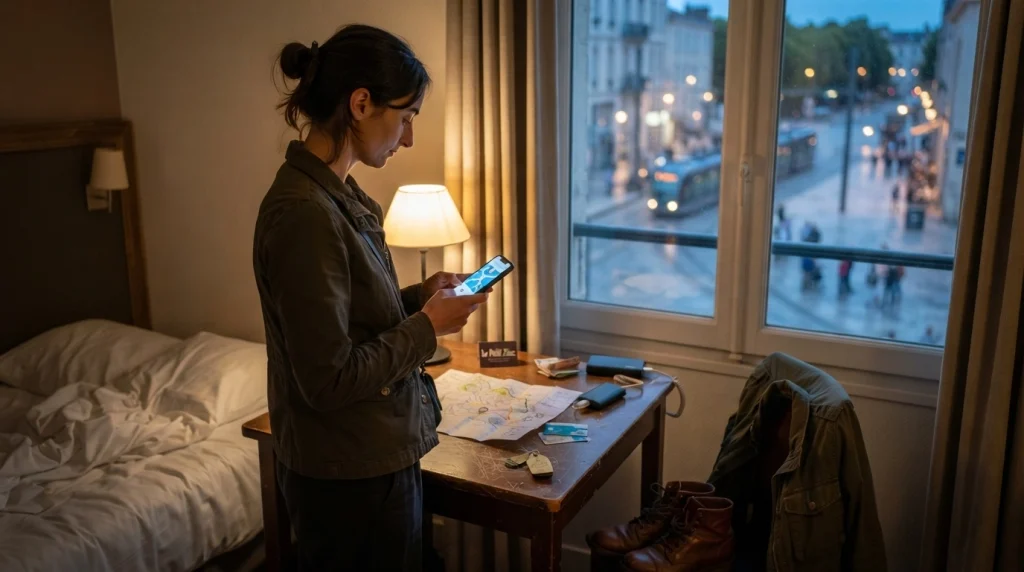
Your research continues after check-in. Spend part of the first day learning how the area works before planning a complicated night out.
I like to identify the easiest route home while I still have daylight and plenty of energy. That small step removes uncertainty later.
Build an evening routine
- Charge your phone: Start the evening with enough battery for maps, tickets, messages, and transport.
- Save your address: Keep the accommodation name and address available offline.
- Check closing times: Confirm when your venue and transport actually finish operating.
- Choose your return: Decide whether you will walk, use transit, or arrange a ride.
- Share plans when useful: A trusted person can know your general location and expected return.
- Keep a backup: Carry enough money or another payment method for an unexpected ride.
Give yourself permission to leave
A safe evening plan should be easy to shorten. You do not need to remain somewhere because you paid for it or expected yourself to stay longer.
If the atmosphere changes, transportation becomes uncertain, or you simply feel uncomfortable, changing plans is a valid travel decision. Being flexible is part of solo travel.
Watch current health conditions too
Evening planning is not only about crime or transportation. Weather, outbreaks, air quality, heat, and other health conditions may change which activities make sense.
Before international travel, I also check the CDC Travelers’ Health destination resources for current health notices. As of 2026, the CDC continues to publish destination information and travel health notices that can affect trip planning.
Section Takeaway: A good evening plan gives you choices. You should know where you are going, how you are returning, and what you will do if the plan changes.
Frequently Asked Questions
What should a solo female traveler look for in a destination at night?
Look for active central neighborhoods, several evening activities, reliable transportation, reputable accommodation, and easy return routes. Check current destination advisories as well. The best setup is one where you can change plans or leave an activity without becoming stranded.
Are busy tourist areas always safer in the evening?
No. A busy area may offer better lighting, transportation, and foot traffic, but crowds can also create opportunities for theft or unwanted attention. Research the exact neighborhood and current conditions instead of assuming that popularity equals safety.
Is walking at night safe for solo female travelers?
There is no universal answer. Walking conditions vary by city, neighborhood, time, route, and current conditions. Research the specific route, keep distances short when possible, and use another transport option when a walk feels uncertain.
What are good alternatives to nightlife when traveling alone?
Look for evening food tours, theater, concerts, cooking classes, late-opening museums, cultural performances, organized group activities, restaurants, and established night markets. These can provide a social evening without depending on clubs or bars.
Should I choose my hotel based on evening activities?
Location deserves significant weight. Staying near restaurants, transport, and the activities you want can reduce long nighttime journeys. A cheaper hotel may cost more in time, transportation, and inconvenience if it sits far from the areas you use.
How late should a woman stay out when traveling alone?
There is no universal safe hour. A better question is whether transportation, street activity, venue operations, and your own alertness still support the plan. Choose a return time based on the specific destination rather than an arbitrary rule.
How can I check current destination safety before traveling?
Start with official government travel advisories and local transportation information. Then compare recent accommodation reviews and local sources for practical context. Recheck conditions shortly before departure because demonstrations, weather, transit disruptions, or other events can change quickly.
Final takeaway: Finding destinations with safe evening activities is less about identifying a perfect city and more about choosing workable evening logistics.
Prioritize active neighborhoods, structured activities, short return journeys, dependable transportation, and current information. When those pieces fit together, traveling alone after dinner can feel far simpler and more enjoyable.
Before booking your next solo trip, compare two or three destinations using the evening checklist above. Choose the one whose routines fit your comfort level, not the one that simply looks most exciting online.