How Can a Woman Find Scenic Destinations That Are Comfortable to Explore Alone?
Quick Answer
A woman can find scenic destinations that are comfortable to explore alone by looking beyond beautiful photos and checking how the place works in real life. Prioritize easy transportation, a convenient base, accessible scenery, daytime activities, current safety information, and simple backup options. Before booking an international trip, review the official guidance for women travelers.
Use these filters first
- Easy transport: Favor places where you can reach viewpoints, historic areas, waterfronts, or nature without complicated transfers.
- Convenient base: Look for accommodation near restaurants, transport, staffed attractions, and the places you want to explore.
- Daytime scenery: Choose destinations where the best experiences do not depend on isolated late-night travel.
- Current conditions: Check official travel advisories, local laws, health information, weather, and seasonal access.
- Simple backups: Make sure another bus, taxi, route, hotel, or activity is available if your first plan fails.
- Your comfort level: Match the destination to how independent, outdoorsy, social, or experienced you want to be.
One useful rule
- A spectacular destination is not automatically a comfortable solo destination. Choose beauty you can reach and enjoy without creating unnecessary logistical stress.
Finding a beautiful place is easy. Finding somewhere beautiful that also feels manageable when you’re traveling alone takes more thought.
When women ask how to find scenic destinations that are comfortable to explore alone, I suggest judging the experience between the famous viewpoints. Transportation, accommodation, walking conditions, daylight, communication, and backup plans often matter more than the postcard image.
As of 2026, I also treat destination research as something to repeat shortly before departure. Safety conditions, transport schedules, health guidance, and access rules can change after you book.
In This Guide
- What Makes a Scenic Destination Comfortable for Solo Travel?
- How Can You Screen Scenic Destinations Before Booking?
- Which Type of Scenic Solo Trip Fits You Best?
- How Do Transport and Accommodation Change the Experience?
- How Can You Research Safety Without Letting Fear Choose for You?
- How Do You Test a Destination Before Committing?
- Scenic Solo Destination FAQ
What Makes a Scenic Destination Comfortable for Solo Travel?
A comfortable scenic destination gives you access to beautiful experiences without making every day a logistical challenge. The scenery matters, but so does your ability to reach it, enjoy it, and return to your accommodation easily.
Solo female travel means traveling without a companion while independently managing your itinerary, transport, accommodation, money, activities, and personal safety decisions.
Think about the entire day, not one viewpoint
Imagine the destination from breakfast until bedtime. Ask what happens before and after the beautiful part.
- Morning: Can you get breakfast and start your day without a long transfer?
- Transport: Can you reach your chosen attraction without relying on one complicated connection?
- Activity: Is the scenic experience appropriate for your fitness, navigation skills, and comfort with isolation?
- Food: Will you have realistic meal options nearby?
- Return: Can you get back easily if you finish earlier or later than expected?
- Evening: Is there something comfortable to do without needing to travel far after dark?
A mountain town may look perfect until you learn that every trail requires a rental car. A coastal village can be charming until the last bus leaves at 5 p.m.
Neither detail automatically makes the destination unsuitable. They simply change how independently you can move.
Look for freedom to change your mind
I use flexibility as one of my strongest destination filters. A place feels easier alone when one failed plan does not ruin the whole day.
Useful backup options include:
- More than one daily train or bus.
- Licensed taxis or established ride services where available.
- Several accommodation choices in the same area.
- Indoor attractions for bad-weather days.
- Restaurants or shops within a comfortable distance.
- Alternative walks or activities near your main base.
Section Takeaway: A comfortable solo destination combines scenery with independence. The easier it is to change plans, the less pressure you put on every decision.
How Can You Screen Scenic Destinations Before Booking?

Start with a shortlist of three to five places, then research them using the same criteria. Comparing destinations side by side prevents one beautiful photograph from making the decision for you.
Start with inspiration, then switch to practical research
Travel magazines, videos, maps, and destination guides are useful for discovering possibilities. Lonely Planet’s destination directory, for example, covers countries around the world and can help you build an initial shortlist.
Once a place catches your attention, change your questions. Stop asking only, “What can I see?”
- How do I reach the scenic areas?
- Can I stay close to what interests me?
- What happens if the weather changes?
- Do I need a car?
- Can I join a guided activity if I don’t want to go alone?
- How early does transportation stop?
- Will my phone have useful coverage?
Use maps before you book a hotel
Open a map and mark your likely accommodation area, station, scenic attractions, restaurants, and transport stops. Distances become much clearer when you see the whole pattern.
A hotel that costs $20 less can become inconvenient if reaching everything requires repeated taxis. A slightly more central base may simplify the entire trip.
Search recent traveler experiences carefully
Recent reviews can reveal practical details that destination marketing rarely explains. Look for repeated comments about walking conditions, transportation, noise, isolation, confusing entrances, or seasonal closures.
Do not treat one dramatic review as universal truth. Look for patterns, then confirm important safety or access details through authoritative sources.
| Destination Trait | Usually Easier Alone | Requires More Planning |
|---|---|---|
| Transport | Several daily options and simple routes | One limited service or car-only access |
| Accommodation | Central base near food and activities | Remote property with few nearby services |
| Scenery | Viewpoints, parks, or walks with straightforward access | Remote terrain requiring specialist navigation |
| Daily activities | Several flexible daytime choices | One major activity with no backup |
| Communication | Reliable data or Wi-Fi in populated areas | Long periods without connectivity |
Section Takeaway: Use beautiful content to discover destinations, but use maps, transport information, recent reviews, and official sources to decide whether they fit you.
Which Type of Scenic Solo Trip Fits You Best?
The easiest scenic trip depends on what “scenic” means to you. Some women want mountains and trails, while others want colorful historic streets or ocean views.
Choose the landscape first. Then choose the level of independence it requires.
Scenic cities and historic towns
These can work well when you want beauty without giving up services. Architecture, parks, river walks, viewpoints, gardens, and historic districts may all sit within one compact area.
Look for:
- Walkable central neighborhoods.
- Frequent local transportation.
- Staffed attractions.
- Plenty of daytime activity.
- Cafés and restaurants near your base.
Coastal destinations
Coastal trips can offer beaches, clifftop walks, harbors, islands, and sunsets. The key question is often transportation rather than scenery.
Check ferry schedules, tide-sensitive routes, seasonal businesses, and the final return service. Island connections can become much less frequent outside peak season.
Mountain and lake destinations
These trips can be spectacular, but beautiful landscapes sometimes come with greater isolation. Separate easy-access scenery from activities requiring outdoor skills.
A lakeside town with trains, marked paths, boat services, and guided excursions is a different solo experience from a remote backcountry route.
National parks and nature trips
Nature can be a wonderful focus for solo travel when the logistics match your experience. Research trail difficulty, transport, weather, daylight, navigation, wildlife guidance, and mobile coverage.
For a first solo nature trip, I would favor well-used routes, clear trail information, simple transport, and an established place to stay. Remote wilderness can wait until your outdoor skills match the environment.
Pro tip: For international nature travel, check current official destination guidance and the CDC Travelers’ Health destination pages before departure. Conditions and health recommendations can change.
How Do Transport and Accommodation Change the Experience?
Transport and accommodation determine how much energy you spend solving problems. Strong choices in these two areas can make an unfamiliar scenic destination feel surprisingly manageable.
Choose your base before building the itinerary
I prefer to decide where I can comfortably stay before saving dozens of attractions. A good base reduces repeated planning every morning.
Before booking, check:
- Distance from the main station or arrival point.
- Nearby restaurants and grocery stores.
- How you will return after an evening meal.
- Recent reviews mentioning the surrounding area.
- Reception or check-in arrangements.
- Cancellation terms if your plans change.
A beautiful cabin thirty minutes outside town may be ideal with a car. Without one, a central guesthouse could give you far more freedom.
Study the final mile
The “final mile” is the last part between a station, airport, ferry terminal, or bus stop and your accommodation. This part deserves more attention than many travelers give it.
Know your preferred route before arrival. Save the accommodation address and a backup transport option offline.
Favor transport that gives you choices
A route with six trains each day offers more flexibility than one with a single departure. Frequency can matter as much as journey length.
When comparing scenic places, check whether missing one connection creates a minor delay or leaves you stranded until tomorrow.
Section Takeaway: A central base and flexible transportation can matter more than choosing the most dramatic location. Convenience protects both your time and your ability to change plans.
How Can You Research Safety Without Letting Fear Choose for You?
Good safety research should give you clearer choices, not convince you that every unfamiliar place is dangerous. Focus on specific conditions rather than vague labels such as “safe” or “unsafe.”
Check destination-specific official information
For international travel, review your destination’s current government travel advisory, local laws, entry rules, and relevant health guidance. The U.S. State Department also publishes guidance specifically for women travelers.
That guidance recommends researching local customs and transportation practices before departure. It also notes that women can face different health and security concerns depending on the destination.
Research the neighborhood, not only the country
Your day happens at street level. Research where visitors usually stay and how you will move between your accommodation and activities.
Ask practical questions:
- Will I regularly return after dark?
- Are transport stops near my accommodation?
- Will I need isolated walks to reach attractions?
- Are reputable taxis or app-based rides available?
- Do local customs affect clothing or behavior?
- Are there activities I would rather join with a guide?
Check health conditions separately
Safety is not only about crime. Climate, altitude, mosquitoes, food and water risks, vaccines, heat, and access to medical care can change how comfortable a trip feels.
The CDC maintains destination-specific Travelers’ Health pages covering international destinations. Check the page for the place you are considering rather than assuming nearby countries have identical guidance.
Pro tip: Recheck official advisories and health guidance shortly before departure. Do not rely only on a blog article saved months earlier.
How Do You Test a Destination Before Committing?
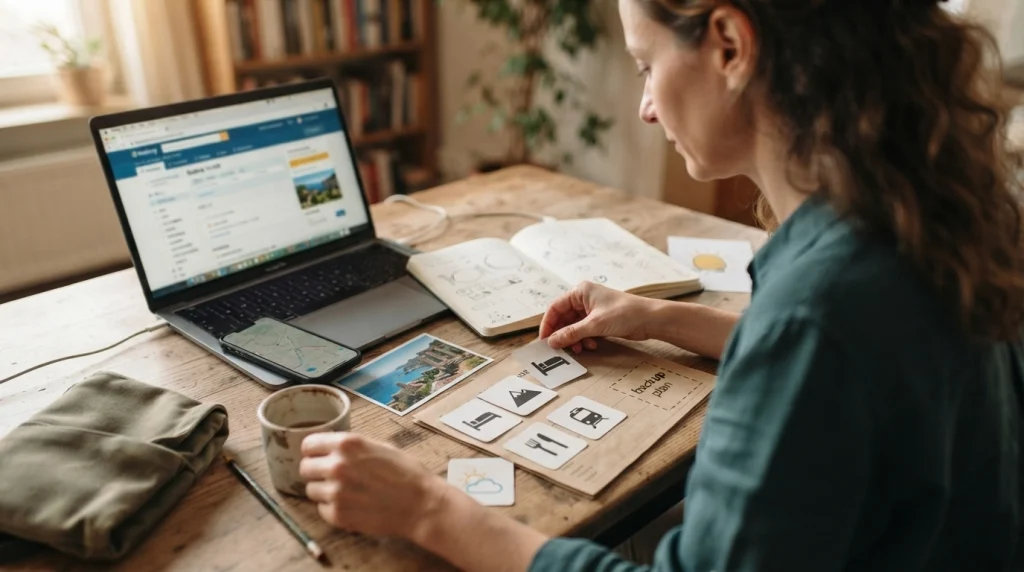
Create a sample day before you buy the ticket. This is one of the fastest ways to expose hidden logistical problems.
Build one realistic solo day
- Choose accommodation: Pick a real property or neighborhood you could afford.
- Choose one scenic activity: Use something you genuinely want to experience.
- Map the journey: Check how you would reach it and return.
- Add food: Find realistic breakfast, lunch, and dinner options.
- Check timing: Include opening hours, daylight, transport frequency, and travel time.
- Create a backup: Decide what you would do if weather or transport disrupted the plan.
If that imaginary day already feels exhausting, investigate why. The destination might still work with a different base, a guided day tour, or a slower itinerary.
Use a simple scoring worksheet
You do not need complicated mathematics. Give each destination a personal rating from one to five for factors that matter to you.
- Scenery I genuinely want to experience.
- Ease of arrival.
- Ease of local transportation.
- Comfort with the accommodation area.
- Number of accessible daytime activities.
- Availability of backup plans.
- Total trip cost.
- Language and communication comfort.
- Current safety and health considerations.
The purpose is not to find a universally “best” destination. It is to notice which place fits the trip you want right now.
Start smaller when your confidence is still growing
You do not need to begin with your dream expedition. A two- or three-night trip to an easier scenic destination can teach you what you value when traveling alone.
You may discover that you love long solo walks but dislike changing hotels. You might enjoy remote landscapes during the day but prefer staying in a lively town at night.
That information is valuable. Your next trip becomes easier to design because you know your own travel style.
Section Takeaway: Test the practical version of the trip before booking. The right destination is one whose beauty fits your current skills, budget, energy, and comfort with independence.
Scenic Solo Destination FAQ
What makes a destination good for a woman traveling alone?
A good solo destination combines experiences you genuinely want with manageable transportation, suitable accommodation, realistic costs, current safety information, and enough flexibility to change plans. Your personal comfort matters more than whether a destination appears on a generic “best places for solo women” list.
Should a first solo traveler choose a city or a remote nature destination?
A well-connected city, town, or established nature base can be simpler for a first trip because you usually have more transport, accommodation, food, and backup options. Remote nature travel can work too, but it may require stronger navigation, transportation, weather, and emergency planning.
How can I tell whether a scenic destination requires a car?
Map the accommodation areas and attractions you want to visit, then check public transport routes and operating times. Pay special attention to trailheads, beaches, viewpoints, and rural attractions because a destination may have excellent intercity transport but limited access to its scenic areas.
How far in advance should I research destination safety?
Research before booking, then review the information again shortly before departure. Current conditions can change. For international trips, check official travel advisories, local laws, entry requirements, transportation information, and destination-specific health guidance instead of relying only on older travel posts.
Are guided tours useful for women traveling alone?
They can be. A guided hike, boat trip, walking tour, or day excursion may make difficult-to-reach scenery easier to experience without organizing every transport detail yourself. You can mix guided activities with independent days rather than choosing between fully solo and fully organized travel.
How do I find scenic places without relying on social media?
Use established destination guides, official tourism resources, maps, national park information, transportation websites, and recent traveler reviews. Social media is useful for inspiration, but practical sources are better for checking access, seasonality, opening hours, transport, weather, and current conditions.
What should I do if a beautiful destination feels too complicated?
Change the trip design before abandoning the destination. Stay in a better-connected base, reduce hotel changes, book a guided excursion, choose easier scenery, or save the more remote experience for a future trip when your skills and confidence are stronger.
Choose Scenery You Can Enjoy, Not Just Photograph
The best scenic solo destination is not automatically the place with the wildest mountains, clearest water, or most dramatic photographs. It is the place where the scenery and the practical experience work together for you.
Start with places that excite you. Then test transportation, accommodation, daytime access, backup plans, current conditions, costs, and your own comfort level.
You are not looking for a destination where nothing can go wrong. You are looking for one where you can make decisions, adjust your plans, and still enjoy the reason you traveled there in the first place.