How Can a Solo Female Traveler Choose a Destination Based on Her Budget?
Quick Answer
A solo female traveler can choose a destination based on her budget by setting a total trip limit first, then comparing airfare, accommodation, food, local transport, activities, insurance, and a separate emergency cushion. I also check practical safety and local conditions through reliable resources such as the U.S. Department of State travel guidance before deciding whether a cheaper destination is genuinely practical for me.
Use these six budget filters
- Total budget: Decide the most you can comfortably spend without touching money needed at home.
- Getting there: Compare the full transport cost, including baggage and airport transfers.
- Daily costs: Price accommodation, meals, local transport, and activities for your actual dates.
- Solo costs: Remember you will not automatically split rooms, taxis, or rental cars with another traveler.
- Safety flexibility: Keep enough money for a better hotel, licensed taxi, or changed travel plan when needed.
- Emergency cushion: Keep backup funds outside your normal sightseeing and food budget.
My simplest rule
- Choose the destination where your budget still leaves room for safe accommodation, reliable transport, and an unexpected change of plans.
If you’re wondering how can a solo female traveler choose a destination based on her budget, start with one important shift: don’t search for the cheapest country first.
Start with the amount you can spend comfortably, then find destinations that fit that number without forcing you to compromise on the parts of solo travel that matter most.
I’ve found that the cheapest-looking trip can become expensive fast. A low hotel rate means little if the neighborhood requires constant taxis, while a slightly pricier room near public transport can simplify the whole trip.
In This Guide
- How Much Can You Comfortably Spend on a Solo Trip?
- How Do You Compare the Real Cost of Different Destinations?
- Which Type of Destination Fits Your Travel Budget?
- How Should Safety Affect a Solo Female Travel Budget?
- How Can You Compare Your Final Destination Shortlist?
- What Budget Mistakes Should Solo Travelers Avoid?
- Frequently Asked Questions
How Much Can You Comfortably Spend on a Solo Trip?
Your destination search should begin with a total trip budget, not an attractive flight deal. That number should cover the complete trip without interfering with your normal living expenses.
I separate my travel money into planned expenses, flexible spending, and money I hope not to use.
Definition: A solo travel budget is the total amount available for transportation, accommodation, food, local travel, activities, preparation costs, and unexpected expenses during a trip taken independently.
Start with the money you can spend without stress
Suppose you can comfortably spend $1,500. Treat that as a firm ceiling rather than a challenge to spend every dollar.
I would usually leave part of it uncommitted before comparing destinations.
- Main trip fund: Flights, accommodation, meals, transport, attractions, and other expected costs.
- Flexible cushion: Money for changing plans, price increases, extra meals, or an occasional taxi.
- Emergency reserve: Money available if something more serious disrupts the trip.
An emergency reserve isn’t the same as souvenir money. I don’t mentally spend it before I leave home.
Choose your trip length before judging affordability
A destination that feels expensive for ten nights might fit easily for four. Trip length can change your options as much as the country itself.
For example, imagine two possible trips:
- Trip A: Seven nights in a lower-cost destination with a long, expensive flight.
- Trip B: Four nights in a more expensive nearby city with a cheap direct flight.
Trip B can sometimes cost less overall. Daily prices never tell the entire story.
Decide where you are willing to economize
Budget travel doesn’t mean cutting every category equally. I would rather save on attractions than book accommodation that makes my daily routine difficult.
Choose your personal priorities before comparing cities.
- Private room versus hostel dorm
- Restaurant meals versus supermarkets and casual cafés
- Direct flights versus long connections
- Central accommodation versus cheaper outer neighborhoods
- Paid tours versus independent sightseeing
- One destination versus several cities
Your budget becomes much easier to use once you know which compromises feel acceptable.
Section Takeaway: Start with your total affordable trip cost, keep backup money separate, and decide what you are willing to compromise on before researching destinations.
How Do You Compare the Real Cost of Different Destinations?

Compare destinations using the total door-to-door cost. Don’t choose one because somebody online says it costs only $40 or $70 per day.
Your departure city, dates, accommodation preferences, and transportation style can completely change that number.
Price transportation first
For many international trips, getting to the destination is one of the largest expenses. Search your realistic travel dates before becoming attached to a city.
Include every cost attached to the journey:
- Airfare, rail fare, bus ticket, or fuel
- Checked or cabin baggage charges
- Seat-selection fees when needed
- Transport to your departure airport or station
- Transport from the destination airport
- Overnight accommodation caused by long connections
A $350 flight that needs a hotel during a connection may be less appealing than a $430 direct option.
Check accommodation for your exact dates
Generic hotel averages can mislead you. Search real rooms for the week you expect to travel.
I also study location before judging a room by price.
- Is public transport close?
- Can I reach restaurants easily?
- Will I need taxis after normal sightseeing hours?
- Does the property have the check-in arrangement I want?
- Are recent guest reviews consistent?
A centrally located $75 room can make more sense than a $55 room requiring two $15 taxi rides every day.
Build a realistic daily spending estimate
Next, estimate one normal travel day. Don’t build the budget around your cheapest imaginable day.
| Budget Category | What to Research | Commonly Missed Cost |
|---|---|---|
| Accommodation | Real rooms for your dates | Taxes and local fees |
| Food | Breakfast, lunch, dinner, drinks | Airport meals and snacks |
| Transport | Metro, buses, trains, taxis | Late-night or airport transport |
| Activities | Actual admission prices | Booking and guide fees |
| Connectivity | SIM, eSIM, or roaming | Extra data purchases |
| Preparation | Insurance, visas, supplies | Transport to appointments |
Remember that solo travel changes the math
Traveling alone gives you complete control over your spending. It also means some costs aren’t divided between two people.
Private rooms, airport taxis, rental cars, and some tours may cost the same whether one or two people use them.
That’s why I compare cost per traveler, not the price someone reported after traveling with a partner.
Section Takeaway: Compare complete trip costs using your actual dates and solo travel style. Daily destination averages alone are not enough.
Which Type of Destination Fits Your Travel Budget?
The same budget can support completely different trips. Your goal is to match the destination style to both your money and your comfort level.
Here is a practical way I sort possibilities.
If your total budget is tight
Start by looking closer to home. Transportation savings can leave much more money for accommodation and activities.
A short regional trip can also reduce several costs at once.
- Fewer travel days
- Lower transportation costs
- Less complicated insurance or entry planning
- Smaller food and accommodation total
- Less pressure to see everything at once
A two-to-four-night trip can be a smart first solo experience. It gives you useful practice without turning the trip into a major financial commitment.
If you have a moderate budget
You can widen the search, but I still compare flight cost against destination cost. An inexpensive destination isn’t automatically a better-value trip when airfare consumes half the budget.
Look for places where you can stay in one base and use affordable public transport.
This style limits hotel changes and reduces the number of transfers you need to manage alone.
If you have more room in your budget
Extra money can buy comfort rather than extravagance. I often value that flexibility more than expensive restaurants or luxury shopping.
A larger budget can help you choose:
- Direct or more convenient flights
- Accommodation in a practical neighborhood
- Private transfers after difficult arrivals
- Small-group excursions
- Flexible or refundable bookings
- A longer emergency cushion
This is one reason I don’t define a good solo destination only by its cheapest possible daily cost.
Use budget bands as planning tools, not destination promises
You can create your own destination bands before searching. These aren’t universal destination prices; they’re personal filters.
| Your Planning Band | What to Prioritize | Trip Style to Research |
|---|---|---|
| Lower total budget | Low transport cost | Short regional trip, one base |
| Moderate total budget | Balance airfare and daily costs | City break or one-region trip |
| Higher total budget | Convenience and flexibility | Longer trip or more distant destination |
The important word is total. A destination should fit the whole financial picture, not only your hotel search.
How Should Safety Affect a Solo Female Travel Budget?
Safety should be part of the budget before you book. I never want my cheapest plan to be my only plan.
Women travelers can face destination-specific security, cultural, and health considerations, so I check current official information instead of assuming one country is universally “safe” or “unsafe.”
Pro tip: Before international travel, review current destination information and guidance for women travelers on Travel.State.gov.
Budget for accommodation you are comfortable returning to
I don’t automatically choose the cheapest available room. Location matters more when I’m navigating alone after a long day.
I look at transportation, nearby activity, check-in procedures, recent reviews, and the route back to the property.
Sometimes spending $15 or $25 more per night removes a recurring transportation problem. Over a short trip, that can be money well spent.
Keep taxi or rideshare money available
I may plan to use public transport most of the time. I still keep enough money for another option.
That backup becomes useful when:
- I arrive later than expected.
- Public transport stops running.
- Weather changes suddenly.
- I’m tired or carrying luggage.
- I take the wrong route.
- I simply don’t feel comfortable continuing on foot.
A budget that allows zero flexibility can make a minor inconvenience much harder to solve.
Check health planning before comparing final prices
Health requirements and travel preparation vary by destination. The CDC maintains destination-specific traveler information covering health risks and recommended preparation.
Pro tip: Check the CDC Travelers’ Health destination list before finalizing an international trip, especially when health preparation could affect your costs or timing.
Don’t confuse expensive with safe
A high-cost destination isn’t automatically safer, and a low-cost destination isn’t automatically risky. Those shortcuts don’t tell you enough.
Research the specific location, neighborhood, transport system, local laws, cultural expectations, and current conditions instead.
As of 2026, this remains one of my strongest destination-selection rules: I want enough room in my budget to change a plan when new information changes my comfort level.
Section Takeaway: Build practical flexibility into your budget. Safe solo planning means having alternatives, not trying to predict every possible problem.
How Can You Compare Your Final Destination Shortlist?
Once you have three or four realistic destinations, compare them using the same categories. This prevents beautiful photos or one cheap airfare from dominating the decision.
I use a simple worksheet.
| Factor | Destination A | Destination B | Destination C |
|---|---|---|---|
| Round-trip transport | $___ | $___ | $___ |
| Accommodation total | $___ | $___ | $___ |
| Daily food | $___ | $___ | $___ |
| Local transport | $___ | $___ | $___ |
| Activities | $___ | $___ | $___ |
| Insurance/preparation | $___ | $___ | $___ |
| Emergency cushion | $___ | $___ | $___ |
| Total | $___ | $___ | $___ |
Then compare practical difficulty
Price only answers half the question. I also ask how much effort the destination requires once I arrive.
- Airport arrival: Is the route to my accommodation straightforward?
- Public transport: Can I move around without expensive private transfers?
- Accommodation: Are suitable properties available within my budget?
- Walkability: Can I combine attractions without repeated transport costs?
- Communication: Can I navigate, book tickets, and get help easily?
- Backup plans: Could I change hotels or transportation without destroying my budget?
Run the “bad day” test
This is one of my favorite solo travel checks. Imagine the trip when something ordinary goes wrong.
Ask yourself:
- Can I afford a taxi if I miss the last train?
- Could I book another room if my accommodation becomes unusable?
- Can I afford a simple meal without constantly checking every dollar?
- Could I replace a lost charger or basic travel item?
- Would changing one activity ruin the financial plan?
If one small disruption breaks your entire budget, the destination may be too financially tight for this particular trip.
Choose value, not the absolute lowest number
My favorite choice is often the destination that sits comfortably below my maximum budget. That margin gives me more freedom once I’m there.
Solo travel feels different when every small decision isn’t a financial emergency.
Section Takeaway: Compare destinations side by side using both total cost and everyday practicality. The strongest fit leaves money and flexibility after the basic trip is paid for.
What Budget Mistakes Should Solo Travelers Avoid?
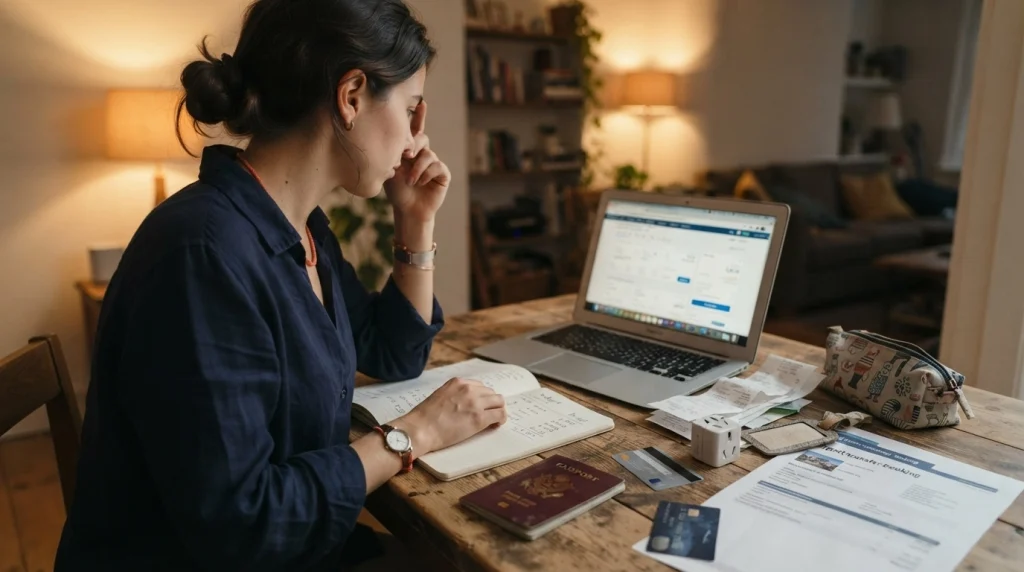
The most common mistakes happen when a traveler compares only the obvious prices. The overlooked details often determine whether the trip still feels affordable after arrival.
Mistake 1: Booking a cheap flight before pricing the trip
A flight sale creates urgency. I resist booking until I’ve checked several nights of accommodation and basic daily costs.
A cheap flight to an expensive destination can still produce an expensive vacation.
Mistake 2: Using someone else’s daily budget
A backpacker staying in dorms may spend much less than someone wanting a private room. A couple may divide costs you will pay alone.
Build your own number from your own travel style.
Mistake 3: Forgetting pre-trip expenses
Some money leaves your account before the first travel day.
- Passport or visa costs when applicable
- Travel insurance
- Luggage
- Travel adapters
- Medication or health preparation
- Airport transport
- SIM or eSIM purchases
These can make a seemingly affordable trip exceed your original plan.
Mistake 4: Cutting accommodation too aggressively
Saving money on a room can make sense. Saving $20 while creating $25 of daily transportation costs doesn’t.
I compare the cost of the room with the cost of living from that location.
Mistake 5: Having no backup payment method
I don’t want one card problem to become a trip problem. I prefer access to a second payment method stored separately.
I also keep some emergency money outside my everyday spending budget.
Mistake 6: Spending every available dollar before departure
A trip budget needs breathing room. Currency movements, transportation problems, weather changes, and ordinary mistakes can all affect spending.
Leave space for uncertainty instead of designing an itinerary that works only if nothing changes.
Section Takeaway: A cheap itinerary isn’t automatically a resilient one. Include overlooked costs and preserve enough flexibility to solve normal travel problems.
Frequently Asked Questions
What is a good budget for a first solo female trip?
There isn’t one universal amount. Your budget depends on where you’re starting, trip length, transportation, accommodation style, and destination. Calculate the whole trip first, then keep an additional cushion for changes and emergencies instead of choosing a random savings target.
Should I choose the cheapest country for my first solo trip?
Not necessarily. Compare total travel cost, transportation simplicity, accommodation location, communication, and your ability to change plans. A destination with slightly higher daily prices may cost less overall if it has inexpensive transport and affordable flights from your home.
How much should I budget per day when traveling alone?
Build your daily amount from actual accommodation, meals, transport, and activities for your dates. Don’t copy a generic figure from another traveler because their room type, travel companion, spending habits, and departure location may be completely different.
Does traveling solo cost more than traveling with someone?
It can in some categories. Private rooms, taxis, rental cars, and certain tours aren’t automatically split with another traveler. However, solo travelers control every spending decision, making it easier to reduce activities, meals, or transport costs when desired.
Should safety expenses be separate from my normal travel budget?
I recommend leaving flexible money available for safer or easier alternatives, such as changing accommodation or taking different transportation. You don’t need to assume problems will happen, but a budget with no room to adapt can limit your choices.
How can I tell whether a destination is too expensive for me?
Add transportation, accommodation, food, local travel, activities, preparation, insurance, and a reasonable backup fund. If the total reaches your maximum before you’ve added any flexibility, shorten the trip, adjust your travel style, or compare another destination.
When should I book once I find an affordable destination?
Book only after checking the major trip costs together and reviewing current destination conditions. For international travel, confirm entry requirements, local laws, health information, and current travel guidance before committing to expensive nonrefundable reservations.
Choose the Destination That Gives Your Budget Room to Breathe
Choosing a solo destination based on budget isn’t about finding the lowest hotel price or cheapest country. It’s about finding a trip you can afford comfortably from departure day through the journey home.
I start with my total budget, price the complete trip, compare several destinations equally, and keep money available for changing plans.
- Set your total spending limit first.
- Compare real prices for your travel dates.
- Include solo-specific costs.
- Research accommodation location and transportation.
- Keep safety and emergency flexibility in the budget.
- Choose value instead of chasing the absolute lowest price.
Once a destination passes those tests, I feel much more confident booking it. My budget isn’t simply paying for the trip; it’s giving me enough freedom to enjoy traveling alone.