How Can a Solo Female Traveler Choose a Mountain Destination?
Quick Answer
A solo female traveler should choose a mountain destination by looking beyond scenery and comparing trail difficulty, transportation, accommodation, phone coverage, weather, altitude, access to medical help, and how easy it is to get assistance. For a first mountain trip, I would favor a well-developed mountain town with marked trails and reliable services rather than an isolated trekking route. Before booking, review current official mountain safety guidance.
What I would check first
- Trail accessibility: Favor marked, commonly used routes that match your hiking experience.
- Reliable transport: Know how you will arrive, leave, and return from trailheads without depending on uncertain rides.
- Good accommodation: Look for staffed lodging in an established town rather than an isolated property.
- Communication: Check cellular coverage and download offline maps before entering mountain areas.
- Emergency access: Research rescue services, medical facilities, local emergency numbers, and evacuation options.
- Current conditions: Check weather, seasonal closures, trail conditions, and official travel advice shortly before departure.
A simple rule
- Choose the mountain destination where solving a delayed bus, bad weather, minor injury, or changed hiking plan would still feel manageable on your own.
Choosing a mountain destination as a solo woman is different from choosing one for a group trip. Beautiful scenery matters, but your real decision should come down to how easily you can move around, get help, change plans, and stay connected.
I like to think about mountain trips in layers. First I check the destination itself, then transportation, hiking difficulty, accommodation, weather, communication, and backup options.
In This Guide
- What Makes a Mountain Destination Good for Solo Female Travel?
- How Should You Compare Mountain Destinations Before Booking?
- What Safety Research Should You Do Before Choosing?
- How Difficult Should Your First Solo Mountain Trip Be?
- What Should You Check Before Making the Final Booking?
- Frequently Asked Questions
- Final Takeaway
What Makes a Mountain Destination Good for Solo Female Travel?
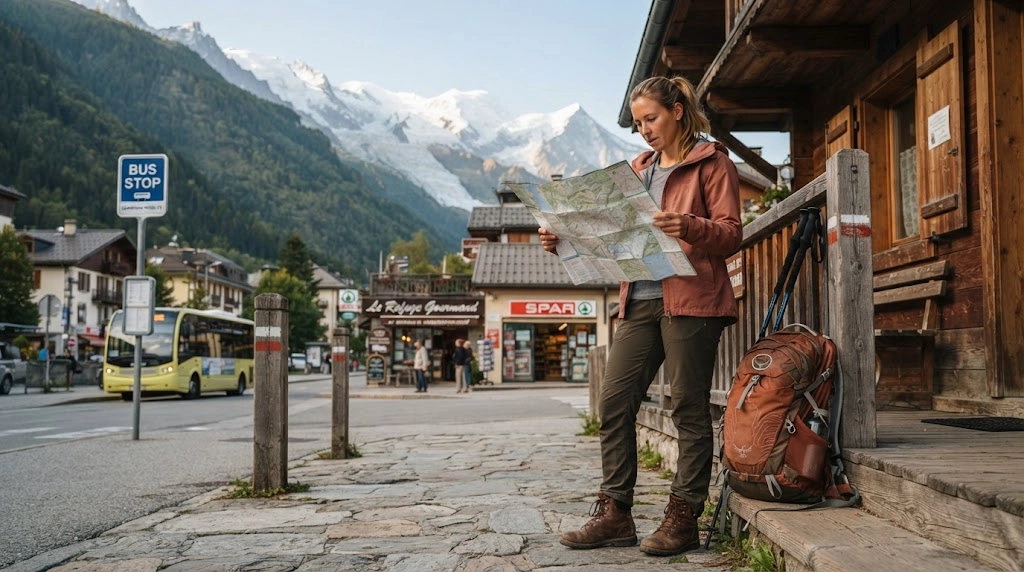
A good mountain destination for a solo female traveler combines natural scenery with enough infrastructure to make everyday problems manageable. You want independence without turning every small change into a logistical emergency.
Solo female mountain travel means visiting a mountain destination independently while managing your own transportation, accommodation, outdoor activities, communication, budget, and safety decisions.
Start with infrastructure, not Instagram views
A destination can look spectacular online while being difficult to navigate without a private car, guide, or local knowledge. That matters much more when nobody else is traveling with you.
Before falling in love with a mountain view, check these basics:
- Arrival options: Can you reach the town by train, scheduled bus, shuttle, or reputable taxi?
- Trail access: Can you reach several hikes without arranging complicated private transportation?
- Food: Are restaurants or grocery stores within walking distance of your accommodation?
- Medical care: Is there a clinic, hospital, pharmacy, or established rescue system nearby?
- Communication: Is phone service available in town and on commonly used trails?
- Tourism infrastructure: Are there staffed hotels, hostels, visitor centers, guides, and organized activities?
A mountain town with several moderate day hikes can often be easier than a famous wilderness route. You still get dramatic landscapes without carrying every piece of your safety plan on your back.
Think about what happens when plans fail
One of my favorite planning questions is simple: What would I do if tomorrow’s plan stopped working? Mountain destinations expose weak backup plans quickly.
Imagine these situations before booking:
- Your afternoon bus is canceled.
- A thunderstorm closes your planned trail.
- Your phone loses reception.
- You wake up with a headache from altitude.
- A trail takes two hours longer than expected.
- Your accommodation cannot arrange the transfer you expected.
If each problem has a straightforward alternative, the destination is probably manageable. If one disruption could leave you stranded, the trip deserves more research.
Choose a destination that fits your independence level
Solo experience matters, but outdoor experience matters too. Being comfortable alone in Paris does not automatically prepare you for navigating an unmarked trail at 3,000 meters.
I would separate mountain trips into three broad levels:
- Easy: Established resort or mountain town, marked day hikes, staffed accommodation, regular public transport, and nearby services.
- Moderate: Longer hikes, fewer transport departures, some remote sections, changing weather, or moderate altitude.
- Advanced: Multi-day trekking, high altitude, limited communication, wilderness camping, technical terrain, or complicated evacuation.
Moving gradually through those levels builds useful experience. It also teaches you which parts of mountain travel you enjoy rather than merely tolerate.
Section Takeaway: A solo-friendly mountain destination is not necessarily the easiest or busiest one. It is the place where transportation, trails, communication, accommodation, and emergency options match your current experience.
How Should You Compare Mountain Destinations Before Booking?
Compare mountain destinations using practical factors you can verify rather than relying on broad statements that one country or town is “safe.” Your goal is to understand how the trip would work hour by hour.
I would score each destination on the same basic questions before paying for flights or accommodation.
| Factor | Easier Solo Mountain Destination | More Demanding Destination |
|---|---|---|
| Arrival | Direct train, bus, or scheduled shuttle | Several transfers or private vehicle required |
| Trails | Marked, maintained, frequently used | Remote or navigation-heavy routes |
| Accommodation | Staffed lodging near town services | Isolated lodging or self-check-in property |
| Phone coverage | Reliable around town and key trail areas | Long sections without service |
| Medical access | Clinic or hospital reasonably accessible | Evacuation may take hours |
| Altitude | Low or moderate elevation | Rapid ascent to high elevation |
| Weather backup | Indoor activities and alternative routes | Trip depends on one outdoor activity |
Look at transportation after dark
Daytime transportation can make a destination appear easier than it is. The important question is what happens when a train arrives late or a hike finishes after your expected return time.
Research:
- Last bus or train times
- Whether taxis use official ranks or booking apps
- How far accommodation is from the station
- Whether your hotel provides transfers
- Whether mountain roads close seasonally
- How transport schedules change on weekends
A destination where you can comfortably return to your accommodation without improvising late at night gets a major advantage.
Compare accommodation by location, not just rating
A beautiful cabin can be a poor solo choice when it sits several kilometers outside town. A simpler hotel beside restaurants and transportation may give you far more freedom.
For mountain trips, I prioritize:
- Staffed reception
- Recent guest reviews
- Secure entry
- Walkable food options
- Easy transportation access
- Clear check-in instructions
- Luggage storage
- Someone available to discuss local trail conditions
A hostel can also work well if you want optional social contact. You can travel independently while still finding hiking partners or joining organized excursions.
Check the season carefully
Mountain travel is extremely seasonal. A route that feels simple in July can become unsuitable after early snow, heavy rain, heat, landslides, or shortened daylight.
Check official or local sources for:
- Typical trail opening dates
- Snow conditions
- Rain or monsoon patterns
- Avalanche information where relevant
- Daylight hours
- Seasonal transportation
- Mountain hut opening periods
Shoulder season can bring lower prices and fewer crowds. It can also mean reduced transportation and unpredictable trail conditions.
Section Takeaway: Compare destinations using logistics you can verify. A place with simple transport, central lodging, marked trails, backup activities, and useful services is usually easier to manage alone.
What Safety Research Should You Do Before Choosing?
Research destination safety at several levels: the country, the mountain region, the town, your accommodation area, and the exact outdoor activities you plan to do. National safety reputations alone are too broad to guide a mountain trip.
As of 2026, official travel guidance remains one of the most useful starting points for checking changing security conditions, local laws, emergency limitations, and destination-specific risks.
Check official travel advice first
For international trips, I would review your own government’s travel advice and compare it with local tourism information. U.S. travelers can use the U.S. State Department travel portal.
Women may face different cultural expectations, harassment patterns, laws, or clothing norms depending on the destination. The State Department also maintains dedicated guidance for women travelers.
- Current regional warnings
- Areas visitors should avoid
- Local laws and customs
- Transportation concerns
- Women-specific information
- Emergency contact information
- Restrictions affecting outdoor travel
Pro tip: Recheck official travel advice shortly before departure. Conditions can change between the day you book and the day you arrive.
Research trail safety separately
A safe tourist town does not make every nearby trail appropriate for solo hiking. Mountain risk changes according to terrain, weather, altitude, remoteness, and your preparation.
Research each serious hike independently:
- Distance
- Elevation gain
- Typical completion time
- Trail markings
- Water availability
- Phone coverage
- Technical sections
- River crossings
- Wildlife concerns
- Escape routes
- Current closures
The State Department’s mountain guidance recommends sharing plans, checking local conditions, preparing for limited connectivity, knowing emergency numbers, and carrying suitable equipment. It also advises travelers to avoid hiking or climbing alone.
If local authorities or official guidance recommends using a guide, treat that as part of your destination decision. In some mountain regions, guides may also be legally required.
Plan communication before you need it
Phone reception often disappears exactly where mountain terrain becomes more serious. Downloading a map is useful, but it should not be your entire emergency plan.
Before leaving town:
- Download an offline map.
- Save your accommodation address offline.
- Save local emergency numbers.
- Tell someone which route you plan to use.
- Agree on a check-in time.
- Carry enough battery for navigation and emergency calls.
- Consider whether remote activities justify a satellite communication device.
A check-in plan should include what your contact should do if you miss the agreed time. Otherwise, it is only a travel update rather than a practical safety system.
Consider medical care and evacuation
Mountain emergencies can require more than normal travel insurance. A standard policy may not cover every altitude, trekking activity, rescue method, or evacuation expense.
Read the policy wording for:
- Emergency medical treatment
- Medical evacuation
- Search and rescue
- Trekking altitude limits
- Skiing or climbing exclusions
- Pre-existing condition rules
- Adventure activity exclusions
The State Department warns that access to medical help may be difficult in remote adventure-travel areas. Evacuation can also be expensive.
For destination-specific health advice, check the CDC Travelers’ Health section before an international trip.
Pro tip: If altitude, vaccines, medication, or a health condition affects your trip, use current medical guidance rather than relying on travel blogs.
Section Takeaway: Treat mountain safety as a chain. Destination conditions, trail difficulty, communication, medical access, weather, and your own experience all need to work together.
How Difficult Should Your First Solo Mountain Trip Be?
Your first solo mountain trip should usually feel slightly easier than the hardest outdoor trip you could manage with companions. Solo travel already adds navigation, transportation, planning, and decision-making responsibilities.
You do not need to prove anything on trip number one.
Choose day hikes before remote multi-day trekking
For a first mountain destination, I would usually choose one base and several optional day hikes. That structure gives you flexibility without requiring you to carry your entire trip between remote overnight stops.
A beginner-friendly structure might look like this:
- Day 1: Arrive during daylight, check into accommodation, and learn the town layout.
- Day 2: Take a short, popular trail with straightforward navigation.
- Day 3: Try a longer hike if weather and energy are good.
- Day 4: Keep a flexible sightseeing or recovery day.
- Day 5: Leave with plenty of time for transportation delays.
This gives you space to adjust. Mountains reward flexible plans more than packed itineraries.
Do not confuse distance with difficulty
A six-mile hike can be harder than a ten-mile hike when it includes steep elevation gain, loose terrain, exposure, altitude, or difficult navigation. Published distance is only one part of the decision.
Check:
- Total elevation gain
- Highest altitude
- Trail surface
- Exposed sections
- Navigation complexity
- Expected weather
- Water sources
- Turnaround points
If you are uncertain, ask a local visitor center, guide, accommodation host, or park ranger about current conditions. Local information can be more useful than an old trail review.
Altitude changes the trip
High altitude deserves separate consideration because fitness alone does not determine how your body responds. Rapid ascent can cause headache, nausea, fatigue, poor sleep, or more serious symptoms.
For higher destinations, build in time to acclimatize rather than arriving and immediately attempting your hardest hike.
- Ascend gradually where possible.
- Hydrate normally.
- Avoid forcing yourself through worsening symptoms.
- Know when descending is the safer decision.
- Research medical guidance before visiting very high elevations.
Mountain destinations become more complicated when high altitude combines with isolation. That is one reason a lower mountain region can make a better first solo experience.
Know when a guide improves the trip
Traveling solo does not mean doing every activity alone. Hiring a licensed guide can be a sensible decision without taking away your independence.
I would strongly consider guided support for:
- Technical climbing
- Glacier travel
- High-altitude trekking
- Remote multi-day routes
- Routes with difficult navigation
- Wildlife-heavy areas
- Regions where regulations require guides
You can also join a guided day hike while keeping the rest of the trip completely independent. That balance works well when you want solo travel without unnecessary outdoor risk.
Section Takeaway: Make the outdoor challenge easier than your maximum ability when you are also handling the entire trip alone. You can increase difficulty after you understand how you respond to solo mountain travel.
What Should You Check Before Making the Final Booking?
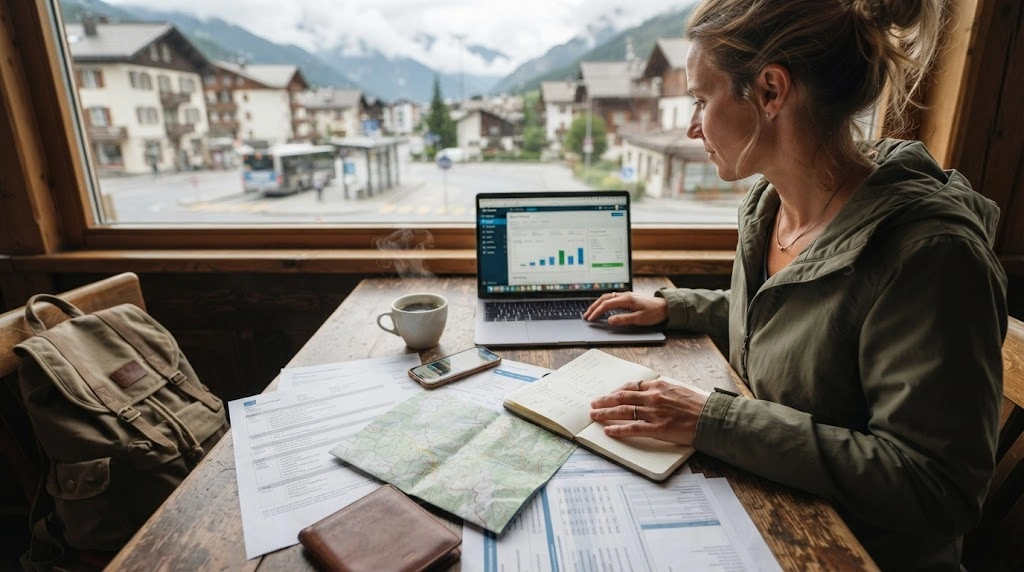
Before booking, run the destination through one final practical test. Imagine yourself arriving tired, experiencing bad weather, changing a hiking plan, and leaving without help from a travel companion.
If those scenarios still feel manageable, you probably have a realistic candidate.
Use this mountain-destination checklist
- Arrival: I know exactly how I will reach my accommodation.
- Timing: I can arrive during daylight or have a reliable late-arrival plan.
- Accommodation: My lodging is in an area where I can comfortably access food and transportation.
- Trails: I have several routes appropriate for my experience.
- Weather: I understand seasonal conditions and have backup activities.
- Transport: I know how to reach and leave the main hiking areas.
- Communication: I understand where phone coverage may disappear.
- Navigation: I can use offline maps and have backup navigation where necessary.
- Emergency help: I know the local emergency number and where medical help is located.
- Insurance: I have checked activity, altitude, rescue, and evacuation coverage.
- Culture: I have researched local expectations affecting women travelers.
- Budget: I have included transfers, activities, insurance, food, and emergency flexibility.
- Exit plan: I can leave the destination without relying on one fragile transportation option.
Use a personal red-flag test
I would pause before booking if several parts of the trip depend on uncertainty. One uncertain element may be manageable; five uncertain elements create unnecessary stress.
Possible red flags include:
- You cannot find dependable transportation information.
- Most accommodation is isolated from town.
- Trail information is outdated or inconsistent.
- Your route requires technical skills you have not practiced.
- The destination has unreliable communication and no clear backup plan.
- You are depending on strangers for essential transportation.
- Weather could close the only route in or out.
- You have not confirmed medical or evacuation coverage.
- Official advice identifies risks that directly affect your route.
None of these automatically makes a destination impossible. They tell you where you need a stronger plan, a guide, a different season, or another destination.
Pick the destination that leaves room for enjoyment
The best mountain destination is not the place where you spend every hour proving you can cope alone. It should give you enough structure to relax and enjoy being there.
A manageable destination leaves mental space for the good parts:
- Watching sunrise without worrying about the return bus
- Taking an unplanned café break
- Changing trails when clouds move in
- Joining a group hike when you feel social
- Taking a rest day without damaging the whole itinerary
That flexibility is one of the biggest advantages of solo travel. Build the trip so you can use it.
Section Takeaway: The right mountain destination should give you choices. If you have several ways to spend the day, get around, find help, and change plans, solo travel becomes much easier to enjoy.
Frequently Asked Questions
Are mountain destinations safe for solo female travelers?
Many mountain destinations can work well for solo female travelers, but safety depends on the specific region, transportation, trail conditions, accommodation, weather, communication, and planned activities. Research the exact destination instead of relying on a country’s general reputation.
Should a woman hike alone on a solo mountain trip?
Official mountain-safety guidance generally advises against hiking or climbing alone, especially in remote areas. If you are traveling independently, you can still join guided hikes, choose busy established trails, or arrange activities through reputable local operators.
What type of mountain destination is best for a first solo trip?
A developed mountain town with regular transportation, staffed accommodation, marked day hikes, phone coverage, restaurants, and nearby medical services is usually easier for a first trip than an isolated wilderness destination or multi-day trek.
How do I know if a mountain trail is too difficult for me?
Check more than mileage. Compare elevation gain, altitude, terrain, technical sections, navigation, weather exposure, water availability, expected hiking time, and your previous experience. Choose a route comfortably within your abilities when hiking without familiar companions.
What should I do if there is no phone signal in the mountains?
Download offline maps, save emergency information, tell someone your planned route and return time, and carry backup power. For remote destinations, research whether a satellite communication device is appropriate rather than assuming cellular service will be available.
Should I buy travel insurance for a mountain trip?
Travel insurance can be especially important for mountain travel, but coverage varies. Check medical treatment, evacuation, search and rescue, altitude limits, hiking or trekking exclusions, skiing, climbing, and any adventure activities you plan to do before purchasing a policy.
Is it better to stay in a hotel or hostel on a solo mountain trip?
Either can work. A staffed hotel may provide privacy and easy local assistance, while a well-reviewed hostel can make it easier to meet other travelers or find companions for day activities. Location, security, transportation, and reception availability matter more than the label.
Final Takeaway
When choosing a mountain destination as a solo female traveler, start with manageability rather than popularity. The best choice is a place where the trails, transportation, accommodation, weather, communication, medical access, and cultural environment fit your experience.
You do not need the most adventurous destination for the trip to feel adventurous. A well-chosen mountain town can give you independence, challenging scenery, and enough backup options to enjoy the experience instead of constantly troubleshooting it.
Before you book, compare two or three destinations using the same checklist. The differences become much clearer when you stop asking, “Which mountain is prettiest?” and start asking, “Which trip can I confidently manage on my own?”