Which Factors Should a Woman Compare Before Choosing a Solo Travel Destination?
Quick Answer
Before choosing a solo travel destination, compare safety, transportation, accommodation location, total trip cost, local culture, communication, healthcare access, and emergency options. I also recommend checking the current official destination travel guidance before booking because conditions can change quickly.
Compare these factors first
- Safety conditions: Look beyond country-wide labels and research the neighborhoods, transport routes, and situations your itinerary will involve.
- Transportation: Check airport transfers, public transit, reputable taxi options, walking conditions, and how you would return after dark.
- Accommodation: Compare location, secure access, reception hours, recent guest feedback, and distance from transport and food.
- Real trip cost: Include lodging, meals, transport, attractions, mobile data, insurance, airport transfers, and a flexibility buffer.
- Local culture: Research clothing expectations, laws, public behavior, alcohol rules, and attitudes toward women traveling independently.
- Backup options: Know how you would change hotels, get medical care, replace documents, contact someone, or leave an uncomfortable situation.
My simple decision rule
- Choose the destination whose ordinary daily logistics feel manageable when you imagine handling them alone and tired.
Choosing a solo destination isn’t just about finding somewhere beautiful. The better question is whether that place fits your confidence, budget, travel experience, and comfort with managing problems alone.
When I compare destinations, I think about an ordinary Tuesday rather than an Instagram highlight reel. I picture arriving with luggage, finding dinner after sunset, getting back to my accommodation, and changing plans if something goes wrong.
In This Guide
- What factors should you compare before choosing a solo destination?
- How should you compare safety between destinations?
- How easy will the destination be to navigate alone?
- How should you compare the real cost of solo travel?
- How much do culture and communication matter?
- Which destination fits your personal travel style?
- Frequently asked questions
What Factors Should You Compare Before Choosing a Solo Destination?
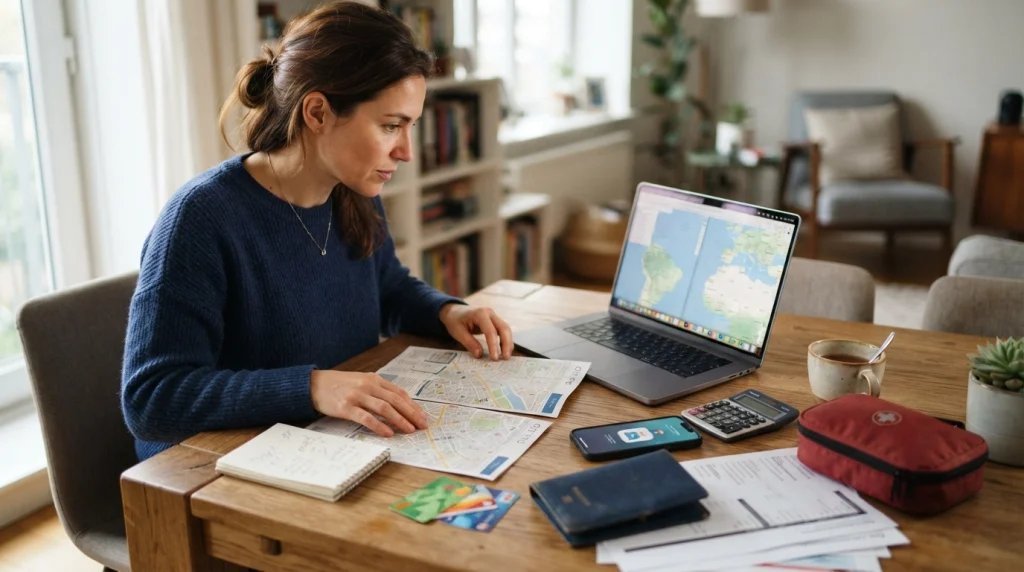
Compare destinations using the same set of practical factors. That gives you a much clearer answer than relying on broad labels such as “safe,” “cheap,” or “good for women.”
Solo female travel means traveling without a companion while making your own decisions about accommodation, transportation, activities, money, communication, and personal safety.
Because you won’t automatically have another person to share decisions with, small inconveniences can matter more. A confusing airport transfer or isolated hotel may affect your experience more than a famous attraction improves it.
- Current safety: Research government guidance, neighborhood conditions, common visitor problems, demonstrations, scams, and local laws.
- Arrival logistics: Check how you’ll travel from the airport or station to your accommodation.
- Daily transport: Compare metro systems, buses, walking, taxis, ride-hailing, and late-night service.
- Accommodation location: Look at the surrounding streets, transport access, food options, and reception arrangements.
- Total cost: Compare realistic daily spending instead of airfare alone.
- Language: Consider how easily you can navigate transport, order food, seek help, and handle unexpected changes.
- Culture and laws: Research clothing, alcohol, public behavior, photography, relationships, and rules affecting women.
- Health support: Consider medical facilities, prescriptions, insurance, climate, food safety, and destination-specific health advice.
- Connectivity: Check mobile data, local SIM or eSIM options, Wi-Fi, offline maps, and translation tools.
- Backup plans: Ask what you would do if your accommodation, transport, phone, passport, or itinerary suddenly failed.
I give extra weight to factors that affect every day of the trip. Convenient transportation usually matters more than one attraction I’m excited to see.
The same applies to accommodation. Saving a little on a room isn’t worthwhile if reaching it alone becomes stressful every evening.
| Factor | Lower-friction sign | Reason to research deeper |
|---|---|---|
| Airport arrival | Direct train, bus, shuttle, or clear licensed taxi system | Several transfers or limited late-night transport |
| Accommodation | Food and transport within an easy walk | Isolated area or regular dependence on taxis |
| Daily transport | Two realistic ways to return to your base | One service with limited hours |
| Communication | Reliable data, clear signage, or easy translation support | Limited connectivity plus a large language barrier |
| Budget | Room for transport changes and unexpected expenses | One hotel change or taxi would strain your funds |
Section Takeaway: Compare how the destination functions, not just how appealing it looks. Daily logistics often determine whether a solo trip feels enjoyable or exhausting.
How Should You Compare Safety Between Solo Travel Destinations?
Don’t compare destinations using one safety score. Compare the specific risks, neighborhoods, transportation conditions, laws, and situations that match your itinerary.
Official guidance for women travelers notes that local customs, transportation safety, healthcare, and laws affecting women can differ significantly between destinations. These details deserve destination-specific research.
Start with current official information
Check the latest advisory published by your own government when possible. U.S. travelers can review the U.S. State Department travel advisories.
Government advisories are not personal guarantees of safety. They are one layer of evidence that helps you identify current risks and areas requiring extra research.
- Read the details: Don’t stop at an advisory level or headline.
- Check geographic differences: Conditions can vary between regions and neighborhoods.
- Note transport concerns: Look for warnings involving roads, taxis, trains, demonstrations, or night travel.
- Review local laws: Rules around alcohol, medication, photography, clothing, and public behavior can affect travelers.
- Look at recent updates: Political unrest, severe weather, strikes, and health conditions can change quickly.
Research the places your itinerary actually uses
A country’s overall reputation may tell you little about the streets around your hotel. I care more about my airport route, accommodation neighborhood, transport hubs, and evening plans.
Search recent reviews from multiple sources, but watch for repeated patterns rather than dramatic single stories. Several travelers describing the same transport scam is more useful than one viral post.
Think about safety after dark
A destination can feel straightforward at noon and much harder at 10 p.m. Compare operating hours, lighting, foot traffic, taxi availability, and how far you’ll walk from stops to your accommodation.
- Can you eat dinner without facing a long walk home?
- Does public transportation still run when your planned activities end?
- Are licensed taxis or reputable app-based rides available?
- Could you change your route without becoming stranded?
The State Department recommends researching licensed transportation and arranging airport transport carefully, particularly when traveling alone. It also suggests checking local authorities or tourism officials for destination-specific transport information.
Pro tip: Safety conditions change. Check your government’s current destination advisory shortly before booking and again before departure.
Section Takeaway: Safety is itinerary-specific. Compare the situations you’ll realistically face instead of treating an entire country as one uniform risk level.
How Easy Will the Destination Be to Navigate Alone?
Transportation and accommodation should work together. A wonderful hotel in an awkward location can create more daily stress than a simpler room near reliable transport.
This factor matters even more on a first solo trip. Every transfer requires you to manage directions, belongings, payment, timing, and unexpected changes yourself.
Map your arrival before you book
I like to compare the entire arrival route before choosing a hotel. I want to know how the journey works from the terminal door to reception.
- Find the airport or station you’ll actually use.
- Check official public transport options.
- Research licensed taxi or ride-hailing alternatives.
- Check service hours against your scheduled arrival.
- Estimate walking distance with luggage.
- Identify one backup option.
A route with one simple train may suit a first-time traveler better than a cheaper destination requiring three transfers. Ease has value.
Compare accommodation by location, not room photos
The State Department’s lodging guidance recommends researching accommodation before travel and considering proximity to transportation and important services. It also advises having backup lodging options.
- Transport distance: Check the walk to metro, bus, or train services.
- Nearby food: Make sure you can get meals without difficult evening journeys.
- Reception: Confirm check-in hours if you arrive late.
- Secure access: Look for controlled entry and sensible room-security arrangements.
- Recent feedback: Read newer reviews, especially comments from solo travelers.
- Luggage storage: Check arrangements for early arrival or late departure.
Ask what happens when Plan A fails
This question separates an easy destination from a fragile itinerary. Imagine your train is canceled, your phone battery dies, or you dislike your accommodation.
You don’t need a detailed disaster plan. You need realistic alternatives.
- Can you take another form of transport?
- Are other hotels nearby?
- Can you navigate offline?
- Do you have enough money for an unexpected taxi?
- Can you contact your accommodation without mobile data?
Section Takeaway: A manageable solo destination gives you options. The easier it is to recover from a small problem, the less stressful independent travel becomes.
How Should You Compare the Real Cost of Solo Travel?
Compare the complete trip cost, not just the airfare or nightly room rate. Solo travelers often pay fixed costs alone rather than splitting them with a companion.
A destination with a cheap flight can still become expensive once you add airport transfers, transport, attraction tickets, insurance, and accommodation in a practical neighborhood.
Build one realistic daily budget
I find one normal sightseeing day more useful than an optimistic trip total. Price what you’d realistically eat, visit, and use.
| Cost category | What to check | Easy-to-miss expense |
|---|---|---|
| Accommodation | Nightly rate, taxes, city fees, breakfast | Paying more later to escape a poor location |
| Airport transfer | Train, bus, shuttle, licensed taxi | Late-arrival taxi or surcharge |
| Local transport | Fares, passes, taxis, intercity transfers | Extra rides after plans change |
| Food | Meals, water, coffee, service charges | Tourist-area pricing |
| Activities | Tickets, tours, reservations, equipment | Booking and entrance fees |
| Connectivity | SIM, eSIM, roaming, portable Wi-Fi | High roaming charges |
| Protection | Travel insurance and emergency funds | Medical or trip-change costs |
Include a flexibility buffer
A solo budget shouldn’t be so tight that one problem becomes a crisis. Leave room for a taxi, replacement ticket, different room, pharmacy visit, or extra night.
That buffer can influence which destination makes sense. A place may be affordable on paper yet unsuitable if your budget leaves no room to change plans.
Compare value, not just price
Paying slightly more for a well-connected neighborhood can reduce transport costs and improve your evenings. Sometimes the more expensive room creates the cheaper overall trip.
The same applies to direct transport. Spending more on a simple airport transfer may be worthwhile after a long overnight flight.
Section Takeaway: The best budget is not the lowest possible number. Compare what it costs to travel comfortably while keeping enough flexibility to solve problems independently.
How Much Do Culture and Communication Matter for a Woman Traveling Alone?
Culture and communication can change how demanding a destination feels. Neither needs to be familiar, but you should understand the extra effort involved.
Official guidance for women travelers recommends researching local customs because expectations around women’s clothing, behavior, and public interactions can differ substantially between countries.
Research the rules you could encounter every day
- Clothing: Check expectations in religious sites and conservative areas.
- Alcohol: Understand where drinking is legal and socially accepted.
- Photography: Research restrictions involving government buildings, people, or religious sites.
- Public behavior: Learn local expectations around affection, loud behavior, and social etiquette.
- Medication: Confirm whether prescription or over-the-counter medicines face restrictions.
- Interactions with men: Read recent female-traveler accounts for practical cultural context.
Don’t assume unfamiliar customs automatically make a destination unsuitable. Preparation can make a large difference.
Decide how much language friction you want
You don’t need everyone to speak English. You do need a workable strategy for directions, transport, accommodation, food, and emergencies.
- Download an offline translation package.
- Save your accommodation address in the local language.
- Download offline maps.
- Save essential transport routes before leaving Wi-Fi.
- Learn a few phrases for help, directions, and basic courtesy.
A substantial language barrier becomes harder when combined with confusing transport and weak mobile data. Compare challenges together rather than separately.
Consider how visible you may feel
Travel experiences can differ based on appearance, nationality, clothing, disability, or other visible characteristics. Research perspectives from travelers whose experiences may be relevant to yours.
That doesn’t mean assuming another person’s experience will become yours. It gives you more context for making your own decision.
Pro tip: Check current local laws and destination-specific guidance from official government or tourism sources instead of relying only on old forum posts.
Section Takeaway: Cultural difference isn’t automatically a disadvantage. What matters is whether you understand the expectations and feel comfortable managing them independently.
Which Destination Fits Your Personal Solo Travel Style?

The right destination depends on the traveler. Two women can research the same city and reasonably reach different decisions.
I compare destinations against the amount of challenge I want on that particular trip. Sometimes I want stimulation and complexity; other times I want simple trains and an easy routine.
First-time solo traveler
If this is your first trip alone, reducing logistical friction can make the learning curve easier. One city or region for four to seven nights is often simpler than a fast multi-stop itinerary.
- Simple airport connection
- Reliable public transportation
- Accommodation in an active area
- Easy access to food and daily services
- Reliable mobile data
- Several ways to spend the day independently
Occasional solo traveler
You may feel comfortable accepting one or two extra challenges. Perhaps the language is harder, transport requires more planning, or the itinerary includes several bases.
The key is knowing which type of difficulty energizes you. Don’t stack every challenge into one trip unless that’s intentional.
Experienced solo traveler
Experience can expand your options, but it doesn’t remove the need for research. Current transport conditions, laws, weather, health risks, and political situations can change.
Confidence should improve your planning rather than replace it.
Use a simple comparison scorecard
Instead of asking which destination is “best,” rate how each option fits your own needs. A simple three-level system is enough.
| Question | Easy fit | Manageable | Needs deeper research |
|---|---|---|---|
| Can I reach my accommodation easily? | Simple direct route | One manageable transfer | Complex or uncertain arrival |
| Can I afford flexibility? | Comfortable buffer | Small buffer | Budget depends on nothing going wrong |
| Can I navigate independently? | Multiple clear options | Some planning required | Limited options or confusing routes |
| Do local norms feel manageable? | Comfortable | Requires preparation | Important restrictions need research |
Look at the pattern rather than adding points mechanically. If every concern centers on late-night transportation, changing your flight or accommodation may solve the problem.
That’s why destination selection shouldn’t end with “yes” or “no.” Sometimes the better answer is a different neighborhood, season, itinerary, or arrival time.
As of 2026, I still prefer current official information over any permanent list of supposedly ideal solo destinations. Conditions and your own needs both change.
Section Takeaway: Choose the destination that fits the traveler you are now, not the traveler you think you should be. A manageable trip can still be adventurous.
Frequently Asked Questions
What is the most important factor when choosing a solo travel destination?
Start with how the trip will function day to day. Compare safety, accommodation location, airport arrival, transportation, communication, costs, and backup options together rather than judging a destination from one factor.
How do I know whether a destination is safe for a woman traveling alone?
Check current government travel guidance, local laws, neighborhood-level information, transportation conditions, and recent traveler reports. Then compare those findings with the exact places and activities on your itinerary rather than relying on a generic safety ranking.
Should my first solo destination be somewhere English is widely spoken?
Not necessarily. A language barrier can be manageable when transportation is clear, mobile data works well, signage is understandable, and translation tools are available, but combining difficult communication with complex logistics may make a first trip more demanding.
Is a hostel or hotel better for a first solo trip?
Neither is automatically better. Compare location, secure access, recent reviews, reception hours, privacy, social atmosphere, lockers or room security, and proximity to transport before deciding which accommodation style suits you.
How much emergency money should I keep for a solo trip?
There is no universal amount because costs vary by destination. Keep enough accessible backup money to cover realistic problems such as an unexpected taxi, new ticket, hotel change, pharmacy purchase, meal, or an additional night.
Should I avoid destinations with a higher government travel advisory?
Read the full advisory instead of relying only on its headline or level. Check which risks and geographic areas it covers, then follow the guidance issued by your own government and consider how those conditions affect your specific itinerary.
What should I check immediately before booking?
Recheck current travel guidance, entry requirements, accommodation location, airport transport, cancellation terms, estimated total costs, and insurance coverage. Confirming these details can reveal problems that weren’t obvious when you first became interested in the destination.
Final Takeaway: Choose the Trip You Can Navigate With Confidence
A good solo destination isn’t simply the safest, cheapest, closest, or most popular option. It’s the place where safety, logistics, cost, culture, communication, and your personal comfort level work together.
Before booking, imagine the ordinary moments: arriving tired, finding dinner, taking transport after sunset, losing mobile data, or needing to change plans. If you can picture yourself handling those situations with reasonable confidence, you’ve learned far more than any “best destinations” list can tell you.
Do your research, keep a backup plan, and choose a trip that feels exciting without requiring you to ignore practical concerns. That’s the balance I look for in a strong solo destination.