Are Hiking Backpacks Allowed As Carry On Bags on Flights
Are hiking backpacks allowed as carry-on bags on flights? In most cases, yes! This guide explores airline size limits, packing strategies, and how to choose the right hiking backpack for carry-on use. Travel smart and avoid surprises at the airport by understanding the key rules and tips for flying with your hiking backpack.
Key Takeaways
- Carry-on size limits vary: Airlines set specific dimensions your hiking backpack must meet to qualify as carry-on luggage.
- Hiking backpacks can be carry-on: Many hiking backpacks fit within standard carry-on size limits, especially smaller or compressible models.
- Check airline policies: Always verify your airline’s carry-on rules before your flight to avoid surprises at the gate.
- Packing smart helps: Organizing and compressing your gear can make your hiking backpack easier to carry on board.
- Consider backpack features: Look for backpacks with stowable straps and a sleek profile to meet carry-on requirements.
- Be prepared to gate-check: If your backpack is oversized, some airlines may require you to check it at the gate.
- Weight restrictions matter: Besides size, be mindful of weight limits to avoid additional fees or difficulties carrying your pack.
Are Hiking Backpacks Allowed As Carry On Bags on Flights?
Planning to fly with your hiking backpack? You might wonder if hiking backpacks are allowed as carry-on bags on flights. The good news is, in many cases, they are! This guide will walk you through everything you need to know about airline carry-on rules, how to pick the right hiking backpack for flying, packing tips, and what to expect at the airport. By the end, you’ll feel confident traveling with your hiking backpack as carry-on luggage.
Understanding Airline Carry-On Size and Weight Restrictions
Every airline sets its own rules for carry-on luggage. These typically include maximum dimensions and weight limits. Knowing these is crucial to avoid hassles at check-in or boarding.
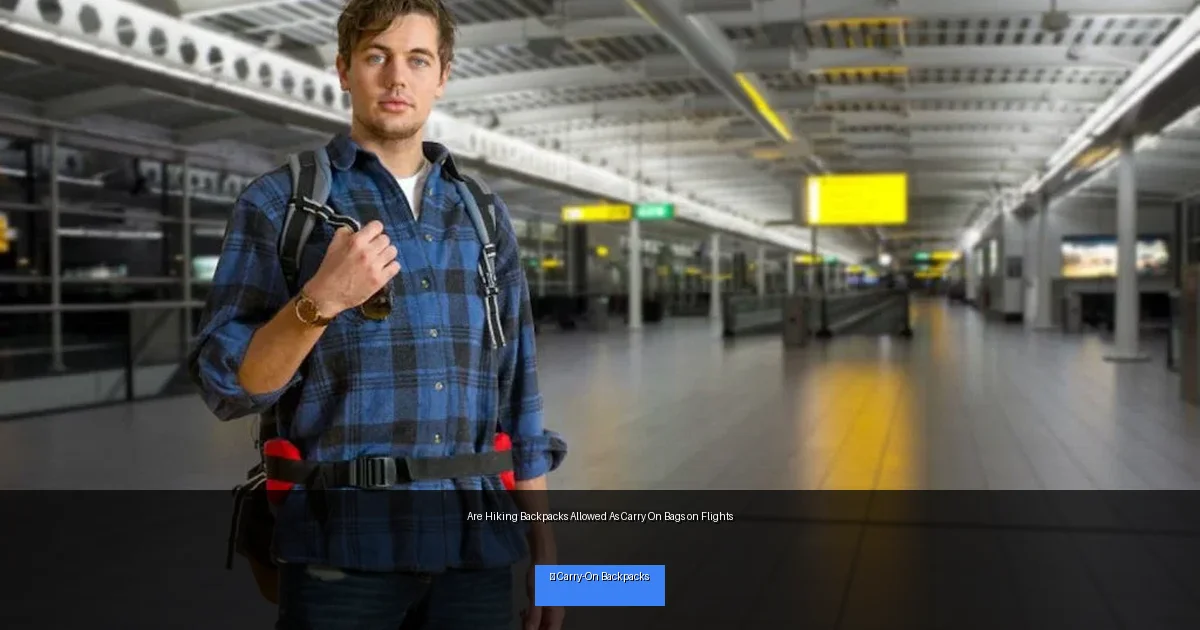
Visual guide about Are Hiking Backpacks Allowed As Carry On Bags on Flights
Image source: leisurehiking.com
Common Size Limits
- Typical maximum dimensions are around 22 x 14 x 9 inches (56 x 36 x 23 cm), but this can vary.
- Some airlines allow slightly larger or smaller bags.
- Backpacks with external pockets or straps that stick out may be measured differently.
Weight Restrictions
- Weight limits for carry-ons vary widely, from 15 to 22 pounds (7 to 10 kg) on many airlines.
- Check your airline’s official website for exact limits.
- Some airlines focus more on size than weight, but it’s best to pack light.
Can Hiking Backpacks Qualify as Carry-On Bags?
Hiking backpacks come in many shapes and sizes. Whether yours can be a carry-on depends mainly on its size and how you pack it.
Smaller Hiking Backpacks
Backpacks around 30-40 liters often fit within airline carry-on size limits when packed efficiently. These are ideal if you want to avoid checking luggage.
Larger or Bulky Hiking Backpacks
Bigger packs, especially over 50 liters, usually exceed carry-on size limits. They may need to be checked or gate-checked, depending on the airline.
Backpack Features That Help
- Backpacks with compressible or removable frames.
- Models with straps that can be stowed or tucked away.
- Backpacks designed with travel in mind, featuring sleek profiles.
How to Measure Your Hiking Backpack for Carry-On Use
Measuring your backpack correctly helps you know if it meets airline requirements.
Step 1: Gather Your Tools
- Tape measure or ruler
- Flat surface for accuracy
Step 2: Measure the Backpack
- Height: From bottom to top, including any extended parts.
- Width: Widest side to side measurement.
- Depth: Front to back, including pockets and straps.
Step 3: Consider Packed Size
Sometimes your backpack compresses smaller when packed smartly. Measure it with clothing or gear inside to get a realistic size.
Tips for Packing Your Hiking Backpack as Carry-On
Packing right can make your backpack fit carry-on limits and make your travel easier.
Use Packing Cubes or Compression Bags
- Compress bulky clothes to save space.
- Keep gear organized and easy to access.
Distribute Weight Evenly
Pack heavier items close to your back to keep the backpack balanced and comfortable to carry through the airport.
Remove or Tuck Away Straps
Stow loose straps inside the pack or secure them tightly to avoid exceeding size limits.
Limit Non-Essential Gear
Only bring what’s necessary for your trip to avoid overpacking and oversized bags.
Checking Airline Policies Before You Fly
Each airline may have unique rules for carry-on bags.
Visit the Airline Website
Look for carry-on baggage size and weight limits.
Contact Customer Service If Unsure
Ask about hiking backpacks specifically, as some airlines have special requirements.
Check for Fees
Some budget airlines charge for carry-ons or have strict size rules.
What to Expect at the Airport with a Hiking Backpack Carry-On
Knowing what happens at security and boarding helps you prepare.
Security Screening
- You’ll place your backpack on the scanner belt.
- Be ready to remove electronics or liquids as required.
Gate Check Possibility
If your backpack is borderline in size, gate agents may ask you to check it at the door. This is usually free, but it means you’ll get your bag back at the plane’s exit.
Boarding Comfort
Backpacks are easy to manage during boarding and in overhead bins if sized right.
Troubleshooting Common Issues
Backpack Too Big for Carry-On
- Consider using a smaller backpack or travel duffel.
- Check the bag at the gate to avoid checked bag fees.
Straps Getting Caught or Blocking Overhead Space
- Use straps covers or tuck them inside the pack.
- Choose backpacks designed for travel with minimal external attachments.
Weight Over Limit
- Remove non-essentials or shift items to checked luggage.
- Weigh your backpack before heading to the airport.
Conclusion
Yes, hiking backpacks are allowed as carry-on bags on flights as long as they meet the airline’s size and weight restrictions. Selecting the right backpack, packing smartly, and checking your airline’s policies will make your travel smooth and stress-free. Remember to measure your pack, organize your gear efficiently, and be ready for possible gate checks on larger packs. With these tips, you’ll be ready to hit the trail right after your flight without worrying about your luggage!