How Can a Shy Woman Prepare for Her First Solo Trip?
Quick Answer
If you’re wondering how can a shy woman prepare for her first solo trip, start small instead of trying to become fearless first. Practice independent outings, choose an easy destination, plan arrival details carefully, and review official travel guidance for women before leaving.
A simple first-trip preparation plan
- Practice locally: Spend an afternoon eating, navigating, and exploring somewhere alone.
- Keep it short: Consider a two- to five-night trip instead of starting with several weeks.
- Choose simplicity: Pick one well-connected base with easy transportation and plenty of daytime activities.
- Plan your arrival: Know exactly how you’ll travel from your arrival point to your accommodation.
- Control social pressure: Book optional group activities without making your trip depend on meeting people.
- Create backups: Save emergency contacts, offline directions, payment options, and important booking details.
Remember
- Being shy doesn’t mean you need to become outgoing before traveling. You need a trip designed around how you comfortably make decisions and interact with people.
Preparing for a first solo trip as a shy woman is less about changing your personality and more about reducing unnecessary uncertainty. You can travel independently without becoming the loudest person in the hostel common room.
My favorite approach is to make the trip slightly challenging, not emotionally exhausting. In this guide, I’ll show you how to build confidence, choose an easier first destination, plan safety, handle social situations, and recover when you feel overwhelmed.
In This Guide
- How Can a Shy Woman Build Confidence Before Traveling Alone?
- What Kind of First Solo Trip Is Easiest for a Shy Woman?
- How Should You Plan Safety and Practical Details?
- How Can a Shy Solo Traveler Handle Social Situations?
- What Should You Do If You Feel Overwhelmed During the Trip?
- Frequently Asked Questions
How Can a Shy Woman Build Confidence Before Traveling Alone?
A shy woman can build solo travel confidence by practicing small pieces of the trip before departure. The goal isn’t eliminating nervousness; it’s making unfamiliar tasks feel familiar.
Solo female travel means traveling without a companion while independently managing transportation, accommodation, meals, activities, money, safety decisions, and your daily schedule.
Start with a solo practice ladder
You don’t need an international flight to learn whether eating alone makes you uncomfortable. Start close to home and increase the difficulty slowly.
- Take yourself for coffee: Stay for 30 to 60 minutes without hiding behind constant phone use.
- Eat one meal alone: Choose somewhere casual and order normally.
- Explore an unfamiliar neighborhood: Navigate there and back independently.
- Take a day trip: Handle transport, food, sightseeing, and timing yourself.
- Spend one night away: Practice checking in, going to dinner, and returning to your accommodation alone.
Each practice outing answers a useful question. You discover what makes you nervous before you’re hundreds of miles from home.
This gradual approach also matches a common recommendation in recent solo-travel guidance: ease into independent travel through smaller experiences first. You can read more solo travel tips from Lonely Planet while planning.
Practice the tiny conversations that travel requires
Shy travelers sometimes imagine solo travel requires constantly approaching strangers. Most necessary interactions are much smaller.
- “Hi, I’d like to check in.”
- “Does this train go to the city center?”
- “Could I have a table for one?”
- “Where is platform four?”
- “Is this seat taken?”
- “Could you show me where that is on the map?”
Practice saying these sentences aloud before leaving. Rehearsing simple phrases reduces the mental load when you’re already processing a new environment.
Create evidence that you can solve problems alone
Confidence usually grows after action, not before it. Give yourself small problems to solve during your practice outings.
- Find an alternative route when a bus is late.
- Ask staff for directions instead of calling someone at home.
- Choose a restaurant without another person’s approval.
- Change plans when weather affects an activity.
- Spend an hour alone without filling every minute.
One lesson I return to is simple: independence doesn’t always feel dramatic. Sometimes it’s quietly changing a plan, buying dinner, finding your platform, and realizing nobody else had to make those decisions for you.
Section Takeaway: You don’t need to become less shy before traveling. Build confidence by repeatedly practicing the exact small tasks you’ll perform during the trip.
What Kind of First Solo Trip Is Easiest for a Shy Woman?
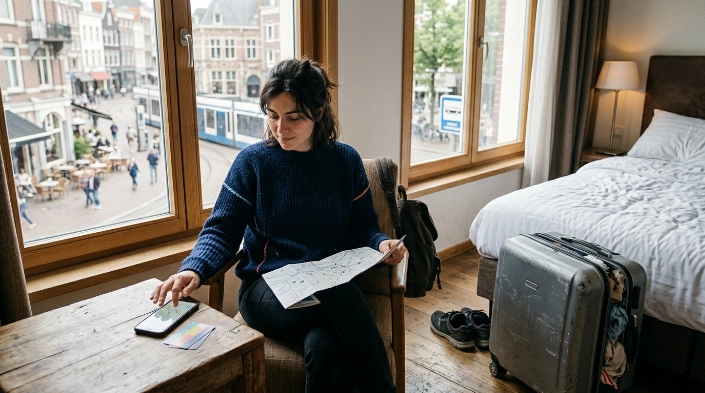
An easier first solo trip usually has one base, straightforward transportation, flexible activities, and enough services nearby to change plans. Avoid creating unnecessary logistical pressure.
Choose a manageable trip length
There’s no universal perfect duration. For a nervous beginner, however, a short trip gives you enough experience without making the commitment feel endless.
| Trip format | Typical length | Logistical pressure | Social pressure | Best use |
|---|---|---|---|---|
| Local solo outing | 4–8 hours | Low | Low | Building basic confidence |
| Overnight practice trip | 1 night | Low to moderate | Low | Testing evenings and accommodation |
| Weekend trip | 2–3 nights | Moderate | Low to moderate | First complete solo experience |
| Starter vacation | 3–5 nights | Moderate | Flexible | Experiencing a fuller solo routine |
| Long first trip | 7+ nights | Higher | Variable | Travelers already comfortable alone |
I treat these as planning ranges, not rules. A shy but experienced independent commuter may feel comfortable faster than someone taking her first trip away from home.
Choose one base instead of moving every day
Changing accommodation creates repeated checkouts, unfamiliar neighborhoods, luggage handling, and transport decisions. Staying in one place removes several stress points.
You can still take day trips. The difference is that you return to a familiar room each evening.
Look for an easy daily environment
Your first destination doesn’t need to be boring. It should simply give you options when your confidence or energy changes.
I look for these features when designing a lower-pressure first trip:
- Frequent public transportation or straightforward taxi options.
- Accommodation near restaurants and useful services.
- Several daytime attractions within a compact area.
- Staffed hotels, hostels, or guesthouses with recent reviews.
- Walking tours, classes, or other optional group activities.
- Places where solo diners aren’t unusual.
- Enough backup activities for bad weather.
Don’t choose your destination to prove something
A complicated destination doesn’t make your first solo trip more legitimate. Neither does crossing an ocean.
A nearby city can teach you navigation, budgeting, solo dining, problem-solving, and personal safety. Those skills transfer to bigger trips later.
Section Takeaway: Make your first trip simple enough that you can focus on learning how you travel alone. One base, manageable transport, and flexible days remove unnecessary pressure.
How Should You Plan Safety and Practical Details?
Good solo female travel safety planning focuses on reducing avoidable uncertainty. Know where you’re staying, how you’re arriving, how you’ll communicate, and what you’ll do if the original plan fails.
Plan your first two hours in detail
Your arrival deserves more planning than your second museum. Being tired, carrying luggage, and entering an unfamiliar place can make simple decisions feel harder.
Before departure, save these details offline:
- Accommodation name, address, and phone number.
- Check-in hours and instructions.
- Airport, station, or bus-terminal arrival details.
- Your preferred route to the accommodation.
- A backup transportation option.
- A screenshot or offline map of the surrounding streets.
- The location of a nearby café, store, or staffed public place.
When possible, I prefer arriving with enough time to understand the neighborhood before I’m tired. If you must arrive late, make the final transportation step especially clear.
Research the neighborhood, not just the hotel
A beautiful room doesn’t help much if returning there creates stressful transportation every evening. Look beyond photos and room ratings.
- Check access to public transportation.
- Read recent reviews mentioning the surrounding area.
- Check reception and entrance procedures.
- Confirm how room doors and lockers work.
- Look at the route from dinner areas or evening activities.
- Know whether ride services or licensed taxis operate there.
Create a communication plan
You don’t need to report every movement to someone at home. A simple check-in routine can still provide reassurance.
- Share your accommodation details with someone you trust.
- Send your main transportation itinerary.
- Agree on a normal check-in schedule.
- Explain what they should do if they cannot reach you.
- Keep one emergency contact written outside your phone.
For eligible U.S. international travelers, the State Department’s Smart Traveler Enrollment Program provides embassy or consulate alerts and emergency-related information.
Prepare money, documents, and your phone
Don’t keep every important item in one wallet or bag. A single loss shouldn’t remove all access to money or identification.
- Carry at least two usable payment methods when possible.
- Keep backup money separate from your main wallet.
- Store secure digital copies of important documents.
- Download offline maps before arrival.
- Save booking confirmations offline.
- Carry a charging cable and practical backup power.
- Confirm roaming, eSIM, or local SIM options before departure.
Check official information before international travel
As of 2026, conditions can change after you book. Recheck destination-specific entry, safety, transportation, and health information shortly before departure.
The U.S. State Department provides current international planning and advisory resources. The CDC’s pre-travel guidance also explains how to review destination-specific health information before international trips.
Pro tip: For international travel, verify safety guidance, entry rules, and health requirements through official government sources close to your departure date rather than relying on an old blog post or social-media video.
Section Takeaway: Detailed arrival planning, reliable communication, backup money, offline information, and current official guidance matter more than trying to predict every possible problem.
How Can a Shy Solo Traveler Handle Social Situations?
You don’t have to become highly social to enjoy solo travel. Build a trip where conversation is available but optional.
Choose structured social activities
Unstructured mingling can feel difficult because nobody knows how to begin. Activities with a shared purpose remove much of that pressure.
Good options include:
- Small walking tours.
- Cooking classes.
- Museum tours.
- Food tours.
- Craft workshops.
- Day excursions.
- Hostel-organized activities.
- Photography walks.
You already have something to discuss because everyone is participating in the same activity. You can also leave when the scheduled activity ends.
Use the “one social thing” rule
I like planning no more than one socially demanding activity on a nervous travel day. That leaves room to recover afterward.
For example, you might join a morning walking tour and spend the afternoon exploring independently. You don’t need another group dinner that evening unless you want one.
Decide whether a hostel actually suits you
A hostel is budget-oriented accommodation that often includes shared rooms or common spaces. Many properties also offer private rooms and women-only dorms.
A hostel can make meeting people easier, but it isn’t mandatory. A shy traveler may prefer a private room while using organized tours or classes for social contact.
Before booking, check:
- Room configuration.
- Locker availability.
- Quiet-hour policies.
- Recent security and cleanliness reviews.
- Whether social events are optional.
- Reception hours.
- Neighborhood location.
Prepare easy conversation openers
You don’t need a clever opening line. Travel gives you obvious shared topics.
- “Have you done this tour before?”
- “How long are you staying here?”
- “Have you found a good place for dinner?”
- “What are you seeing tomorrow?”
- “Where did you travel from?”
Ask one question and listen. You don’t need to carry the entire interaction.
Give yourself permission to end a conversation
Being polite doesn’t mean staying available indefinitely. You can leave social situations without giving a detailed explanation.
- “It was nice meeting you. I’m heading back now.”
- “I’m going to explore on my own for a while.”
- “I have an early start tomorrow.”
- “I’m going to grab some food. Enjoy your evening.”
Keep personal details private when you prefer. You don’t owe strangers your accommodation, complete itinerary, room number, or exact future movements.
Section Takeaway: Create structured opportunities to meet people, but keep them optional. Solo travel works perfectly well when your social battery has limits.
What Should You Do If You Feel Overwhelmed During the Trip?
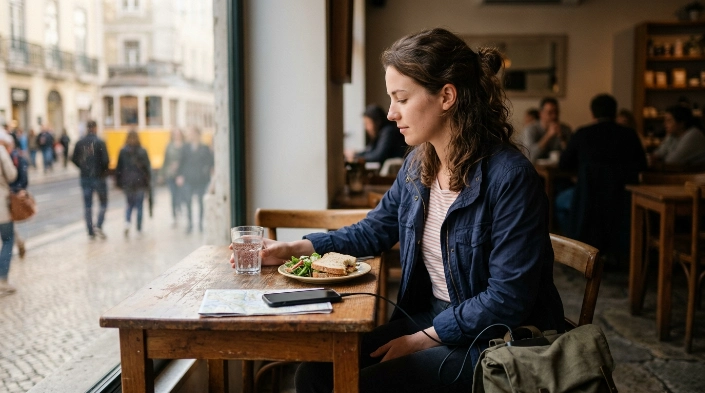
If you feel overwhelmed, reduce the number of decisions you need to make. Stop trying to rescue the perfect itinerary and return to basic needs first.
Use a simple reset routine
A difficult hour doesn’t mean the trip is failing. Hunger, fatigue, crowds, navigation mistakes, and constant stimulation can pile up quickly.
- Move somewhere comfortable: Choose your room, a café, hotel lobby, or another calm staffed space.
- Drink water and eat: Don’t make major decisions while hungry or exhausted.
- Charge your phone: Restore the tool you rely on for maps, communication, and bookings.
- Check your next essential task: Ignore optional sightseeing for the moment.
- Choose one small action: Shower, eat dinner, take a short walk, or rest.
After that, reassess. You may discover you needed two quiet hours rather than a completely different vacation.
Have a low-energy version of each day
Don’t build an itinerary where every day succeeds only if you’re confident and energetic. Create an easier alternative before leaving.
Your low-energy options might include:
- A nearby museum instead of a distant day trip.
- Lunch near your hotel instead of crossing the city.
- A familiar café instead of searching for another restaurant.
- A scenic bus ride instead of several hours of walking.
- An early evening in your room instead of nightlife.
This isn’t wasting the trip. Rest is part of independent travel because nobody else is managing your energy for you.
Know the difference between discomfort and a practical warning
Shyness may make a harmless social situation feel uncomfortable. Safety concerns are different and deserve practical action.
Leave or seek help when something feels concretely wrong, such as:
- Someone repeatedly ignores your boundaries.
- Your transportation situation changes unexpectedly.
- You become lost somewhere isolated.
- You cannot access your accommodation as planned.
- A person pressures you to reveal private information.
- You feel physically unwell or unsafe.
You don’t need to stay somewhere simply to avoid appearing rude. Move toward a staffed public place, contact your accommodation, or use appropriate local emergency services when necessary.
Don’t measure success by how outgoing you were
Your first solo trip doesn’t need a movie-style transformation. You may come home just as quiet as when you left.
Success might mean you navigated a station alone, solved a booking issue, enjoyed breakfast by yourself, or changed plans calmly. Those are meaningful solo-travel skills.
On one of my own quieter travel days, I once replaced a planned social evening with dinner near my accommodation and an early night. The next morning felt completely different because I had stopped treating tiredness as failure.
Section Takeaway: When the trip feels overwhelming, simplify it. Protect your basic needs, lower the number of decisions, and judge success by independence rather than sociability.
Frequently Asked Questions
Is solo travel suitable for a shy woman?
Yes. Shyness doesn’t prevent you from navigating, booking accommodation, eating alone, or making safety decisions. Build your trip around optional social contact, manageable logistics, and enough quiet time to recover when unfamiliar environments become tiring.
Should a shy woman stay in a hostel on her first solo trip?
Only if the environment appeals to her. Hostels can make social contact easier, but a private hotel or guesthouse may feel more comfortable. Private hostel rooms can offer a middle ground between personal space and access to social activities.
How long should a shy woman’s first solo trip be?
There’s no universal rule, but a two- to five-night trip can be a manageable starting point. A shorter commitment lets you experience arrival, meals, navigation, evenings, sightseeing, and independent decision-making without beginning with a long itinerary.
How can I eat alone without feeling awkward?
Start with casual cafés or lunch before trying a long dinner. Bring a book or journal if it helps you settle in, but remember that solo diners are normal in many destinations and restaurant staff routinely serve individual guests.
What if I don’t make any friends during my first solo trip?
Your trip can still be successful. Meeting people is optional, not a requirement for legitimate solo travel. If you want conversation, add a walking tour, class, or day excursion rather than expecting spontaneous friendships to happen every day.
Should I tell strangers that I’m traveling alone?
You don’t have to share more information than you’re comfortable revealing. Keep your accommodation, room number, detailed itinerary, and future movements private when appropriate, especially if a conversation becomes intrusive or someone ignores your boundaries.
What if I get nervous and want to come home?
Give yourself time to rest before making a major decision unless you’re facing a genuine safety or health problem. Eat, sleep, simplify the next day, and reassess. Choosing to shorten a trip is also allowed; solo travel isn’t a test you must pass.
Your first solo trip doesn’t need to turn you into a fearless traveler. It only needs to give you enough space to discover what you can handle independently.
Start smaller than your imagination tells you a “real” solo adventure should be. Prepare carefully, leave room for quiet time, and let confidence grow from the things you successfully do along the way.
“`