What Should a Woman Research Before Choosing Her First Solo Destination?
Quick Answer
Before choosing a first solo destination, a woman should research safety conditions, transportation, neighborhoods, accommodation, daily costs, cultural expectations, entry rules, health risks, communication, and emergency options. I also recommend checking an official destination travel advisory before booking, because current conditions matter more than an old blog post or social media video.
Research these first
- Safety by neighborhood: Research where visitors usually stay, where problems are more common, and how conditions change after dark.
- Getting around: Check airport transfers, public transport, ride-hailing, taxi practices, walking conditions, and late-night options.
- Real trip cost: Price accommodation, local transport, food, attractions, mobile data, insurance, and airport transfers.
- Local culture: Learn expected clothing, social behavior, alcohol rules, photography restrictions, and attitudes toward women traveling alone.
- Practical backup: Know how you would get help, contact family, replace documents, or leave an uncomfortable situation quickly.
My first-trip rule
- Choose the destination that feels manageable when you imagine arriving tired, navigating alone, and solving a small problem without immediate help.
Your first solo trip doesn’t need to be the most adventurous destination on your wish list. It needs to be somewhere you can understand well enough to move through with confidence.
When women ask me what they should research before choosing their first solo destination, I look beyond broad claims like “safe” or “female-friendly.” I want to know what an ordinary day will actually feel like from airport arrival to getting home after dinner.
In This Guide
- What should you research before choosing a solo destination?
- How do you research solo female travel safety?
- How easy will it be to get around alone?
- How much will the destination really cost?
- Do local culture and laws fit your comfort level?
- What practical details can make or break a first solo trip?
- How should you compare possible solo destinations?
- Frequently asked questions
- Final takeaway
What Should You Research Before Choosing a Solo Destination?
Research the destination as a place you will have to navigate independently, not just somewhere you want to photograph. That means studying safety, logistics, cost, culture, accommodation, communication, and backup options together.
Solo female travel means traveling without a companion while making your own decisions about transport, accommodation, activities, money, and personal safety. The destination should therefore fit both your interests and your current confidence level.
- Neighborhoods: Identify two or three areas commonly used by visitors and compare lighting, transit access, restaurants, and evening activity.
- Arrival: Map the complete route from the airport, train station, or bus terminal to your accommodation.
- Accommodation: Check reception hours, recent guest feedback, location, secure entry, luggage storage, and transport access.
- Transport: Research trains, buses, metro systems, taxis, ride-hailing apps, walking, and night services.
- Budget: Calculate a realistic daily total instead of judging affordability from the hotel price alone.
- Communication: Check mobile data options, local SIM or eSIM availability, Wi-Fi reliability, and common languages.
- Culture: Research dress, public behavior, tipping, alcohol, dating culture, and expectations around women.
- Entry rules: Verify passport validity, visa rules, onward-ticket requirements, and any arrival forms.
- Health: Check destination-specific health guidance, medication rules, climate, and access to medical care.
- Emergency planning: Save local emergency numbers and know where your embassy or consulate is located if applicable.
Research the ordinary moments, not only the highlights
A destination can look easy when you research museums, beaches, and cafés. The harder questions appear when you imagine arriving after a delayed flight or walking back from dinner alone.
I like to mentally rehearse the first 24 hours. If I can’t explain how I’ll reach my accommodation, get connected, find food, withdraw or exchange money, and handle an unexpected transport problem, I keep researching.
- What happens if my flight lands two hours late?
- Is the airport transfer still available after 10 p.m.?
- Can I walk from dinner to my accommodation on a busy, well-used route?
- Is there a second transport option if my preferred one fails?
- Will my phone work immediately after arrival?
- Can I check in if I arrive outside normal reception hours?
Those questions often tell me more than a list of the “best destinations for solo women.” Your first destination should work when the day is imperfect.
Section Takeaway: Research what happens between the attractions. A first solo destination becomes easier when arrival, transport, accommodation, communication, and backup plans are predictable.
How Do You Research Solo Female Travel Safety?
Start with current official advice, then narrow the research to the neighborhoods, transport routes, and situations you will actually use. Avoid reducing an entire country to a single “safe” or “unsafe” label.
Safety can vary by city, neighborhood, time of day, transport method, public event, and individual circumstances. A good destination choice comes from understanding those differences.
Check official advisories first
Government travel advisories can flag security concerns, demonstrations, entry issues, local laws, transportation problems, and regional warnings. Check the publication or update date before relying on the information.
If you’re not American, your own government’s foreign ministry or travel-advice service may provide guidance better matched to your nationality. The UK’s foreign travel advice is also useful for comparing destination-specific safety, entry, health, and legal information.
Research neighborhoods separately
“Is this city safe?” is too broad for practical planning. Ask where first-time visitors usually stay and how those areas connect with the places you expect to visit.
- How far is the accommodation from public transport?
- Are restaurants and shops nearby?
- Do streets remain active in the evening?
- Will you need to cross isolated areas to reach the hotel?
- Are major attractions reachable without complicated transfers?
- Can you return by licensed taxi or ride-hailing service if you feel uncomfortable walking?
Look for recurring patterns in recent traveler reports
Recent reviews and travel communities can reveal practical issues that official advisories may not discuss. Look for repeated patterns rather than treating one frightening story or one glowing review as representative.
Useful topics include street harassment, aggressive selling, taxi disputes, pickpocketing areas, poor street lighting, accommodation access, and whether women feel comfortable using public transport after dark.
- More useful: Several recent travelers mentioning the same taxi scam at one terminal.
- Less useful: One viral video saying an entire country is dangerous.
- More useful: Repeated comments about a hostel entrance being down an unlit side street.
- Less useful: A ten-year-old forum thread with no current context.
Check whether your planned activities change the risk
A destination that works well for daytime sightseeing may require more planning for nightlife, hiking, driving, remote beaches, or long-distance buses. Research the activities you intend to do rather than only the destination name.
I also ask one simple question: “If I become uncomfortable, how quickly can I change the situation?” Easy access to transport, staffed accommodation, busy public spaces, and alternative plans gives me more control.
Pro tip: Always recheck official destination advisories shortly before departure because security conditions, demonstrations, natural disasters, and entry rules can change.
Section Takeaway: Don’t search for a perfect safety score. Research specific neighborhoods, transport situations, current advisories, recurring traveler concerns, and your ability to leave an uncomfortable situation quickly.
How Easy Will It Be to Get Around Alone?
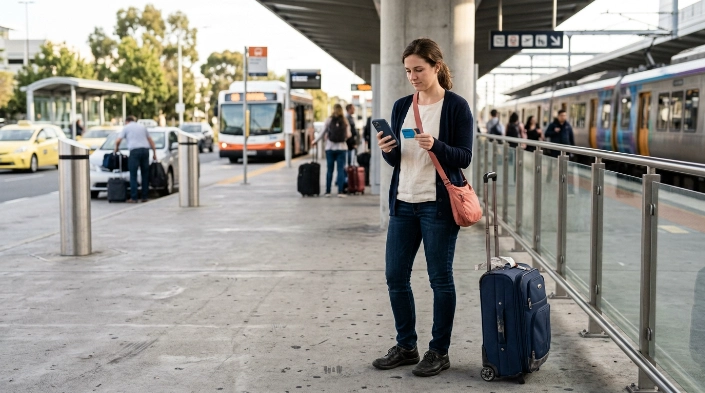
Transportation affects your independence more than almost any attraction list. For a first solo trip, I prefer places where I can understand at least two ways to reach important locations.
Research the airport-to-accommodation route first
Your arrival is often the most tiring part of the trip. Map it before comparing restaurants or day tours.
- Identify the airport or station you will actually use.
- Check the official public transport route.
- Estimate the door-to-door travel time.
- Check the last train, bus, or shuttle time.
- Research the licensed taxi or ride-hailing alternative.
- Save your accommodation address offline.
If the final leg involves a 25-minute walk with luggage, two transfers, and a poorly marked bus stop, I count that as meaningful arrival friction. A cheap hotel can become a poor first-solo choice when reaching it is stressful.
Look at your normal daily routes
Plot five places you would realistically visit. Then check how you would travel between them rather than simply noting that the city “has public transportation.”
- Accommodation to the main sightseeing area
- Accommodation to restaurants
- Accommodation to a pharmacy or convenience store
- Accommodation to the departure station
- Accommodation to one evening activity
Check frequency as well as coverage. A route that operates every 10 minutes during the day but stops early may change your evening plans.
Decide whether you actually need a car
Driving adds navigation, parking, road rules, insurance, fuel, and vehicle security to your mental workload. That may be worthwhile for a rural trip, but it isn’t automatically easier.
For a first solo destination, a walkable base with public transport can reduce the number of decisions you must make every day. Simpler logistics leave more attention for enjoying the trip.
Section Takeaway: A first solo destination becomes easier when you can reach your accommodation simply, move around without one fragile transport option, and return safely when plans change.
How Much Will the Destination Really Cost?
Research the total cost of the trip, not the cheapest flight or hotel headline. Solo travelers can’t split many fixed expenses, so transport and accommodation deserve extra attention.
Build a one-day realistic budget
I price one ordinary sightseeing day before choosing a destination. That gives me a better comparison than looking at airfare alone.
| Cost category | What to research | Common first-time oversight |
|---|---|---|
| Accommodation | Nightly rate, taxes, city fees, breakfast, lockers, luggage storage | Choosing a cheaper room far from transport |
| Airport transfer | Train, bus, shuttle, taxi, late-arrival surcharge | Ignoring the cost of a late-night taxi |
| Local transport | Single fares, day passes, ride-hailing, intercity transfers | Budgeting only for attraction entry |
| Food | Breakfast, lunch, dinner, water, coffee, service charges | Using grocery prices to estimate restaurant spending |
| Activities | Tickets, tours, reservations, equipment rental | Forgetting booking fees or guided-tour costs |
| Connectivity | SIM, eSIM, roaming, public Wi-Fi | Assuming free Wi-Fi will cover navigation needs |
| Safety buffer | Extra taxi, hotel change, replacement ticket, emergency purchase | Budgeting with no room to change plans |
Add a flexibility buffer
I don’t want my budget so tight that I feel forced to walk somewhere uncomfortable or stay in accommodation I dislike. Money can buy flexibility when a plan stops feeling right.
- An unplanned taxi instead of a long night walk
- A replacement train or bus ticket
- A different room or hotel
- Extra mobile data
- A meal in a convenient location
- A medical or pharmacy expense
A useful planning target is to estimate your expected trip cost and keep an additional buffer separate. The exact amount depends on destination prices, insurance, and your financial situation.
Research solo supplements and single occupancy
A solo supplement is an extra charge sometimes applied when one person occupies accommodation or joins an activity priced around two travelers. It appears more often on cruises, tours, and some resort packages.
Check whether tours require minimum participant numbers too. A cheap activity isn’t useful if it regularly cancels when too few people book.
Do Local Culture and Laws Fit Your Comfort Level?
A destination can be manageable yet still feel exhausting if its social expectations clash with how you want to travel. Research cultural norms before deciding whether you would enjoy adapting to them.
Research expectations for women
Look for practical guidance rather than stereotypes. Expectations can differ between large cities, resorts, rural areas, religious sites, beaches, and nightlife districts.
- Expected dress at religious or government sites
- Whether shoulders, knees, or hair should be covered in certain places
- How common it is for women to eat or drink alone
- Local attitudes toward alcohol
- Typical interactions with strangers
- Whether street harassment is frequently discussed by female travelers
- Whether public displays of affection attract attention
Check laws that may differ from home
Don’t assume behavior legal at home is legal abroad. Research alcohol, prescription medication, photography, drones, driving, public conduct, and restricted areas.
Also check rules affecting medication you need to carry. Some countries restrict medicines that are common elsewhere.
Think about how much cultural adjustment you want
Your first solo trip doesn’t need to test every part of your comfort zone at once. You might enjoy a destination with unfamiliar food and language while preferring straightforward transportation and social norms.
I find it useful to separate “interesting difference” from “constant friction.” A little challenge can make a trip memorable, but too many unfamiliar systems at once can make the first few days tiring.
- Language challenge: Fine if transport and signage remain easy.
- New cultural norms: Easier when you understand them before arrival.
- Complicated transport: More manageable if accommodation can help.
- Remote location: Better when communication and backup transport are reliable.
Section Takeaway: Choose a destination whose cultural differences interest you without creating more daily friction than you want on your first solo trip.
What Practical Details Can Make or Break a First Solo Trip?
Entry rules, health preparation, phone service, accommodation procedures, and emergency planning aren’t glamorous. They can still decide whether your trip begins calmly or with preventable stress.
Verify passport, visa, and entry requirements
Check requirements based on your own passport, not the nationality of a blogger or influencer. Airlines and border authorities may also require specific passport validity or documentation.
The IATA Travel Centre is one useful starting point for passport, visa, and health requirements, but confirm important requirements with the destination’s official authorities before departure.
- Passport validity requirement
- Blank passport-page requirement
- Visa or electronic travel authorization
- Onward or return-ticket requirement
- Arrival or customs forms
- Proof of accommodation if required
- Transit-country requirements
Research health conditions before booking
Health research should happen early enough to act on it. The CDC recommends checking destination-specific guidance and discussing needed vaccines or medicines with a healthcare professional before travel.
Use the CDC’s before-you-travel guidance when researching health considerations, then follow advice appropriate to your nationality and medical situation.
- Recommended or required vaccines
- Mosquito-borne or food-and-water risks
- Heat, altitude, or extreme weather
- Medication availability
- Travel insurance coverage
- Nearest suitable medical facility
Pro tip: Health requirements and outbreaks can change. Verify them through official health authorities close to your departure date rather than relying on an old packing list.
Check how you will stay connected
A working phone helps with navigation, transport, translation, accommodation messages, and emergency contact. I treat connectivity as part of safety planning rather than a luxury.
- Will your home SIM roam affordably?
- Can you buy an eSIM before arrival?
- Are local SIM cards sold at the airport?
- Does registration require a passport?
- Can you download offline maps?
- Will important transport apps accept your phone number and payment card?
Create an emergency information plan
Save information before you need it. Keep important details both on your phone and somewhere you can access if the phone disappears.
- Local emergency number
- Accommodation address and phone number
- Travel insurer contact information
- Emergency contact at home
- Passport copy
- Airline or transport booking details
- Embassy or consulate information where relevant
U.S. travelers can also research the Smart Traveler Enrollment Program, which provides embassy and consulate alerts for registered destinations. Travelers of other nationalities should check whether their government offers a similar registration or alert service.
Section Takeaway: Verify the boring details early. Entry requirements, health preparation, connectivity, and emergency contacts are much easier to solve at home than after landing alone.
How Should You Compare Possible Solo Destinations?
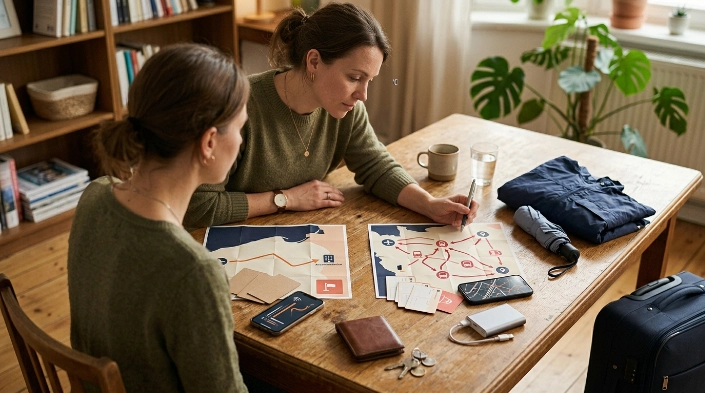
Compare destinations using the same questions instead of choosing whichever has the prettiest photos. I use practical screening criteria that reflect what my days will actually involve.
The table below is a planning framework, not an official safety rating. Adjust the benchmarks to your confidence, budget, nationality, health needs, and travel style.
| Research factor | Lower-friction first-trip sign | Reason to research deeper |
|---|---|---|
| Airport arrival | One direct public route or clear licensed taxi option | Multiple uncoordinated transfers or limited late-night service |
| Accommodation location | Food and transit within roughly a 10-minute walk | Isolated location or regular dependence on private transport |
| Daily transport | At least two realistic ways to return to your base | One transport option with early closing times |
| Budget | You can afford planned spending plus a flexibility buffer | One taxi, hotel change, or missed connection would strain the budget |
| Communication | Reliable data plus offline maps and saved addresses | Poor coverage combined with difficult navigation |
| Itinerary | One main base with optional day trips | Changing hotels every one or two nights |
| Backup options | Alternative hotel, transport, and communication options exist | Remote itinerary with little flexibility |
Try the “tired arrival” test
Imagine your flight lands late, you’re hungry, and your phone battery is at 15%. Which destination would still feel manageable?
The answer doesn’t automatically determine where you should go. It reveals which destination depends on everything working perfectly.
Try the “bad day” test
Now imagine heavy rain cancels your activity, public transport is disrupted, or you dislike your accommodation. Research how easily you could change the plan.
- Can you book another room nearby?
- Can you afford an unexpected taxi?
- Are there indoor activities?
- Can you shorten or change a day trip?
- Is there another route to your next stop?
Match the destination to your current confidence
Your first solo trip is not an exam. You don’t earn extra points for choosing the hardest destination you can tolerate.
A five-day city break with one comfortable base may teach you more about your travel style than an ambitious three-country route. You can add complexity on future trips after learning what parts of solo travel energize or tire you.
As of 2026, I still think this is one of the most useful filters: choose somewhere that gives you enough independence to feel adventurous without making every routine task a challenge.
Frequently Asked Questions
What is the most important thing a woman should research before her first solo trip?
Start with how the trip will function day to day. Research neighborhood-level safety, airport arrival, accommodation location, transport, communication, costs, cultural expectations, and what you would do if a plan changes.
How do I know whether a destination is safe for solo female travel?
Don’t rely on one safety ranking. Compare current government advisories, neighborhood information, transportation conditions, local laws, and repeated reports from recent female travelers, then consider how those factors relate to your itinerary.
Should my first solo destination speak my language?
It isn’t essential, but communication difficulty should be considered alongside other challenges. A destination with unfamiliar language can still be manageable when signage, public transport, mobile data, accommodation support, and translation tools work well.
Is a hostel better than a hotel for a first solo trip?
Neither is automatically better. A social hostel can make meeting travelers easier, while a hotel may provide more privacy; compare location, reception hours, security, recent reviews, room type, and the atmosphere you want.
How long should a first solo trip be?
There is no universal ideal length, but a shorter trip with one main base can reduce logistics. Many first-time travelers find it easier to learn their solo rhythm without changing accommodation every day or two.
Should I choose a city or beach destination for my first solo trip?
Choose based on logistics rather than the label. A city with excellent transport may be simpler than a remote beach, while a compact resort town can be easier than a sprawling city with complicated transportation.
What should I research immediately before booking?
Recheck current travel advisories, entry requirements, passport validity, cancellation terms, accommodation location, airport transfers, insurance coverage, and expected total cost. Then confirm that your itinerary still works if you arrive late or need to change plans.
Choose the Destination You Understand, Not Just the One You Want to Visit
The best first solo destination isn’t automatically the cheapest, closest, safest-looking, or most popular. It’s the destination whose risks, logistics, culture, costs, and daily routines you understand well enough to handle independently.
Before booking, make sure you can explain how you’ll arrive, where you’ll stay, how you’ll move around, how much you’ll spend, how you’ll stay connected, and what you’ll do when something changes.
- Verify current official travel guidance.
- Research neighborhoods rather than only countries.
- Map airport and evening transport.
- Price the full trip.
- Learn cultural and legal expectations.
- Check health and entry requirements.
- Create communication and emergency backups.
- Choose an itinerary that matches your current confidence.
Your first solo trip should stretch you enough to feel exciting without making every hour a test. Good research gives you the freedom to arrive with fewer unknowns and more energy for the experience itself.