Should a Woman Rent a Car on Her First Solo Trip?
Quick Answer
A woman can rent a car on her first solo trip, but she does not need one simply because she is traveling alone. A rental makes the most sense when the destination is car-dependent, the roads are manageable, parking is straightforward, and you already feel comfortable driving independently. For an international trip, review official driving and transportation safety guidance before booking.
Rent a car when these factors line up
- Limited public transport: Your hotel and main attractions are difficult to reach by train, bus, or reputable rideshare.
- Confident driving: You are comfortable navigating, parking, refueling, and handling small driving problems alone.
- Simple road conditions: Local traffic rules, road quality, and driving style are not dramatically different from what you know.
- Useful flexibility: A car will let you reach rural areas, beaches, trailheads, or several stops that would otherwise be difficult.
- Safe logistics: You can pick up, park, refuel, and return the vehicle in locations where you feel comfortable.
Skip the rental if it adds stress
- If your destination has excellent public transportation or unfamiliar driving conditions, using trains, buses, or reputable rideshares may make your first trip much easier.
If you’re wondering whether a woman should rent a car on her first solo trip, I would treat the car as a travel tool rather than a requirement. Solo female travel safety improves when your transportation choice reduces stress instead of creating another problem to manage.
For a first trip, I prefer the simplest system that still lets me do what I came to do. Sometimes that means having my own keys, while other trips are far easier without a vehicle.
In This Guide
- Is renting a car a good idea for a woman traveling alone?
- When does a rental car make a first solo trip easier?
- When should you skip renting a car?
- Rental car vs. public transport vs. rideshare
- How can a woman rent and drive safely alone?
- Frequently asked questions
- Should you rent a car on your first solo trip?
Is Renting a Car a Good Idea for a Woman Traveling Alone?
Yes, it can be. Your gender alone does not determine whether driving is the right choice; destination conditions, your driving confidence, and your itinerary matter more.
Solo rental-car travel means handling the vehicle, navigation, parking, fuel, paperwork, and unexpected problems without another traveler sharing those responsibilities.
That independence can feel liberating. It can also increase your mental workload during a first solo trip.
- You control your schedule: You can leave when you want and change plans without checking a timetable.
- Your luggage stays manageable: You avoid carrying bags through several stations or transfers.
- Remote places become accessible: Beaches, villages, parks, viewpoints, and rural hotels may become practical.
- You handle every problem: Wrong turns, parking rules, flat tires, tolls, and fuel stops become your responsibility.
I would not use renting a car as a test of whether you are “brave enough” to travel solo. There is no prize for making the trip harder than necessary.
The better question is simple: Will the car remove more problems than it creates?
When Does a Rental Car Make a First Solo Trip Easier?
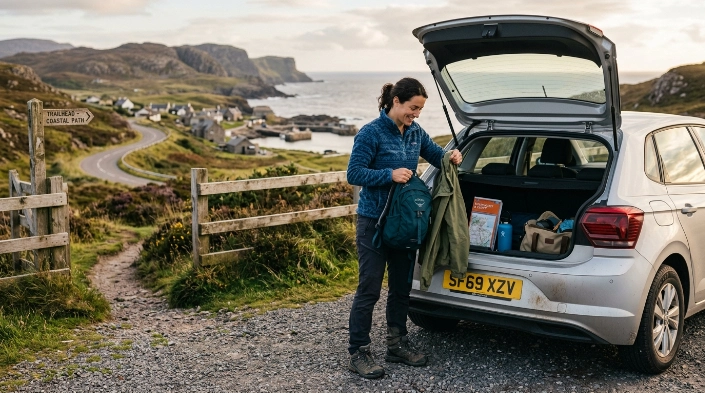
A rental car helps most when your itinerary depends on places that are inconvenient to reach without one. Road trips and rural stays are obvious examples.
It can also make sense when transit schedules would force you to waste hours waiting or repeatedly change buses and trains.
Choose a car for a car-dependent itinerary
Imagine a three-night trip where your hotel is outside town and your plans include two trailheads, a coastal viewpoint, and a small village. Four separate taxi bookings could become more stressful than one rental.
A car gives you a private space for jackets, water, shopping, and day-trip gear. That can simplify the rhythm of the day.
- National parks with limited shuttle service
- Rural accommodations
- Scenic road-trip routes
- Small towns spread across a region
- Destinations with infrequent buses
- Trips involving bulky outdoor gear
Choose a car when driving already feels normal
Your first solo trip is not the ideal time to learn several difficult skills at once. If you rarely drive at home, adding an unfamiliar rental vehicle and unknown roads may increase travel anxiety.
I would rather make the first trip slightly easier. Confidence grows faster when you have enough mental space to enjoy where you are.
Section Takeaway: Rent a car when it solves a real transportation problem, not because you feel that independent travelers are supposed to drive.
When Should You Skip Renting a Car?
Skip the rental when the destination already has simple, frequent transportation. A car can become an expensive object that spends most of the trip sitting in a parking garage.
Dense cities are a common example. Traffic, one-way streets, restricted zones, parking fees, and unfamiliar road signs can outweigh the freedom a car provides.
Do not add unfamiliar driving just for convenience
International driving deserves extra thought because traffic laws and road behavior can differ sharply between countries. Some destinations also drive on the opposite side from what you use at home.
The U.S. State Department advises travelers to research local traffic laws, road conditions, licensing requirements, and insurance before driving abroad.
- Skip it if: You are nervous about driving alone even at home.
- Skip it if: Your hotel charges heavily for parking and everything you want is nearby.
- Skip it if: You will arrive after dark and immediately face unfamiliar roads.
- Skip it if: Local guidance recommends using experienced drivers because road conditions are difficult.
- Skip it if: Trains or buses connect all your planned stops efficiently.
A car may give you physical independence while reducing your emotional comfort. That trade-off matters on a first trip.
If driving is the part of the itinerary you keep worrying about before departure, reconsider whether you need it.
Rental Car vs. Public Transport vs. Rideshare: Which Is Better?
No option wins everywhere. Match the transportation method to the destination rather than deciding that you always need a rental when traveling alone.
| Factor | Rental Car | Public Transport | Rideshare/Taxi |
|---|---|---|---|
| Schedule freedom | High | Depends on timetable | Usually high when available |
| Navigation effort | You drive and navigate | You navigate routes and transfers | Low after pickup |
| Remote destinations | Often excellent | Often limited | Availability can drop outside cities |
| Parking responsibility | Yes | None | None |
| Extra costs to check | Fuel, parking, tolls, taxes, coverage | Tickets and passes | Fare changes, airport fees, tips where customary |
| Best first-trip fit | Rural or car-dependent route | Transit-friendly city | Short or occasional transfers |
For a city break, I would usually start by checking whether the airport, accommodation, and main attractions connect easily by transit. If they do, I need a strong reason to add a car.
For a countryside itinerary, I reverse the question. I check whether not having a car would leave me stranded, dependent on rare buses, or paying for repeated long taxi rides.
How Can a Woman Rent and Drive Safely Alone?
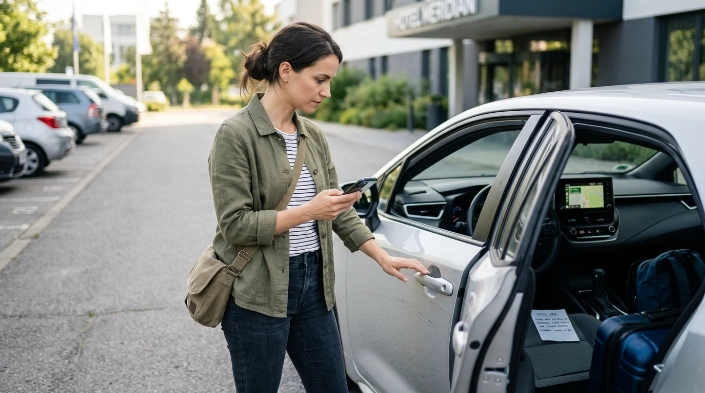
Good solo driving starts before you collect the keys. Plan the first drive, parking, paperwork, and backup options while you still have time to compare them calmly.
The State Department’s guidance for women travelers also recommends researching destination transportation and avoiding informal transportation options that have not been checked for reliability.
Before booking the car
- Map the route: Check your first drive from the rental office to your accommodation.
- Check parking: Confirm where you can leave the car overnight.
- Compare total cost: Include taxes, toll arrangements, fuel, parking, and optional extras.
- Review coverage: Know what your existing insurance or credit card may cover before accepting or declining rental-company products.
- Save offline information: Keep your hotel address, rental office details, and important phone numbers available without mobile data.
The U.S. Federal Trade Commission’s rental-car guidance notes that advertised rates may not show the full cost. Fuel policies, toll programs, airport surcharges, equipment, coverage, and other fees can change your final bill.
At pickup
- Photograph or record existing scratches and body damage.
- Check the fuel level and agreed return policy.
- Find the headlights, hazard lights, wipers, and fuel-door release.
- Set navigation before moving.
- Ask for the roadside-assistance number.
Choose a vehicle size you can park confidently. Your first solo trip is rarely the moment to upgrade to a much larger SUV simply because the counter offers one.
During the trip
Try to handle long drives and unfamiliar roads during daylight. I also prefer fuel stops in busy, well-lit areas rather than waiting until the tank is nearly empty.
- Keep doors locked while driving.
- Do not leave passports or visible valuables in a parked vehicle.
- Avoid telling strangers that nobody knows your itinerary.
- Share your general route with someone you trust when taking a remote drive.
- Do not push through serious fatigue just to reach a planned stop.
Pro tip: For international travel, check the destination’s current official travel guidance before driving. Road conditions, local laws, required documents, and safety advice can change.
Check license and permit requirements abroad
Your home driver’s license may not be enough in every country. Some destinations require or recognize an International Driving Permit alongside your regular license.
For U.S. license holders, check current requirements and the official AAA International Driving Permit information before departure. Never assume the rental reservation itself proves you have every document needed to drive legally.
Section Takeaway: The safest rental plan is usually the boring one—daylight driving, known parking, enough fuel, clear coverage, saved directions, and no unnecessary rush.
Frequently Asked Questions
Is it safe for a woman to rent a car alone?
It can be safe when the destination has manageable road conditions and you are a confident driver. Research local laws, parking, road quality, and personal-safety concerns first. For international trips, check current government travel guidance instead of assuming driving conditions match those at home.
Should I rent a car for my first solo city trip?
Probably not if the city has reliable trains, buses, or other established transportation. A city rental can add traffic, parking, tolls, and extra fees. Compare your actual itinerary before booking and see how many planned places genuinely require a car.
Should I drive at night on my first solo trip?
If possible, make your first drive during daylight. It is easier to read signs, understand unfamiliar roads, find your accommodation, and assess the surrounding area. Night driving may be reasonable later if you know the route and local conditions support it.
What should I check before renting a car abroad?
Check driver’s-license rules, International Driving Permit requirements, insurance, minimum rental requirements, local traffic laws, which side of the road is used, toll systems, border restrictions, parking rules, and the rental company’s fuel and return policies.
Is renting a car better than using rideshare alone?
It depends on the itinerary. A rental gives you more control and works well for multiple rural stops. Reputable rideshare services can be easier for occasional city journeys because you do not need to drive, park, refuel, or understand unfamiliar road rules yourself.
What if I get nervous after renting the car?
Change the plan if necessary. Return the vehicle early if your contract allows it, use established public transportation, or arrange reputable local transport. A first solo trip is about learning what works for you, not proving you can stick with a stressful decision.
Should You Rent a Car on Your First Solo Trip?
Rent a car if it makes the trip simpler: you are comfortable behind the wheel, your route genuinely needs a vehicle, and you understand the local road conditions, costs, parking, and rental rules.
Skip it when public transportation already does the job or when unfamiliar driving would dominate your attention. Removing one difficult responsibility can make a first solo trip far more enjoyable.
For 2026 trip planning, I would decide transportation only after choosing the destination and mapping the places I actually want to visit. That gives you a practical answer instead of a rule based on what other solo travelers do.
Your first solo trip does not need to be the most independent trip possible. It needs to be manageable enough that you finish it wanting to travel alone again.