Is a Big City or Small Town Better for a Woman’s First Solo Trip?
Quick Answer
For most women taking a first solo trip, a well-connected big city is usually easier than a small town. Cities often give you more accommodation choices, frequent public transport, staffed attractions, food options, and backup plans, although you should always check the destination’s current official travel advisory before booking.
The main differences
- Transport: Large cities usually offer more ways to move around without renting a car.
- Backup options: Changing hotels, restaurants, routes, or activities is usually easier in a city.
- Pace: A small town can feel calmer and less overwhelming for an anxious first-time traveler.
- Social opportunities: Cities usually have more tours, hostels, classes, cafés, and organized activities.
- Isolation: Small destinations require more attention to transport schedules, opening hours, and accommodation location.
My beginner rule
- Choose the destination that makes everyday logistics simple, not the destination that merely looks safest or prettiest online.
If you are wondering whether a big city or small town is better for a woman’s first solo trip, you are asking the right question. Your destination can affect how confident, connected, and independent you feel from the moment you arrive.
I look at this decision through a practical lens. The best first solo destination is usually the place where transport, accommodation, food, activities, and backup plans are easy to manage alone.
In This Guide
- Is a big city or small town easier for a first solo trip?
- Is a big city or small town safer for a woman traveling alone?
- Which destination makes solo travel logistics easier?
- Where is it easier to meet people while traveling alone?
- How should a woman choose her first solo destination?
- Frequently asked questions
- Final takeaway
Is a Big City or Small Town Easier for a First Solo Trip?
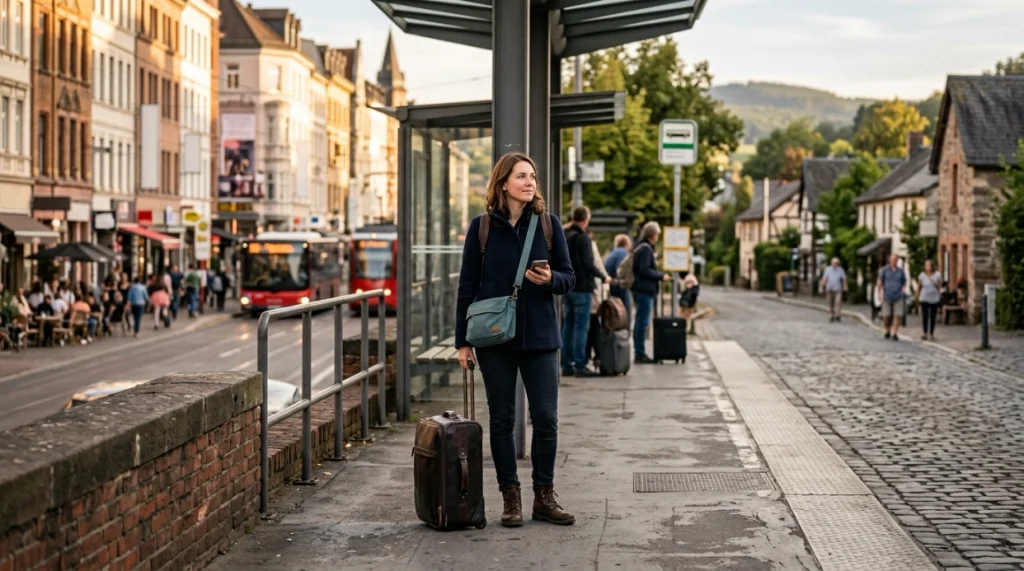
For most beginners, a medium-to-large city with good public transport is the easier starting point. You can usually solve small travel problems without completely changing your itinerary.
A city also gives you flexibility. If a neighborhood feels inconvenient, an attraction closes, or the weather ruins your outdoor plan, you normally have alternatives nearby.
What does “beginner-friendly solo travel” mean?
A beginner-friendly destination lets you handle accommodation, transportation, meals, navigation, and unexpected changes without depending heavily on another person, a rental car, or complicated local knowledge.
That does not mean the biggest city is automatically the best choice. A huge capital with complex transit, crowded streets, and long travel distances can feel harder than a compact regional city.
Small towns have their own advantage: simplicity. You may have fewer streets to learn, fewer transport systems to understand, and a slower daily rhythm.
- A big city may suit you if: you want museums, tours, cafés, nightlife, public transport, and plenty of accommodation choices.
- A small town may suit you if: crowds drain you and your ideal trip involves walking, reading, nature, local cafés, and early evenings.
- A compact city can offer both: enough infrastructure for independence without the scale of a huge capital.
For my own destination planning, I care more about the neighborhood than the city’s total population. A walkable central base can make a large city feel surprisingly manageable.
The opposite is also true. A peaceful village can become stressful if your accommodation sits far from the station and the final bus leaves before dinner.
| First-Trip Factor | Big City | Small Town |
|---|---|---|
| Public transport | Often frequent with several route options | May be limited or finish earlier |
| Accommodation choice | Usually many hotels, hostels, and apartments | Smaller selection, so location matters more |
| Activities | Many indoor, outdoor, and organized options | Fewer choices but often a slower pace |
| Meeting people | Tours, hostels, classes, events, and meetups | Fewer organized opportunities |
| Changing plans | Usually easier | Can require more advance planning |
| Sensory load | Potentially crowded and stimulating | Usually quieter and slower |
Section Takeaway: For many first-time solo travelers, the sweet spot is a walkable, visitor-friendly city with straightforward public transport rather than either a huge metropolis or an isolated village.
Is a Big City or Small Town Safer for a Woman Traveling Alone?
Population size alone cannot tell you whether a destination is safe for a solo woman. Neighborhood, transport, local conditions, accommodation location, arrival time, and your daily routine matter more.
A big city may have busy streets, staffed stations, ride services, late-opening businesses, and several ways to return to your hotel. Those features can make practical problem-solving easier.
- Check the exact neighborhood: Research the area around your accommodation, not only the destination’s overall reputation.
- Plan your arrival: Your first arrival is easier when you know exactly how you will reach your accommodation.
- Study evening transport: Check when trains, buses, ferries, or local services stop operating.
- Keep a backup route: Save an alternative way to return if your original transport plan fails.
- Share your plan: Give a trusted person your accommodation details and basic itinerary.
Small towns can feel reassuring because they are quieter and easier to learn. Yet quiet does not automatically mean safer.
Limited taxis, weak public transport, early closing hours, or isolated accommodation can create a different kind of vulnerability. You need to think about access as well as atmosphere.
Before international travel, I would also review destination-specific health information from the CDC’s pre-travel guidance. Health preparation is part of solo travel safety because you are responsible for solving problems independently.
Pro tip: Check the destination government’s official guidance and your own government’s current travel advice shortly before departure, because conditions and local rules can change.
One useful question is simple: “If something goes wrong at 9 p.m., what are my options?” That question tells you more than labels such as big, small, busy, or peaceful.
Section Takeaway: Do not choose by population size alone. Choose a destination where you can move around, get help, change plans, and reach your accommodation comfortably.
Which Destination Makes Solo Travel Logistics Easier?
Logistics are one reason I lean toward cities for a woman’s first solo trip. Your confidence grows quickly when everyday tasks work without much effort.
Imagine arriving tired after a flight or train journey. A destination with several transport choices gives you room to make mistakes without turning the mistake into a crisis.
Public transport matters more when you travel alone
When you travel with someone, one person can watch bags while the other checks directions. Alone, you manage your phone, luggage, tickets, surroundings, and route at the same time.
- Choose accommodation within easy walking distance of useful transport.
- Download an offline map before arrival.
- Save your accommodation address in your phone and on paper.
- Check the final evening departure for any essential route.
- Avoid making your first arrival unnecessarily complicated.
A small town can still work beautifully when it has a railway station, compact center, and accommodation nearby. The problem starts when “peaceful countryside escape” secretly means depending on an infrequent bus or expensive taxi.
Backup plans reduce first-trip anxiety
My favorite beginner destinations are places where Plan B is obvious. If one restaurant closes, another is nearby; if rain starts, there is an indoor activity; if I miss one train, another service follows.
This flexibility matters emotionally too. You stop feeling as though every decision must be perfect.
A useful booking test: Look at your accommodation on a map and imagine arriving there alone after dark with luggage. If the route already feels unnecessarily complicated on your screen, choose an easier base.
For U.S. citizens traveling internationally, the Smart Traveler Enrollment Program can provide destination alerts from U.S. embassies and consulates. Travelers from other countries should look for comparable services from their own government.
Where Is It Easier to Meet People While Traveling Alone?
A city usually gives you more structured ways to meet people without depending on strangers approaching you. That can be helpful when you want company but still want control over your schedule.
You do not need to stay in a party hostel. Walking tours, cooking classes, food tours, museum events, language exchanges, and small-group day trips can all create low-pressure social contact.
- Hostel common areas: Useful even if you book a private room in some hostels.
- Walking tours: Easy places to speak with other travelers during daylight hours.
- Small-group activities: Good when you want company around a shared interest.
- Cafés and markets: Comfortable choices when you want to be around people without social pressure.
- Organized day trips: Helpful for visiting places that would be awkward to reach alone.
Small towns create a different social experience. You may see the same café owner, hotel staff, or other guests repeatedly, which can make a destination feel familiar quickly.
The trade-off is choice. If you do not connect with the limited social scene, there may be few alternatives.
What if I am shy or worried about loneliness?
You do not need to turn your first solo trip into a test of extroversion. Build one optional social activity into each day and leave the rest flexible.
I also like the idea of easing into solo travel instead of forcing instant confidence. Lonely Planet’s solo travel tips for women similarly emphasize building comfort gradually.
- Book one walking tour on your first full day.
- Eat breakfast somewhere with communal seating.
- Join one class, tour, or organized activity.
- Message family or friends at a planned time.
- Give yourself permission to spend an evening alone.
Being alone and being lonely are not the same thing. A destination with optional social contact lets you decide when you want company.
How Should a Woman Choose Her First Solo Destination?
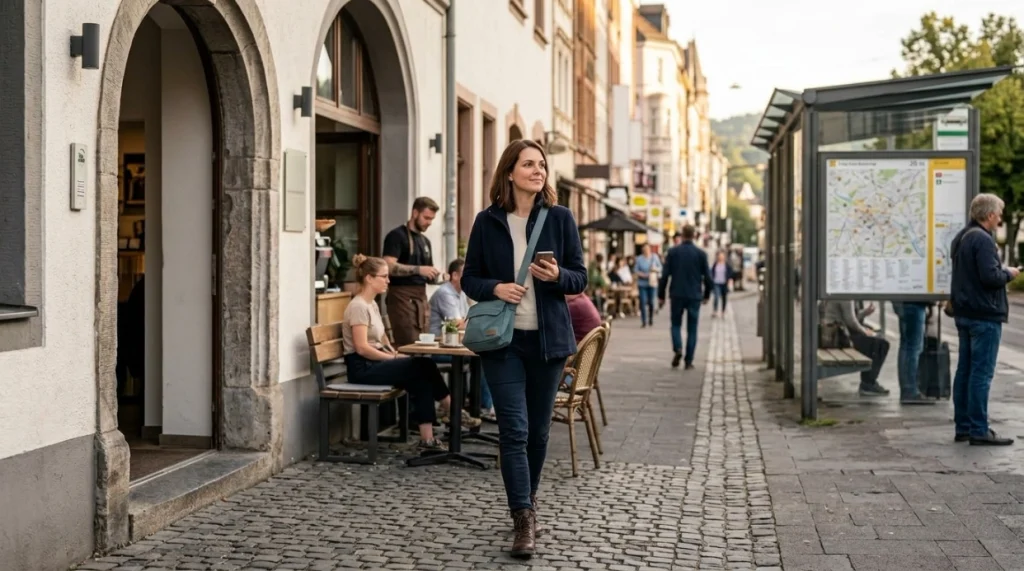
Start with your travel personality rather than choosing the destination everybody else recommends. Your first trip should stretch your confidence slightly, not overwhelm you from the moment you land.
For 2026 travel planning, I would compare destinations using practical questions before looking at Instagram photos or “safest city” lists. The answers reveal how independently you can function there.
Choose a city first if these sound like you
- You do not drive or do not want to rent a car.
- You want several hotel or hostel options.
- You enjoy museums, food, shopping, tours, or cultural attractions.
- You want flexibility when weather changes.
- You worry about becoming lonely.
- You prefer staffed stations and busy public areas.
Choose a small town first if these sound like you
- Large crowds make you anxious.
- Your main goal is rest rather than sightseeing.
- You are comfortable with quieter evenings.
- You have confirmed reliable transport.
- Your accommodation is centrally located.
- You are happy planning meals and activities around limited opening hours.
Use the “easy first 24 hours” test
Before booking, mentally walk through your first day. Start with the airport, railway station, or bus terminal and continue until your first breakfast the next morning.
- Arrival: Can you reach your accommodation without complicated transfers?
- Check-in: Will someone be available when you expect to arrive?
- Food: Can you easily get a meal if you arrive late?
- Connectivity: Will you have mobile data or Wi-Fi soon after arrival?
- Morning plan: Is your first attraction or activity easy to reach?
- Backup: What would you do if your flight or train arrived several hours late?
If you can answer those questions comfortably, the destination is probably workable. If almost every answer needs a special arrangement, keep looking.
I would also consider trip length. A first solo trip does not need to be two weeks long to “count.”
A three- to five-night city break can teach you more about your travel style than an ambitious multi-stop itinerary. Keeping one accommodation base also removes repeated packing and transport decisions.
Section Takeaway: Pick the destination that makes your first 24 hours easy. Confidence usually grows from successful small decisions, not from choosing the most adventurous itinerary.
Frequently Asked Questions
Are big cities dangerous for solo female travelers?
Not automatically. Safety varies by destination, neighborhood, time of day, transport options, and current local conditions, so research the exact area where you plan to stay and use official travel guidance rather than judging by city size alone.
Are small towns safer for a woman traveling alone?
A small town may feel calmer, but low population does not guarantee safety. Check transport availability, accommodation location, lighting, opening hours, local conditions, and how easily you could get help or change plans.
What is the best type of city for a first solo female trip?
A compact, walkable city with reliable public transport, centrally located accommodation, plenty of daytime activities, and simple airport or railway connections is often beginner-friendly. You usually do not need the largest capital city to get those advantages.
Should my first solo trip be close to home?
It can be a smart way to start. A domestic trip or short journey reduces some language, currency, immigration, and cultural challenges while still letting you practice navigating, eating out, sightseeing, and solving problems alone.
How long should a woman’s first solo trip be?
Three to five nights is a comfortable starting point for many first-time travelers because it gives you time to settle in without creating an overwhelming itinerary. There is no required length, so choose a duration that feels manageable financially and emotionally.
Is it better to stay in a hostel or hotel on a first solo trip?
Choose based on the experience you want. A social hostel can make meeting travelers easier, while a centrally located hotel or private room may provide more privacy, quiet, and predictable personal space.
What should I prioritize when booking accommodation?
Prioritize location before luxury. Look for straightforward transport, a well-used surrounding area, convenient food options, clear check-in arrangements, and a route you would feel comfortable navigating with luggage.
Big City or Small Town: My Final Takeaway
For a woman’s first solo trip, I would usually start with a compact, well-connected city rather than an isolated small town. The biggest advantage is not excitement; it is having choices when plans change.
Still, your personality matters. A calm small town can be an excellent first destination when transport is reliable, accommodation is central, and you genuinely prefer a slower trip.
- Choose easy transport over complicated transfers.
- Choose a good neighborhood over a famous city name.
- Choose flexibility over an overloaded itinerary.
- Choose a trip length that feels manageable.
- Choose the destination where you can picture yourself handling an ordinary day confidently.
Your first solo trip does not need to prove anything. Its job is to show you that you can arrive, navigate, eat, explore, change plans, and return home having managed the experience on your own.